3.2% of World’s Glaciers Account for Over Half of Global Glacier Ice Loss
Eduteria Insights · 27 Oct 2026
Why in News?
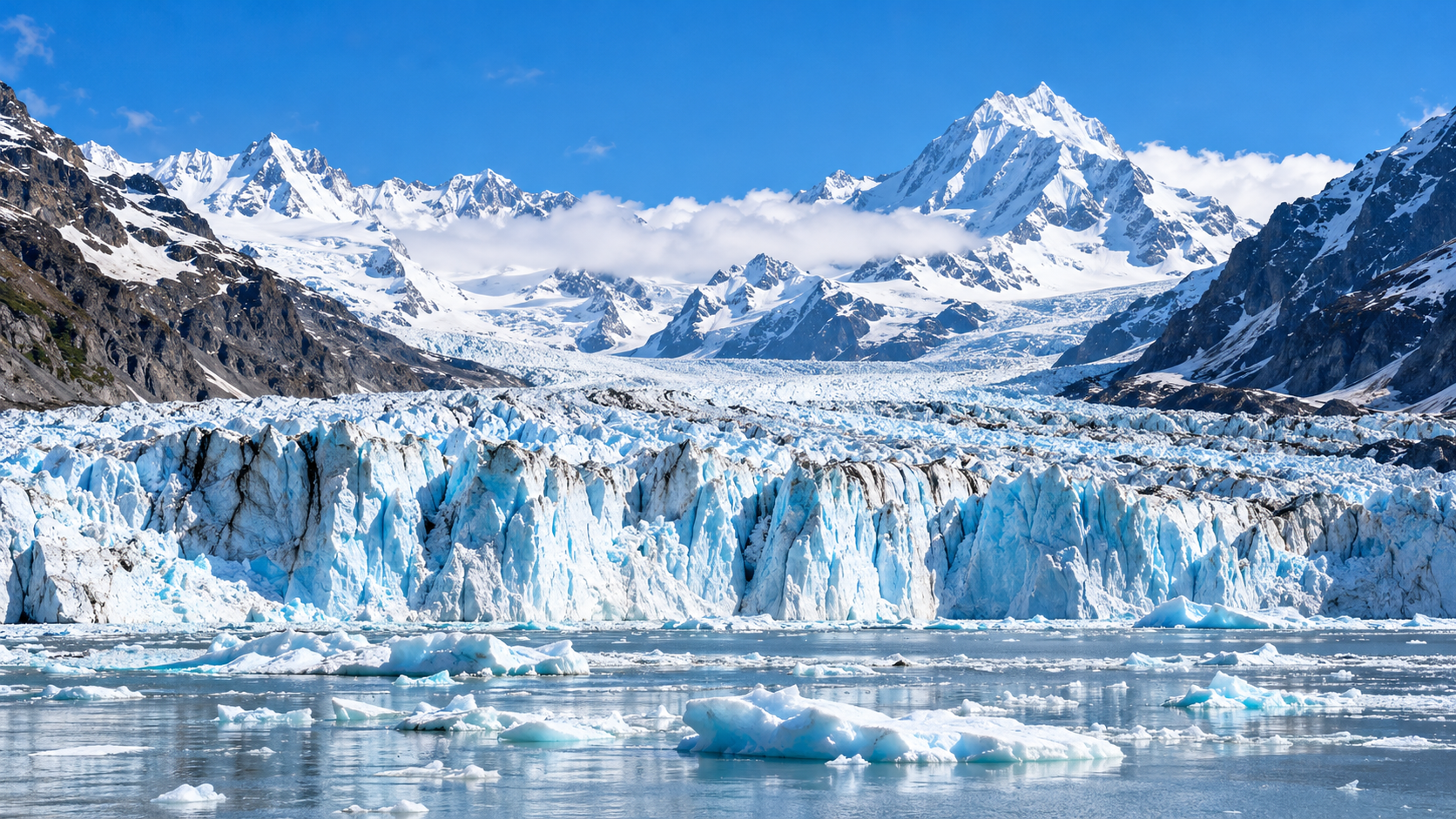
A study published in Nature Communications, led by researchers from the University of Birmingham and the University of Leeds (UK), found that glaciers terminating in lakes, oceans or ice shelves account for just 3.2% of the world’s glaciers but contribute over half of global glacier ice loss.
Key Highlights
Study Period: 2000–2019.
Annual Ice Loss: Lake, ocean and ice-shelf terminating glaciers lost approximately 134 billion tonnes of ice annually during the study period.
Glacier Area: These glaciers collectively cover more than half of the world’s glacier area.
Lake-terminating glaciers flow approximately 10% faster.
Ocean-terminating glaciers flow approximately 44% faster.
Ice Loss by Glacier Type: Lake-terminating glaciers lose around 57% more ice relative to their size than land-terminating glaciers.
Mechanisms of Ice Loss:
Calving: Large chunks of ice break off the glacier front, forming icebergs.
Subaqueous Melting: Water in lakes melts the submerged portions of glaciers.
Climate Change Impact: Rising temperatures are causing some land-terminating glaciers to become lake-terminating glaciers as glacier lakes expand. Some ocean-terminating glaciers in the Arctic are retreating onto land.
Swipe up (or press ↓) for the next news