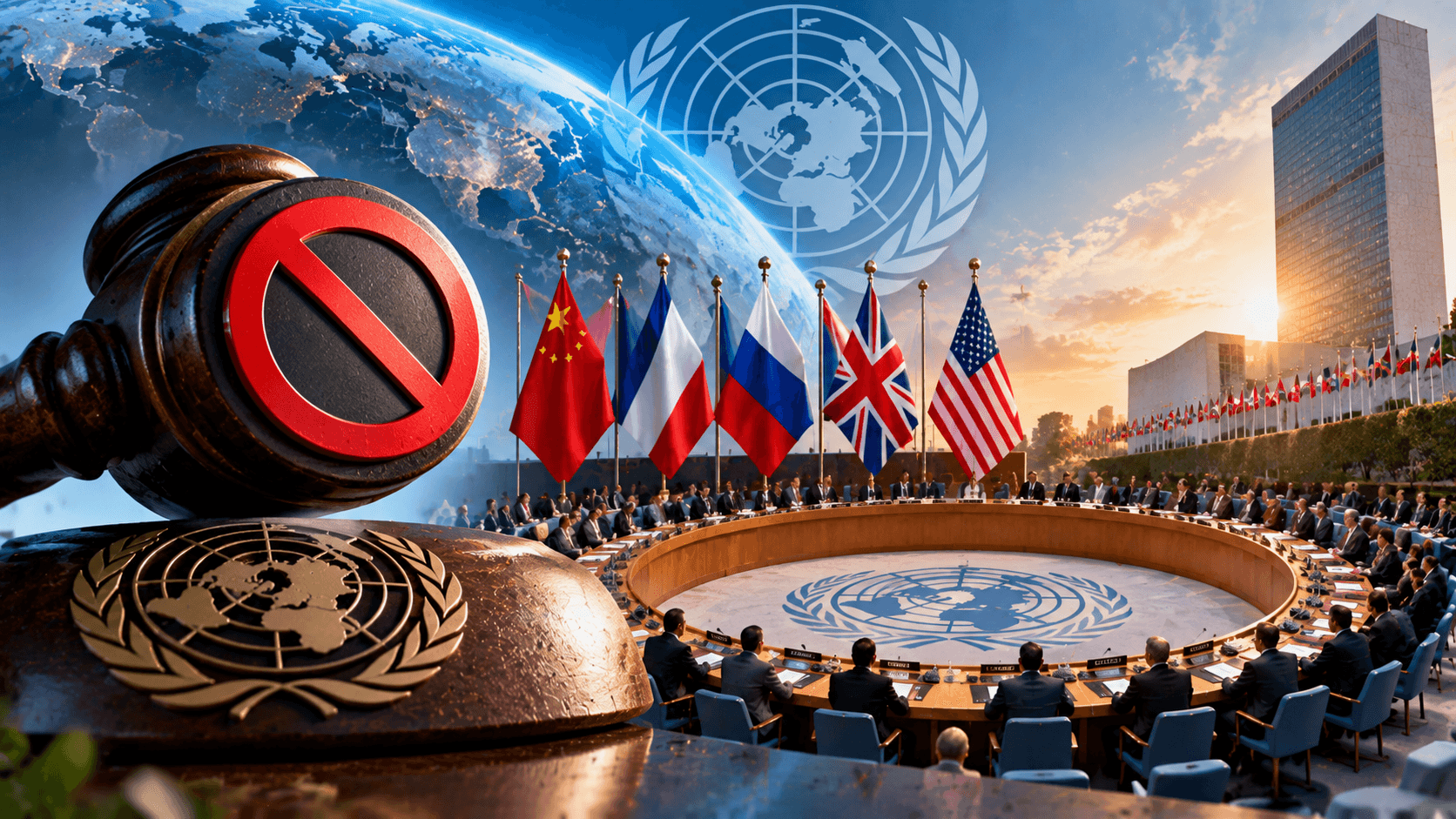
UNSC Reform: End the Veto Power?
Why in the News?
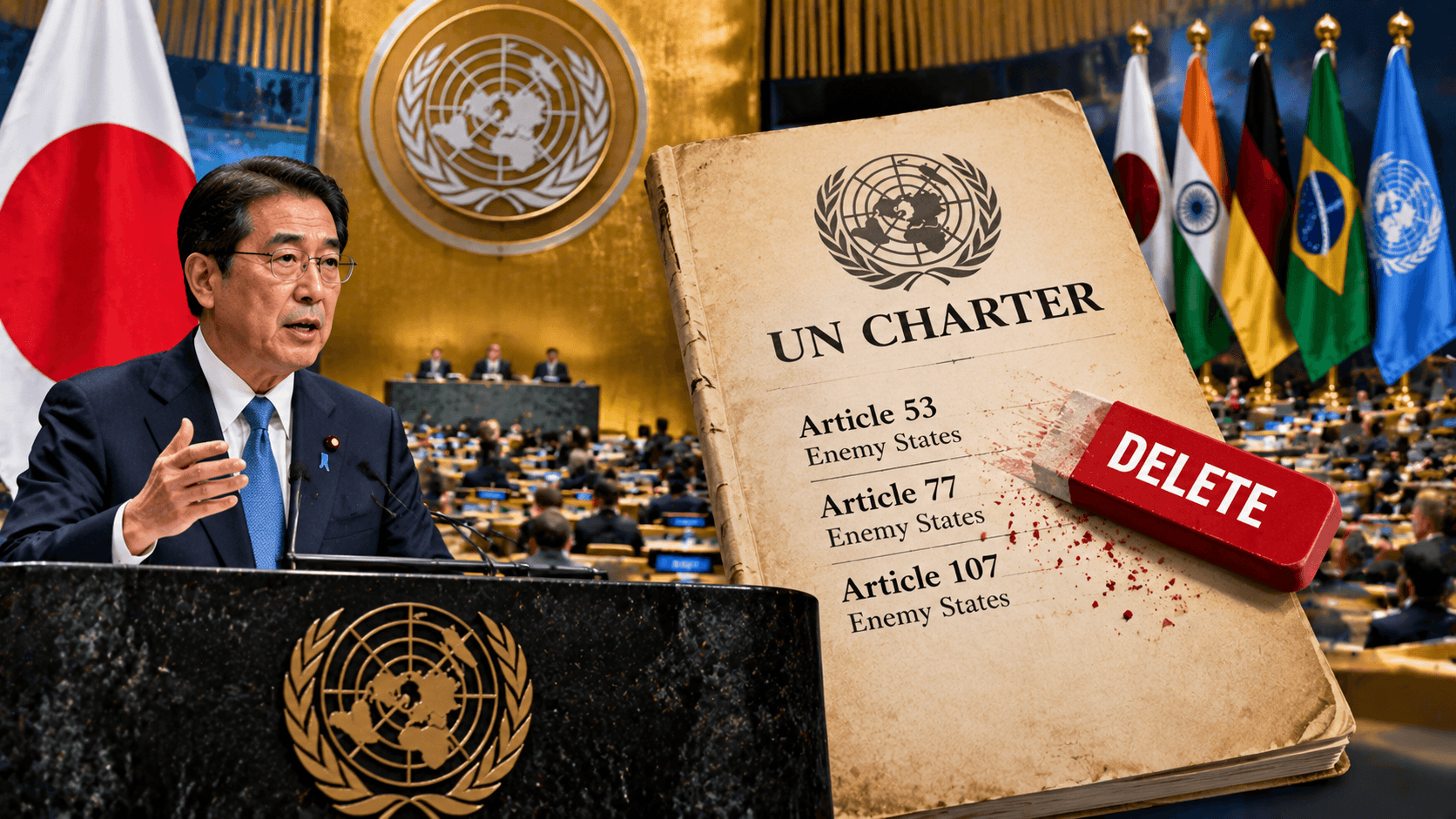
At the 81st Session of the UN General Assembly in September 2026, member states met to discuss long-pending reforms of the UNSC, especially to regulate the use of veto power during grave humanitarian crises.
At the same session, Russia reiterated its support for India’s bid for permanent membership of the Security Council. India, on its part, reaffirmed its commitment to the “Pact for the Future” adopted at the 2024 UN Summit and pushed for urgent, time-bound UNSC reforms that reflect present-day geopolitical realities.
Key Developments
On UNSC veto reform: The reform push tries to balance three things: effectiveness, representation, and accountability. Initiatives like the French Mexican Initiative, the Liechtenstein Initiative, and the ACT Code of Conduct are aimed at regulating or at least putting more scrutiny on how veto power is used.
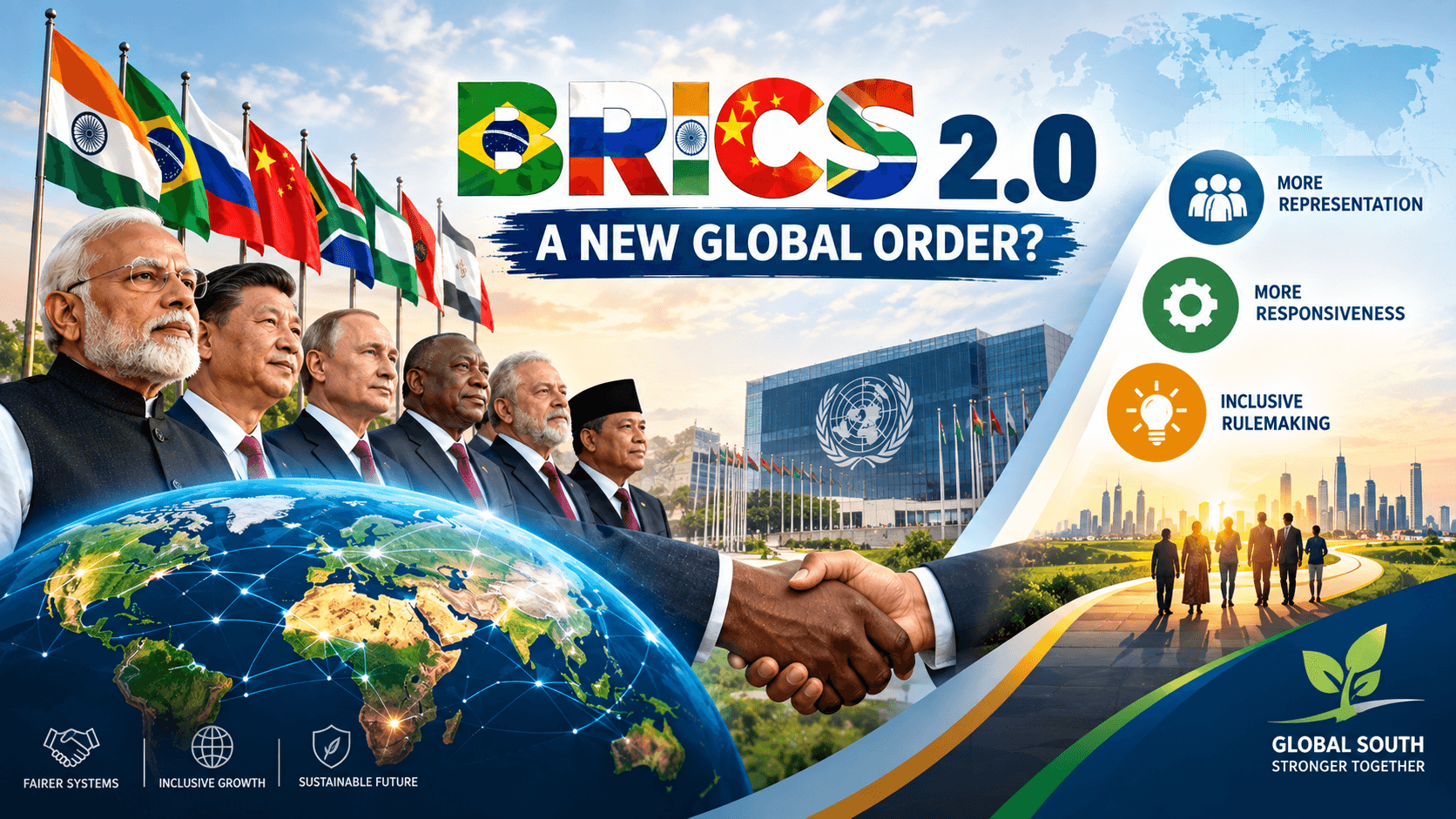
India's position: India is pushing for comprehensive reform of the UNSC. It opposes any idea of second-class permanent membership without veto, says if veto continues there should be veto parity, and is working with groupings like G4, L.69, and the Ezulwini Consensus to ensure greater representation for the Global South and Africa.
What is the UNSC veto power?
Origin: The word “veto” is not mentioned in the UN Charter itself, but the concept comes from Article 27(3). It says that decisions on non-procedural matters need at least nine votes, including the concurring votes of all five permanent members.
Who holds it?
The UNSC has 15 members, 5 permanent members (P5), China, France, Russia, the UK, and the USA, and 10 non-permanent members elected by the UNGA for two-year terms.
How does it work?
If any of the P5 casts a negative vote on a substantive resolution, the resolution fails, no matter how much support it has. However, if a P5 member abstains or is absent, it is not counted as a veto.
Arguments For and Against Abolishing the Veto
Arguments for Abolishing the Veto
| Undemocratic: | The veto gives absolute negative power to just five countries. Critics say it goes against the UN Charter’s own principle of “sovereign equality of all Members” and creates a legally codified hierarchy instead of democratic multilateralism. |
| Causes paralysis: | The veto often leads to deadlock in major crises. For example, between 2011 and 2023, Russia, often joined by China, vetoed over 15 draft resolutions on the Syrian Civil War, blocking aid and investigations into chemical weapons. Even the threat of a veto, called the “pocket veto," stops many resolutions from being tabled at all. |
| Shield against accountability: | The veto is used to protect the P5 or their allies from being held accountable, even under doctrines like Responsibility to Protect (R2P). For instance, the US has often vetoed resolutions critical of Israel on Gaza, while Russia has vetoed resolutions condemning its actions in Ukraine in 2014, 2022, and 2024. From 1945 to 2025, the veto was used 320 times on 264 drafts, led by the USSR/Russia (155) and the US (94). |
| Outdated structure: | The P5 reflects the world of 1945. It leaves out entire continents like Africa (highlighted in the Ezulwini Consensus) and Latin America and major economies like the G4 (India, Brazil, Germany, and Japan), which hurts the Council’s present-day legitimacy. France itself argues the veto should mean special responsibility to act during mass atrocities, not an unrestricted privilege. |
Arguments Against Abolishing the Veto
| Prevents collapse like the League of Nations: | The League of Nations failed because it required universal unanimity, and major powers simply left when decisions went against them. The veto acts as a “safety valve"; without it, big powers might quit the UN itself, risking a return to unchecked great-power conflict. |
| Legal impossibility—Article 108 paradox: | Under Article 108, any amendment to the Charter needs approval by two-thirds of the General Assembly, including all five permanent members. So the P5 can legally veto the abolition of their own veto. |
| Risk of more paralysis: | Groups like Uniting for Consensus (Coffee Club) argue that if veto is given to new permanent members, more countries can block action, which will only increase deadlock. |
Initiatives for Veto Reform
1. French-Mexican Initiative (2015): Launched by France and Mexico, it is a political declaration asking P5 members to voluntarily not use veto in cases of mass atrocities like genocide, crimes against humanity, and large-scale war crimes. It is backed by 128 states, including two P5 members, France and the UK.
2. Liechtenstein Initiative (UNGA Resolution 76/262, 2022): Also called the Veto Initiative, it requires the UN General Assembly to hold a formal meeting within 10 working days whenever a veto is cast in the UNSC. This does not overturn the veto but forces the vetoing P5 member to publicly explain and defend its action, adding transparency and political accountability.
3. ACT Code of Conduct: Made by the Accountability, Coherence, and Transparency (ACT) group, it urges all UNSC members, permanent and non-permanent, to pledge not to vote against credible draft resolutions that aim to prevent or stop mass atrocity crimes.
What is India’s position on UNSC veto reform?
Core stand: In the Inter-Governmental Negotiations (IGN), India opposes a two-tier system where some permanent members have a veto and others don’t. It argues there should be parity among permanent members; as long as the veto exists, it should be extended to new permanent members as well.
India also points out that even non-permanent members have an informal “effective veto” by blocking press statements and sanctions committee decisions, so reform has to be comprehensive.
The G4 compromise: To break the deadlock, India, along with the G4 (Brazil, Germany, and Japan), has proposed a 15-year moratorium; new permanent members will have the same responsibilities as current P5 but will voluntarily not use the veto for 15 years. After that, the UNGA will review the arrangement. This shows India’s flexibility.
Voice of the Global South and Africa:
Ezulwini Consensus: India supports AU’s demand for permanent African representation with veto rights, as long as veto continues.
L.69 Group: India works with the L.69 Group of developing countries to build wider support for comprehensive reform.
It has been coordinating G4 + L.69 to strengthen developing-country consensus.
Reformed Multilateralism: India links UNSC reform to its larger goal of making global institutions more representative, inclusive, and reflective of today’s realities. It is also seeking a non-permanent seat for 2028-29 to further strengthen its case for eventual permanent membership.
What Measures Can Be Taken to Reform the Veto System?
1. Push for normative self-restraint: Build diplomatic pressure to turn the French-Mexican Initiative into a widely accepted norm. This will raise the reputational cost of using a veto during verified humanitarian disasters.
2. Strengthen post-veto tools: Debates in the General Assembly triggered by the Liechtenstein Initiative should not end as just debates. They should be linked to concrete follow-ups, like independent commissions of inquiry or humanitarian corridors authorized under the “Uniting for Peace” resolution.
3. Compromise models for expansion: The UN needs to move from open-ended talks to text-based Inter-Governmental Negotiations (IGN). Models like giving G4 nations permanent membership with a long-term moratorium on veto use can balance representation with the Council’s ability to function.
4. Objective atrocity triggers: Independent bodies like the ICJ or the UN High Commissioner for Human Rights could be empowered to issue factual alerts on mass atrocities. Such alerts could automatically trigger voluntary veto-restraint protocols.
Conclusion
The UNSC veto was designed as a safety valve to keep great powers inside the UN, but over time it has become a tool for paralysis and for shielding allies from accountability. Complete abolition is legally and politically almost impossible because of Article 108, so the realistic path is regulation, not removal, through norms like the French Mexican Initiative, accountability tools like the Liechtenstein Initiative, and compromise models like the G4's veto moratorium. For India, UNSC reform is not just about a permanent seat. It is about making the Council more representative, effective, and legitimate, with proper voice for Africa and the Global South, so that it can act during humanitarian crises rather than being blocked by veto.