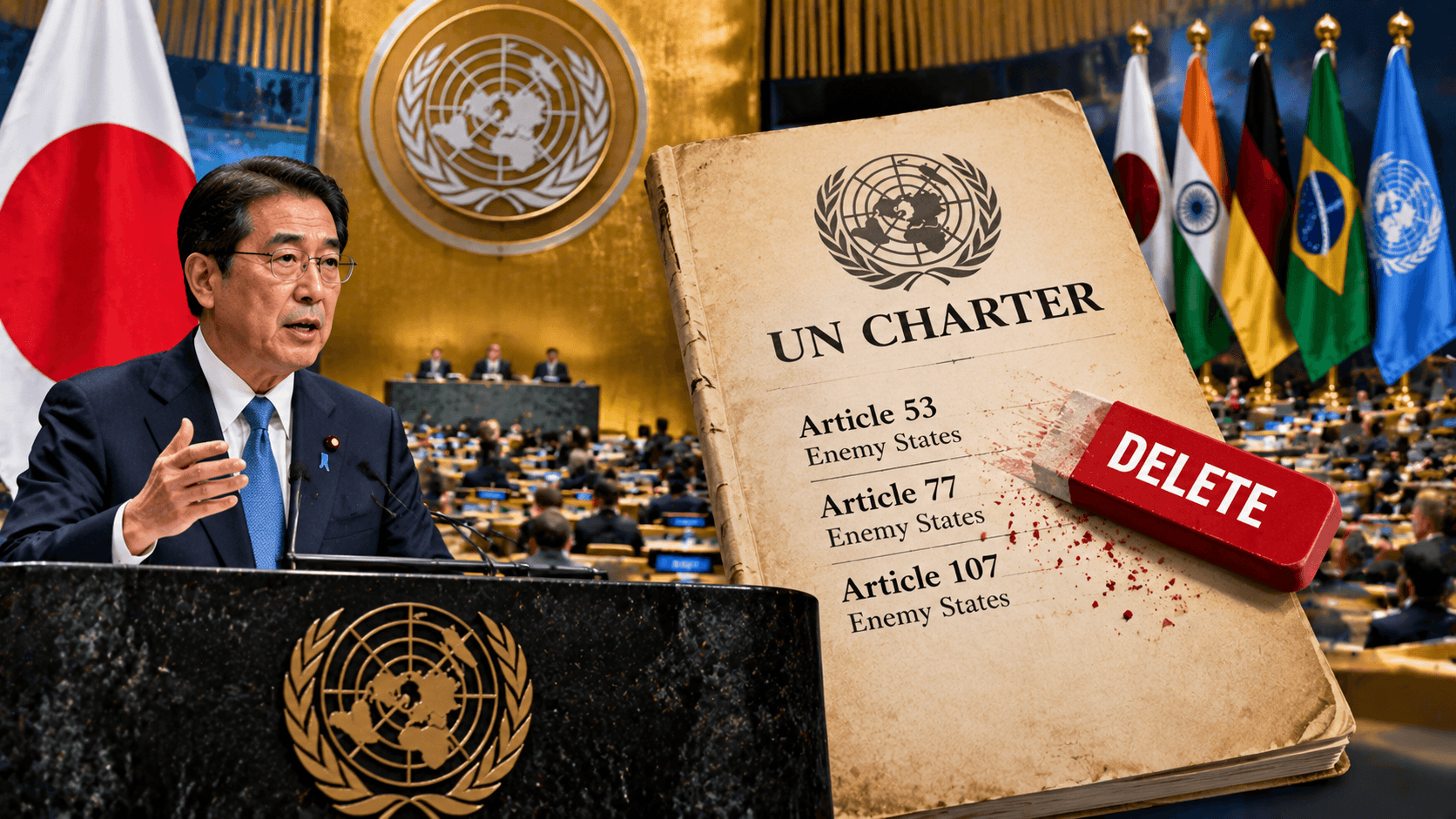
Japan Calls for UN Charter Reform
Why in News?
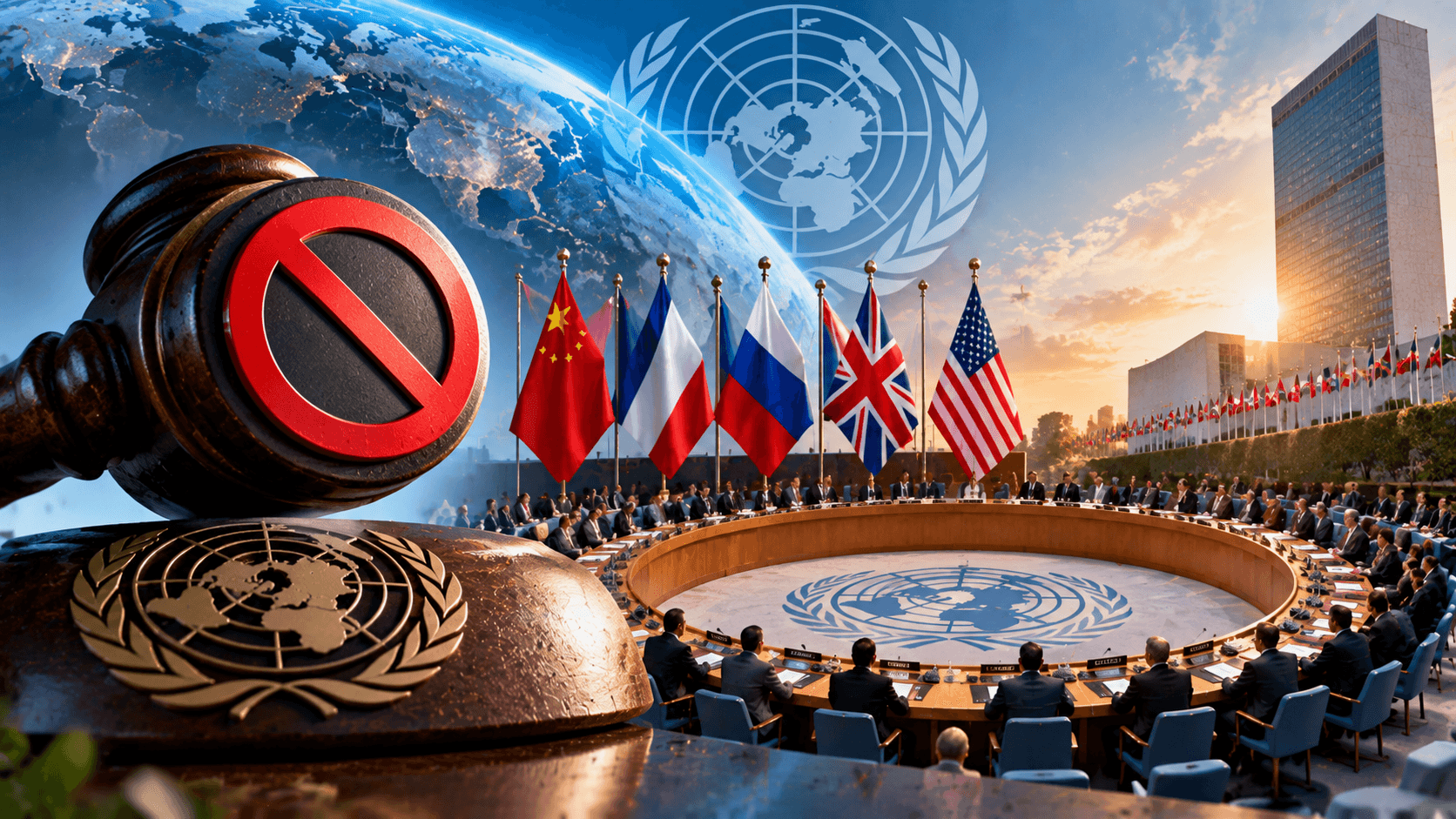
Japan's prime minister at the UN General Assembly has asked the UN to delete the "enemy state" clauses from the UN Charter.
Background: The UN Charter was made at the end of World War II and came into force in October 1945. At that time, the winning Allied Powers, such as the US, the UK, the Soviet Union, and China, wanted to make sure that the defeated Axis Powers, like Japan, Germany, and Italy, would not become militaristic or fascist again. So, they added some special provisions.
These are the enemy state clauses, such as Articles 53, 77, and 107. They are an exception to Article 2(4) of the Charter, which otherwise bans the use of force against any country. Under these clauses, Allied powers could take military action against enemy states without Security Council permission if they again became aggressive. Japan says these clauses are now 70-year-old relics, discriminatory, and should be removed, as Japan is a peaceful and responsible UN member today.
Key Articles of Enemy State Clauses
The term "enemy state" appears in 3 articles of the UN Charter:
1. Article 53: Allows regional groups to take military action against an "enemy state" without UNSC permission. Article 53(2) defines enemy state as any country that was an enemy of the UN Charter signatories during WWII.
2. Article 77: Talks about the UN Trusteeship System. It says territories taken away from enemy states after WWII can be brought under trusteeship.
3. Article 107: Protects and validates all actions taken by Allied Powers against Axis countries during and just after the war. Such actions cannot be challenged under the Charter.
Why Japan Says These Clauses Are Obsolete
Japan joined the UN in 1956 after post-war reconstruction and has since become a peaceful and responsible member.
- Japan argues: These clauses don't reflect today's reality. They are a WWII leftover. UNGA itself called them "obsolete" in 1995 and passed a resolution in 2005 supporting their deletion, but they were never formally removed from the text.
- Geopolitical misuse: Japan says China and Russia are now using these old clauses as a diplomatic tool to question Japan's higher defense spending and to challenge its claims on the Southern Kuril Islands (which Japan calls Northern Territories).
Why deletion is difficult:
- Amending the Charter under Article 108 is very tough: it needs a 2/3rd majority in the UNGA and ratification by 2/3rd of all members, including all 5 permanent members (P5) of the UNSC with veto power.
- P5 countries hesitate to open the Charter for changes because it could lead to bigger demands, like UNSC reforms and expansion, which Japan strongly supports.
Significance for India
Japan's demand to remove old clauses supports India's long-time call for UN reform that matches today's world, not 1945.
As part of the G4, such as India, Japan, Germany, and Brazil, India wants a more representative, legitimate, and effective UN system, including expansion of the permanent membership of the Security Council.
If WWII-era clauses can be called obsolete, then the structure that still reflects WWII power balance also needs to change; this strengthens India's case for a permanent seat at the UNSC.
Conclusion
The "enemy state" clauses are a reminder that the UN Charter still carries the shadow of 1945. While UNGA declared them obsolete long back, their continued presence in the text allows them to be misused for geopolitical pressure. Japan's push is not just about symbolism; it is about making the UN reflect the present, where former enemy states are now pillars of peace, funding, and multilateralism. For India and the G4, this debate reinforces the larger demand: if the Charter can be updated to delete old biases, it must also be updated to include new realities, a reformed and more representative Security Council for the 21st century.