Sukhna Lake Gets Ramsar Tag
Why in News?
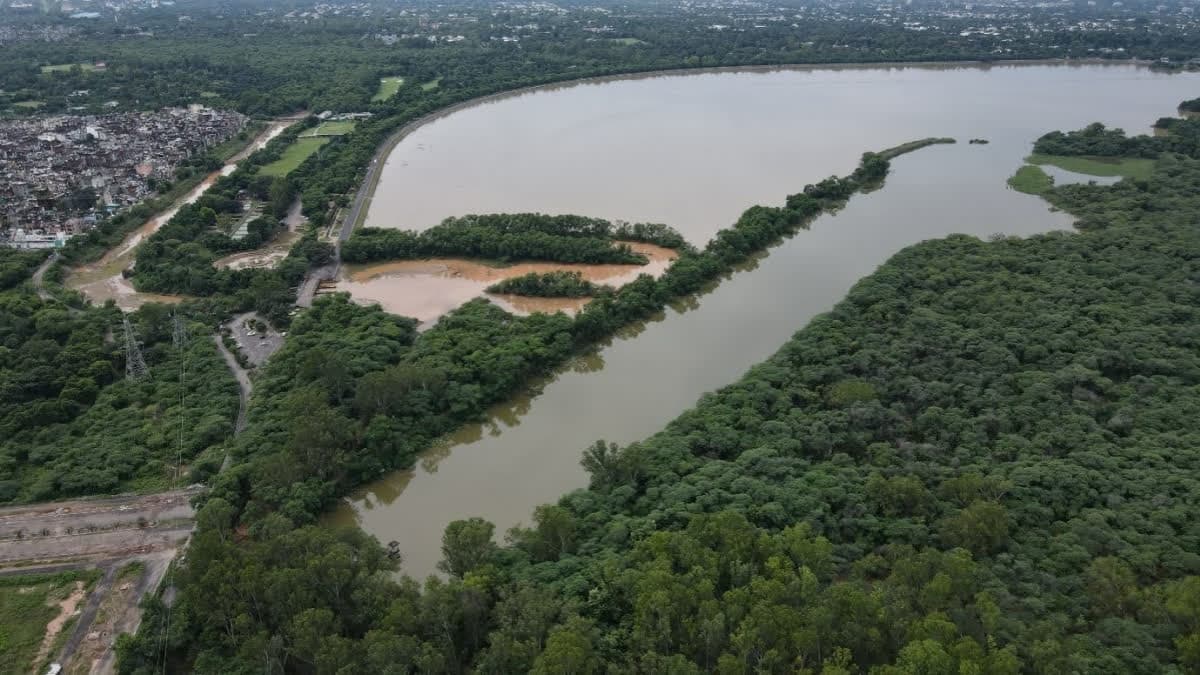
Chandigarh’s famous Sukhna Lake has achieved an important milestone in environmental conservation. The Sukhna Wetland has been added to the Ramsar List of Wetlands of International Importance, bringing international recognition to its ecological value and biodiversity.
Now, India's total number of Ramsar sites has gone up to 103, after Sukhna Wetland (Chandigarh) and Sauj Jheel (Uttar Pradesh) were designated as Wetlands of International Importance under the Ramsar Convention.
What are the key facts about the newly added Ramsar sites?
Sukhna Wetland (Chandigarh)
Location: Located at the foothills of the Outer Himalayas (Shivalik Hills) in Chandigarh, it is a peri-urban reservoir that helps regulate water and sediment flow from its surrounding catchment area.
Ecological significance: It has diverse habitats like open water, littoral vegetation, scrub, and forests. It serves as an important feeding, breeding, roosting, and wintering ground for migratory waterbirds along the Central Asian Flyway.
Key species: Includes the vulnerable common pochard, endangered pallas's fish eagle, and endangered black pond turtle.
Conservation challenges: Sedimentation, soil erosion, and invasive species threaten its ecological health. This calls for catchment conservation and invasive species management.
Sauj Jheel (Uttar Pradesh)
Location: A shallow lake surrounded by agricultural fields in the Ganga River floodplain, located near Saman Bird Sanctuary, which is also a Ramsar Site.
Ecological significance: It is part of an interconnected wetland network and regularly supports over 30,000 waterbirds, providing important nesting, breeding, and feeding habitats.
Key species: Includes the Vulnerable Sarus Crane and Vulnerable Greater Spotted Eagle, along with wetland vegetation like Sacred Lotus and Wild Sugarcane.
Conservation status: Recognized as an Important Bird and Biodiversity Area (IBA) by BirdLife International.
Conservation measures: Proposed measures include seasonal restrictions on fishing, limits on fine-mesh fishing nets, and regulated cattle access.
Ramsar sites in Bihar
Bihar has six Ramsar Sites as of 2026, designated as wetlands of international importance under the Ramsar Convention.
Complete List of Ramsar Sites in Bihar (2026)
| S. No. | Wetland Name | District | Area (hectares) | Year Declared |
|---|---|---|---|---|
| 1 | Kabartal Wetland (Kanwar Jheel) | Begusarai | 2,620 | 2020 |
| 2 | Nagi Bird Sanctuary | Jamui | 205.8 | 2024 |
| 3 | Nakti Bird Sanctuary | Jamui | 332.6 | 2024 |
| 4 | Gokul Jalashay | Buxar | 448 | 2025 |
| 5 | Udaipur Jheel | West Champaran | 319 | 2025 |
| 6 | Gogabil Lake | Katihar | 86.6 | 2025 |
What Is the Ramsar Convention?
The Ramsar Convention is an international environmental treaty adopted in 1971 in Ramsar, Iran. It provides a framework for conserving wetlands and promoting their wise and sustainable use.
India became a party to the convention on 1 February 1982.
Wetlands recognized under this convention are known as Ramsar sites or Wetlands of International Importance. The designation recognizes their ecological significance and encourages countries to protect these valuable ecosystems.
What Are the Criteria for Ramsar Site Recognition?
A wetland can qualify for Ramsar designation if it meets at least one of the nine criteria laid down under the convention.
Unique wetland ecosystems: A wetland may qualify if it is a rare or unique example of a natural or near-natural wetland type within a particular biogeographic region.
Threatened species: Wetlands that support vulnerable, endangered, or critically endangered species can qualify for international recognition.
Biodiversity conservation: A wetland can qualify if it supports significant biological diversity or species important for maintaining a particular biogeographic region.
Critical life-cycle stages: Wetlands that provide essential habitats during breeding, migration, or other critical stages in the life cycles of species may qualify.
Waterbird population: A wetland may qualify if it regularly supports at least 20,000 waterbirds.
One percent population criterion: A wetland can also qualify if it regularly supports at least 1% of the population of a particular waterbird species or subspecies.
Fish diversity: Wetlands that support significant indigenous fish diversity or provide important spawning, nursery, or migration habitats can qualify.
Other wetland-dependent species: Additional criteria recognize wetlands that support important populations of other wetland-dependent animals.
Conclusion
Sukhna Wetland’s inclusion in the Ramsar List is a proud moment for Chandigarh and an important step for wetland conservation in India. Its value lies not only in its scenic beauty but also in the wildlife it supports, its role in bird migration, and its contribution to urban biodiversity. The real success of Ramsar recognition will depend on protecting Sukhna Lake for future generations. International recognition can raise awareness, but sustained conservation efforts will determine the wetland’s long-term future.
Question asked in IAS Pre based on wetlands:
Consider the following pairs:
Wetland/Lake Location
- Hokera Wetland Punjab
- Renuka Wetland Himachal Pradesh
- Rudrasagar Lake Tripura
- Sasthamkotta Lake Tamil Nadu
How many pairs given above are correctly matched? (a) Only one pair (b) Only two pairs (c) Only three pairs (d) All four pairs (IAS Pre 2022)
Ans: b ( Hokera - J & K; Sasthamkotta - Keralam)
Reference: