Start-up Village Entrepreneurship Programme
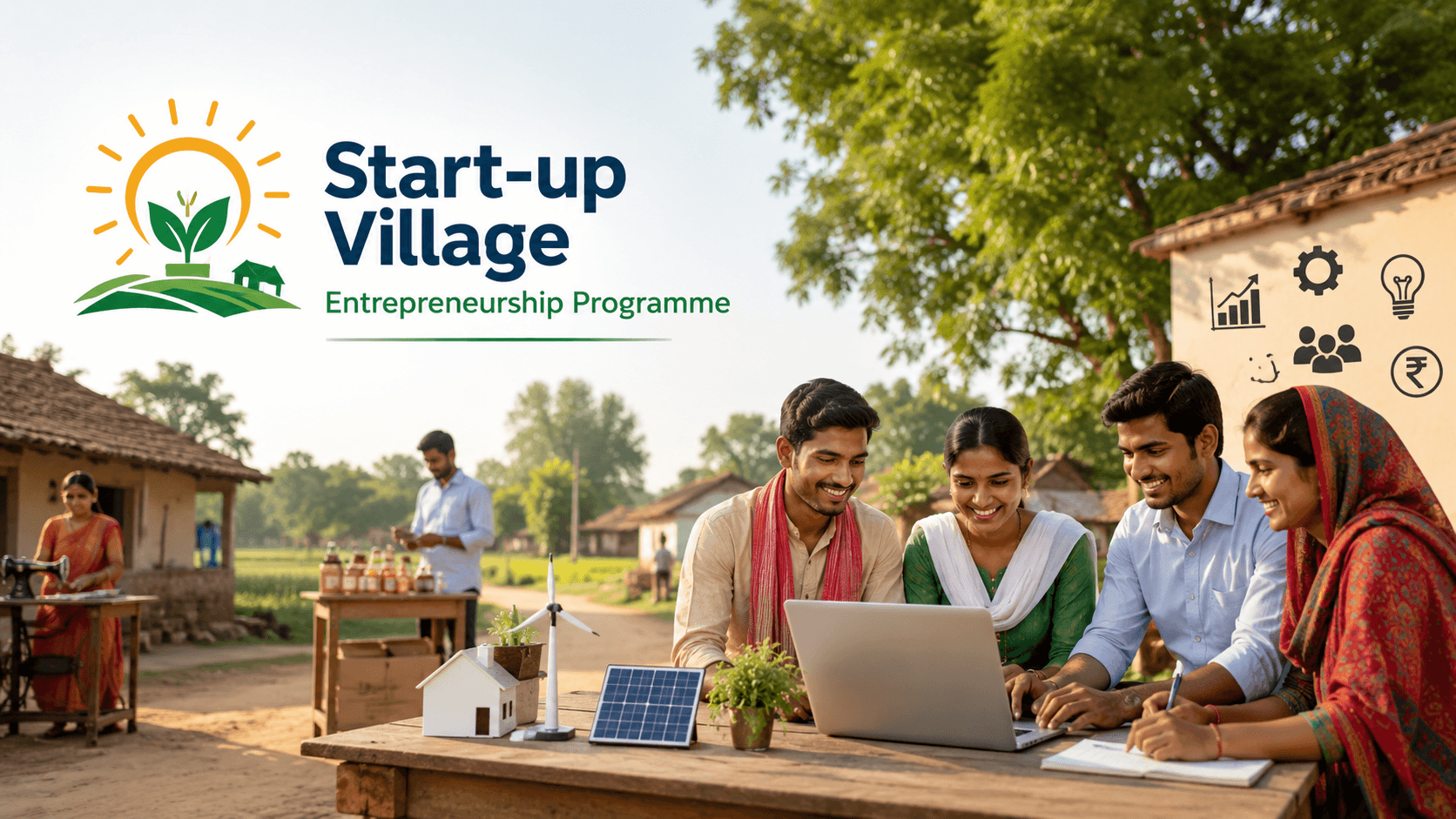
As of June 2026, The Start-up Village Entrepreneurship Programme has supported 4.32 lakh rural enterprises across the country. It provides training and financial support to set up non-farm enterprises in rural areas.
It is worth pondering that While India is known for big tech startups in cities like Bengaluru, SVEP is quietly creating a much larger “startup ecosystem” in our villages.
SVEP is a sub-scheme of Deendayal Antyodaya Yojana – National Rural Livelihoods Mission (DAY-NRLM).It supports rural non-farm enterprises through training, mentoring, and financial assistance.
Deendayal Antyodaya Yojana – National Rural Livelihoods Mission
The Deendayal Antyodaya Yojana–National Rural Livelihoods Mission (DAY-NRLM) is one of the world’s largest livelihood initiatives. It mobilizes rural poor households into Self-Help Groups (SHGs), predominantly women. The focus is on providing them with sustainable livelihoods, access to financial services, and skill development. As of mid-June 2026, more than 10.29 crore rural households have been mobilized into SHGs under DAY-NRLM.
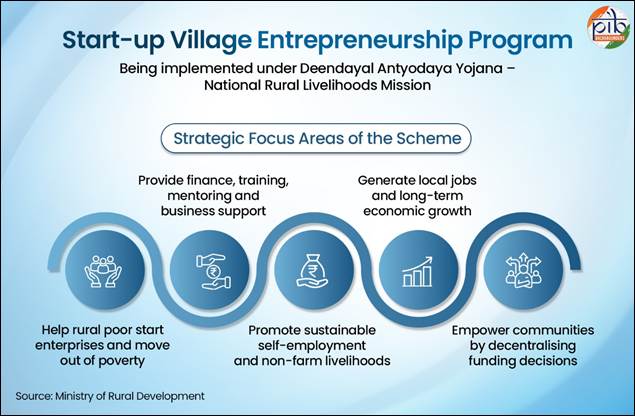
About Start-Up Village Entrepreneurship Programme
Launched in 2016, SVEP is a sub-scheme of the Deendayal Antyodaya Yojana – National Rural Livelihoods Mission (DAY-NRLM).
The programme supports Self Help Groups (SHGs) and their family members in establishing small enterprises in the non-farm sector.
It provides financial assistance, institutional support, business management training, soft skill development, and business development services. This promotes sustainable livelihoods and self-employment opportunities in rural areas.
It supports non-farm enterprises through training, finance, mentoring, and community-led institutional support.
The programme has strongly focused on social inclusion and equitable access to entrepreneurship opportunities. Around 86% of entrepreneurs belong to SC, ST, Minority, and OBC communities.
Through SHGs, CRP-EPs, bank linkages, and convergence with schemes like Pradhan Mantri Mudra Yojana, SVEP has expanded its outreach. SVEP has emerged as an effective grassroots model for poverty reduction, local employment generation, and rural economic development.
Features of Start-up Village Entrepreneurship Programme (SVEP)
The programme supports Self Help Groups (SHGs) and their family members to set up small enterprises in the non-farm sector.
Key Support Provided: Provides funding, credit linkages, and institutional backing. Capacity Building: Offers business management training, soft skill development, and business development services.
Convergence: Facilitates linkages with banks and convergence with other government schemes.
Implementation Structure Implemented through State Rural Livelihoods Missions (SRLMs).
Block Level: Block Resource Centres – Enterprise Promotion (BRC-EPs) coordinate implementation at the block level.
Community Cadre: Trained Community Resource Persons – Enterprise Promotion (CRP-EPs) provide technical support to BRC-EPs for enterprise promotion.
Core Principles: Community-Led Approach: Key decisions on funding and supporting enterprises are taken at the community level.
Inclusive Focus: Follows an all-inclusive approach with special emphasis on women, marginalized communities, and individuals with low educational attainment.
Enterprise-Led Rural Transformation in India
India has the third-largest start-up ecosystem in the world. It has thrived with the support of favourable government policies and has proven highly beneficial for the economy's growth. However, most of the Indian start-up ecosystems are based in urban areas.
Hence, the government has launched several initiatives to promote entrepreneurship and innovation in rural areas. One of the key initiatives is the Start-up Village Entrepreneurship Programme (SVEP).
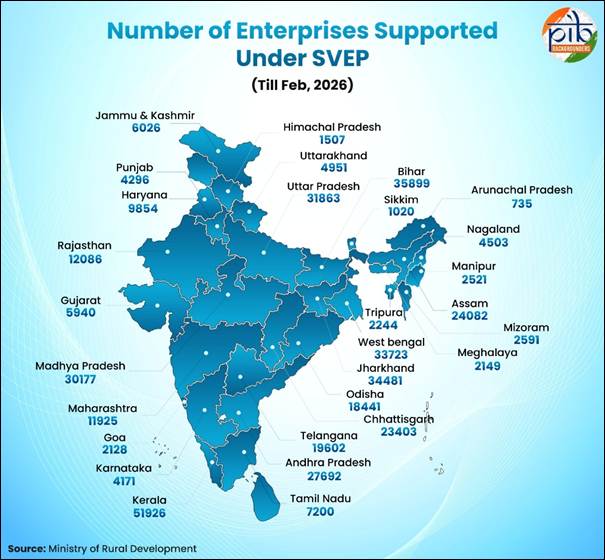
Scaling Rural Entrepreneurship Across India
Since its inception till June 15, 2026, the programme has supported over 4.32 lakh rural enterprises. Assam, Bihar, Jharkhand, West Bengal and Madhya Pradesh have recorded the highest number of enterprises supported under the programme.
To support the continued expansion of SVEP, the government has released a cumulative central share of ₹942.09 crore up to February 2026. This is nearly 738% higher than the cumulative ₹112.39 crore released between the programme's launch in 2016 and January 2018.
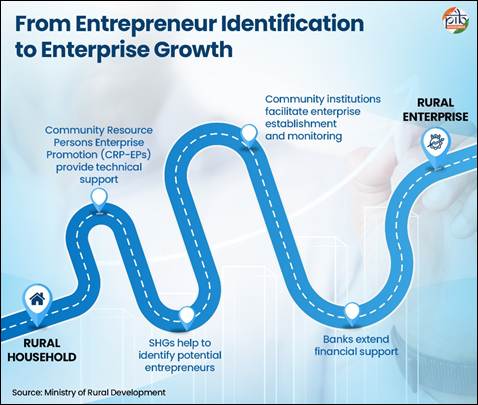
Roadmap for Nurturing and Scaling Rural Enterprises
SVEP is implemented through the State Rural Livelihoods Missions (SRLMs), with a provision of ₹6.50 crore per block and an average investment of ₹27,083 per enterprise.
At the block level, Block Resource Centres–Enterprise Promotion (BRC-EPs) coordinate programme implementation.
Trained Community Resource Persons–Enterprise Promotion (CRP-EPs) provide technical assistance to the Block Resource Centres on enterprise promotion.
Banks extend financial support to eligible entrepreneurs. Self-Help Groups (SHGs) and their federations help identify potential entrepreneurs. Community institutions facilitate enterprise establishment and provide handholding support.
CRP-EPs are selected jointly by SRLMs and Project Implementing Agencies through testing, training, and certification. Preference is given to local residents with basic business and mathematical skills.
At least 90% of CRP-EPs are selected from SHG households, with women constituting a minimum of 60% of the cadre. Each CRP-EP provides mentoring, training, and credit facilitation support to up to 50 enterprises.
SVEP is monitored at the State and Central levels through quarterly reviews and periodic assessments. Further, there is a centralized MIS system for tracking enterprise performance, fund utilisation, and programme progress.
Impact of SVEP on Rural Livelihoods and Entrepreneurship
The Quality Council of India (QCI) conducted a mid-term evaluation of the SVEP for the Ministry of Rural Development, with major field assessments undertaken in 2019. The review assessed the programme's impact on rural enterprises, livelihoods, and social inclusion.
From Welfare to Enterprise-Led Development
This further leads to higher incomes, increased savings, and improved household well-being. More importantly, it has shown that entrepreneurial talent exists in every village and can flourish when provided with the right ecosystem.
Conclusion
As India advances towards becoming a global start-up hub, programmes such as SVEP are laying the foundation for a vibrant rural start-up ecosystem. It is generating employment, strengthen local economies, and unlock new opportunities for millions of rural families. Thus, we can say that this is contributing to the vision of a self-reliant and developed India.
The Start-up Village Entrepreneurship Programme (SVEP) falls primarily under General Studies Paper-II (Section-I: Indian Polity, Indian Economy, and Geography of Bihar) and General Studies Paper-I (Section-II: Current Affairs) as well.
Source:-https://www.pib.gov.in/PressReleasePage.aspx?PRID=2289268®=48&lang=1
What is the Start-up Village Entrepreneurship Programme (SVEP)?
SVEP is a sub-scheme of the Deendayal Antyodaya Yojana - National Rural Livelihoods Mission (DAY-NRLM) that provides training, mentoring, and financial support to Self Help Groups and their members to set up non-farm enterprises in rural areas.
How many rural enterprises has SVEP supported and as of when?
Since its inception until 15 June 2026, SVEP has supported over 4.32 lakh rural enterprises across the country.
When was SVEP launched?
SVEP was launched in 2016.
What is DAY-NRLM and how large is it?
DAY-NRLM is one of the world's largest livelihood initiatives, mobilizing rural poor households, predominantly women, into Self-Help Groups; as of mid-June 2026, more than 10.29 crore rural households have been mobilized under it.
What is the social inclusion profile of SVEP entrepreneurs?
Around 86% of entrepreneurs under SVEP belong to SC, ST, Minority, and OBC communities.
Which states have recorded the highest number of enterprises supported under SVEP?
Assam, Bihar, Jharkhand, West Bengal, and Madhya Pradesh have recorded the highest number of enterprises supported under the programme.
How has central funding for SVEP grown over time?
The government released a cumulative central share of ₹942.09 crore up to February 2026, nearly 738% higher than the ₹112.39 crore released between the programme's launch in 2016 and January 2018.
What is the financial provision for SVEP implementation?
SVEP is implemented through State Rural Livelihoods Missions with a provision of ₹6.50 crore per block and an average investment of ₹27,083 per enterprise.
Who are CRP-EPs and what role do they play in SVEP?
Community Resource Persons-Enterprise Promotion (CRP-EPs) are selected jointly by SRLMs and implementing agencies through testing, training, and certification; at least 90% come from SHG households, women make up at least 60% of the cadre, and each mentors up to 50 enterprises.
Which GS papers cover the SVEP topic for BPSC?
SVEP falls primarily under General Studies Paper II (Indian Polity, Indian Economy, and Geography of Bihar) and General Studies Paper I (Current Affairs), consistent with its Economy category.