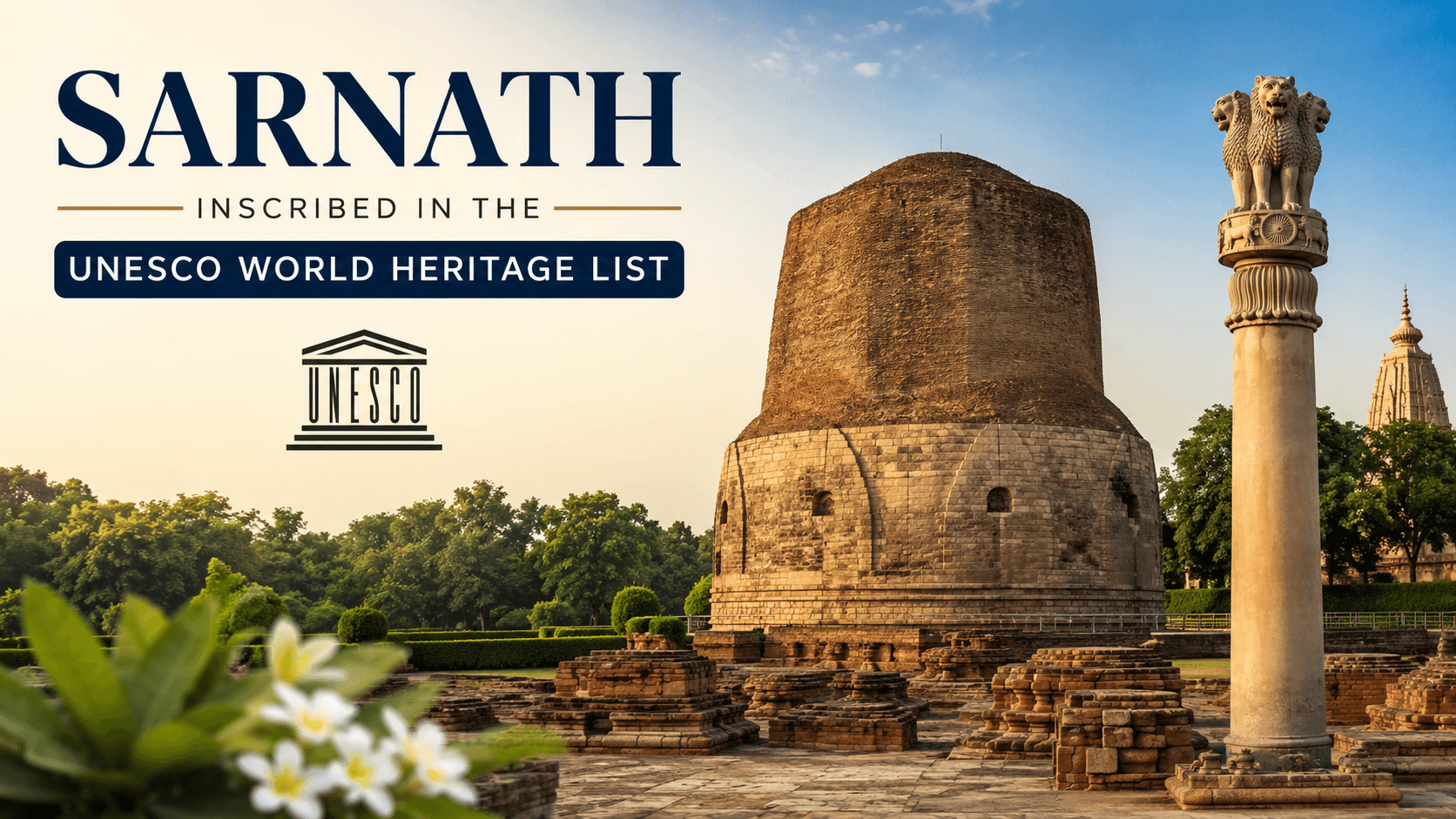
“Sarnath” Inscribed in the UNESCO World Heritage List
In a remarkable decision taken at the 48th Session of the World Heritage Committee being held at Busan, South Korea.
India’s official nomination for 2025-26 cycle, “Ancient Buddhist Site of Sarnath” got inscribed on the UNESCO World Heritage List, becoming India’s 45th property to receive this recognition.
The ancient site of Sarnath was included in the Tentative List of World Heritage in 1998. The proposal to include the site in the list of World Heritage was sent to the consideration of World Heritage Committee in Jan 2025.
After a rigorous eighteen-month long process involving several technical meetings with the advisory bodies and visit of ICOMOS’s mission to review the site, this historic decision was taken by the members of the World Heritage Committee at Busan, South Korea.
Last year, ‘the Maratha Military Landscapes of India’ were inscribed in the World Heritage List at the 47th Session of the World Heritage Committee held at UNESCO Headquarters at Paris.
With 45 sites in the List, India ranks 6th globally and 2nd in Asia Pacific Region for the greatest number of World Heritage Sites. 196 nations have ratified the World Heritage Convention, 1972.
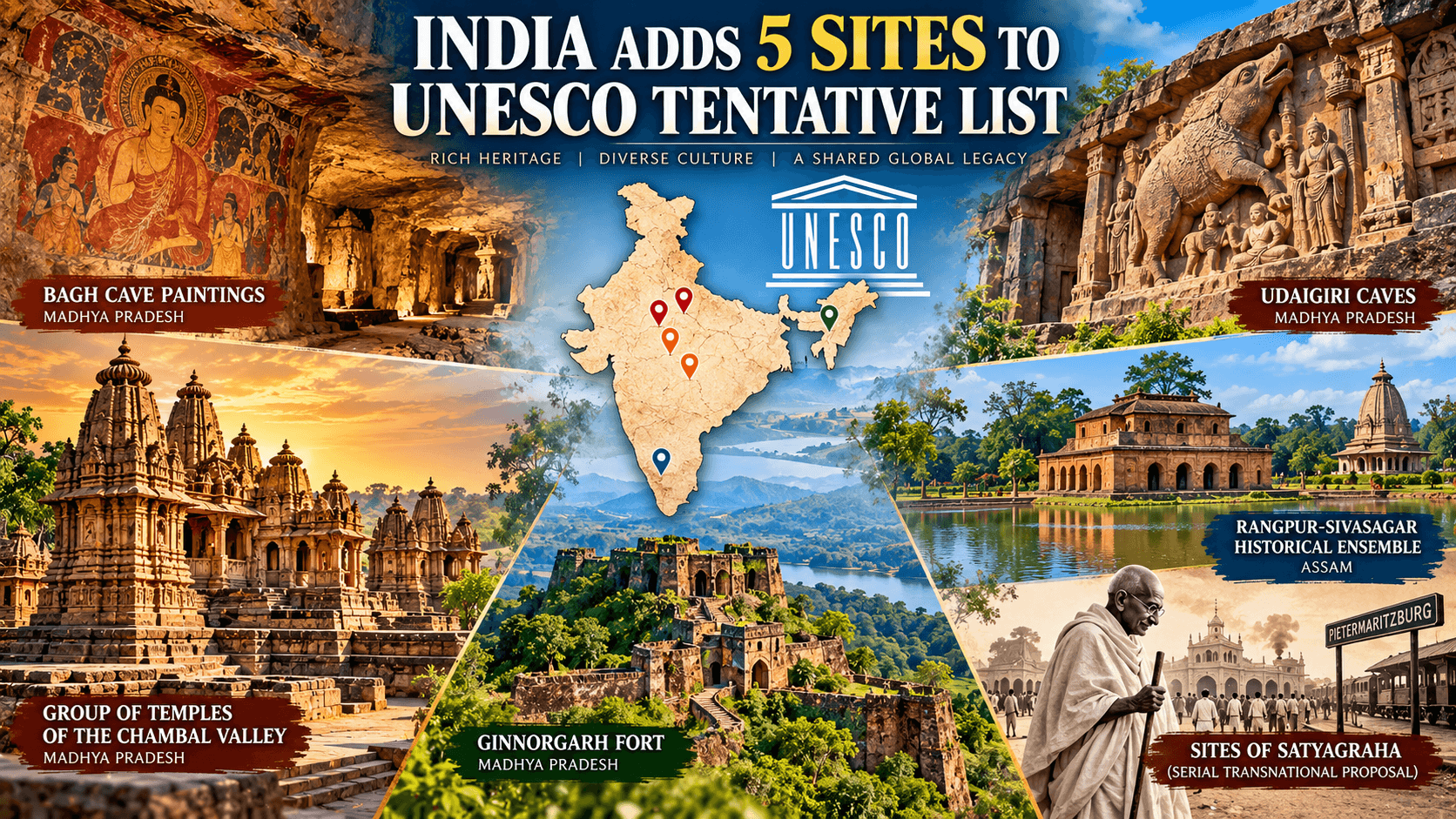
India also has 69 sites in the Tentative List of the World Heritage, which is a mandatory threshold for any site to be considered as a World Heritage property in future.
Every year, each State Party may propose just one site for consideration of the World Heritage Committee for inscription to the World Heritage List.
On behalf of the Government of India, Archaeological Survey of India is the nodal agency of all the World Heritage related matters in the country.
Key Facts Related to Sarnath
Location: Sarnath is located within Varanasi in Uttar Pradesh. It is one of the most prominent places for Buddhists. This is where Gautama Buddha gave his first sermon after becoming enlightened. This sermon is called Dhammachakkappavattana.
Historical and Religious Significance:
Old Names: Sarnath was also called Rishipatana, Ishipatana and Mrigadaya. The name "Sarnath" comes from Saranganatha, which means "Lord of the Deer".
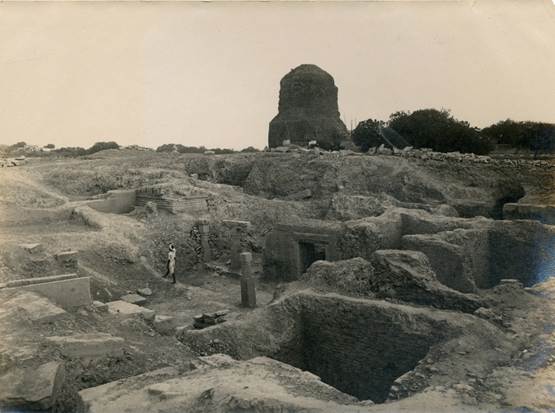
Having seen decline in the 12th century CE and subsequent destruction, it fell into obscurity until its re-discovery in the 18th century.
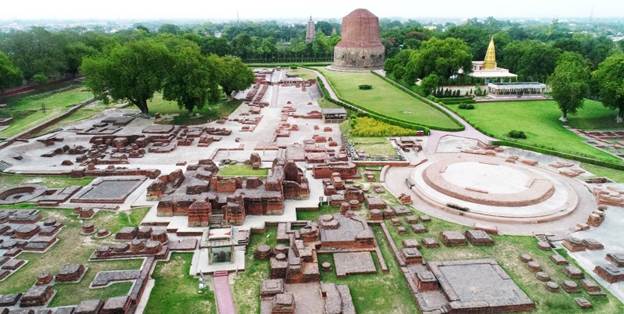
The site comprises an ensemble of ancient monuments constructed from the pre-Mauryan period (5th-4th centuries BCE to 3rd century BCE) up until the destruction of Sarnath in the 12th century CE (with some later additions).
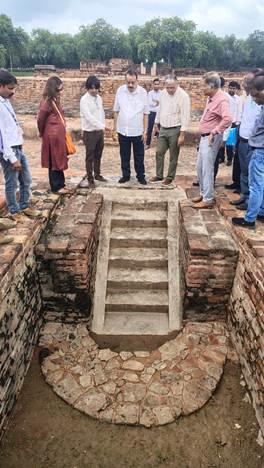
Sarnath has been one of the most extensively excavated sites by the Archaeological Survey of India which resulted in a stratified settlement spread across 16 centuries (5th-4th centuries BCE to 12th century CE).
After the declaration of Sarnath as the World Heritage Property, three of the four most significant Buddhist Pilgrim sites; i.e. Lumbini (Nepal), Mahabodhi Temple, Bodhgaya (Bihar) and now Sarnath (Uttar Pradesh) are now included in the World Heritage, along with several other important Buddhist sites such as Sanchi, Nalanda, Ajanta (all three in India), Anuradhapur (Sri Lanka) Paharpur (Bangladesh), Taxila and Takht-i-Bahi (both in present day Pakistan), etc.
One of 4 Holy Places: Sarnath is one of the 4 main pilgrimage sites in Buddhism.
Lumbini - Birth of Buddha, Bodh Gaya - Enlightenment of Buddha
Sarnath - First sermon of Buddha – (where the Buddha visited in the 6th century BCE and delivered his first sermon known as the “Turning of the Wheel of the Law” (Dharmachakra pravartana) . This event marked the inception of the Buddhist sangha and the establishment of the principles of the Noble Eightfold Path.
Kushinagar - Death of Buddha , After Buddha died, his ashes were kept in stupas at these 4 places to remember the big events of his life.
Architecture: Sarnath shows buildings from many time periods - Mauryan, Kushan, Gupta, and Gahadavala. The whole site has 2 main groups of monuments:
Group A:
Chaukhandi Stupa: Built around the 5th century AD to remember Lord Buddha. It is a tall brick stupa. Later in 1588, Govardhan, son of Raja Todarmal, added an octagonal tower on top to remember Mughal emperor Humayun’s visit.
Group B:
Dhamek Stupa: Built around 500 CE. It is believed to be the exact place where Buddha gave his first sermon.
Dharmarajika Stupa: Built by Emperor Ashoka in the 3rd century BCE. It was made to keep Buddha’s holy relics.
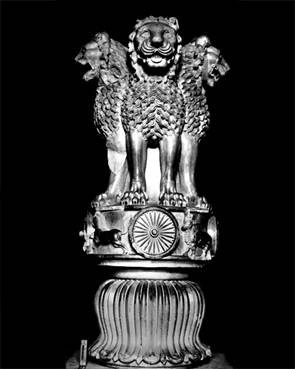
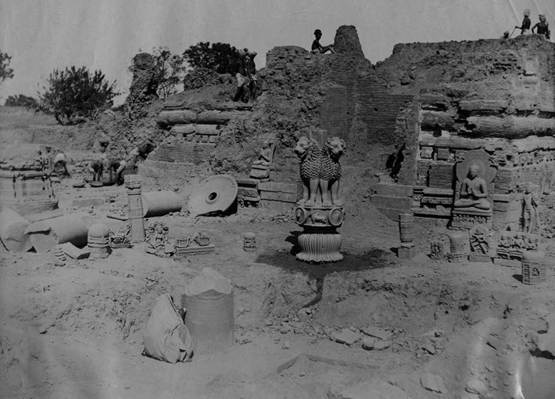
Ashokan Pillar: This pillar has Ashoka’s message written on it. It was once topped with the Lion Capital. Today, that Lion Capital is India’s National Emblem. There are also many old monasteries, temples, and small stupas here. They were built between the 3rd century BCE to the 12th century CE.
Sarnath as a UNESCO World Heritage Property
The “Ancient Buddhist Site of Sarnath” is nominated under criteria (iii) and (vi), recognizing enduring spiritual significance of Sarnath Cr. (iii), one of the four principal destinations of Buddhist pilgrimage, as demonstrated by the large number of religious buildings and other monuments that were built and rebuilt on-site during the many centuries of its existence and through Cr.(vi) direct and tangible way to the events in the life of the Buddha that are of outstanding significance to the Buddhist community – his first sermon and meeting of his first disciples.
The importance of these events and their meaning is carried by the numerous constructions erected at Sarnath over the centuries, which are a response to the message of the Buddha, his teachings, and the concept of Triratna.
The purpose of including these heritage sites in UNESCO’s list is to preserve and promote shared heritage based on OUVs (Outstanding Universal Values) found in cultural, natural as well as mixed properties across 196 countries.
On its part, India became a member of the coveted World Heritage Committee from 2021-25 and also hosted for the first time the World Heritage Committee Meeting in July 2024 at New Delhi.
This global recognition is a testimony to New India’s relentless pursuit of highlighting Bharat’s heritage on the world forum. This recognition underscores the conservation and management efforts of the Archaeological Survey of India (ASI) in preserving these historic treasures.
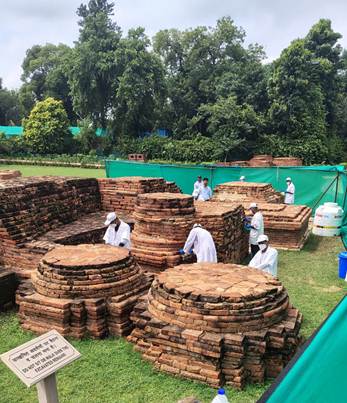
For over 150 years, the Archaeological Survey of India has been excavating and conserving the Ancient Buddhist Site of Sarnath, leading to the discovery and identification of Sarnath with the place where Shakyamuni Buddha gave his first Sermon.
The famous Mauryan Lion Pillar which later became the National Emblem of India and the Dharkachakrapravartan Buddha from the Classic Gupta Art were found from the excavations which are presently displayed at the India's earliest site Museum which was established in 1904.
About UNESCO World Heritage Sites :
UNESCO World Heritage Sites are places of outstanding cultural or natural importance. They are officially recognized under the World Heritage Convention, 1972 because they have value for all of humanity.
India ratified the Convention in 1977. Today, 196 countries including India are part of this global commitment.World Heritage Convention, 1972:
Under this Convention, each member country can nominate only one site per year to be added to the World Heritage List.
At present, India has the 6th largest number of World Heritage Sites in the world and ranks 2nd in the Asia-Pacific region. India also has 62 sites on its Tentative List.Nodal Agency:
The Archaeological Survey of India (ASI) is the nodal agency responsible for all World Heritage matters in India.
About Archaeological Survey of India (ASI)
The Archaeological Survey of India, under the Ministry of Culture, is the top organization for archaeological research and for protecting the cultural heritage of the country
It manages more than 3,650 ancient monuments, archaeological sites, and remains of national importance. Its main activities include conducting surveys of historical remains, exploration and excavation of archaeological sites, and the conservation and maintenance of protected monuments.
ASI was established in 1861 by Alexander Cunningham, who was the first Director-General of ASI. He is also called the “Father of Indian Archaeology”.
Diplomatic significance
World Heritage status would reinforce India's identity as the birthplace of Buddhism and enhance cultural diplomacy with nations such as Japan, Thailand, Sri Lanka, Myanmar, Cambodia, Vietnam, South Korea, Mongolia, etc.
This recognition would further support India's efforts to promote Buddhist heritage as a bridge for international engagement and would also showcase India's expertise in heritage conservation and preparedness in nomination process.
This topic bridges several key areas of the General Studies (GS) Paper I and II: History of Bihar and Indian Culture, Art and Architecture, Current Events of National and International Importance and Geography and Environment as well.
Source :- https://www.pib.gov.in/PressReleasePage.aspx?PRID=2289399®=48&lang=1
When and where was Sarnath inscribed as a UNESCO World Heritage Site?
It was inscribed at the 48th Session of the World Heritage Committee held at Busan, South Korea, becoming India's 45th property on the UNESCO World Heritage List.
What is the religious significance of Sarnath?
Sarnath is where Gautama Buddha gave his first sermon after becoming enlightened, an event known as the Dhammachakkappavattana or Turning of the Wheel of the Law.
What are the old names of Sarnath and the origin of its current name?
Sarnath was also called Rishipatana, Ishipatana, and Mrigadaya; the name Sarnath comes from Saranganatha, meaning "Lord of the Deer."
What are the four principal pilgrimage sites of Buddhism?
They are Lumbini (birth of Buddha), Bodh Gaya (enlightenment), Sarnath (first sermon), and Kushinagar (death of Buddha).
What are the key monuments found at Sarnath?
Key monuments include the Chaukhandi Stupa, the Dhamek Stupa (believed to mark the exact spot of Buddha's first sermon), the Dharmarajika Stupa built by Emperor Ashoka, and the Ashokan Pillar whose Lion Capital became India's National Emblem.
Under which UNESCO criteria was Sarnath nominated?
It was nominated under criteria (iii), recognizing its status as a principal Buddhist pilgrimage destination, and criteria (vi), for its direct link to significant events in the Buddha's life.
Where does India rank globally in the number of World Heritage Sites?
With 45 sites on the list, India ranks 6th globally and 2nd in the Asia-Pacific region for the greatest number of World Heritage Sites.
Which agency is India's nodal body for World Heritage matters and monument conservation?
The Archaeological Survey of India (ASI), established in 1861 by Alexander Cunningham (the first Director-General, called the "Father of Indian Archaeology"), is the nodal agency for all World Heritage related matters.
Which Indian site was inscribed on the World Heritage List the year before Sarnath?
The Maratha Military Landscapes of India were inscribed at the 47th Session of the World Heritage Committee held at UNESCO Headquarters in Paris.
Which GS papers cover this topic for BPSC/UPSC?
This topic bridges General Studies Paper I and II, covering History of Bihar and Indian Culture, Art and Architecture, Current Events of National and International Importance, and Geography and Environment.