Right to Vote: Fundamental or Statutory?
Why in News?
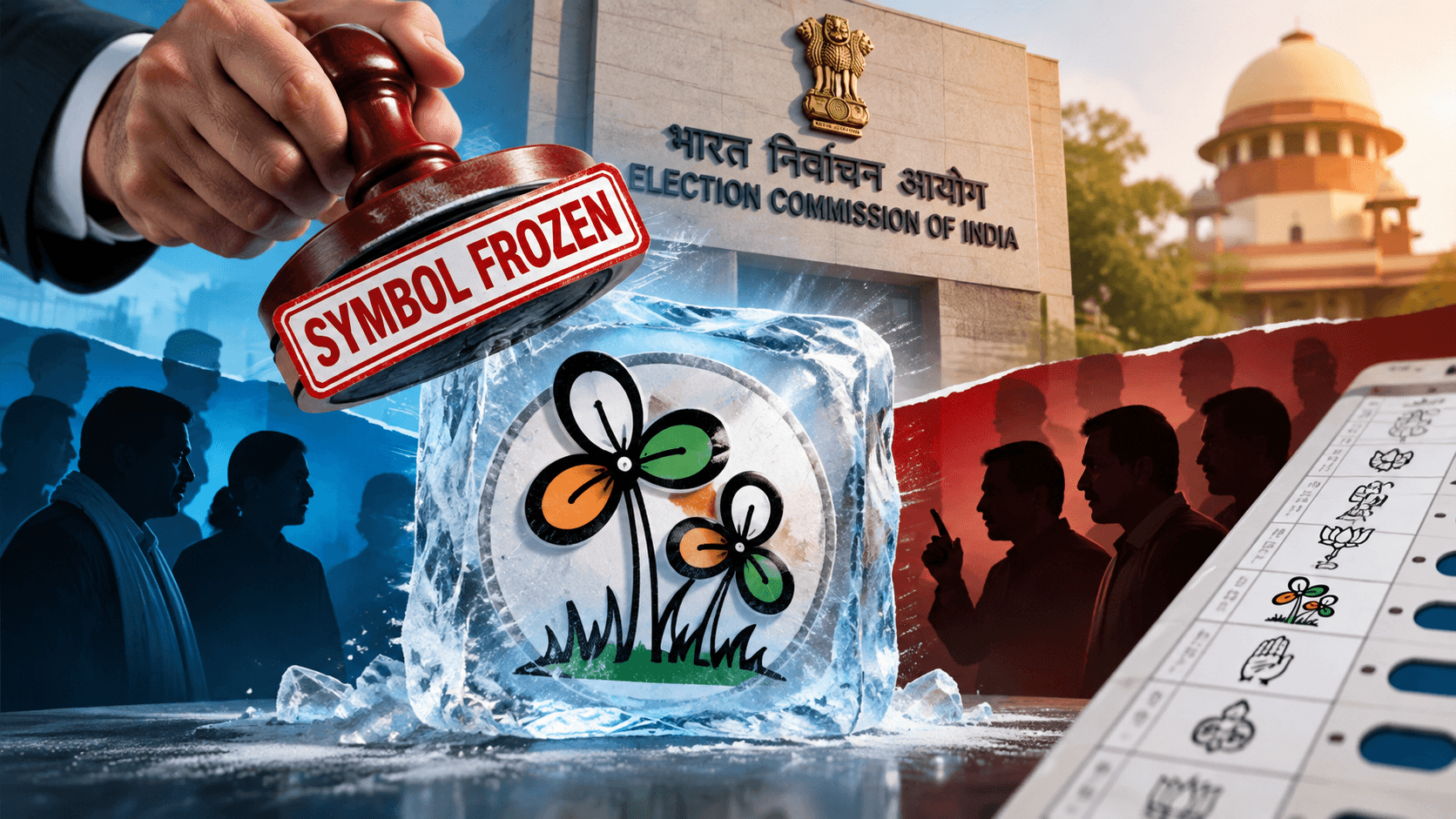
In September 2026, two separate issues brought the Election Commission of India (ECI) into the headlines. First, a report alleged that there were 14 internal objections raised within the ECI over some administrative decisions and the process of electoral roll revisions. This has raised questions about internal functioning and transparency.
Second, in Goa, a technical glitch in ECINet reportedly led to the exclusion of 97 verified voters from the rolls. Since voter cards are often linked to availing government services, this exclusion also affected their access to healthcare benefits. The incident has once again sparked a debate on whether the right to vote should be made a fundamental right to give it stronger legal protection.
About Right to Vote in India: The Fundamental Rights Debate
Evolution of Universal Adult Suffrage
India’s journey on voting rights is very different from the West. Western democracies gave voting rights step-by-step over many years. India, on the other hand, took a bold step right at the start; it gave universal adult suffrage to all citizens from day one of the Constitution, without any bar based on property, literacy, caste, or gender.
Later, to include more young people, the 61st Constitutional Amendment Act, 1988, reduced the voting age from 21 to 18 years.
Is Right to Vote Part of Basic Structure?
Since the landmark Kesavananda Bharati case in 1973, the Supreme Court has in several judgments held that democracy and free and fair elections are a part of the basic structure of the Constitution. This means they cannot be diluted or taken away, even by a constitutional amendment.
Legal and Constitutional Status of the Right to Vote
What did the Constituent Assembly decide?
The framers of the Constitution did not put the right to vote in Part III as a fundamental right. Instead, they provided for adult suffrage under Article 326 and left the detailed rules for elections to be made by Parliament through laws.
What have the courts said?
The Supreme Court has given different views over time: In the Kuldip Nayar case (2006), a 5-judge bench said that the right to elect is a statutory right, meaning it comes from election laws made by Parliament and is not a fundamental right by itself. Later, in Rajbala (2015), the court described voting as a constitutional right. In other judgments too, the courts have linked the right to vote with freedom of political expression and with the idea of constitutional democracy.
The Goa ECINet Episode: Case of Digital Exclusion
Note: The Goa incident and internal ECI developments below are as reported in your draft; their specific allegations and figures need independent verification.
What happened?
During the Special Intensive Revision of electoral rolls, 97 voters in Goa were reportedly flagged for discrepancies in names, ages, and old records and were asked to go through individual verification.
Software-driven exclusion
As per the report, even though field verification confirmed that they were eligible voters, the ECINet software allegedly did not allow the Electoral Registration Officers (EROs) to restore their names. As a result, they remained excluded from the final electoral roll.
Impact beyond voting
This exclusion did not just affect voting rights. It also reportedly impacted their access to Goa’s Mediclaim Scheme, showing how linking welfare benefits like healthcare to voter lists can make a small administrative error much more serious for citizens.
Bigger concern
Unlike a simple clerical mistake that affects one or two people, a centralized software failure can exclude many eligible voters at once. The episode raises larger questions about how quickly such digital errors can be corrected and who is accountable when they happen.
Institutional Governance within the Election Commission
How does the ECI take decisions?
Under Sections 17 and 18 of the CEC and Other Election Commissioners Act, 2023, the Commission is expected to work collectively. It must try for unanimity first, and if there is a disagreement, the decision is taken by majority.
What are the reported concerns?
As per your draft, 14 internal objections were reportedly raised regarding procedures for electoral roll revision and IT governance. The allegation is that some decisions were taken without full approval of the Commission. These are reported claims from your draft and would need independent verification.
Arguments for Making the Right to Vote a Fundamental Right
| Stronger legal protection: | If voting is made a fundamental right, courts can more strictly check arbitrary deletion of names, asking for too many documents, or putting unreasonable restrictions on eligible voters. |
| Protection from digital errors: | An explicit guarantee in the Constitution would give citizens stronger remedies against automatic errors in electoral rolls and push the system to build better safeguards against tech-based exclusion. |
| Protecting welfare benefits: | In states like Goa, where schemes like health insurance are linked to voter lists, stronger protection for voting rights would also help ensure that people don't lose essential welfare benefits due to an administrative mistake. |
| Matching global democratic standards: | It would also strengthen India’s commitment to Article 25 of the ICCPR, which says every citizen has the right to take part in public affairs and to vote without unreasonable restrictions. |
Concerns Regarding Making Voting a Fundamental Right
| More court cases: | If voting becomes a fundamental right, every small dispute over electoral rolls could turn into a writ petition in high courts and the Supreme Court. This may increase the burden on courts, especially during elections when time is very sensitive. |
| Maintaining clean electoral rolls: | The Election Commission also needs to regularly clean the rolls by deleting names of those who have died, permanently shifted, or are otherwise ineligible. Too strong procedural requirements could make this routine maintenance difficult. |
| Clash with Article 329(b): | The Constitution under Article 329(b) says courts should not interfere in ongoing elections and that election disputes should go through election petitions. If voting is made a fundamental right, it could lead to direct constitutional challenges, and the two provisions would need to be carefully reconciled. |
Way Ahead
1. Need for clarity from the Supreme Court: A larger bench of the Supreme Court could finally settle the debate by clearly explaining how the right to vote is linked to constitutional democracy, political expression, and the statutory framework laid down in Kuldip Nayar.
2. Stronger safeguards before deletion: The rules should ensure that no eligible voter is deleted without proper individual notice, a fair hearing, a reasoned order, and an easy way to appeal.
3. Fixing digital governance: ECINet and ERONet should be designed to empower EROs on the ground, giving them clear powers to correct, verify, and restore entries, along with transparent audit trails and technical checks.
4. Delink welfare from voter lists: States should allow other IDs and eligibility proofs for welfare schemes like healthcare so that a mistake in the electoral roll does not stop people from getting essential benefits.
5. Strengthening collective decision-making in ECI: Important policy decisions, major software changes, and procedural guidelines should be taken after documented deliberations of the full Commission, as envisaged under the 2023 Act.
Conclusion
The debate over making the right to vote a fundamental right is not just about legal status but about how we protect citizens from both administrative and digital exclusion. Incidents like the reported Goa ECINet glitch show that in a digital age, a software error can quickly turn into denial of both voting and welfare. At the same time, concerns about litigation load and maintaining clean, accurate rolls are equally valid.
The way forward lies in balance, stronger procedural safeguards and accountable digital systems, de-linking essential welfare from voter lists, ensuring collective decision-making within the ECI, and ultimately getting constitutional clarity from the Supreme Court. This will ensure that universal adult suffrage, adopted with so much foresight at Independence, remains truly universal in practice as well.