ECI: Freezing of Election Symbols
Why is ECI in the news?
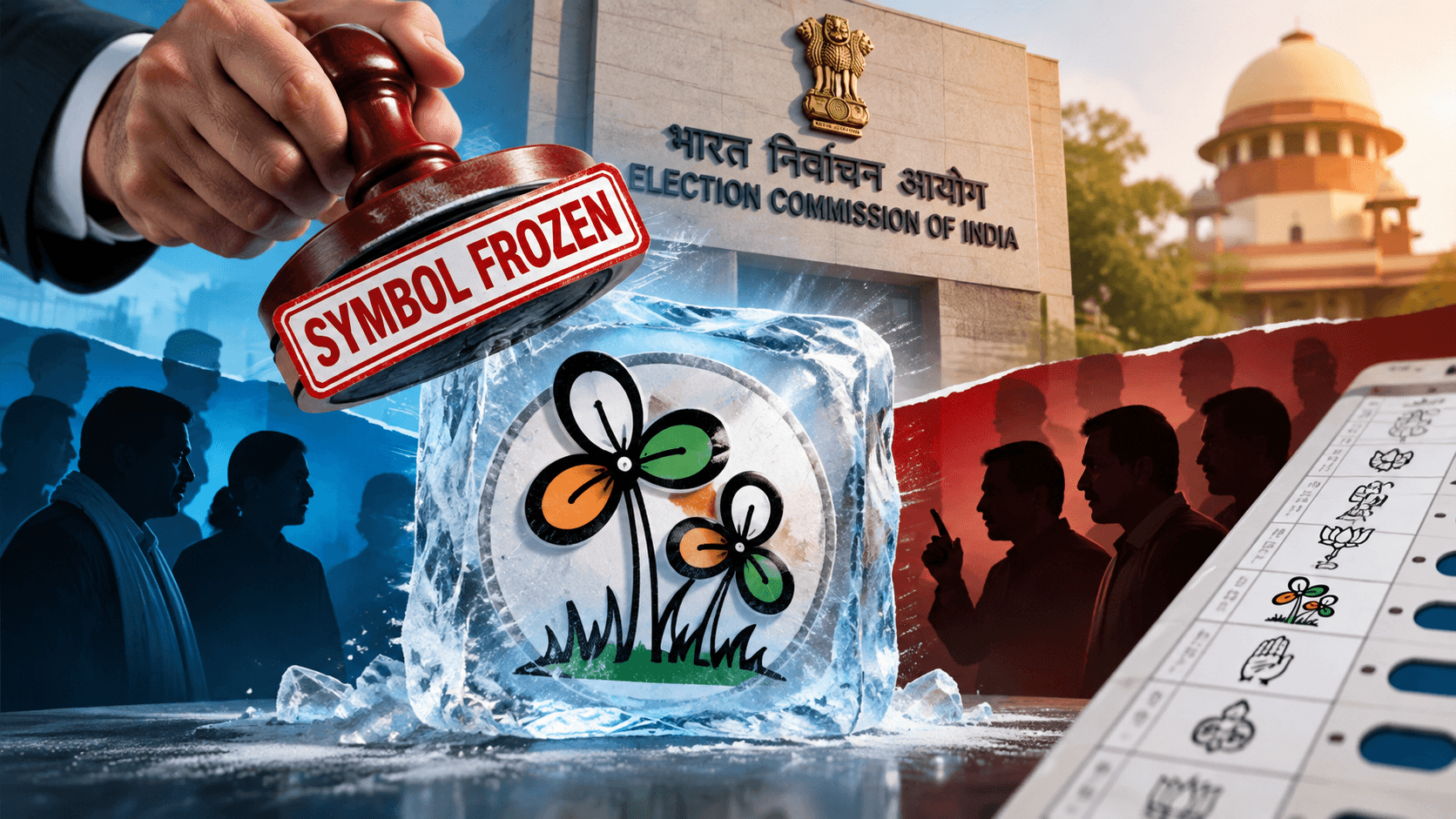
Recently, the Election Commission of India (ECI) froze the 'All India Trinamool Congress' name and its reserved symbol due to competing claims by rival factions before the West Bengal Assembly by polls.
What is freezing of symbols?
If the ECI cannot complete its proceedings before an election is near, it can issue an interim order to freeze the reserved symbol. Both factions are then asked to contest with temporary names and choose different symbols from the ECI's list of 'free symbols'.
Legal Framework and ECI's Authority
The ECI gets its power to decide party name and symbol disputes from Article 324 of the Constitution, the Representation of the People Act, 1951, and the Election Symbols (Reservation and Allotment) Order, 1968.
Paragraph 15: Under the 1968 Order, ECI is the only authority that can decide which rival faction of a recognized national or state party is the "real" party. Its decision is binding.
Unrecognized Parties: For registered but unrecognized parties, ECI does not decide symbol disputes. It asks them to resolve internally or go to civil courts.
The 'Test of Majority': In Sadiq Ali v. ECI (1971), the Supreme Court upheld ECI's power under Paragraph 15 and gave a three-test formula to decide the legitimate group:
Test of Aims and Objects: Checks the party's constitution and its main objectives.
Test of Party Constitution: Checks which faction followed internal rules and held organizational elections democratically.
Test of Majority (Legislative and Organizational): The most important test. ECI checks the numerical strength of each faction in the organizational wing (office bearers, delegates) and the legislative wing (MPs, MLAs).
Fallback Mechanism: If organizational support is disputed or unclear, ECI mainly relies on majority support among elected legislative representatives.
Fate of the Losing Faction: Once ECI makes a final decision, the faction that loses claims to the original name and symbol and may continue under a new name/symbol as allotted by ECI.
Must earn its own State or National recognition based on its future electoral performance, irrespective of past association.
Key Points Related to Election Symbols
An election symbol is a standard symbol allotted to a political party.
They are used during campaigning and are shown on Electronic Voting Machines (EVMs), where voters choose the symbol and vote for the party.
They were introduced to help illiterate voters who cannot read party names while voting.
In the 1960s, it was proposed that regulation, reservation, and allotment of symbols should be done through a law of Parliament, i.e., Symbol Order.
In response, ECI said that recognition of political parties is governed by the Election Symbols (Reservation and Allotment) Order, 1968, and so will be allotment of symbols.
The ECI registers political parties for elections and gives them recognition as national or state parties based on their poll performance. Other parties are declared as registered unrecognized parties.
This recognition gives them certain privileges like allotment of party symbols, time for political broadcasts on TV and radio, and access to electoral rolls.
Every national party and every state party is allotted a symbol exclusively reserved for its use across the country and states, respectively.
Election Symbols (Reservation and Allotment) Order, 1968
Under Paragraph 15 of the Order, EC can decide disputes among rival groups of a recognized political party claiming its name and symbol. EC is the only authority to decide issues of dispute or merger under the Order. The Supreme Court upheld its validity in Sadiq Ali vs. ECI (1971). It applies to disputes in recognized national and state parties.
For splits in registered but unrecognized parties, EC usually advises factions to resolve internally or go to a Symbol court. In almost all disputes decided by the EC so far, a clear majority of party delegates/office bearers, MPs, and MLAs supported one faction.
Before 1968, the EC issued notifications and executive orders under the Conduct of Election Rules. The splinter group, other than the group that got the party symbol, had to register itself as a separate party.
It could claim national or state party status only based on its performance in state or central elections after registration.
Conclusion
The freezing of party names and symbols by the ECI is a temporary measure to ensure a level playing field during elections. The Election Symbols Order, 1968, and the tests laid down by the Supreme Court give ECI clear power to decide who is the real party, based on organizational and legislative majority, while protecting democratic principles and voters' interests.