Why in News?
Recently, India has called for faster implementation of the Paris Agreement and urged countries to focus on closing existing gaps, fulfilling climate commitments and delivering support to vulnerable nations. India is participating in the pre-COP31 meeting, co-hosted by Australia, Fiji, and Tuvalu.
Union Environment Minister Bhupender Yadav, while addressing the plenary discussion on COP31 priorities at the UNFCCC Pre-COP31 meeting in Fiji, said that the next phase of global climate action should focus less on making new promises and more on turning existing commitments into action.
What is pre-COP?
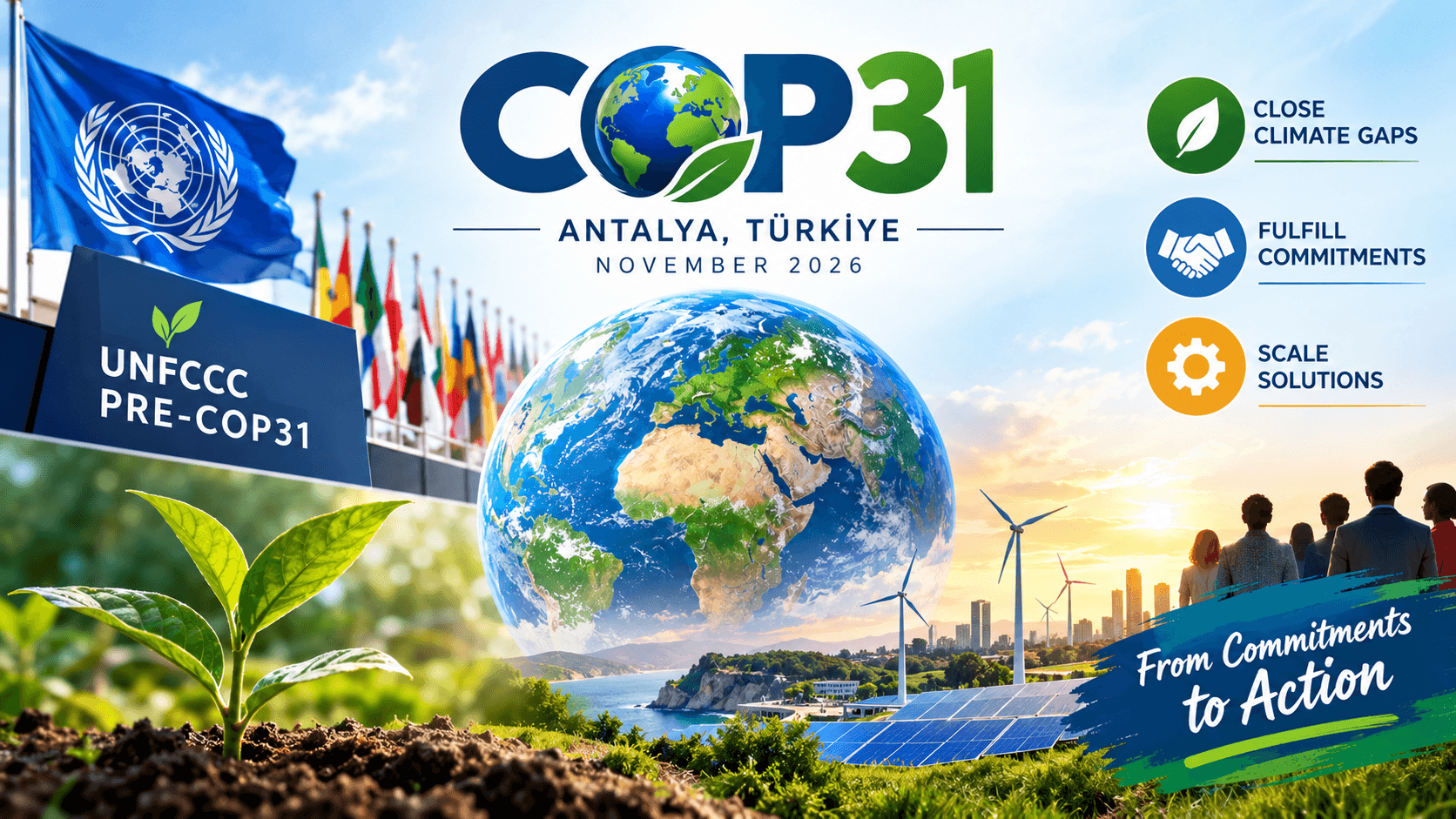
The Pre-COP is a preparatory meeting held before the annual UN Climate Change Conference (COP). It provides countries an opportunity to discuss key issues, build consensus, and prepare the ground for negotiations at the main COP. The COP31 is scheduled to be held in Antalya, Türkiye, in November 2026.
What Did India Say About COP31?
India highlighted three major priorities for COP31:
- Closing gaps in climate understanding and action
- Fulfilling existing commitments under the UNFCCC and Paris Agreement
- Accelerating implementation and scaling up successful solutions
According to India, the world has already agreed on the broad direction of climate action. The key challenge now is to ensure that these commitments are effectively implemented on the ground.
Bridging the Gaps in Climate Action
Bhupender Yadav pointed out that several gaps continue to affect global climate action.
These include:
- The gap between scientific knowledge and traditional knowledge
- The gap between existing practices and climate ethics
- The gap between available resources and actual needs
- The gap between climate commitments and their implementation
India believes COP31 should work towards building greater consensus on how these gaps can be addressed.
Focus on the 1.5°C Goal
The Paris Agreement aims to keep the rise in global average temperature well below 2°C above pre-industrial levels while pursuing efforts to limit it to 1.5°C.
India stressed that achieving this goal requires not only ambitious targets but also adequate means of implementation, including finance, technology, capacity building, and other forms of support.
The focus, therefore, should shift towards finding practical ways to accelerate progress towards existing climate goals.
From Climate Commitments to Climate Action
India also emphasized that countries must fulfill their existing commitments under the UNFCCC and Paris Agreement in letter and spirit.
This means climate action should not stop at announcements and declarations. Countries need to translate their commitments into measurable action and create conditions that enable every country to meet its responsibilities.
Why Implementation Matters?
For India, the success of COP31 should ultimately be judged by what happens on the ground.
Countries have been encouraged to share concrete examples and successful models of:
- High-impact mitigation
- Large-scale climate adaptation
- Effective delivery of climate finance and other support
- Capacity building
- Solutions that can be replicated and scaled up
Sharing such success stories regularly can help countries learn from one another and expand effective climate solutions.
What Should COP31 Deliver?
India has called for COP31 to move beyond simply announcing new targets and declarations.
The real test of the conference, according to India's approach, should be whether:
- Climate implementation becomes faster.
- Support reaches countries and communities that need it most.
- Existing climate solutions are scaled up.
- Countries fulfill their earlier commitments.
- Adaptation and mitigation efforts produce visible results.
Conclusion
India's message ahead of COP31 is clear: the world does not need climate promises alone; it needs climate action.
With the major goals of the Paris Agreement already established, the priority should now be to close implementation gaps, fulfill existing commitments, provide adequate support, and scale up solutions that are already working.
For developing and climate-vulnerable countries, faster implementation and better access to resources will be crucial for making global climate commitments meaningful on the ground.