Drug Addiction in Bihar: The Growing Crisis
The Bihar drug addiction crisis falls under General Studies Paper II (Indian Polity and Indian Economy sections) for the BPSC Mains exam, as well as Bihar-specific General Studies and Current Affairs for both the Prelims and Mains. It is analyzed through social impact, constitutional provisions (Directive Principles of State Policy Article 47), and economic/administrative challenges.
Why in News?
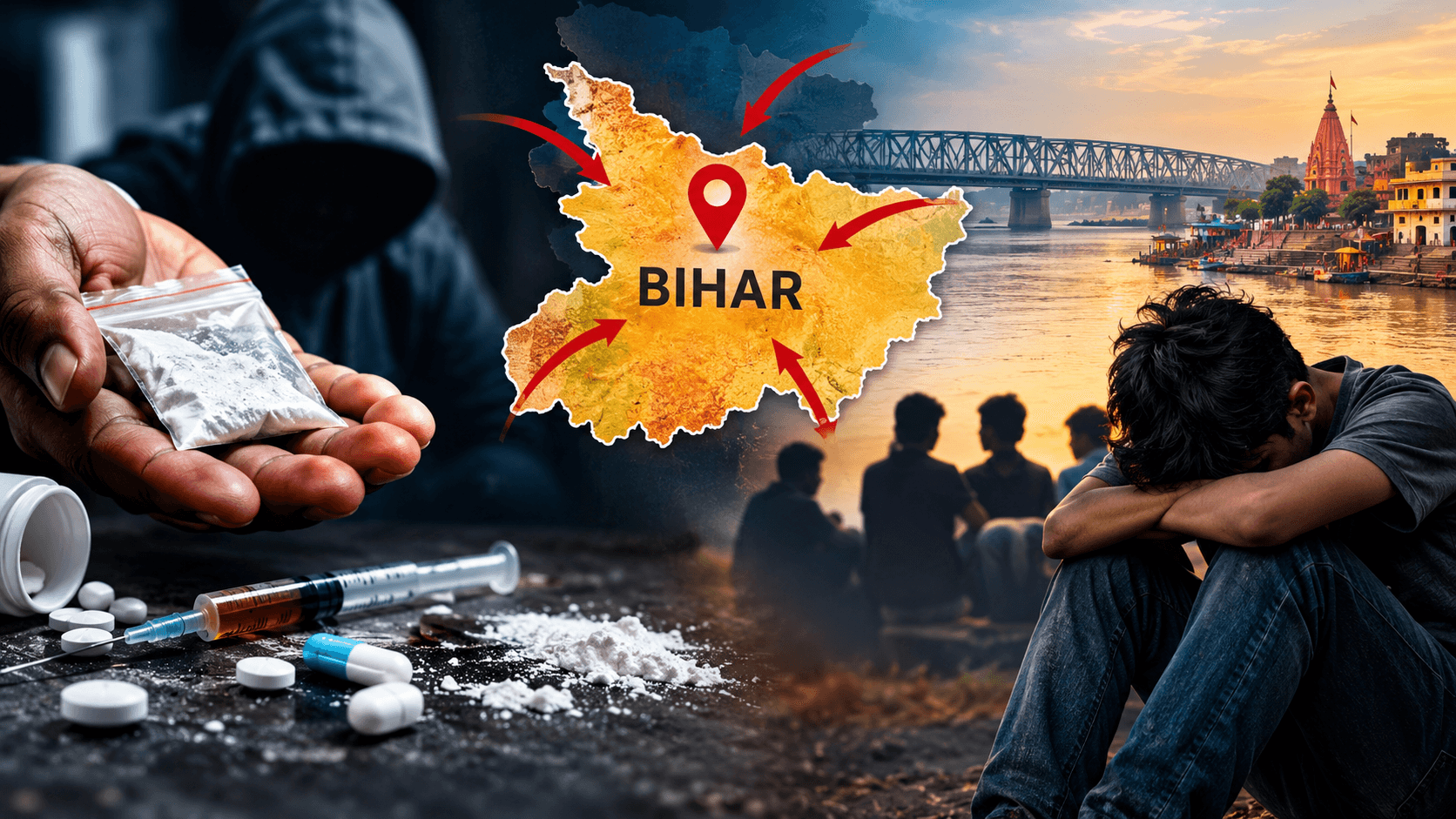
A recent report published by The Indian Express highlights the growing challenges faced by families dealing with drug addiction in Bihar. One of the major concerns is the reported rise in cases under the Narcotic Drugs and Psychotropic Substances (NDPS) Act. The report cites a nearly fourfold increase in NDPS cases over the preceding four years in the Saharsa district, which includes areas within the Kosi region.
Key points of the report
The report also highlights the shortage of adequate rehabilitation support, the pressure on de-addiction centers, and the struggles of families trying to help their loved ones recover. The report finds an increase in drug-related cases across Bihar, including arrests, seizures, and cases involving people struggling with addiction. These figures point to a growing challenge that requires attention from law enforcement agencies, healthcare providers, and society.
However, drug-related arrests and seizures do not, by themselves, reveal the full scale of addiction. Understanding the problem also requires reliable data on substance use, treatment access, and recovery.
The report describes the emotional and financial struggles of families seeking treatment for their loved ones and raises concerns about the pressure on de-addiction facilities in Patna.
Why Drug Abuse is Rising in Bihar ?
Bihar's drug problem is not isolated but is linked to policy, geography, and socio-economic changes.
| The Substitution Trap: | After the complete liquor ban in April 2016, alcohol became expensive and hard to find in the black market. Many users shifted to cheaper and more easily available alternatives like narcotics, adulterated brown sugar, and synthetic drugs to get intoxication. |
| Strategic Location: | Bihar shares an open border with Nepal and lies on the main rail and road routes connecting the Northeast to the rest of India. This makes it a natural transit corridor for drugs coming from the Golden Triangle (Myanmar, Laos, Thailand) and Nepal. |
| Shift to Synthetic Drugs: | There has been a major shift from traditional substances like ganja to more potent and easily concealable drugs. These include codeine-based cough syrups, pharmaceutical tablets, injection vials, and heroin variants like 'Kota'. Police data shows injection vial seizures rose from just 3,677 in 2022 to lakhs in later years. |
| Socio-economic Stress: | The COVID-19 pandemic forced thousands of young workers to return from metros like Delhi and Kolkata. Lack of jobs and support systems back home made rural and semi-urban youth more vulnerable to drug networks. |
| Rising Addiction: | The scale is visible in de-addiction data. Beneficiaries at state-supported centers rose nearly 20-fold from 1,487 in 2022-23 to 29,429 in 2024-25, showing how deep the problem has become. |
Why Is Drug Addiction a Growing Concern in Bihar?
Drug addiction is not just an individual health problem; it can affect entire families. Relatives often struggle with emotional stress, financial difficulties, and uncertainty about their loved one's recovery.
Many families find themselves navigating treatment options with limited support, while the fear of social stigma can make it harder to seek help.
The rapid rise of the drug crisis in Bihar is driven by a combination of the unintended consequences of alcohol prohibition, shifting trafficking corridors, and a boom in cheap synthetic substances.
Pressure on De-Addiction Centers in Patna
According to the report, a de-addiction facility associated with the Indira Gandhi Institute of Medical Sciences (IGIMS) in Patna receives around 200 patients a month. The report also points to concerns about patients not returning for continued treatment.
This highlights an important challenge: recovery does not end when a patient leaves a treatment center. Medical supervision, counselling, rehabilitation, and regular follow-up are essential to support long-term recovery.
Why Is Long-Term Rehabilitation Important?
Effective addiction care requires a comprehensive approach:
- Medical treatment: Professional assessment and appropriate healthcare.
- Psychological counseling: Help with managing stress, triggers, and substance-use-related challenges.
- Family support: Guidance for relatives on how to support recovery.
- Rehabilitation: Assistance with rebuilding social relationships, education, and employment.
- Follow-up care: Continued support to address difficulties and reduce the risk of relapse.
Relapse does not mean recovery is impossible. It may indicate that treatment needs to be reviewed or additional support is required.
What Can Be Done to Address Drug Addiction in Bihar?
Bihar needs to strengthen affordable treatment services, expand access to trained counsellors, improve follow-up care, and promote awareness about substance-use disorders.
Schools, colleges, healthcare institutions, and community organizations can help by encouraging early intervention and reducing stigma. Many reports have been released so far, but stringent action still needs to be taken by every level.
A new research paper by the National Council of Applied Economic Research (NCAER) has suggested that Bihar should withdraw its prohibition on alcohol. The paper, titled 'Macro Perspective of Bihar's Development Achievements, Unfinished Agenda, and the Way Forward,' was led by economist Ratna Sahay and presented at the India Policy Forum.
Conclusion
The report highlights the urgent need for a compassionate and sustained response to drug addiction in Bihar. Expanding access to treatment is important, but it must be accompanied by counselling, rehabilitation, and long-term support. Ultimately, addressing addiction means supporting not only those affected by substance use but also the families who continue to hope for their recovery. The main cause lies in the liquor ban policies, and recently a research paper published by the National Council of Applied Economic Research (NCAER) has suggested that Bihar should withdraw its prohibition on alcohol.
NCAER: Bihar Must Reconsider Its Alcohol Ban
Reference: