Collegium System: Power Without Transparency?
Why in News?
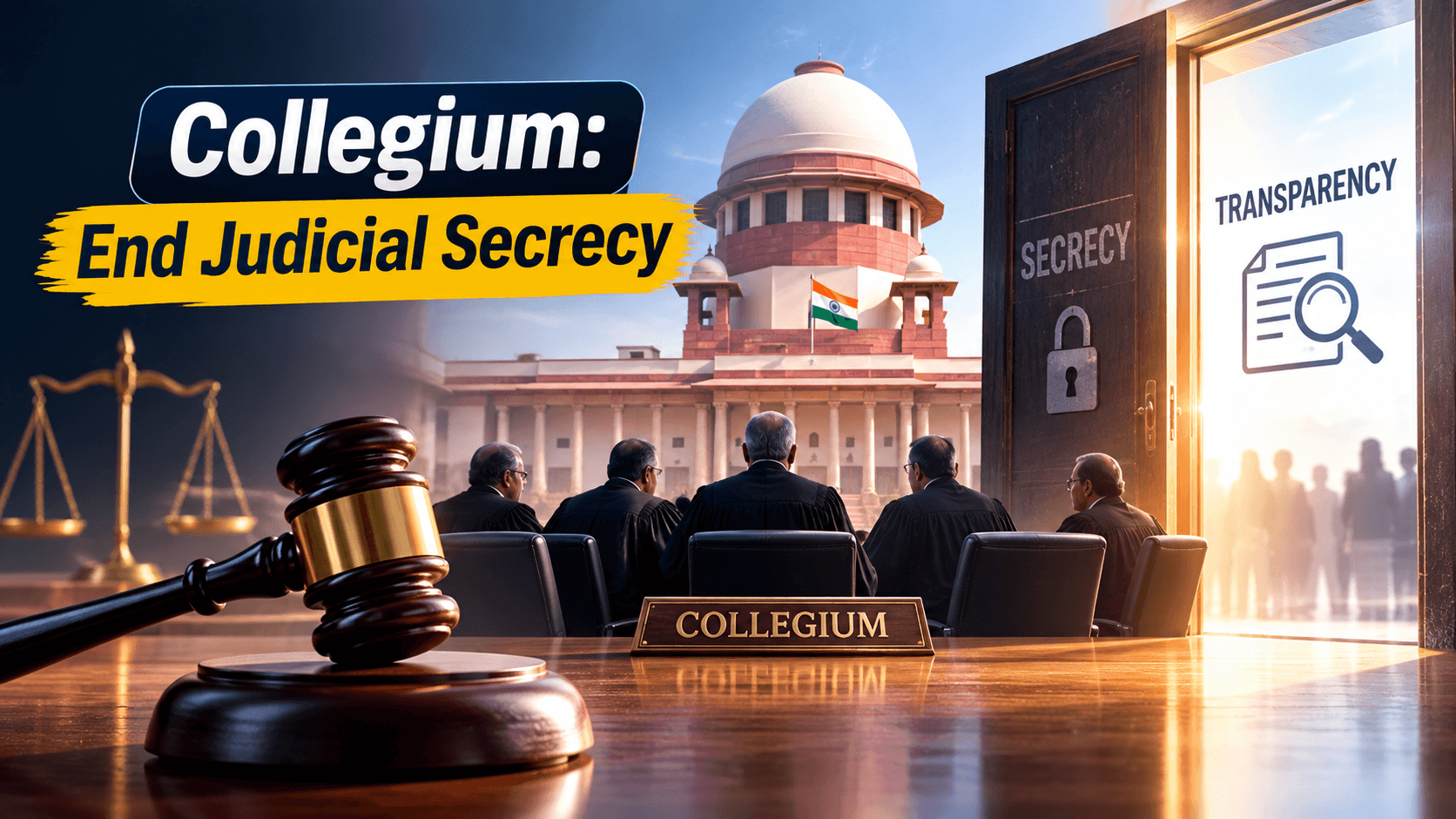
Not long ago, there were two separate instances where the ongoing burning debate over the Collegium system got fuelled. At first, former Supreme Court Judge Abhay Oka was speaking at a discussion on judicial accountability organized by the Campaign for Judicial Accountability and Reforms at the India International Centre in New Delhi, and then there was the second instance where retired Supreme Court Judge Justice Sanjay Kaul lambasted the Collegium system of judicial appointment while discussing the former Chief Justice of India, D.Y. Chandrachud.
Now once again, the collegium system is triggered and made headlines. Undoubtedly, such remarks have renewed the debate over the functioning of the collegium system, particularly its transparency, accountability, and the need for reforms.
Justice Kaul indicated that former Chief Justice of India (CJI) D.Y. Chandrachud may have discussed proposed judicial appointments with the Union Government even before the collegium formally considered those names.
He described this practice as seeking the government's "pre-approval," raising concerns about judicial independence and the possibility of executive influence over judicial appointments.
What is the Collegium System?
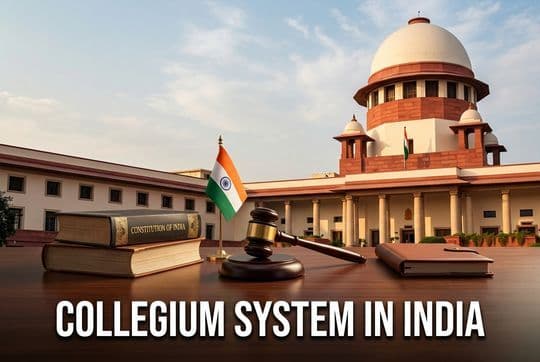
The Collegium System is India's own method for appointing and transferring judges to the Supreme Court and High Courts. It is not written anywhere in the Constitution but has evolved through three landmark judgments of the Supreme Court, known as the Three Judges Cases. Evolution of the Collegium System in India
First Judges Case (1981): In S.P. Gupta v. Union of India (1981), commonly known as the First Judges Case, the Supreme Court held that the executive had primacy over the judiciary in matters of judicial appointments. The opinion of the CJI was not considered binding on the government.
Second Judges Case (1993): In the Supreme Court Advocates-on-Record Association v. Union of India (1993), known as the Second Judges Case, the Supreme Court reversed its earlier position. It established the principle of judicial primacy in appointments and introduced the collegium system to protect judicial independence from excessive executive interference.
Third Judges Case (1998): In 1998, the President sought the Supreme Court's advisory opinion under Article 143 regarding the consultation process for judicial appointments.
Composition and Role of Government
| SC Collegium: | Consists of the CJI and four senior-most judges of the Supreme Court. |
| HC Collegium: | Consists of the Chief Justice of the High Court and its two senior-most judges. |
| What does the government do? | The government can raise objections and seek clarifications, but if the Collegium reiterates the same name, the government is bound to appoint that person. |
Constitutional Provisions for the Appointment of Judges
The Indian Constitution provides for the appointment of judges to the Supreme Court and High Courts by the President of India.
- Article 124(2): Provides for the appointment of Supreme Court judges by the President after consultation with the Chief Justice of India (CJI) and other judges as considered necessary.
- Article 217: Deals with the appointment of High Court judges by the President after consultation with the CJI, the Governor of the concerned State, and the Chief Justice of the High Court.
How Does the Collegium System Work?
The collegium system follows a consultation-based process for recommending judges to the higher judiciary.
| Initiation of proposals: | The collegium identifies suitable candidates for appointment to the Supreme Court or High Courts. |
| Recommendation to the Center: | The recommendations are forwarded to the Union government for consideration. |
| Government's response: | The Central Government may examine the recommendations and return them with objections or seek clarification. |
| Reconsideration: | The collegium can reconsider the proposed names. If it reiterates its recommendation, the government is expected to accept it under the established procedure. |
| Final appointment: | The appointment is formally made by the President of India. |
The detailed procedure is governed by the Memorandum of Procedure (MoP), which lays down the guidelines for judicial appointments.
National Judicial Appointments Commission (NJAC): An Alternative to the Collegium
To reform the judicial appointment process, Parliament introduced the 99th Constitutional Amendment Act, 2014, which provided for the establishment of the National Judicial Appointments Commission (NJAC). The NJAC was proposed as an alternative to the collegium system, with the objective of making judicial appointments more transparent and participatory.
Composition of NJAC
The proposed six-member commission consisted of:
1. Chief Justice of India (Chairperson).
2. Two senior-most Supreme Court judges.
3. Union Minister of Law and Justice.
4. Two eminent persons nominated by a committee consisting of the Prime Minister, CJI, and Leader of Opposition in the Lok Sabha.
Why Was NJAC Struck Down?
In October 2015, the Supreme Court struck down the 99th Constitutional Amendment and the NJAC Act, declaring them unconstitutional.
The court held that the proposed mechanism affected the independence of the judiciary, which forms part of the basic structure of the constitution. Consequently, the collegium system continued to remain in operation.
Collegium System vs. Judicial Appointment Systems in Other Countries
India's collegium system is relatively distinctive. Several other democracies follow different models of judicial appointments.
| United States: | The president nominates judges to the Federal Supreme Court, while the Senate confirms their appointments. |
| United Kingdom: | An independent Judicial Appointments Commission selects candidates for judicial positions. It consists of members representing the judiciary, legal profession, and public. Appointments to the UK Supreme Court are made through a separate selection commission. |
| South Africa: | The Judicial Service Commission (JSC), comprising representatives from the judiciary, legislature, executive, legal profession, and academia, recommends candidates to the President for judicial appointments. |
These models demonstrate how different countries balance judicial independence with institutional participation and accountability.
Major Concerns Associated with the Collegium System
Although the collegium system was developed to protect judicial independence, it has faced several criticisms.
| Lack of Transparency: | The criteria used for selecting judges and the reasons behind particular recommendations are not always made public. This creates questions about the fairness of the selection process. |
| Lack of Accountability: | Since the appointment process is largely controlled by senior members of the judiciary, there are concerns about the absence of an independent mechanism to review their decisions. |
| Allegations of Nepotism: | The system has faced allegations that family connections and professional networks may influence judicial appointments, raising concerns about equal opportunities for deserving candidates. |
| Executive-Judiciary Differences: | Disagreements between the collegium and the Central Government over proposed appointments can delay the selection process and create institutional tensions. |
| Delay in Finalizing the Memorandum of Procedure: | Following the NJAC judgment, the judiciary and the executive agreed to revise the Memorandum of Procedure to improve transparency and consultation. However, differences between the two institutions over certain provisions have delayed its finalization. |
Conclusion: Balancing Judicial Independence with Transparency
The objective of the collegium system was protecting the independence of the Indian judiciary by limiting direct executive control over judicial appointments. But, unfortunately, it has ruined the spirit of the judiciary. However, concerns regarding transparency, accountability, delays, and alleged favoritism highlight the need for institutional reforms.
The objective should not be to weaken judicial independence but to make the appointment process more transparent, inclusive, and accountable. A strong democracy requires an independent judiciary, but judicial independence must go hand in hand with transparency, merit, and public confidence.
Reference: