Air Quality Crisis: Promises vs Performance
Why in News?
According to officials of the Commission for Air Quality Management (CAQM), Delhi and its neighboring states such as Uttar Pradesh, Haryana, Rajasthan, and Punjab have implemented only 40–60% of the anti-pollution measures outlined in their annual action plans.
Other key takeaways
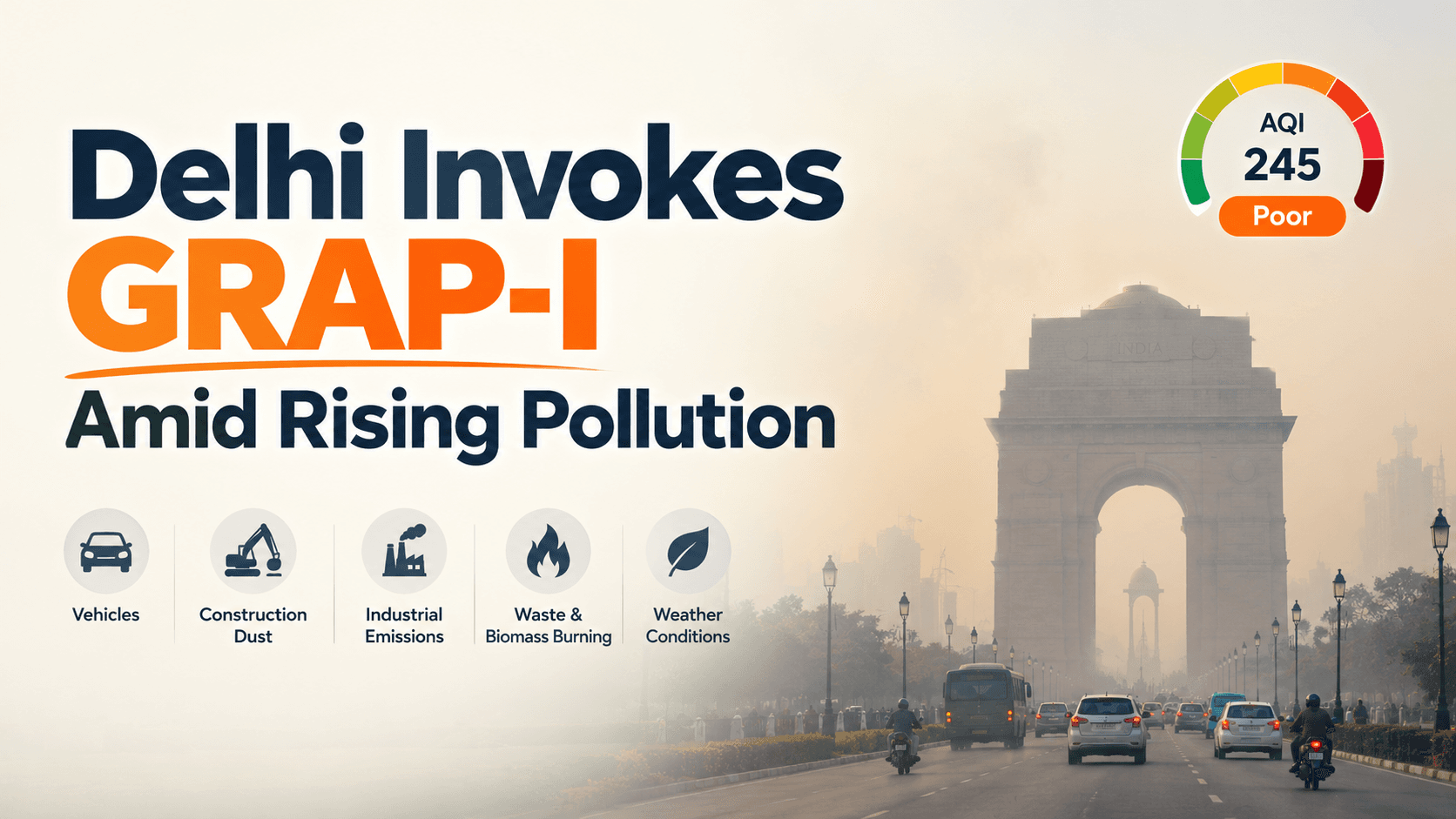
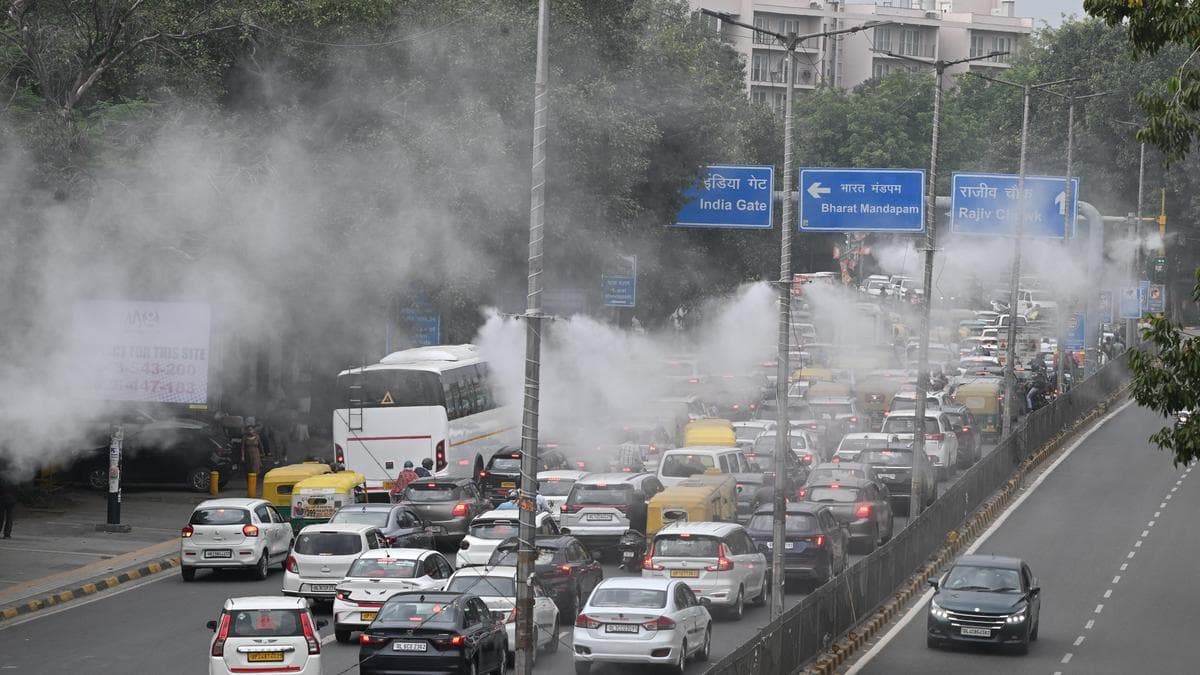
With air quality in Delhi and neighboring cities already reaching the 'Poor' and 'Very Poor' categories, the incomplete implementation of pollution-control measures has raised concerns ahead of the winter pollution season.
These action plans were submitted by the respective states to CAQM in January and finalized in February this year. However, the Commission has directed the states to speed up their efforts and complete a major portion of the pending actions till October.
About Commission for Air Quality Management (CAQM)
It is a statutory body set up under the Commission for Air Quality Management in the National Capital Region (NCR) and Adjoining Areas Act, Mandate: Its main job is to ensure better coordination, research, identification, and resolution of problems related to the air quality index and all matters connected to it.
What Is the Role of CAQM?
It works towards improving air quality through coordinated action involving the Central Government, State Governments, and other relevant authorities.
Its responsibilities include:
- Coordinating pollution-control measures across different states.
- Monitoring the implementation of annual action plans.
- Reviewing progress and identifying implementation gaps.
- Directing authorities to take necessary measures to control air pollution.
The Commission plays an important role because air pollution does not remain restricted to administrative or state boundaries.
How Are States Performing on Pollution Control?
The progress of different states has been assessed based on the implementation of measures included in their annual air pollution action plans.
According to data updated up to 30 September:
- Rajasthan: Recorded the weakest performance among the states.
- Uttar Pradesh: Performed the best in implementing the prescribed measures.
- Other States: Delhi, Haryana, and Punjab have also fallen short of their targets.
The assessment is based on a weighted average of actions undertaken by the states. Greater importance has been given to concrete measures that directly contribute to reducing air pollution.
Although some targets have been achieved, several important deadlines have already been missed.
Why Have States Failed to Meet Pollution Control Targets?
One of the major concerns is the slow implementation of measures related to road infrastructure and dust pollution.
The redevelopment of damaged roads is an important part of the action plans. However, almost all states have failed to complete even 50% of their targets in this area.
Poorly maintained roads contribute to dust pollution, which adds to the overall particulate matter concentration in the air.
The report also points towards delays in implementing other pollution-control measures, despite clearly defined timelines.
What Measures Are Included in the Annual Action Plans?
The action plans prepared by the states cover multiple sources of air pollution rather than focusing on a single cause. Their major focus areas include:
1. Vehicular Emissions: Controlling pollution from vehicles through appropriate emission-reduction measures.
2. Dust Mitigation: Reducing dust generated by roads, construction activities, and other sources.
3. Crop Residue Management: Preventing stubble burning and promoting better agricultural waste management.
4. Road Infrastructure: Improving damaged roads to minimize dust generation.
5. Other Pollution Sources: Taking additional measures according to local pollution challenges.
Each measure has specific deadlines for implementation, and states are expected to complete the assigned work within the prescribed timeframe.
Punjab is an exception in this assessment because its action plan is specifically limited to controlling stubble burning.
Conclusion
The implementation of only 40–60% of pollution-control measures highlights the gap between policy planning and actual execution in Delhi-NCR and neighboring states. While annual action plans provide a framework for addressing different sources of pollution, their success ultimately depends on timely implementation and effective monitoring. The priority should now be to move beyond preparing action plans and ensure their execution on the ground, particularly before the winter pollution season.
Reference: