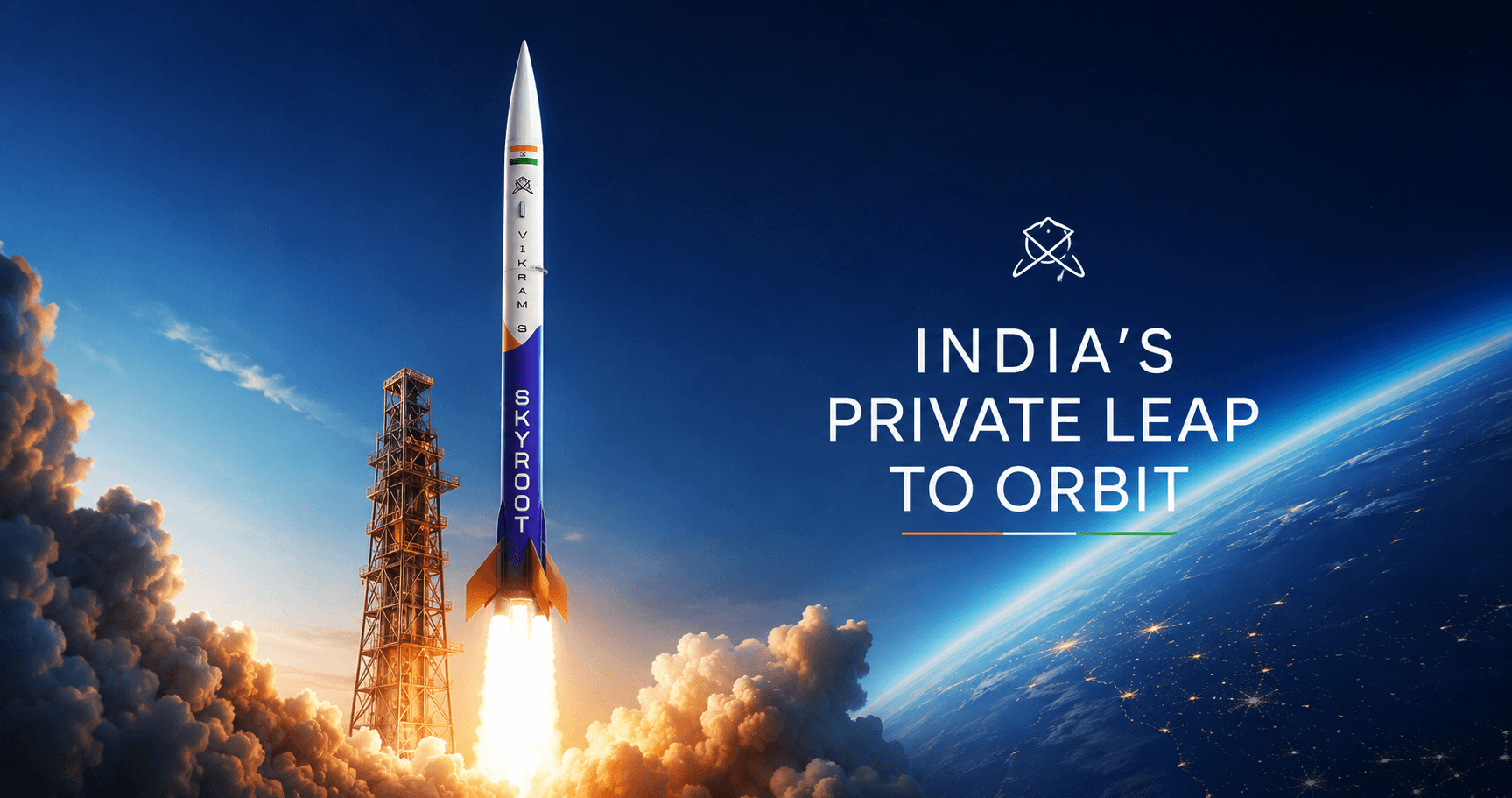
Skyroot Aerospace has created history by successfully launching Vikram-1, India’s first privately-built orbital launch vehicle, and deploying its payloads with precision into orbit.
With the success of the Vikram-1 mission, India has joined an elite group of nations. It becomes the third country, after the US and China, where a private company has independently achieved orbital launch capability. The feat is globally significant as Skyroot placed satellites into Low Earth Orbit (LEO) on its very first orbital flight.
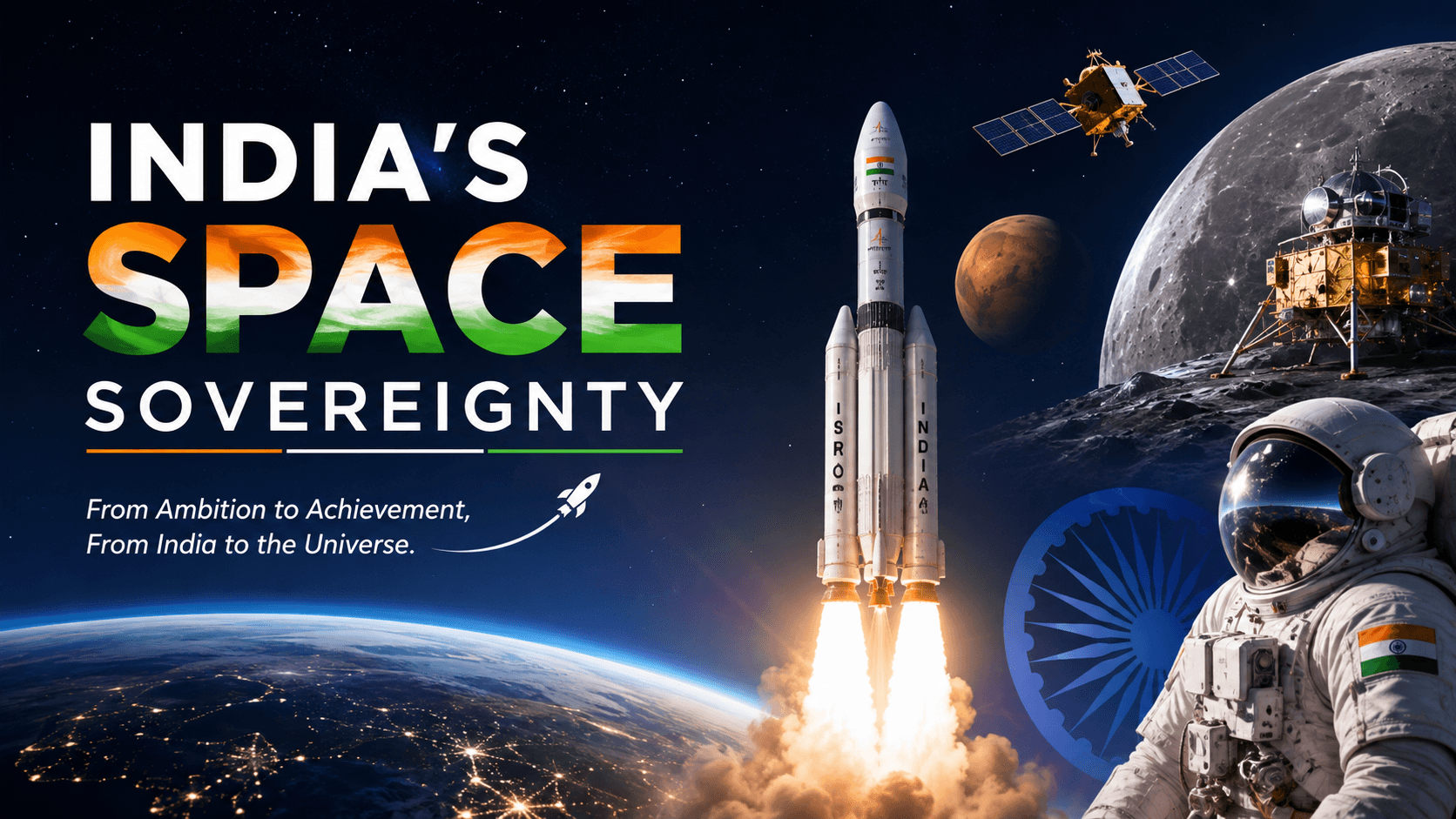
The Indian Space Policy 2023 has opened the entire space value chain to private participation, fostering innovation, investment and enterprise across the space ecosystem. Indian industry is now participating in satellite manufacturing, launch services, space applications and downstream services.
India’s space startup ecosystem has grown from just one startup in 2014 to over 400 in 2026, reflecting the rapid expansion of private participation and innovation across the space sector.
About Vikram-1 Mission
Vikram-1 is a fully indigenous, all-composite, 3-stage solid propulsion rocket developed by Hyderabad-based Skyroot Aerospace.
The mission demonstrates India’s growing private space capability and marks a major shift from a government-led to a public-private space ecosystem.
The launch validates India’s regulatory reforms under IN-SPACe and showcases the potential of private players in end-to-end space operations — from rocket design and manufacturing to launch and payload deployment.
Key Highlights of the Mission
First Private Orbital Launch: Vikram-1 is the first rocket designed, built, and launched to orbit entirely by an Indian private company. Precision Payload Deployment: All onboard payloads were placed accurately into their designated LEO.
Global Milestone: Only the third instance worldwide where a private firm achieved orbit independently on its maiden attempt.
Cost-Effective & Agile Design: The rocket uses advanced materials and modular architecture to reduce cost and turnaround time for future launches.
Why It Matters
Space Sector Liberalization: The success proves the impact of opening India’s space sector to private participation under the Indian Space Policy 2023.
Commercial Opportunities: It positions India as a competitive destination for small satellite launches, a fast-growing global market.
Atmanirbhar Bharat in Space: Reduces dependence on foreign launch providers and strengthens domestic launch infrastructure.
Innovation & Jobs: Encourages startups, R&D, and high-skill employment in aerospace, propulsion, and advanced manufacturing.
The Road Ahead
India's space sector stands at the threshold of a new era, driven by Government-led reforms and a vibrant private ecosystem. The Indian Space Policy 2023, liberalised FDI norms, and dedicated funding initiatives have opened the entire space value chain to any potential players.
These reforms have fostered a dynamic ecosystem marked by growing startups, indigenous innovation, and expanding commercial activities. Moreover, as Vikram-1 prepares for liftoff under Mission Aagaman, it would represent more than a technological milestone.
It reflects the growing confidence and capabilities of India's private space industry. With sustained policy support, public-private partnerships, and technological innovation, India is well positioned to emerge as a leading global space power and a key driver of the future space economy.
Conclusion
Vikram-1 is more than a rocket launch — it is a signal that India’s space economy is entering a new era. The milestone reinforces India’s ambition to become a leading hub for affordable and reliable access to space.
NOTE:- This topic is relevant for UPSC GS Paper-3 under Science & Technology and BPSC Mains GS Paper 3 under Developments in Science & Technology
SOURCE:- https://www.pib.gov.in/PressReleasePage.aspx?PRID=2286011®=3&lang=1
What milestone did Skyroot Aerospace achieve with Vikram-1?
Skyroot Aerospace successfully launched Vikram-1, India's first privately-built orbital launch vehicle, deploying its payloads with precision into orbit.
Where does India now rank globally after the Vikram-1 launch?
India became the third country, after the US and China, where a private company has independently achieved orbital launch capability.
Into which orbit did Vikram-1 deploy its payloads?
Vikram-1 placed satellites into Low Earth Orbit (LEO) on its very first orbital flight.
What policy enabled private companies like Skyroot to participate in space launches?
The Indian Space Policy 2023 opened the entire space value chain to private participation, fostering innovation, investment and enterprise across the space ecosystem.
How has India's space startup ecosystem grown in recent years?
India's space startup ecosystem has grown from just one startup in 2014 to over 400 in 2026.
What are the technical specifications of the Vikram-1 rocket?
Vikram-1 is a fully indigenous, all-composite, 3-stage solid propulsion rocket developed by Hyderabad-based Skyroot Aerospace.
What regulatory framework does the Vikram-1 launch validate?
The launch validates India's regulatory reforms under IN-SPACe and demonstrates the potential of private players in end-to-end space operations, from rocket design to launch and payload deployment.
What makes the Vikram-1 mission a global milestone?
It is only the third instance worldwide where a private firm has achieved orbit independently on its maiden attempt.
How is Vikram-1's design meant to reduce launch costs?
The rocket uses advanced materials and a modular architecture designed to reduce cost and turnaround time for future launches.
Is the Vikram-1 mission part of the BPSC/UPSC syllabus?
Yes, this topic is relevant for UPSC GS Paper 3 under Science and Technology, and for BPSC Mains GS Paper 3 under Developments in Science and Technology.