NCAER: Bihar needs to rethink on alcohol ban
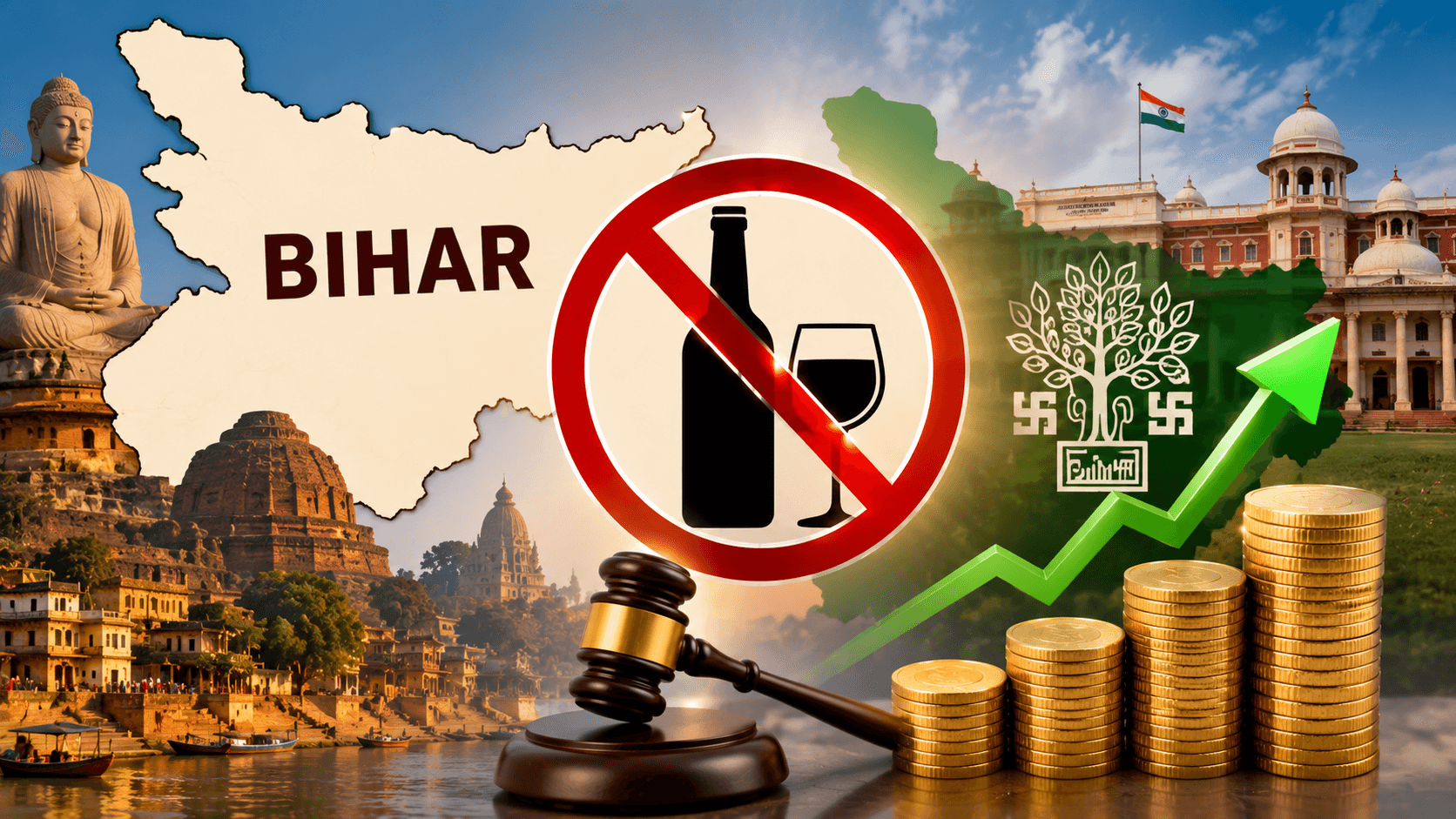
A new research paper by the National Council of Applied Economic Research (NCAER) has suggested that Bihar should withdraw its prohibition on alcohol.
The paper, titled 'Macro Perspective of Bihar's Development Achievements, Unfinished Agenda, and the Way Forward,' was led by economist Ratna Sahay and presented at the India Policy Forum.
What does the report say?
According to NCAER, the liquor ban imposed in Bihar in April 2016 has not delivered the intended results. First, it has not led to a decline in crimes against women, which was one of the key reasons for the ban.
Second, the ban has been followed by a rise in illicit liquor and the use of alternative intoxicants. Instead of ending alcohol consumption, it pushed it underground.
On the economic front, the report argues that restoring liquor excise duty to pre-ban levels could boost Bihar’s own revenue by 14-15%. It would also reduce government spending on enforcement, policing, and anti-smuggling operations.
Why Bihar’s Alcohol Ban Didn’t Work
When Bihar imposed prohibition in 2016, the idea was simple. Alcohol was seen as a major cause of domestic violence. Women’s groups and activists strongly supported it, hoping families would spend money on food and education instead of liquor. The goal was to improve social safety and household welfare.
Did It Reduce Crimes Against Women?
According to NCAER, the data says no. The paper states, "Reported crimes against women in Bihar have not declined post-2016. Instead, total reported crimes increased. Researchers found no broad-based drop in crimes against women. At the same time, the ban led to new problems—growth of illicit liquor networks, enforcement challenges, and corruption. The paper also flagged a rise in alternative intoxicants and illicit drugs, along with a surge in illegal liquor trade.
The Economic Cost
The ban hit Bihar’s finances hard. Before 2016, excise duty on alcohol was about 14% of the state’s own revenue. After the ban, the government not only lost this money but also spent more on policing, monitoring, and anti-smuggling drives. NCAER suggests that bringing back excise at old rates could restore that 14% revenue and ease fiscal pressure.
What Bihar Should Focus on Now
Beyond alcohol, the paper lists 6 priorities for Bihar’s development: education, health, governance & law and order, flood management, private sector growth, and women's empowerment.
It says reforms here are key to create jobs for Bihar’s young population and improve productivity. The study also notes that Bihar’s recovery after 2005 was driven by better law and order under Nitish Kumar’s government—through policing, judicial reforms, and accountability.
Why Bihar Matters
With an estimated population of 13.2 crore in 2026, Bihar accounts for over 9% of India’s population. It is larger than all but 10 countries in the world and remains India’s poorest state. That’s why what happens in Bihar is critical for India’s overall development goals.
Constitutional Provisions on Intoxication
The Indian Constitution does not ban alcohol outright, but it clearly sees it as something the state should try to control.
- Article 47 under the Directive Principles of State Policy says that the State should "endeavor to bring about prohibition of intoxicating drinks and drugs which are injurious to health, except for medicinal purposes.
- ”DPSPs are not legally binding like fundamental rights, but they act as guiding principles. The idea is to create conditions where people can live a healthy and good life.
- So, the Constitution treats alcohol as an “undesirable evil” that needs to be regulated, not promoted.
- At the same time, the Seventh Schedule puts alcohol completely in the hands of the states. It lists “production, manufacture, possession, transport, purchase, and sale of intoxicating liquors” as a state subject.
- This is why alcohol laws in India are so different from state to state. Some states, like Bihar and Gujarat, have full prohibition, while others allow regulated sale through government or private shops. In short, the Constitution gives states the freedom to decide what approach works best for them.
The Way Forward
NCAER’s view is that while the ban was introduced for social reasons, its outcomes after 8 years have been mixed. The growth of illegal trade and the loss of revenue are now affecting the state’s ability to fund development programs.
The think tank suggests that the government should consider lifting the ban and instead focus on strong regulation, public awareness, and measures to ensure women’s safety.
NCAER concludes that prohibition failed to meet its social goals and instead caused revenue loss and new enforcement problems. The way forward, it argues, is better regulation, not a ban.
The Bihar liquor ban falls under General Studies Paper II (Indian Polity and Indian Economy sections) for the BPSC Mains exam, as well as Bihar-specific General Studies and Current Affairs for both the Prelims and Mains. It is analyzed through social impact, constitutional provisions (Directive Principles of State Policy Article 47), and economic/administrative challenges.