Myristica Swamps: A Vanishing Ecosystem
This topic of environment is directly connected to UPSC GS Paper III (biodiversity, conservation, climate change, environmental degradation, and ecosystem services) & BPSC (Indian environment, biodiversity hotspots, wetland conservation, and sustainable development).
Why in the News?
In the recent months or years, Myristica swamp has been taking a place in the environment-related news. In fact, researchers have discovered a rare (endangered) Myristica swamp forest near the Goa–Maharashtra border, highlighting the importance of community-led conservation in protecting India’s threatened ecosystems.
A swamp is a wetland with waterlogged ground, covered with trees and other vegetation. It is usually found in low-lying areas where water collects, like river floodplains, coastal regions, and areas with poor drainage. Depending on the location, swamps can be freshwater or saltwater ecosystems.
The newly reported sacred grove, associated with Lord Shiva and protected by local communities for generations, covers approximately 8,200 square meters. It reportedly contains 39 plant species, including 70 individuals of the threatened tree Myristica magnifica.
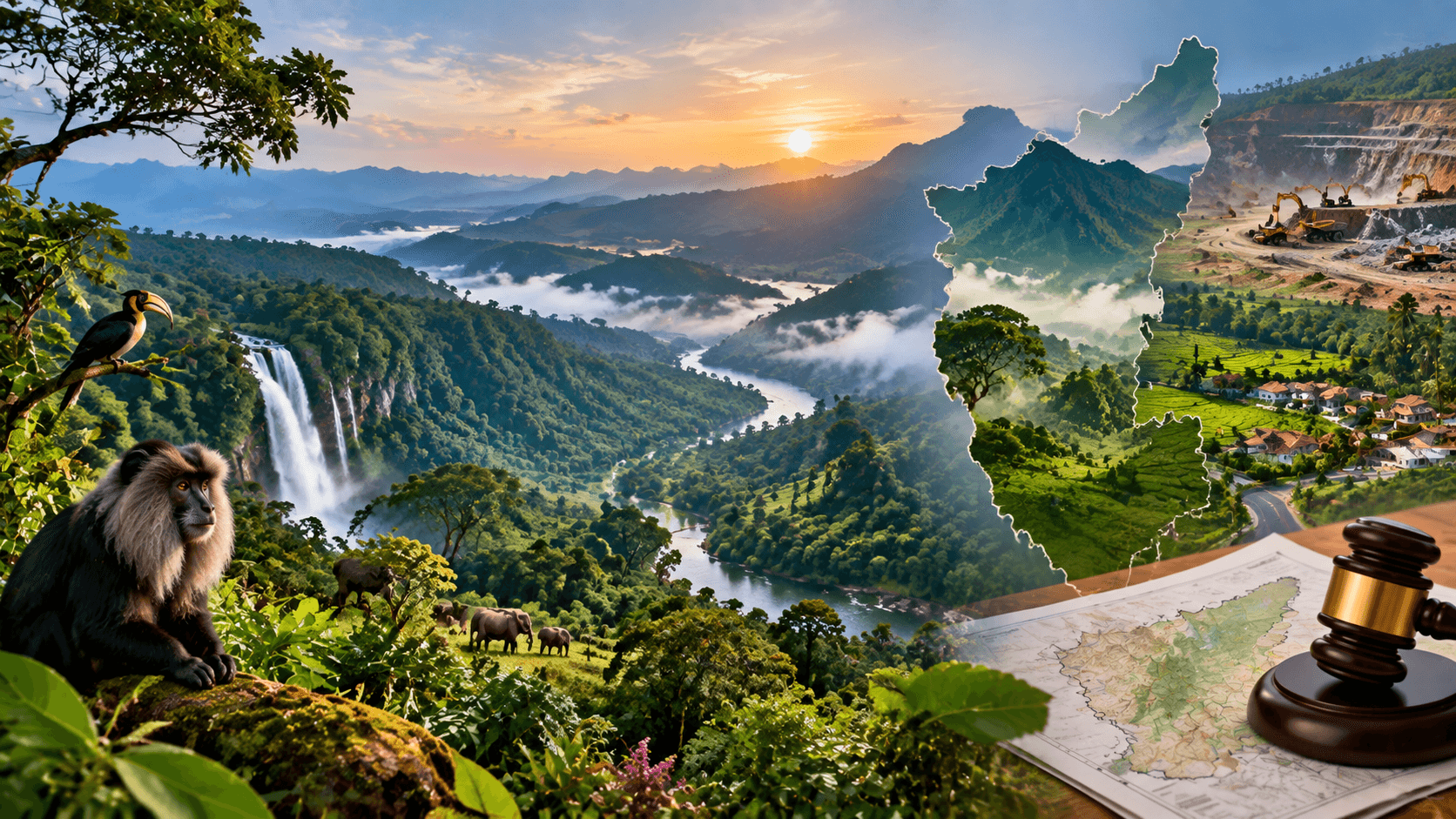
The discovery has renewed attention on Myristica swamps, rare freshwater forest ecosystems found mainly in the Western Ghats. Despite their ecological importance, these ancient wetlands are increasingly threatened by agricultural expansion, drainage, logging, and the conversion of natural forests into plantations.
What Are Myristica Swamps?
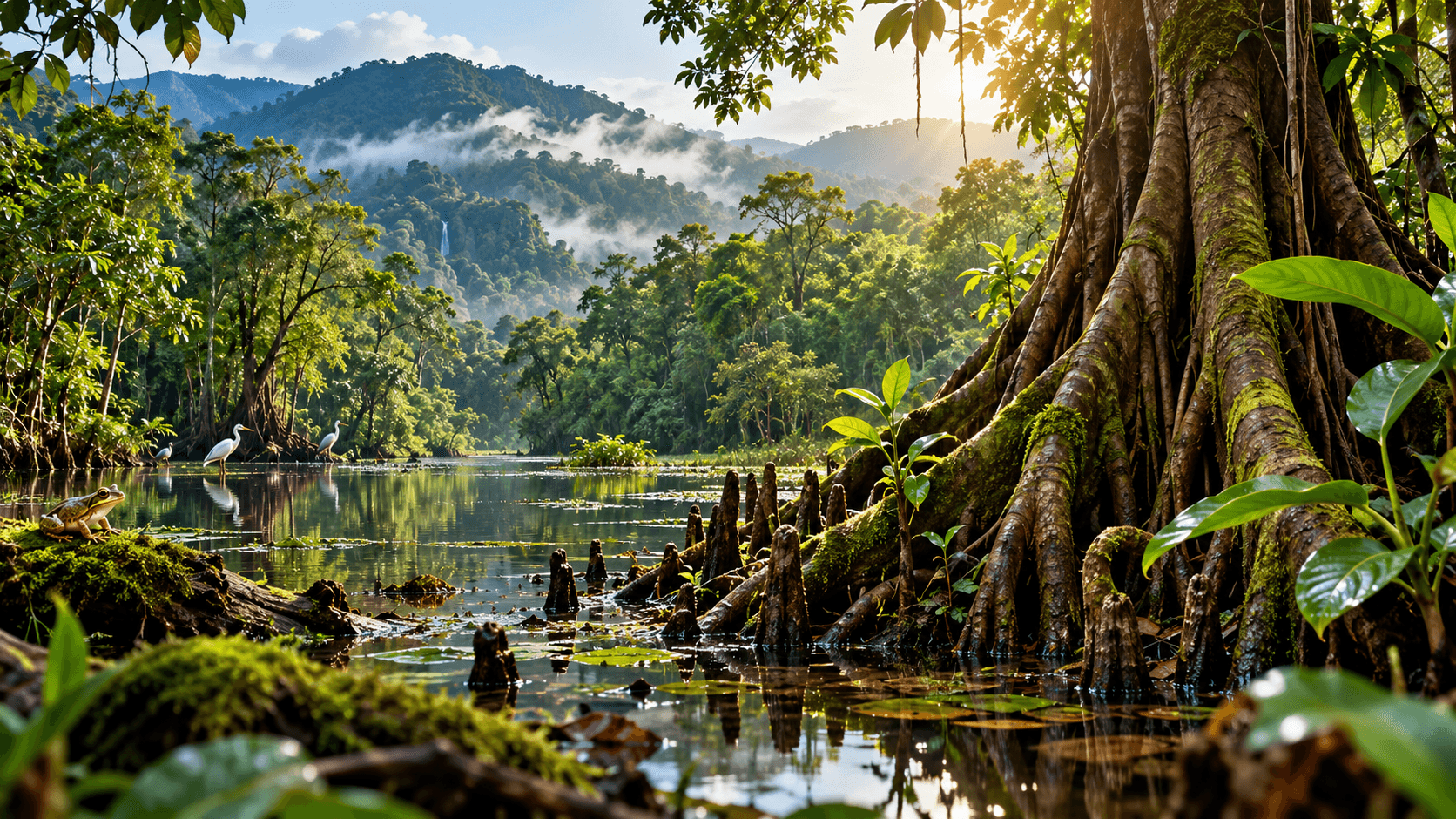
Myristica swamps are tropical freshwater wetlands dominated by evergreen trees belonging to the Myristicaceae family, which includes nutmeg and related plants. They are considered among India's most ancient and ecologically distinctive forest ecosystems.
These swamps generally occur in low-lying areas where water accumulates, creating waterlogged conditions that support specialized plant and animal communities. Unlike ordinary forests, their survival depends heavily on the continuous availability of freshwater and the maintenance of natural drainage patterns.
Myristica plants are sometimes described as living fossils because their lineage represents an ancient branch of flowering-plant evolution. However, the term does not mean that these plants have remained unchanged over millions of years.
Origin and Classification
The scientific recognition of Myristica swamps in India developed through botanical exploration and forest classification.
| 1960: | Botanist and forest officer K. Krishnamoorthy documented these distinctive habitats in the Travancore region of present-day Kerala. |
| 1968: | Forest researchers Champion and Seth introduced the category “Myristica Swamp Forests” to classify these ecosystems according to their characteristic vegetation. |
Their specialized vegetation, unusual root structures, and waterlogged soils distinguish them from other tropical forest types.
Distribution of Myristica Swamps in India
Myristica swamps are primarily associated with the Western Ghats, a globally recognized biodiversity hotspot. Their distribution is fragmented, with many surviving habitats restricted to small patches. Major areas include:
- Kerala: Swamps occur in the southern Western Ghats, including the Shendurney Wildlife Sanctuary and forest areas around Anchal and Kulathupuzha.
- Karnataka: Several swamp habitats have been documented in the Western Ghats, including the Uttara Kannada region.
- Goa–Maharashtra border: The recently reported discovery highlights the importance of investigating and protecting additional habitats.
- Andaman and Nicobar Islands: Smaller distributions have also been reported.
Research cited in Current Science identifies approximately 53 surviving patches in the Shendurney Wildlife Sanctuary and the Anchal and Kulathupuzha forest areas of Kerala. This fragmentation makes the protection of every remaining habitat particularly important.
Ecological Characteristics and Importance
Myristica swamps are not simply forests growing in wet soil. They are complex ecosystems that connect vegetation, freshwater resources, and wildlife. Their ecological importance extends from biodiversity conservation to flood management and climate regulation.
1. Specialized roots and waterlogged soils
Myristica swamps develop in soils that remain saturated for long periods. Because waterlogged soil contains limited oxygen, many plants require specialized adaptations to survive.
Some swamp-associated plants develop protruding or stilt roots, while certain wetland species possess pneumatophores—specialized aerial roots that facilitate gas exchange. These adaptations help plants survive under challenging soil conditions.
2. Natural flood control
The soil, vegetation, and interconnected drainage channels of Myristica swamps help retain rainwater and regulate its movement towards nearby streams and rivers.
By slowing water runoff and supporting water retention, these wetlands can reduce local flood risks. When they are drained or destroyed, their water-holding capacity declines, potentially increasing runoff and soil erosion during the monsoon.
3. Groundwater recharge and freshwater availability
These swamps play an important role in maintaining local hydrological systems. Their water-retaining soils and natural drainage networks support nearby streams and can contribute to groundwater recharge, depending on local geological conditions.
By helping sustain stream flow, they can also support freshwater availability during periods of low rainfall.
4. Carbon storage and climate regulation
The vegetation and soils of wetlands store carbon, making them important components of the natural carbon cycle.
When these ecosystems are drained or disturbed, their carbon-storage capacity may decline, and stored carbon can be released under certain conditions. Protecting Myristica swamps therefore contributes to climate mitigation and long-term ecosystem resilience.
5. Natural water filtration
Forest mounds, ridges, and narrow channels create a complex drainage network that directs water towards nearby rivers and streams.
This system can trap sediments and retain some pollutants, helping maintain water quality and supporting the ecological health of connected freshwater habitats.
Biodiversity: A Haven for Rare and Threatened Species
The specialized conditions found in Myristica swamps support a diverse range of plants and animals, including endemic and threatened species. Their conservation is therefore important not only for protecting individual species but also for maintaining the biodiversity of the Western Ghats.
Important plant species
- Myristica fatua: A characteristic tree associated with these swamp habitats.
- Myristica fatua var. magnifica: A distinctive taxon associated with Myristica swamp forests.
- Myristica magnifica: A threatened tree reported from the recently identified sacred-grove habitat.
- Gymnacranthera canarica: An evergreen tree associated with the Western Ghats.
- Semecarpus kathalekanensis: A rare tree native to the Western Ghats.
Conservation categories should be verified against the relevant IUCN Red List assessments, particularly where scientific names or taxonomic classifications differ between sources.
Animal species supported by these ecosystems
Myristica swamps and their surrounding forests provide habitat for several important animal groups, including:
- Lion-tailed macaque: An endangered primate associated with the Western Ghats.
- Malabar pit viper: A snake found in the Western Ghats.
- Hornbills: Forest birds that play an important role in seed dispersal.
- Amphibians and reptiles: Species that depend on moist forest habitats and freshwater environments.
- Fish, butterflies, spiders, and mammals: Diverse groups that contribute to the ecological functioning of these habitats.
Research cited in the source material reports that Myristica swamps support more than half of Kerala’s amphibian species, around 26% of its bird species, 23% of its butterflies, over 20% of its reptiles, 11% of its spiders, 8.4% of its fish, and 6.6% of its mammal species.
These figures reflect reported research findings and should be interpreted in the context of the original study's geographical coverage and methodology.
Why Are Myristica Swamps Disappearing?
Despite their ecological importance, Myristica swamps are among the most vulnerable forest ecosystems because their survival depends on specific water and soil conditions. Even relatively small changes in land use can disrupt their ecological balance.
1. Agricultural expansion: Historically, wetlands have been drained to make land suitable for cultivation. The conversion of Myristica swamps into paddy fields reduces their area and destroys the waterlogged conditions required by their characteristic vegetation.
2. Expansion of plantations: The spread of tea, areca nut, oil palm, and teak plantations has contributed to natural habitat loss in parts of the Western Ghats. Plantation development can alter drainage patterns, disturb soils, and fragment the remaining swamp forests, making it more difficult for native species to survive.
3. Logging and commercial exploitation: Timber extraction has placed additional pressure on Myristica species. A paper published in Current Science reports that these trees faced commercial exploitation during the 1970s, including for match manufacture and packing cases. Such activities added to the pressure on already vulnerable populations.
4. Drainage, dykes, and burning: Draining wetlands, constructing dykes, and burning vegetation can interfere with the natural movement and storage of water. As the wetlands lose their water-retention capacity, the surrounding landscape may experience increased erosion and flooding during the monsoon, followed by reduced stream flow during drier periods.
5. Habitat fragmentation: Many surviving Myristica swamps now exist as small, isolated patches surrounded by agricultural land or other human-dominated landscapes. This fragmentation restricts habitat connectivity, increases the vulnerability of small populations, and raises the risk of local extinction.
6. Climate change: Changes in rainfall patterns, temperature, and seasonal water availability may place additional stress on these specialized ecosystems. Climate change can intensify the effects of existing habitat degradation, making the protection of natural water systems increasingly important.
Myristica Swamps vs. Mangrove Forests
Myristica swamps and mangrove forests are both important wetland ecosystems but differ in ecology and location. Myristica swamps are primarily freshwater systems found in inland low-lying habitats, dominated by evergreen trees of the Myristicaceae family, while mangroves are found along tropical and subtropical coasts and estuaries in saline or brackish water with salt-tolerant trees and shrubs.
Myristica swamps face threats like drainage, agricultural conversion and habitat fragmentation, whereas mangroves are threatened by coastal development, aquaculture, pollution and altered tidal flows.
Both play a crucial role in carbon storage and biodiversity; Myristica swamps help in freshwater regulation and flood mitigation, while mangroves provide coastal protection and act as nursery habitats, highlighting why wetlands must be conserved as functioning ecosystems rather than treated as unused land.
Way Forward
The decline of Myristica swamps calls for protecting not just flora and fauna but also the water systems that sustain them.
1. Habitat protection: Map remaining patches, stop encroachment and illegal logging, give legal protection, restore water flow and protect surrounding catchments.
2. Research: Conduct ecological surveys, use DNA barcoding for species identification, and ensure long-term monitoring of biodiversity and hydrology.
3. Community role: Involve locals through sacred grove traditions, monitoring and restoration, while respecting their knowledge.
4. Awareness & coordination: Joint action by government, researchers and communities, with public awareness on their role in freshwater security, flood control, biodiversity and climate resilience.
Conclusion
Myristica swamps are much more than rare forests of evergreen trees. They are ancient freshwater ecosystems that sustain threatened biodiversity, regulate water flow, store carbon, and strengthen the ecological resilience of the Western Ghats. Protecting Myristica swamps requires an integrated approach that combines scientific research, legal protection, hydrological restoration, and community participation. Their conservation is essential not only for safeguarding rare species but also for maintaining freshwater resources, reducing flood risks, and strengthening long-term climate resilience.
Reference: