'Museum of Word'
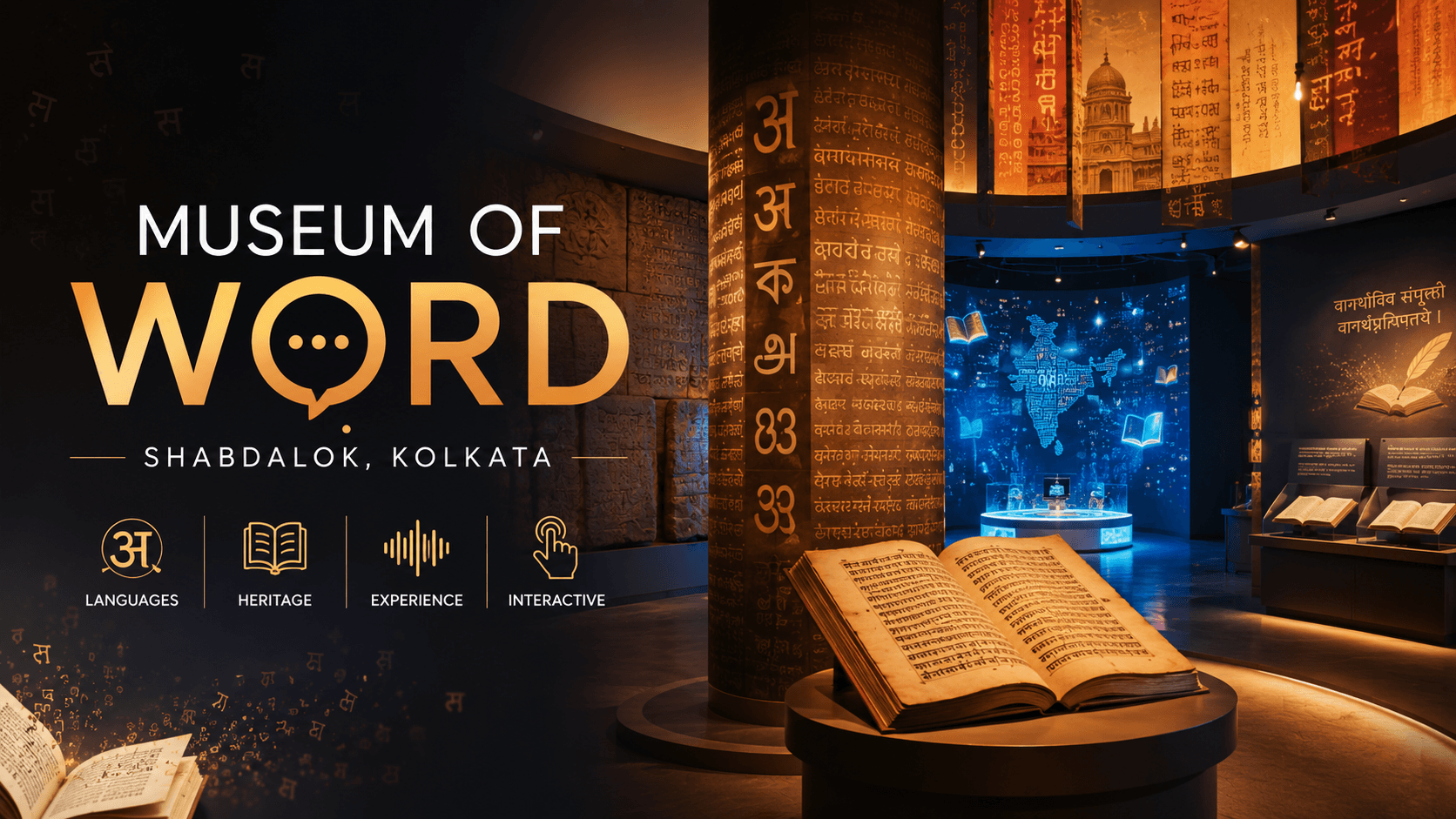
India’s first immersive language museum, the Museum of Word, was recently opened at the National Library in Kolkata. It is also known as Shabdalok.
Shabdalok is India’s first immersive museum dedicated to languages, words and the country’s multilingual heritage. It has been developed by the National Library of India under the Union Ministry of Culture. It is India’s largest library by collection size; it originated as the Imperial Library and was renamed the National Library after Independence.
Objective: The museum aims to show how words shape language, how language reflects culture, and how cultural traditions are passed down across generations.
A museum where words can be heard, touched, smelled and even imagined .The Museum of Word offers an interactive journey through the history, evolution and power of language. The Museum is maintained under the National Council of Science Museums (NCSM).
About India’s First Immersive Language Museum
- The first phase of the museum chronicles the diversity of Indian languages, scripts, and literature.
- Instead of being a conventional repository, it has been designed as an immersive cultural experience with digital displays, holograms, and motion-sensor technology to engage visitors. It brings India’s linguistic heritage to life through visual, auditory, tactile, and interactive displays, turning intangible traditions into an engaging experience for visitors.
- Shabdalok celebrates India’s 22 official languages and traces their journey from oral traditions and ancient manuscripts to printed works and modern electronic texts.
- One of its key attractions allows visitors to trace the evolution of words over centuries, illustrating how their pronunciation, meaning, and usage have changed over time.
- Historical Journey: The galleries trace the evolution of language and writing — from Omkar and Panini’s grammar to the Shruti and Smriti traditions, and further to inscriptions, manuscripts, the printing press, and modern digital archives.
Collections and Exhibits: The museum displays dialects, folk traditions, copper plates, inscriptions, Bhojpatra texts, handwritten manuscripts, printed books, lullabies, and other linguistic artifacts from across India.
This topic is equally significant for BPSC’s General Studies (GS) Paper (PT) and General Studies (GS) Paper II (Mains) as well.
Source:-https://www.pib.gov.in/PressReleasePage.aspx?PRID=2286356®=3&lang=1
What is the Museum of Word and where is it located?
The Museum of Word, also known as Shabdalok, is India's first immersive language museum, recently opened at the National Library in Kolkata.
Which ministry developed the Museum of Word?
It was developed by the National Library of India under the Union Ministry of Culture.
What is significant about the National Library where the museum is housed?
The National Library is India's largest library by collection size; it originated as the Imperial Library and was renamed the National Library after Independence.
What is the main objective of the Museum of Word?
The museum aims to show how words shape language, how language reflects culture, and how cultural traditions are passed down across generations.
Under which body is the Museum of Word maintained?
The museum is maintained under the National Council of Science Museums (NCSM).
What technology does the museum use to engage visitors?
It uses digital displays, holograms, and motion-sensor technology to create an immersive cultural experience rather than a conventional repository.
How many official languages does Shabdalok celebrate?
Shabdalok celebrates India's 22 official languages, tracing their journey from oral traditions and ancient manuscripts to printed works and modern electronic texts.
What historical journey do the museum's galleries trace?
The galleries trace the evolution of language and writing from Omkar and Panini's grammar to the Shruti and Smriti traditions, and further to inscriptions, manuscripts, the printing press, and modern digital archives.
What kinds of artifacts does the museum display?
The museum displays dialects, folk traditions, copper plates, inscriptions, Bhojpatra texts, handwritten manuscripts, printed books, lullabies, and other linguistic artifacts from across India.
Is this topic part of the BPSC/UPSC syllabus?
Yes, this topic is significant for BPSC's General Studies Paper in both the Preliminary exam and the Mains GS Paper II.