

India’s 1st Soil Carbon Payments Initiative
Why in News?
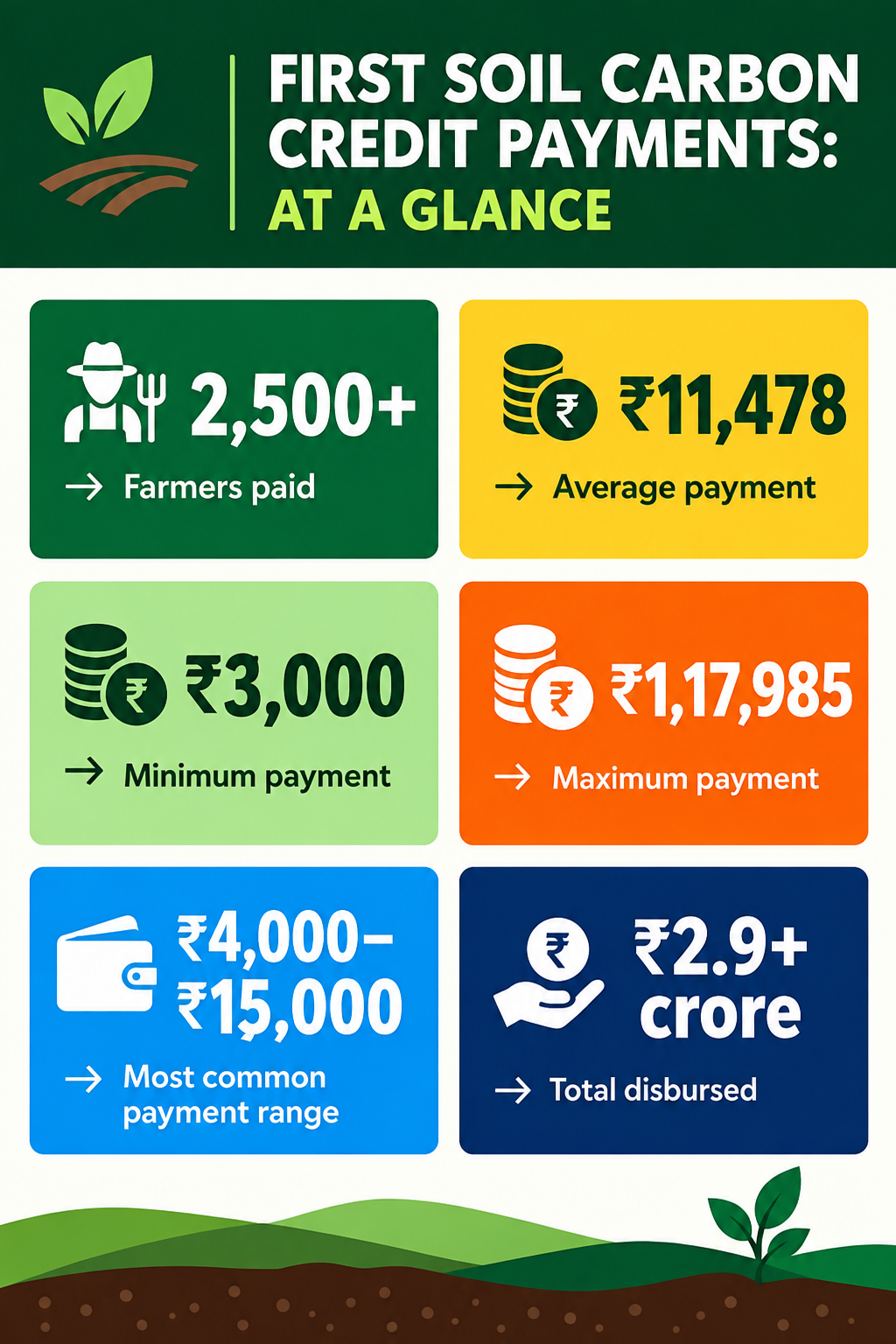
Recently, India's agri-carbon market has reached the grassroots level. Under the 'Aadi' farmer carbon program, over 2,500 smallholder farmers from Punjab and Haryana have received digital payments for shifting to regenerative agricultural practices.
Regenerative agricultural practices
Regenerative agriculture is a holistic farming approach. Its focus is to restore soil health, increase biodiversity, and improve overall ecosystem functions, while also ensuring long-term productivity and resilience in farming. Sustainable farming only tries to maintain the existing condition of land and resources. Regenerative agriculture goes one step further it actively tries to improve the system. It rebuilds soil fertility, strengthens biodiversity, and makes the ecosystem more resilient to climate change and other stresses.
About the Initiative
| What is the 'Aadi' Programme | Launched in 2019 by Grow Indigo with technical guidance from ICAR, the 'Aadi' program aims to link sustainable farming with extra income for farmers. |
| Farming Practices Adopted: | Between 2019 and 2022, farmers shifted to regenerative practices like Direct Seeded Rice (DSR), reduced tillage, and better crop residue management. These practices help improve soil health and cut greenhouse gas emissions. |
| Payment to Farmers: | Farmers got digital payments based on their share of carbon credits generated from their fields. The first payments ranged between ₹3,000 and ₹15,000. |
| How Carbon Credits Are Generated: | The reduction in emissions and increase in soil carbon were scientifically measured and independently verified. Credits were then issued under the globally recognized Verra VM0042 methodology. |
| Scale of the Program: | The initiative is huge; it covers over 2 million acres and more than 1 lakh farmers across 7 states, making it one of India's largest Agri carbon programs. |
| Environmental Benefits: | The program has brought big environmental gains; it saved around 45 billion liters of water, prevented the burning of over 2 lakh tonnes of crop residue, and avoided around 1,000 tonnes of PM2.5 emissions. |
| Significance: | This initiative shows a strong link between science, carbon markets, and farmer welfare. It proves that regenerative agriculture can increase farmer income while also improving soil health, conserving resources, and making farming more climate resilient. |
What are the key practices under regenerative agriculture?
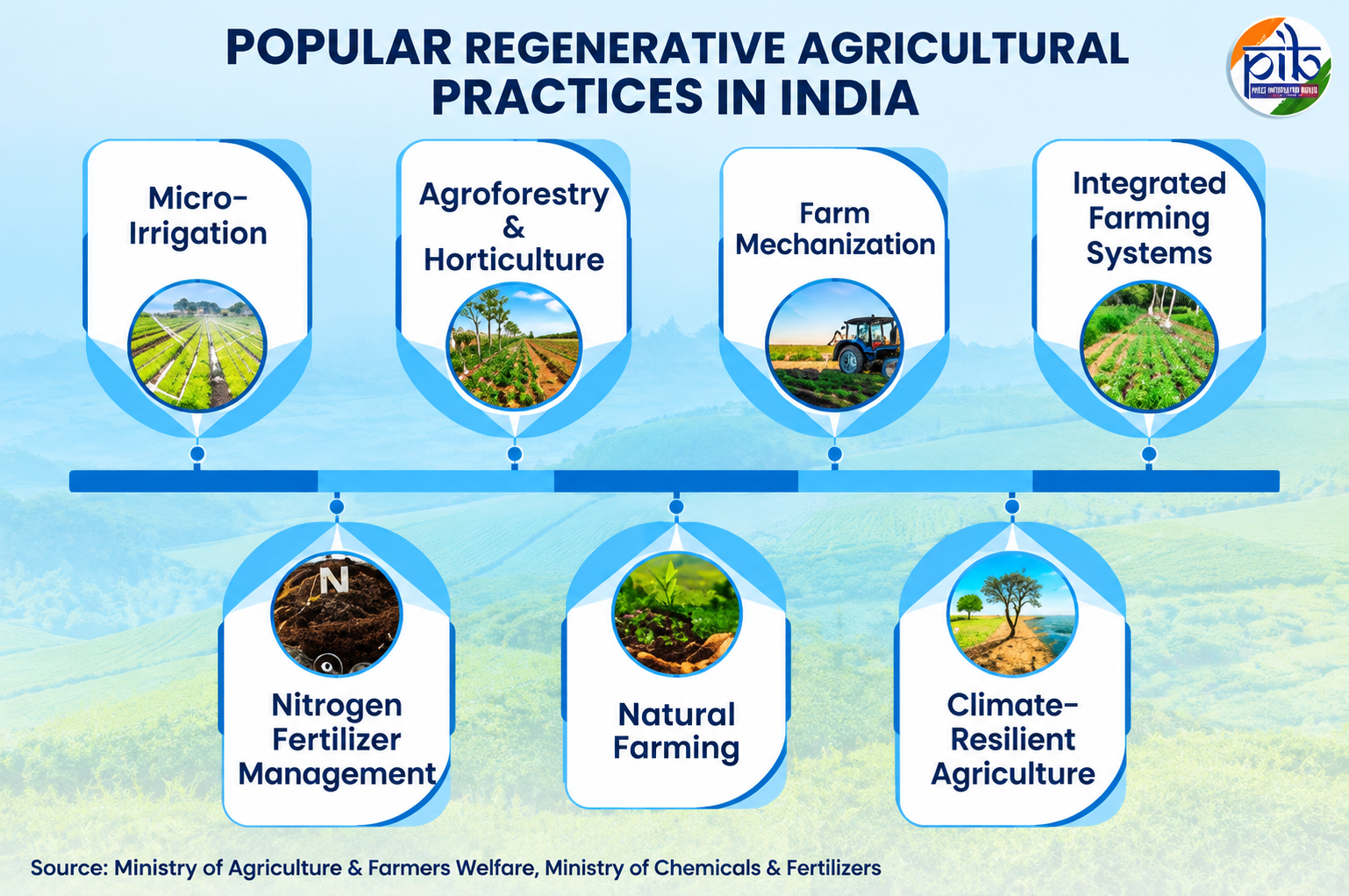
Regenerative agriculture is not one single practice but a combination of practices that restore soil and save resources.
Major practices are
A. Water and Resource Efficiency
Micro-irrigation: Systems like drip, sprinkler, and fogger deliver water directly to plant roots. It reduces wastage, improves water-use efficiency, and makes farming more resilient to drought.
Farm Mechanization: Use of modern agri-machinery helps in timely and precise farm operations. It optimizes use of water, fuel, and fertilizers, reduces wastage, lowers carbon footprint, and increases productivity.
B. Soil and Nutrient Management
Nitrogen Fertilizer Management: Focuses on the right fertilizer, the right dose, and the right timing. Practices like deep placement of urea, leaf color chart, use of cyanobacteria, and legume intercropping improve nitrogen-use efficiency, reduce nitrous oxide emissions, and prevent nutrient loss.
Natural Farming: A chemical-free approach based on bio-inputs like Beejamrut, Jeevamrut, GhanJeevamrut, Neemastra, and Dashparni. It promotes traditional seeds, mulching, multi-cropping, minimal soil disturbance, and livestock integration to improve soil health and cut input cost.
Soil Health Management: Practices like green manuring, cover cropping, and mulching increase soil fertility and organic matter. They improve moisture retention, prevent erosion, support microbial activity, and help in carbon sequestration.
C. Integrated and Climate-Resilient Farming Systems
Integrated Farming Systems (IFS): Combines crops with livestock, fisheries, horticulture, agroforestry, and apiculture. It ensures maximum resource use, diversifies farmer income, reduces risks, and builds resilience against climate extremes.
Agroforestry: Integrates trees with crops to improve soil moisture, regulate temperature, store carbon, restore degraded land, and provide extra income, especially in rainfed areas.
Climate-Resilient Agriculture (CRA): It uses balanced nutrient management, efficient water use, pest management, soil moisture conservation, community nurseries, seed and fodder systems, and collective marketing to make agriculture stronger against climate change impacts.
How is India Promoting Regenerative Agriculture?
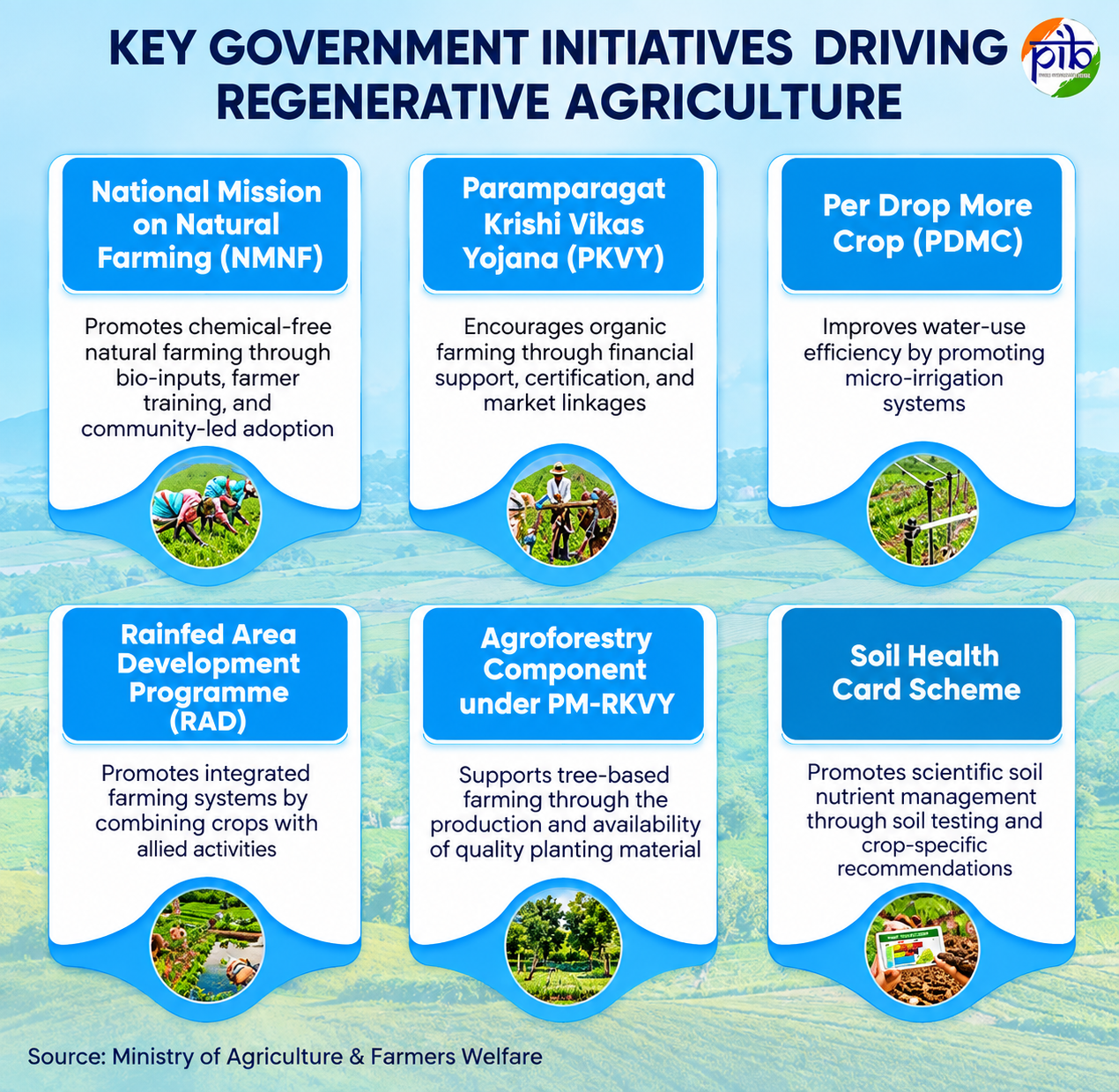
National Mission on Natural Farming (NMNF) 2024: The mission promotes natural farming by providing financial help, training, and bio-inputs. It gives Rs 4,000 per acre per year for two years and supports 10,000 bio-input resource centers. As of March 2026, 18,786 clusters have been formed covering 8.80 lakh hectares and 18.19 lakh farmers.
Paramparagat Krishi Vikas Yojana (PKVY) 2015: This scheme promotes organic farming with support for eco-friendly practices and certification. It provides Rs 31,500 per hectare over three years. Since inception, 16.90 lakh hectares have been covered.
Per Drop More Crop (PDMC) 2015-16: It promotes micro-irrigation like drip and sprinkler to improve water-use efficiency. It provides 55% assistance to small and marginal farmers and 45% to others. As of May 2026, 109 lakh hectares have been covered with Rs 26,325 crore central assistance.
Rainfed Area Development Programme (RAD) 2014-15: It promotes integrated farming systems by combining crops with livestock, fisheries, and horticulture. It gives Rs 30,000 per family and Rs 10,000 per cluster for training. So far, 9.53 lakh hectares and 15.73 lakh farmers have benefited.
Agroforestry Component under PM-RKVY 2023-24: It promotes tree-based farming by supporting nurseries and quality planting material. It gives 100% assistance to govt agencies and 50% to private beneficiaries. In 2025-26, 135 new nurseries were set up, and 176.59 lakh saplings were raised.
Soil Health Card Scheme 2015: It provides soil test reports based on 12 parameters and advises balanced fertilizer use. As of March 2026, 25.89 crore Soil Health Cards have been generated, and 70,002 Krishi Sakhis have been trained.
Conclusion
India's agri-carbon market reaching the farm level through the 'Aadi' program is a major step towards linking farmer income with climate action. Initiatives like NMNF, PKVY, PDMC, RAD, Agroforestry, and Soil Health Card show that the government is actively promoting regenerative practices. With scientific measurement, carbon credit incentives, and grassroots training, regenerative agriculture can ensure higher income, better soil health, water conservation, and climate resilience, making Indian farming more sustainable for Viksit Bharat 2047.