India’s Unemployment Rate: What PLFS Reveals?
Why in News?
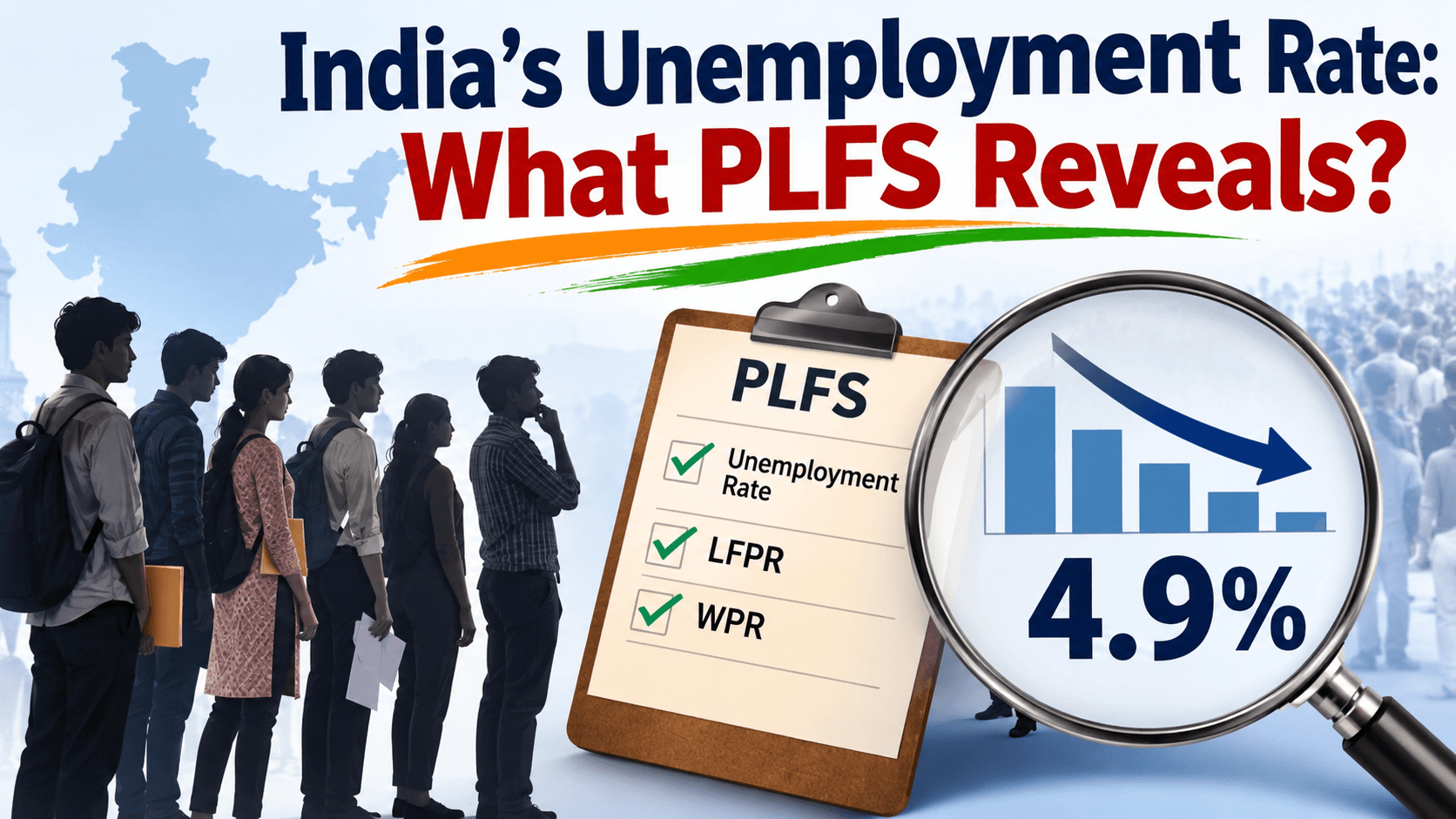
Recently, according to the latest Periodic Labour Force Survey (PLFS) released by the Ministry of Statistics and Programme Implementation (MoSPI), the unemployment rate among people aged 15 years and above stood at 4.9% in October 2026, compared to 5% in September 2026.
This report indicates slight improvement, with the overall unemployment rate declining compared to both the previous month and the same month last year.
The report also highlights improvements in rural employment indicators and a slight rise in the Labor Force Participation Rate (LFPR). However, differences between rural and urban areas, as well as between men and women, continue to remain visible.
About the Periodic Labour Force Survey (PLFS)
The Periodic Labour Force Survey (PLFS), launched in April 2017 by the NSO under MoSPI, is India’s official survey to track employment and unemployment. Since January 2025, it provides monthly and quarterly estimates for both rural and urban areas using Current Weekly Status (CWS), along with an annual report based on the calendar year. It measures the labor market through three key indicators:
| Labour Force Participation Rate (LFPR): | % of people who are either working or actively looking for work. LFPR = (Employed + Unemployed) / Total Population × 100. |
| Worker Population Ratio (WPR): | % of employed persons in total population. WPR = Employed / Total Population × 100. |
| Unemployment Rate (UR): | % of unemployed among those in the labor force. UR = Unemployed / (Employed + Unemployed) × 100 |
Classification of Activity Status: PLFS uses 2 frameworks:
| Usual Status (ps+ss): | Based on activity in the last 365 days. It captures long-term, stable employment. It combines Principal Status (ps) + Subsidiary Status (ss). |
| Current Weekly Status (CWS): | Based on activity in the last 7 days. A person is counted as employed if they worked for at least 1 hour on any day in that week. This is the main metric for monthly and quarterly reports. |
Let's understand the major findings of the October 2026 PLFS report.
1. India's Overall Unemployment Rate in October 2026
The overall unemployment rate declined marginally by 0.1 percentage point, from 5% in September 2026 to 4.9% in October 2026. On a year-on-year basis, the improvement was slightly more significant. The unemployment rate declined by 0.3 percentage points compared to October 2025.
2. Rural and Urban Unemployment Rates: What Has Changed?
The survey shows that unemployment declined in both rural and urban areas during October 2026.
Here is a comparison:
- Rural unemployment rate: Declined from 4.4% in September to 4.2% in October 2026.
- Urban unemployment rate: Declined from 7% to 6.7% during the same period.
The figures indicate that the improvement was more noticeable in rural areas. However, urban unemployment continues to remain higher than rural unemployment.
3. Gender-Wise Unemployment Rate: Male vs. Female
The PLFS report also highlights differences in unemployment rates between men and women.
Male Unemployment Rate
- The overall male unemployment rate declined from 5.1% in October 2025 to 4.9% in October 2026.
- In rural areas, the male unemployment rate fell from 4.6% to 4.3%.
Female Unemployment Rate
- The overall female unemployment rate declined by 0.4 percentage points, from 5.4% in October 2025 to 5% in October 2026.
- In urban areas, the female unemployment rate among people aged 15 years and above stood at 8.7%, compared to 6% among males in the same age group.
The figures show that female unemployment remains a significant concern, particularly in urban areas.
4. Labor Force Participation Rate (LFPR) Increased in October 2026
Apart from unemployment, the survey also reported an improvement in the Labor Force Participation Rate (LFPR).
The overall LFPR increased to 55.7% in October 2026, compared to 55.5% in September 2026.
The area-wise figures are as follows:
- Rural LFPR: Increased from 58% to 58.4%.
- Urban LFPR: Slightly declined from 50.7% to 50.5%.
This means that rural labor force participation improved, while urban participation witnessed a marginal decline.
5. Female Labor Force Participation Rate Shows Improvement
One of the important findings of the October 2026 survey is the improvement in female labor force participation. The overall female LFPR increased to 35% in October 2026, compared to 34.6% in September 2026.
Rural Female LFPR: In rural areas, female LFPR increased by 0.6 percentage points over the previous month, reaching 39.5% in October 2026.
Urban Female LFPR: In urban areas, female LFPR remained unchanged at 25.9%.
The data suggests that women's participation in the labor force improved mainly in rural areas, while urban female participation remained stable.
Note: According to the World Bank, raising the female Labour Force Participation Rate (LFPR) to 50% could be the best way for India to raise its GDP growth rate closer to the 8% needed to become a high-income country by 2047.
Some challenges remain:
- Urban unemployment is still higher than rural unemployment.
- Female unemployment in urban areas remains higher than male unemployment.
- The urban labor force participation rate has witnessed a slight decline.
- Female participation in urban areas has remained unchanged.
Conclusion
The October 2026 PLFS report indicates a marginal improvement in India's employment scenario. The decline in unemployment, particularly in rural areas, along with an increase in female labor force participation, represents a positive development. However, the differences between rural and urban employment indicators and between male and female participation highlight the need for continued efforts to improve employment opportunities across the country.
Reference: