India's First Hydrogen-Powered Train
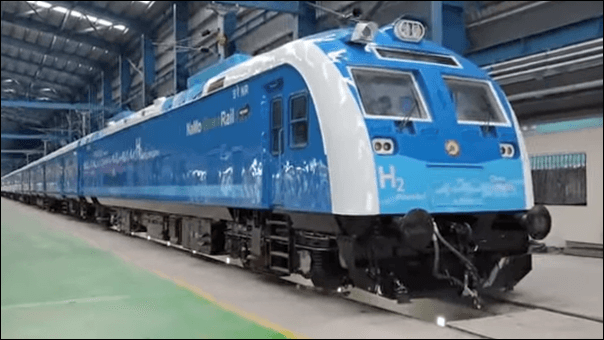
Recently India's first indigenous hydrogen-powered train inaugurated in Jind–Sonipat section, Northern Railway. It Marks India’s big step into green rail mobility and cuts reliance on diesel.
With this, India joins a selected group of countries exploring hydrogen-powered rail transportation. These include Germany, Japan, China and the United States.
It’s part of Indian Railways’ push for net-zero emissions by 2030. Hydrogen trains run on fuel cells, so the only emission is water vapor — no smoke, less noise, and much cleaner for routes that aren’t fully electrified yet.
This Jind–Sonipat run is basically the pilot. If it performs well, expect more hydrogen corridors in Himachal, Uttarakhand, and other hilly/non-electrified sections.
Inside India's First Hydrogen Train
The hydrogen train project has been developed in accordance with design approval and technical specifications prepared by the Research, Design & Standards Organisation (RDSO). Designed and developed entirely in India, the project demonstrates the vision of Atmanirbhar Bharat.
Technology Behind the Train
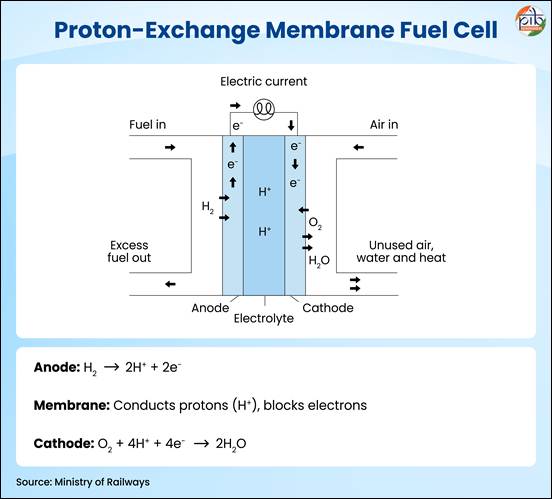
Hydrogen fuel cell technology produces electricity through a chemical reaction using hydrogen. The primary energy source is a Proton Exchange Membrane Fuel Cell (PEMFC).
This is a fuel cell that generates electricity by reacting hydrogen and oxygen across a proton-conducting Perfluoro sulfonic Acid (PFSA) polymer membrane.
The process produces only water vapour and heat as byproducts. Hydrogen is a high-energy fuel, 120 MJ/Kg (megajoules per kilogram) in comparison to diesel, which is 43 MJ/Kg. It is low maintenance with a manageable carbon footprint.
The project combines advanced propulsion technology with dedicated hydrogen storage, refuelling and operational infrastructure. It will demonstrate the feasibility of clean rail transportation in India.
Key Features of the Hydrogen
10-car hydrogen fuel cell-based trainset.
Powered by a 1200 kW hydrogen fuel cell propulsion system.
Approved to operate at a maximum speed of 75 kmph with a design speed of 110 kmph.
Capacity of Around 2,600 Passengers.
Developed from the design stage through prototype manufacturing.
Hydrogen Infrastructure
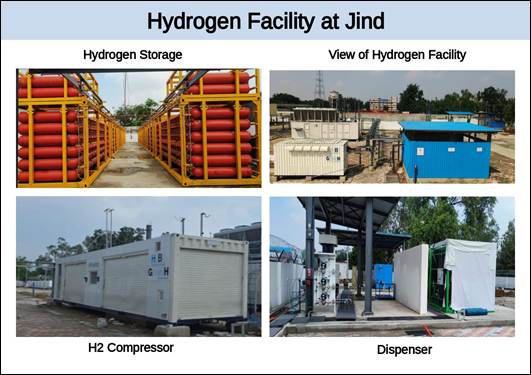
The country's largest railway hydrogen storage and refuelling facility has been established at Jind, Haryana. The indigenous facility stores nearly 3,000 kg of hydrogen at a time. It will support hydrogen-powered train operations.
The Petroleum and Explosives Safety Organisation (PESO) has granted the required licence. The licence covers storage and dispensing of compressed hydrogen gas at the site. The hydrogen ecosystem has been designed in accordance with internationally accepted standards.
The train consists of two Hydrogen Driving Power Cars (DPCs) and eight Trailer Coaches (TCs). Each DPC houses fuel cells, lithium iron phosphate (LFP) batteries and hydrogen storage cylinders.
Ensuring Safe Operations
Indian Railways has established a comprehensive operational and safety framework to support the hydrogen train operations. Multiple independent safety systems continuously monitor, verify and protect every stage of hydrogen storage, transfer and utilisation.
Operational Preparedness
- The maintenance facility at Shakurbasti in Delhi has been prepared for hydrogen train operations.
- The hydrogen refuelling system will remain under 24×7 monitoring.
Safety Measures
- Hydrogen leak detectors have been installed at the production, storage and dispensing facilities.
- Flame detectors have also been installed for continuous monitoring.
- Safety sensors will undergo regular inspection and cleaning.
- Non-stop ventilation keeps air always moving through the train.
- If anything unusual is detected, like heat, flame or smoke, the system can automatically cut off the hydrogen supply on its own.
- The Loco Pilot’s cabin has been designed with a special mode that allows the train to be moved to safety in an emergency.
Towards Sustainable Rail Mobility
The project helps validate technology, operating procedures and maintenance practices. It also strengthens the technical capabilities required to support hydrogen-powered mobility at scale. It supports the National Green Hydrogen Mission and net-zero carbon emission goals.
With the continued modernisation of Indian Railways, the initiative lays the foundation for wider adoption. The project represents an important step towards building a more resilient transport system.
Conclusion
Indian Railways is entering a new era of clean and sustainable transportation. Hydrogen fuel cell technology has emerged globally as a promising alternative to fossil fuel-based traction systems. India's first indigenous hydrogen-powered train marks an important step in adopting this next-generation technology.
It is equally significant for the BPSC Prelims, as well as for the Mains General Studies Paper I (National and International Importance Current Affairs) and General Studies Paper II (Role and Impact of Science and Technology in Economic Development).
https://www.pib.gov.in/PressReleasePage.aspx?PRID=2285268®=48&lang=2
Where was India's first indigenous hydrogen-powered train inaugurated?
It was inaugurated in the Jind-Sonipat section of Northern Railway, marking India's step into green rail mobility and reducing reliance on diesel.
Which other countries have explored hydrogen-powered rail transport?
With this train, India joins a select group of countries exploring hydrogen-powered rail transportation, including Germany, Japan, China, and the United States.
What is the only emission produced by hydrogen fuel cell trains?
Hydrogen trains run on fuel cells, so the only emission is water vapor, with no smoke and less noise compared to diesel trains.
What is the core technology behind the hydrogen train?
The primary energy source is a Proton Exchange Membrane Fuel Cell (PEMFC), which generates electricity by reacting hydrogen and oxygen across a Perfluoro sulfonic Acid (PFSA) polymer membrane, producing only water vapour and heat as byproducts.
How does hydrogen's energy density compare to diesel?
Hydrogen is a high-energy fuel at 120 MJ/kg compared to diesel, which is 43 MJ/kg.
What are the key specifications of India's hydrogen train?
It is a 10-car hydrogen fuel cell-based trainset powered by a 1200 kW propulsion system, approved to run at a maximum speed of 75 kmph (design speed 110 kmph), with a capacity of around 2,600 passengers.
Where is India's largest railway hydrogen storage facility and what is its capacity?
The country's largest railway hydrogen storage and refuelling facility has been established at Jind, Haryana, and it stores nearly 3,000 kg of hydrogen at a time.
What safety measures have been put in place for the hydrogen train?
Safety measures include hydrogen leak detectors, flame detectors, non-stop ventilation, an automatic hydrogen supply cutoff if heat, flame, or smoke is detected, and a special emergency mode in the Loco Pilot's cabin.
Which organization approved the design of the hydrogen train?
The project was developed in accordance with design approval and technical specifications prepared by the Research, Design and Standards Organisation (RDSO), demonstrating the vision of Atmanirbhar Bharat.
Which GS papers cover this topic for BPSC?
It is significant for BPSC Prelims as well as Mains General Studies Paper I (National and International Importance Current Affairs) and Paper II (Role and Impact of Science and Technology in Economic Development).