India’s Drug Price Crisis
Why in the news?
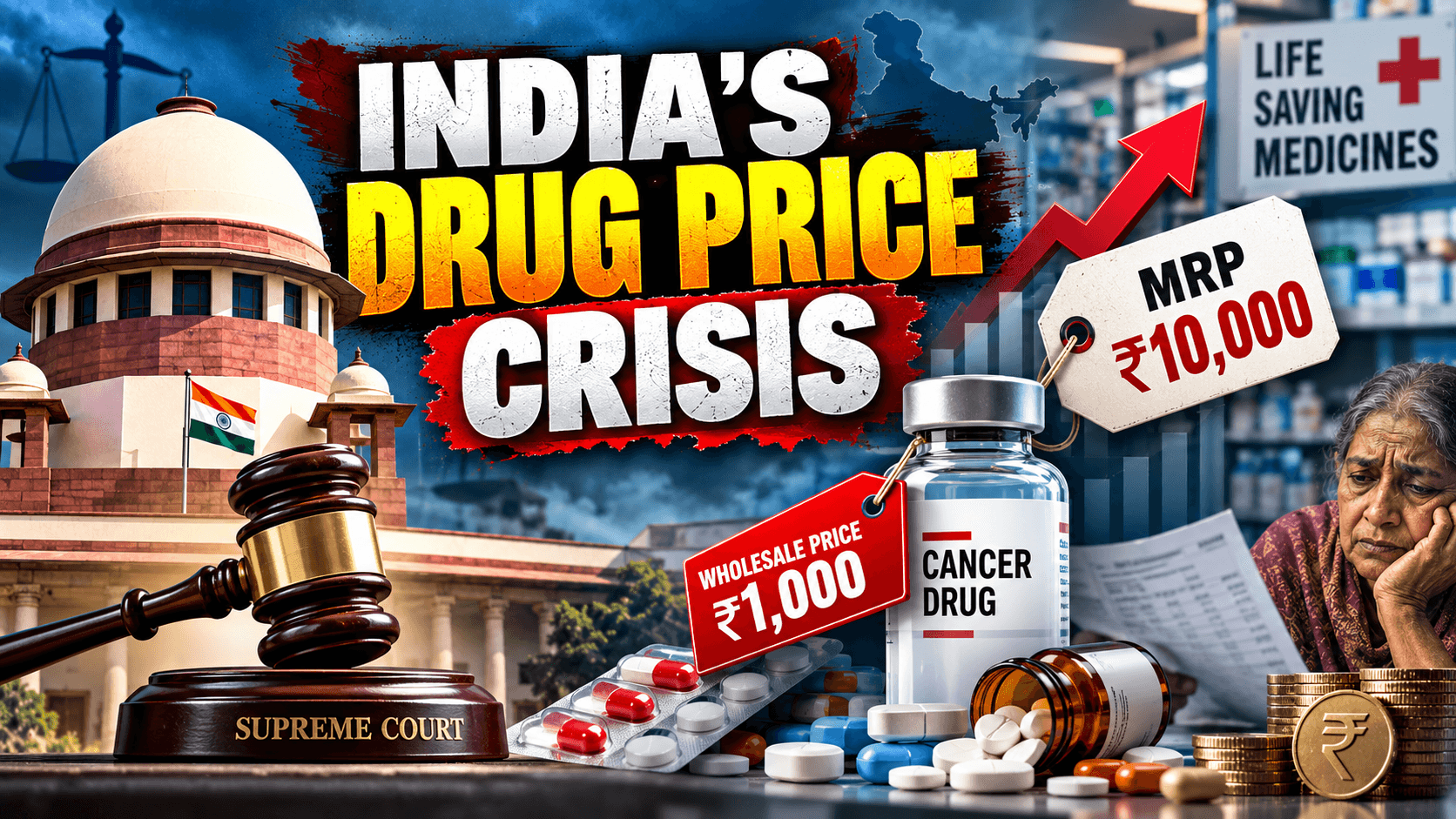
The Supreme Court slammed the huge difference between the wholesale price and the MRP of essential life-saving medicines. Calling a 10-times markup on a cancer drug "broad daylight dacoity", the Court asked the Central Government why there shouldn't be a fixed, uniform retailer margin for all essential medicines and medical devices.
How is the pharma sector regulated in India?
Law for Price Control:
- Essential Commodities Act, 1955: Medicines are declared as essential commodities, so the government can control their price and supply.
- Drugs Prices Control Order (DPCO), 2013: This is the main law under ECA that controls drug prices.
- NPPA (National Pharmaceutical Pricing Authority): It is the body under the Ministry of Chemicals and Fertilisers that fixes prices, enforces DPCO, and collects fines for overcharging.
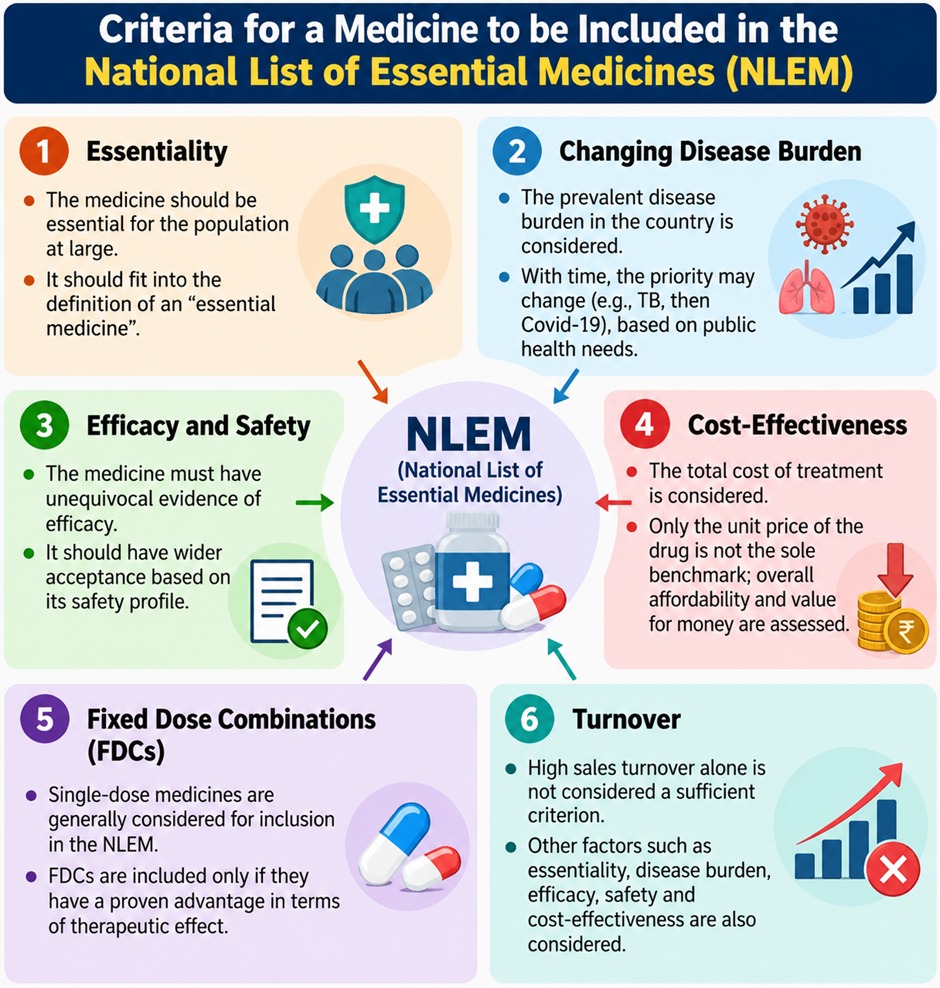
- For Scheduled Drugs (Essential Medicines): These are medicines listed in the National List of Essential Medicines (NLEM). NLEM 2022 has 388 medicines and about 1,000 formulations.
- How is price fixed? NPPA takes the average Price to Retailer (PTR) of all brands with at least 1% market share and adds a fixed 16% retailer margin to fix the final MRP. Price hike is linked to Wholesale Price Index (WPI) only.
- For Non-Scheduled Drugs (Non-Essential): Companies can fix their own launch price but can't increase MRP by more than 10% per year. The problem is, since the launch price is not capped, companies keep a huge gap between the factory price and MRP. This big trade margin is used to push their brand through distributors, chemists, and hospitals.
Regulation of Quality and Manufacturing:
- Drugs and Cosmetics Act, 1940: Controls import, manufacture, distribution and sale of drugs.
- CDSCO (Central Drugs Standard Control Organization): The top body under Ministry of Health. It approves new drugs and clinical trials and sets quality standards.
What are the key issues in pharma regulation?
1. Huge Trade Margins: The launch price of non-scheduled drugs (80% of the market) is not controlled. So, companies give massive margins of 500-1000% to hospitals, distributors and chemists to push their brand.
2. Patients Have No Choice: Patients don't have enough knowledge to ask for cheaper generics. In corporate hospitals, they are captive buyers forced to buy from the in-house pharmacy at full MRP.
3. High Out-of-Pocket Spending: Failure to control prices is the main reason for high medical expenses. As per National Health Accounts 2022-23, out-of-pocket expenditure is 43.4% of total health expenditure in India. As per the NSSO 75th Round, medicines alone make up about 70% of that out-of-pocket cost.
4. Quality Issues: Regulation is divided between the Centre (CDSCO) and States, so enforcement is uneven. WHO has flagged substandard Indian cough syrups contaminated with diethylene glycol, linked to around 300 child deaths globally.
5. Limited Scope of NLEM: NLEM covers only about 20% of the pharma market turnover. Most critical and rare-disease drugs are out of strict price control.
6. Violation of Right to Health: Giving companies full freedom to fix initial MRP without linking it to actual manufacturing cost is seen as a violation of Article 21 (Right to Life).
India's Initiatives for Affordable and Quality Medicines:
| Trade Margin Rationalization (TMR): | NPPA used its special powers to cap trade margins on critical items. This led to big price cuts for 42 anti-cancer drugs, coronary stents, knee implants and oxygen concentrators. |
| PMBJP - Jan Aushadhi Yojana: | Provides high-quality generic medicines at 50% to 80% cheaper prices than branded medicines through Jan Aushadhi Kendras. |
| National Health Mission (NHM): | Under its Free Drugs Service Initiative, essential medicines are given free at public health centers, from PHCs to district hospitals. |
| Pharma Sahi Daam App: | Launched by NPPA so consumers can check medicine prices, find generic options and complain against overcharging. |
| Mandatory Schedule M (GMP): | The government has revised Schedule M rules, making WHO-standard Good Manufacturing Practices mandatory for all pharma MSMEs to ensure quality. |
Way Forward:
- Cap Trade Margins for All Drugs: Instead of just capping prices of NLEM drugs, the government should fix a maximum allowed trade margin across the whole supply chain to stop hospital-driven overpricing.
- Achieve API Self-Reliance: India depends heavily on China for APIs (raw materials). Bulk drug parks should be made functional with cheap electricity, waste treatment support and tax benefits so Indian API makers can compete.
- Diversify Export Markets: India should not depend only on US and EU markets. It must explore new markets and use FTAs to protect against sudden tariffs and export bans.
- Enforce Generic Prescriptions: NMC guidelines say doctors must prescribe generic names, not brand names. This needs strict enforcement with penalties.
- Centralized Quality Control: India needs a single, unified drug regulator (merging Centre and State licensing powers) for zero-tolerance quality checks in all manufacturing units.
Conclusion
The Supreme Court's observation on medicine pricing exposes a critical gap in India's healthcare system, where profit margins outweigh patient welfare. While bodies like NPPA and CDSCO and schemes like PMBJP and Schedule M reforms are steps in the right direction, they are not enough. India needs to move from just controlling the MRP of 20% essential drugs to capping the trade margins for ALL drugs, ensuring generic prescriptions, achieving API self-reliance, and having a single strong quality regulator.
Ultimately, affordable and quality medicines are not just a policy choice but a matter of the right to life under Article 21, and the government must ensure that life-saving drugs don't become a tool for "daylight dacoity".