Challenge of AI Divide in India
Why in News?
Recently, the World Bank's World Development Report 2026: The Promise of Artificial Intelligence highlights how Artificial Intelligence (AI) can transform developing economies by improving productivity, strengthening public services, and expanding economic opportunities.
Artificial Intelligence (AI) is rapidly transforming the global economy. Countries and companies are investing trillions of dollars in advanced chips, data centers, and powerful AI models. However, an important question is emerging: Will the real economic benefits of AI go only to the companies developing it, or can these benefits reach ordinary people, businesses, and developing economies as well?
The report emphasizes that the biggest economic benefits of AI may not come only from countries and companies developing advanced AI models but also from those that successfully apply these technologies across different sectors.
Will Artificial Intelligence Replace Jobs or Improve Productivity?
One of the biggest concerns surrounding AI is its potential impact on employment. Many people fear that automation may replace existing jobs and create economic uncertainty.
However, the World Bank report suggests that the impact of generative AI may differ significantly between developed and developing countries.
According to the report:
- Around 4.5% of existing jobs in low- and middle-income countries are highly exposed to automation by generative AI.
- In high-income countries, the corresponding figure is approximately 14.2%.
- Around 16.2% of jobs in low- and middle-income countries could experience meaningful productivity improvements.
- The estimated share for advanced economies is approximately 18.7%.
These figures suggest that AI may complement human work more often than it replaces workers in developing economies.
For countries such as India, affordable and task-specific AI tools can improve the capabilities of workers, businesses, and public institutions.
For example, AI-powered tools can help farmers access agricultural information, support health workers in diagnosis, assist teachers in learning activities, and improve government service delivery. The objective should therefore be to use AI to make people more productive rather than viewing technology only as a substitute for human labor.
Economic Potential of AI in India
AI can be a big growth engine for India.
Massive Value Addition: Potential to add USD 1.7 trillion to GDP by 2035 by boosting productivity of businesses, households, and government.
Boon for MSMEs: India’s low-cost AI model favours cheap, narrow, “good-enough” AI. MSMEs can affordably automate bookkeeping, inventory, and quality checks, reducing the gap with big firms.
New Jobs: While some jobs are disrupted, new roles are emerging—AI conversation designers, ethical AI specialists, AI trainers, and remote robot operators (e.g., manual scavengers upskilled to operate cleaning robots).
NITI Aayog estimates 4 million AI jobs by 2031, making India a global AI workforce hub and reversing brain drain.
Augmentation, Not Replacement: Only 4.5% of jobs in developing countries face full automation. For most, AI acts as a co-pilot—e.g., Wadhwani AI helping ASHA workers in TB screening and advisories for farmers.
Support for Informal Sector: India has ∼490 million informal workers (90% of the workforce). AI can improve their productivity, market access, financial inclusion, and livelihood security through personalized advisories, digital tools, and skilling.
Primary Economic and Ecological Challenges
Job Crisis at Entry Level: As per IIT Madras, AI automates tasks before jobs. Entry-level pipeline is freezing—freshers lose routine data work and basic coding jobs, while top skilled talent earns huge premiums.
NITI Aayog: Over 60% of formal jobs are exposed to AI-driven task changes by ecological footprint: AI data centers are highly resource-intensive. India’s data center sector uses ∼150 billion liters of water/year, likely to cross 358 billion by 2030. Over 70% capacity is in water-stressed cities like Chennai, Bengaluru, Mumbai, and Hyderabad—sparking protests over drinking water and irrigation impact.
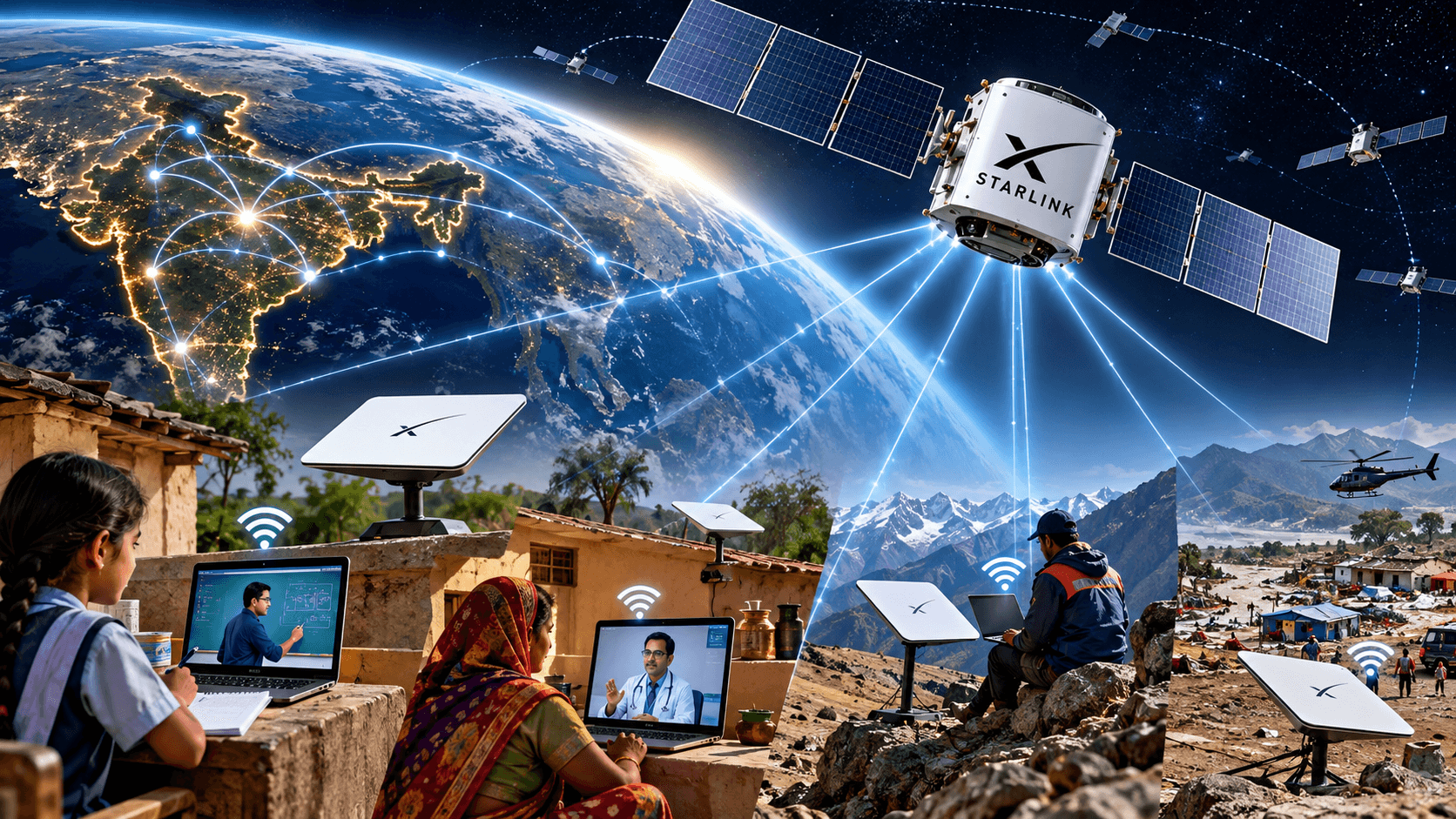
Complements Gap: Without reliable electricity, high-speed internet, affordable devices, and local-language datasets, AI benefits only the urban elite, widening the digital divide.
Measures to Maximize and Democratize AI’s Impact in India
Make AI Resource-Efficient: Data center approvals must be linked to regional ecological capacity. Make zero-liquid-discharge and use of reclaimed wastewater mandatory to avoid conflict over drinking water and irrigation.
Expand Sector-Specific, Low-Cost AI: focus on locally adapted, cost-effective AI, not expensive frontier models.
Agriculture: Scale Bharat VISTAAR with local-dialect voice bots for crop and weather advisories to bypass literacy barriers.
Healthcare: Mandate public procurement of proven domestic tools like Cerebra AI (94% TB detection accuracy in UP) to take diagnostics to vulnerable populations.
DPIs: Aggressively scale AI-integrated Digital Public Infrastructure in critical sectors.
Democratise Data via AI Kosha: AI is only as good as its data. Expand India AI Datasets Platform (AI Kosha), currently 5,500+ non-personal public datasets in agriculture, health, etc., so startups can train models without Western bias.
Portable Social Protection: AI will cause frequent job transitions, especially for gig and informal workers. Create portable safety nets—health, pension, and unemployment benefits—that move with the worker.
Expand the Rs 1 lakh crore Deep-Tech Fund of Funds and Anusandhan National Research Foundation (ANRF) to boost private investment in R&D, so India becomes an innovator, not just a consumer.
Decentralize AI Education: To address the entry-level job freeze, under IndiaAI FutureSkills, set up Data and AI Labs in Tier-2 and Tier-3 cities via ITIs. Shift focus from basic coding to AI literacy and prompt engineering.
Target Jobs Deficit and Brain Drain: Through MSDE-WEF India Skills Accelerator and research fellowships, create a talent-retention framework to reverse brain drain and capture 4 million deep-tech jobs projected by 2031.
Safe and Trusted AI: Operationalize self-assessment checklists and ethical frameworks under the India AI Mission, aligned with the proposed Digital India Act, to prevent discrimination and deepfake harms.
Conclusion: India's AI Opportunity Lies in Inclusive Economic Growth
Artificial intelligence has the potential to become a major driver of India's economic transformation. However, its success should not be measured only by the number of AI models developed, data centers established, or investments attracted.
India's experience with digital public infrastructure provides a strong foundation for this transformation. By investing in skills, infrastructure, domestic research, and accessible AI applications, India can move from isolated experiments towards economy-wide productivity improvements. The real AI challenge for India is not simply to develop advanced technology but to ensure that its economic benefits reach as many people as possible.
Reference: