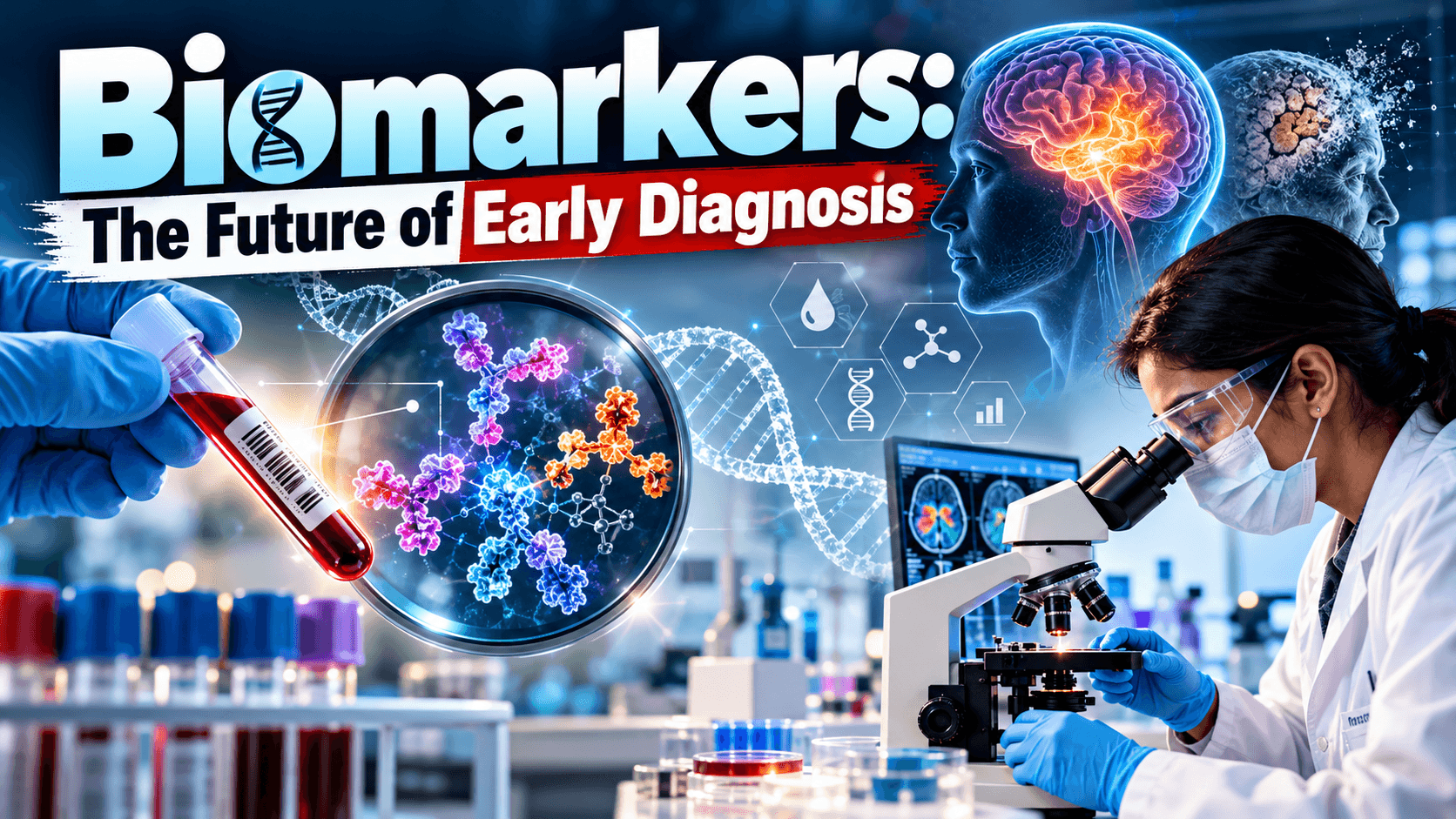
Biomarkers: The Future of Early Diagnosis
Why in News?
In a short while, scientists are highlighting the growing role of chemical signatures, known as biomarkers, in changing early disease diagnosis, especially for neurological disorders like Alzheimer’s and Parkinson’s. Despite their huge potential, using these tools in routine clinical practice still faces major hurdles related to accuracy, cost, and accessibility.
What are chemical signatures (biomarkers)?
A biomarker is a measurable biological indicator found in body fluids like blood or cerebro-spinal fluid. It is a unique pattern of proteins, molecules, elements, isotopes, or by-products.
Function: It objectively shows what is happening inside the body, whether it is a normal process, a disease, or a response to treatment.
How it Works: When a disease starts, it causes molecular-level changes much before visible symptoms appear. By measuring the presence, absence, or abnormal behavior of specific proteins, doctors can catch these early physiological shifts.
Detection Instruments: Advanced tools like spectrometers, which measure molecules by mass or light absorption, and chromatographs, which separate components of a mixture, are used to detect these minute chemical patterns.
Status of Biomarkers in India:
Genome India Project: Launched in January 2020 by the Department of Biotechnology (DBT), it has completed whole-genome sequencing of over 10,000 individuals from diverse Indian populations. It is one of the world’s largest genetic databases and forms a critical base for finding population-specific biomarkers and genetic risk factors for South Asians.
BHARAT Study: IISc, under its Longevity India Programme, has launched BHARAT, Biomarkers of Healthy Aging, Resilience, Adversity, and Transitions, to create a "Bharat Baseline" for the Indian population, reducing dependence on Western biomarkers.
Since aging is influenced by molecular, cellular, environmental, and socio-economic factors, chronological age may not reflect true biological age. This study aims to develop biomarkers that better capture aging patterns among Indians.
Significance of Biomarkers in Healthcare
| Early and Pre-Symptomatic Detection: | Biomarkers help doctors shift from late-stage treatment to early molecular detection. Diseases can be caught years before cognitive or physical decline starts. |
| Non-Invasive Diagnostics: | Blood-based biomarker tests are cheaper, safer, and less painful compared to invasive procedures like lumbar puncture (spinal tap) or costly PET(Positron Emission Tomography) scans. |
| Targeted Therapies: | Many diseases have overlapping symptoms, like different types of dementia. Biomarkers help differentiate them accurately, so patients get the right targeted therapy instead of just general symptom suppressants. |
| Tracking Disease Progression: | Repeated blood tests allow doctors to monitor in real-time how a patient is responding to drugs or ongoing treatment. |
Challenges in Testing and Diagnosis through Biomarkers
| Accuracy and Specificity Issues: | Many biomarkers are not fully specific. For example, Neurofilament Light (NfL) protein shows nerve damage but cannot tell which disease is causing it. Also, age, kidney function, and other medicines can change biomarker levels, leading to false-positive or false-negative results. |
| High Cost and Lack of Infrastructure: | Tests needing advanced immunoassays are costly and mostly limited to big metro cities. District and rural hospitals lack automated platforms, creating a huge diagnostic gap in rural India. |
| Lack of Uniform Standards: | There is no harmonization across labs. Different methods and equipment give varying results, affecting consistency and interpretation. |
| Ethical and Socio-economic Concerns: | Detecting preclinical disease in healthy people can create "patients in waiting," causing severe anxiety. Also, a positive biomarker on record can lead to discrimination, like denial of life insurance or workplace bias. |
Way Forward
Promote Indigenous R&D: The government and public sector should support domestic biotech firms to develop affordable, locally made diagnostic reagents. This will cut import dependence and make tests accessible.
Standardization of Protocols: ICMR and CDSCO should frame unified clinical guidelines and SOPs for biomarker testing to ensure uniform lab interpretation across the country.
Ethical Safeguards: Clear legal framework is needed for genetic and biomarker data privacy to prevent insurance and employment discrimination against asymptomatic at-risk individuals.
Capacity Building: Diagnostic infrastructure must be expanded to district hospitals, and doctors must be trained in biomarker interpretation to integrate these tools into mainstream public health.
Reference;