APEDA : Export of GI-tagged Mithila Makhana
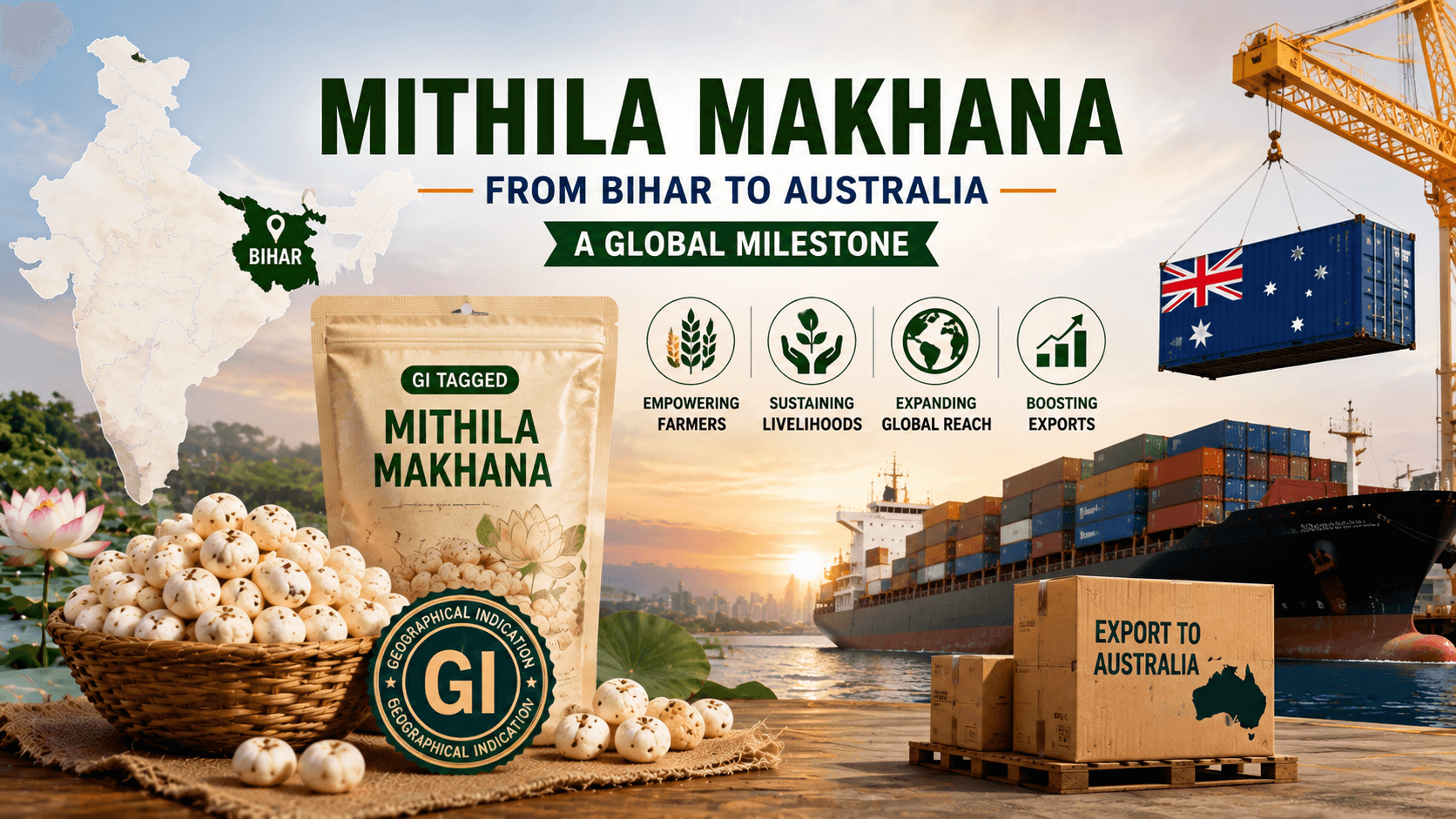
In a big first for Bihar’s farmers, APEDA successfully facilitated the first-ever commercial sea shipment of 18 metric tons of GI-tagged Mithila Makhana from the BIADA Industrial Area in Bihta, Bihar, to Australia. This milestone shipment shows just how much global demand for Bihar’s farm products is growing.
The entire consignment consisted of premium-quality, raw GI-tagged Mithila Makhana that was sourced directly from farmers in the Darbhanga district and then processed and packed at Bihta. More than just an export, this is a new door opening for Bihar’s Makhana growers and exporters.
It is expected to give Mithila Makhana much stronger international visibility, create long-term export opportunities for the state’s Makhana sector, and most importantly, lead to better and more sustainable incomes for farmers.
About ‘APEDA’
Agricultural and Processed Food Products Export Development Authority – APEDA
| APEDA is a statutory body under the Ministry of Commerce and Industry. It was set up in 1985 under the Agricultural and Processed Food Products Export Development Authority Act. APEDA acts as the apex body for promoting agricultural exports from India. Its main goal is to develop and promote the export of what are called "scheduled products." Any exporter dealing with these scheduled products must register with APEDA. Scheduled products include fruits, vegetables, meat, dairy products, alcoholic and non-alcoholic beverages, and more. To support exporters, APEDA provides financial assistance, market information, and guidelines for developing these products. APEDA is also responsible for monitoring sugar imports. Beyond exports, APEDA serves as the secretariat to the National Accreditation Board (NAB). It plays a key role in accrediting certification bodies under the National Programme for Organic Production—NPOP. For organic products to be certified for export, they must be produced, processed, and packed as per the standards laid out in the NPOP document. Headquarters: New Delhi |
APEDA has been consistently promoting Makhana exports through capacity building, market development initiatives, export facilitation, and stakeholder engagement.
India's Makhana Production
Bihar is the heart of India’s Makhana story, producing nearly 85% of the country’s total Makhana. To give this sector a bigger push, a separate HS Code for Makhana was introduced from July 2025 under the Finance Bill, 2025. This will make trade easier and help track Makhana exports better.
The demand is already showing results. In FY 2025–26, India exported over 7,000 metric tons of makhana and value-added makhana products to more than 20 countries. Major destinations include the USA, the Middle East, and Africa.
With GI-tagged Mithila Makhana now reaching new markets like Australia and a dedicated HS code in place, Bihar’s Makhana is steadily moving from local ponds to global shelves—creating better opportunities for farmers and exporters.
What is a Geographical Indication (GI)?
A geographical indication, or GI, is a special tag given to products that come from a specific geographical area. It shows that the unique quality, reputation, or characteristics of that product are directly linked to its place of origin.
As defined in Article 22(1) of TRIPS, GIs are “indications which identify a good as originating in the territory of a member, or a region or locality in that territory, where a given quality, reputation, or other characteristic of the good is essentially attributable to its geographic origin."
Globally, many EU countries classify GIs into two categories: Protected GI—PGI and Protected Designation of Origin—PDO. However, India recognizes only the PGI category.
GI certification is not limited to agricultural products. It is also extended to non-agricultural products like handicrafts, where the skills, materials, and resources available in a particular region make the product unique.
Overall, GI is a powerful tool for protecting traditional knowledge and culture. It also helps local artisans and farmers by boosting the brand value of their products and supporting socio-economic development in that region.
Conclusion
The first-ever sea shipment of 18 MT of GI-tagged Mithila Makhana from Bihar to Australia marks a major milestone for Bihar’s agriculture and export sector. Facilitated by APEDA in collaboration with the Government of Bihar, this initiative directly sourced premium-quality Makhana from Darbhanga farmers and enabled them to earn nearly 18% higher returns than domestic market rates.
This export not only strengthens the global identity of Mithila Makhana as a GI product but also opens sustainable, export-led opportunities for farmers, processors, and exporters. With Bihar contributing 85% of India’s makhana production, the introduction of a separate HS Code in July 2025 and growing demand in markets like the USA, the Middle East, Africa, and now Australia show the rising global potential of this crop.
Overall, this shipment is a step toward making Bihar’s makhana a recognized global brand, ensuring better incomes for farmers and positioning India’s agri-exports for long-term growth.
The topic of GI Tag mainly comes under Economy and Geography in the Bihar Public Service Commission (BPSC) syllabus. It is an important part of both BPSC Prelims and Mains examinations.
Reference:
What milestone did APEDA achieve for Bihar's Makhana?
APEDA facilitated the first-ever commercial sea shipment of 18 metric tons of GI-tagged Mithila Makhana from the BIADA Industrial Area in Bihta, Bihar, to Australia.
Where was the exported Makhana sourced and processed?
The premium-quality, raw GI-tagged Mithila Makhana was sourced directly from farmers in Darbhanga district and then processed and packed at Bihta.
What is APEDA and when was it established?
APEDA (Agricultural and Processed Food Products Export Development Authority) is a statutory body under the Ministry of Commerce and Industry, set up in 1985 under the APEDA Act, serving as the apex body for promoting agricultural exports of scheduled products.
What other roles does APEDA perform besides promoting exports?
APEDA monitors sugar imports, serves as the secretariat to the National Accreditation Board (NAB), and accredits certification bodies under the National Programme for Organic Production (NPOP).
What share of India's Makhana does Bihar produce?
Bihar produces nearly 85% of India's total Makhana output.
What change was introduced for Makhana trade from July 2025?
A separate HS Code for Makhana was introduced from July 2025 under the Finance Bill, 2025, to make trade easier and help track Makhana exports better.
How much Makhana did India export in FY 2025-26, and to how many countries?
India exported over 7,000 metric tons of makhana and value-added makhana products to more than 20 countries in FY 2025-26, with major destinations being the USA, the Middle East, and Africa.
What is a Geographical Indication (GI) tag, and how does India's GI system differ from the EU's?
A GI tag identifies a product as originating from a specific geographical area where its quality or reputation is essentially linked to that origin, as defined under Article 22(1) of TRIPS. While the EU classifies GIs into PGI and PDO categories, India recognizes only the PGI category.
How much extra income did farmers earn from the Australia Makhana shipment compared to domestic rates?
Farmers earned nearly 18% higher returns from this export shipment compared to domestic market rates.
How is the GI Tag topic relevant to the BPSC syllabus?
The topic of GI Tag mainly comes under Economy and Geography in the BPSC syllabus and is important for both BPSC Prelims and Mains examinations.