EDU TERIA Logo
CartSign InSign UpEnroll Now
Back Modern Indian History
BPSC Mains GS-1 Masterclass · Modern Indian History

Indenture & the Working ClassFrom Plantation Ships to Picket Lines

Colonial rule uprooted millions of Indians. Some, many from Bihar, were shipped under contract to plantations across the Empire. Others went into India's new mills, mines and railways and became a working class whose strikes joined the freedom struggle.

Start1834Indenture begins

after slavery was abolished.

Scale30 millionEmigrated 1834–1937

24 million returned home.

End1917Indenture ends

in the 2nd period of migration.

Unions1920AITUC founded

workers' national organisation.

Growth271 → 362Trade unions

between 1937 and 1939.

Climax1946Naval mutiny

Bombay workers struck in support.

Part 1 · What indenture was

Bound by Contract: The Indenture System

After slavery ended, plantations across the Empire turned to Indian contract labour, much of it from Chota Nagpur and Bihar.

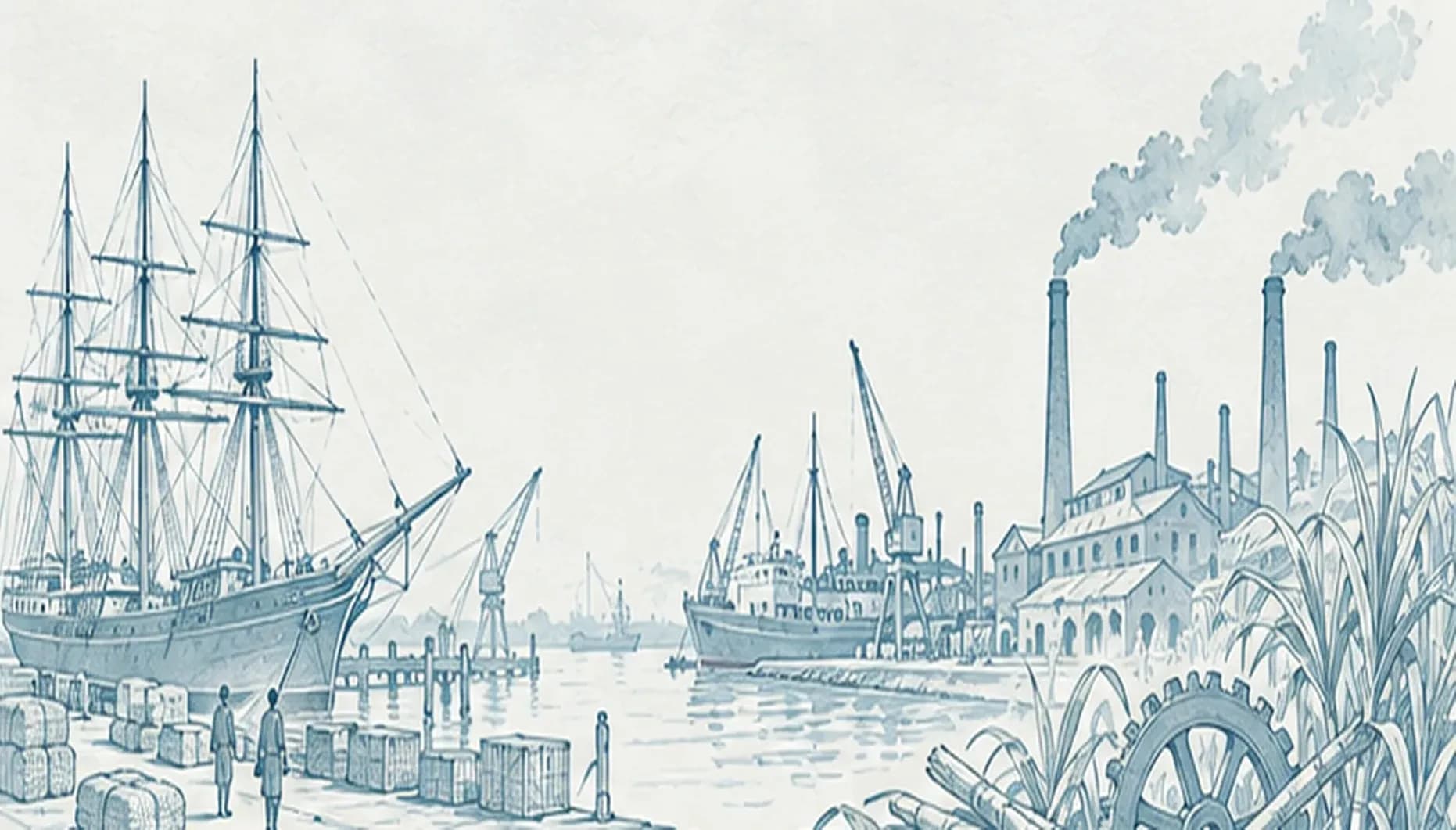
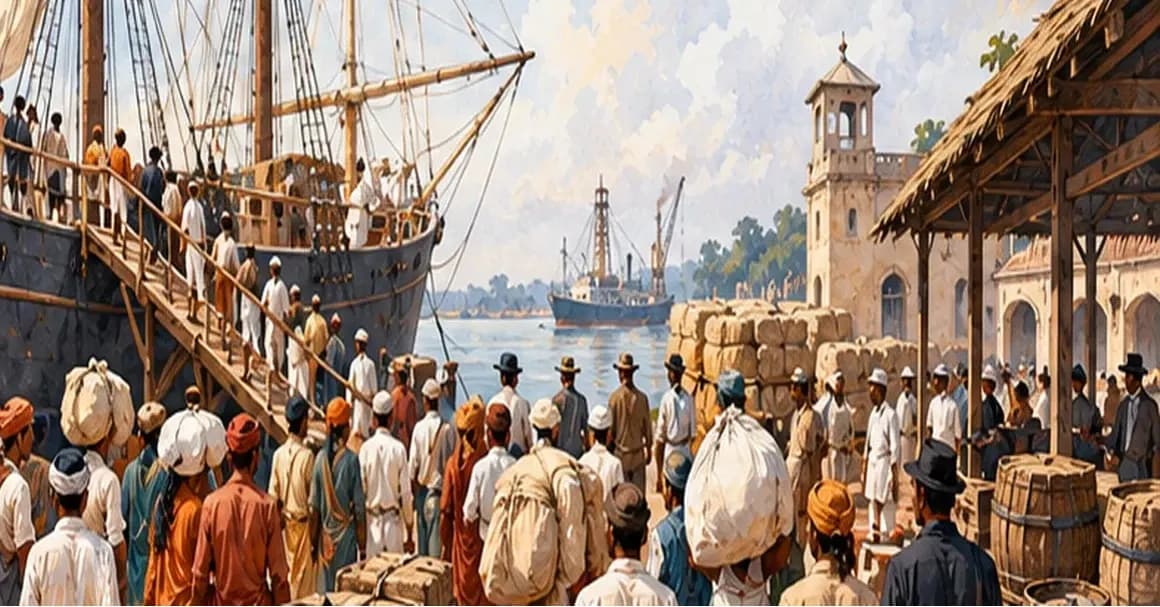
Illustration of a 19th-century emigration depot at a river port, Indian labourers with bundles waiting beside a sailing ship

A system of bonded labour

Indentured labour was a system of bonded labour that was instituted following the abolition of slavery throughout British Empire in 1833 as newly free men and women refused to work for low wages on sugar, tea plantations and rail construction projects in British colonies of West Indies, Fiji, Mauritius, Guyana, Trinidad, Surinam, Ceylon etc.

Most of the indentured labourers came from North India, especially from the un-prosperous regions of Chota Nagpur plateau and Bihar before the 1860s, and the eastern districts of the U.P and western Bihar from the 1870s onwards. Most of them originated from the lower to middling social and economic strata of rural North Indian society, which was always the first to bear the brunt of economic vicissitudes and calamities of nature.

The indenture contract

Indenture was a contract by which the emigrant was bound to work for a given employer for three- to five-year term, performing the task assigned to him for a specified wage.

  1. Years 1–5

    Bound term

    Work for a given employer, on the task assigned, for a specified wage.

    Passes on: contract ends
  2. End of contract

    Free choice

    At the end of the contract the labourer was free to re-indenture or to work elsewhere in the colony.

    Passes on: after ten years
  3. Year 10

    Return

    After ten years he was entitled to a subsidized return passage.

“The notion of the Indian working class could not exist before the notion of the Indian ‘people’ had begun to take root.”
— BPSC Mains answer · Working class and the national movement

Curated for BPSC, UPSC & State PCS Civil Services Aspirants | Modern Indian History Master Module