
EDU TERIA Logo
CartSign InSign UpEnroll Now

Write a short note on El-Nino and its impact on world climate.

BPSC Mains answer writing · · 8marks · model answer in Hindi & English

हिंदी माध्यम

प्रश्न

अल-नीनो और विश्व की जलवायु पर इसके प्रभाव के बारे में एक संक्षिप्त टिप्पणी लिखें।


आदर्श उत्तर

अल-नीनो समुद्र और वायुमंडल से जुड़ी एक ऐसी घटना है जो समय-समय पर होती रहती है। इसमें मध्य और पूर्वी भूमध्यरेखीय प्रशांत महासागर में समुद्र की सतह का तापमान असामान्य रूप से बढ़ जाता है। यह 'अल-नीनो सदर्न ऑसिलेशन' (ENSO) का एक महत्वपूर्ण चरण है, जो अनियमित अंतराल पर होता है और वैश्विक वायुमंडलीय परिसंचरण पर गहरा प्रभाव डालता है। हवा के पैटर्न, समुद्री धाराओं और बारिश के वितरण में बदलाव लाकर, अल-नीनो दुनिया की जलवायु पर दूरगामी प्रभाव डालता है। इसके कारण अक्सर अलग-अलग क्षेत्रों में सूखा, बाढ़, लू (हीटवेव) जैसी स्थितियां पैदा होती हैं और कृषि उत्पादन पर भी बुरा असर पड़ता है।

अल-नीनो का विकास भूमध्यरेखीय प्रशांत महासागर के ऊपर, समुद्र के तापमान और वायुमंडलीय परिसंचरण के बीच होने वाली परस्पर क्रिया में बदलाव के कारण होता है। इसकी प्रक्रिया को निम्नलिखित चरणों के माध्यम से समझा जा सकता है:

  • सामान्य स्थितियाँ: सामान्य स्थितियों में, भूमध्यरेखीय प्रशांत क्षेत्र में पूर्वी व्यापारिक हवाएँ पूर्व से पश्चिम की ओर चलती हैं, जो सतह के गर्म पानी को ऑस्ट्रेलिया और इंडोनेशिया की ओर धकेलती हैं।

  • गर्म पानी का जमा होना: इन हवाओं के कारण, पश्चिमी प्रशांत क्षेत्र में गर्म पानी जमा हो जाता है, जबकि दक्षिण अमेरिका के पश्चिमी तट के पास 'अपवेलिंग' नामक प्रक्रिया के जरिए ठंडा और पोषक तत्वों से भरपूर पानी ऊपर आ जाता है।

  • व्यापारिक पवनों का कमजोर होना: अल-नीनो के दौरान, पूर्वी व्यापारिक पवनें काफी कमजोर हो जाती हैं और कभी-कभी अपनी दिशा भी बदल सकती हैं।

  • गर्म पानी का पूर्व की ओर बहाव: गर्म सतही पानी मध्य और पूर्वी भूमध्यरेखीय प्रशांत क्षेत्र की ओर बढ़ता है, जिससे इन क्षेत्रों में समुद्र की सतह का तापमान बढ़ जाता है।

  • अपवेलिंग में कमी: पूर्वी प्रशांत क्षेत्र में थर्मोक्लाइन की गहराई बढ़ जाती है, जिससे दक्षिण अमेरिकी तट के किनारे ठंडे और पोषक तत्वों से भरपूर पानी का ऊपर की ओर आना कम हो जाता है।

  • वायुमंडलीय परिसंचरण में परिवर्तन: संवहन और वर्षा का केंद्र पूर्व की ओर खिसक जाता है, जिससे सामान्य वॉकर परिसंचरण कमजोर हो जाता है और वैश्विक पवन तथा वर्षा के पैटर्न बदल जाते हैं।
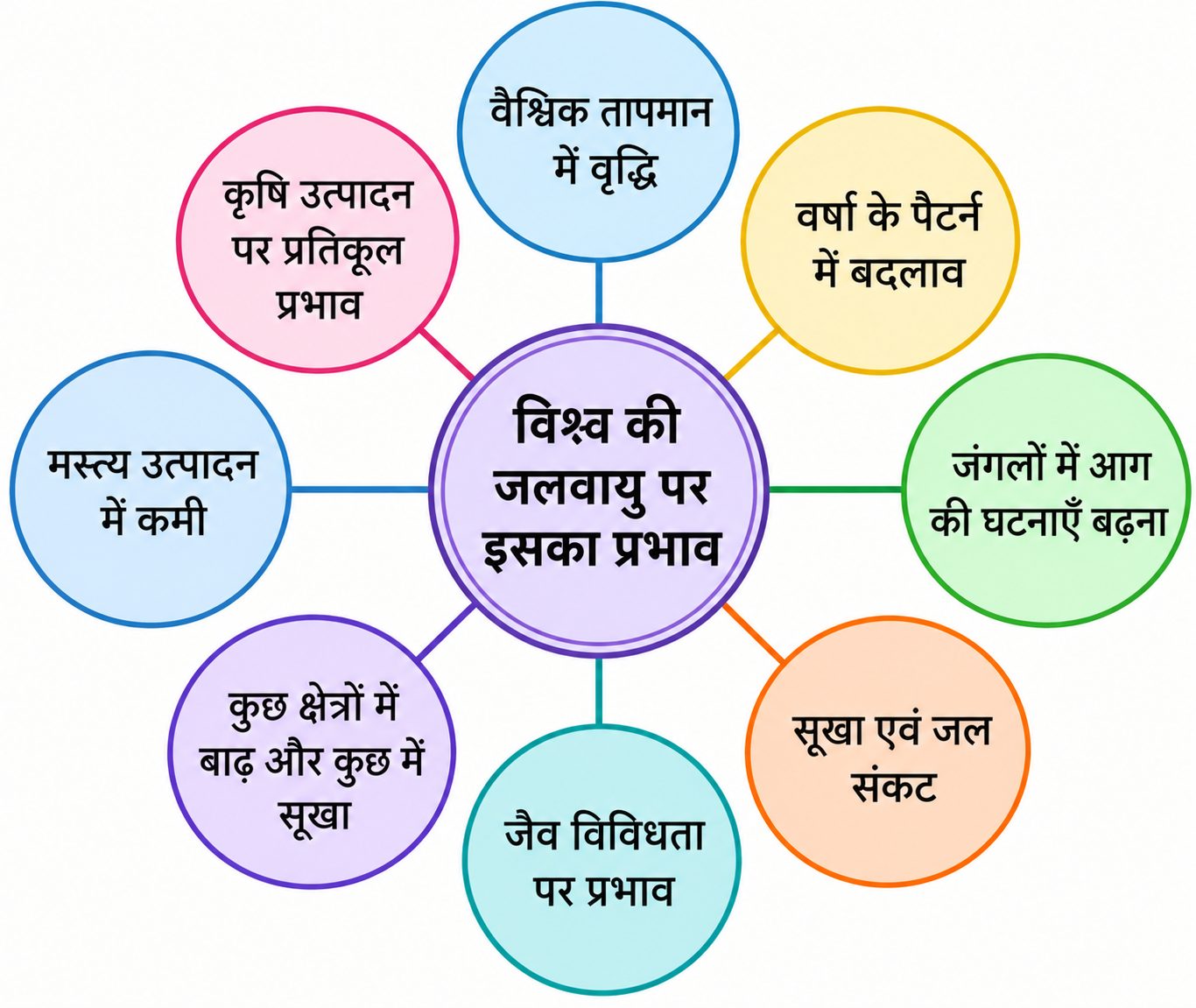
इस प्रकार, अल-नीनो समुद्र और वायुमंडल के बीच एक महत्वपूर्ण परस्पर क्रिया है, जो वैश्विक जलवायु परिसंचरण के सामान्य पैटर्न को बाधित करती है। इसका प्रभाव प्रशांत महासागर से आगे तक फैला हुआ है, जो दुनिया भर में मानसूनी प्रणालियों, कृषि उत्पादकता, समुद्री पारिस्थितिकी तंत्र और अत्यधिक मौसमी घटनाओं की बारंबारता को प्रभावित करता है। इसलिए, इसके प्रतिकूल सामाजिक-आर्थिक और पर्यावरणीय परिणामों को कम करने के लिए सटीक पूर्वानुमान, जलवायु की निगरानी और आपदा प्रबंधन की अनुकूलनीय रणनीतियाँ अत्यंत आवश्यक हैं।
English Medium

Question

Write a short note on El-Nino and its impact on world climate.


Model answer

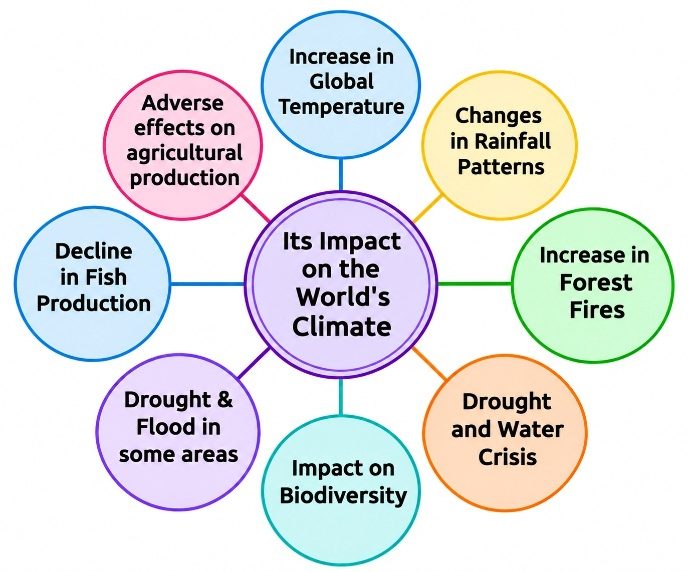
El-Niño is a recurring ocean-atmospheric phenomenon characterised by the abnormal warming of sea surface temperatures in the central and eastern equatorial Pacific Ocean. It is an important phase of the El-Niño Southern Oscillation (ENSO), which occurs at irregular intervals and significantly influences global atmospheric circulation. By altering wind patterns, ocean currents and rainfall distribution, El-Niño has far-reaching consequences for the world's climate, often triggering droughts, floods, heatwaves and disruptions in agricultural production across different regions.

El-Niño develops due to changes in the interaction between ocean temperatures and atmospheric circulation over the equatorial Pacific Ocean. Its mechanism can be understood through the following stages:

  • Normal Conditions: Under normal conditions, easterly trade winds blow from east to west across the equatorial Pacific, pushing warm surface water towards Australia and Indonesia.

  • Accumulation of Warm Water: Due to these winds, warm water accumulates in the western Pacific, while cold, nutrient-rich water rises near the western coast of South America through a process known as upwelling.

  • Weakening of Trade Winds: During El-Niño, the easterly trade winds weaken considerably and may occasionally reverse direction.

  • Eastward Movement of Warm Water: The warm surface water moves towards the central and eastern equatorial Pacific, increasing sea surface temperatures in these regions.

  • Reduction in Upwelling: The thermocline deepens in the eastern Pacific, reducing the upward movement of cold, nutrient-rich water along the South American coast.

  • Atmospheric Circulation Changes: The centre of convection and rainfall shifts eastwards, weakening the normal Walker Circulation and altering global wind and rainfall patterns.

Thus, El-Niño represents a significant ocean-atmospheric interaction that disrupts the normal pattern of global climate circulation. Its influence extends beyond the Pacific Ocean, affecting monsoon systems, agricultural productivity, marine ecosystems and the frequency of extreme weather events worldwide. Therefore, accurate forecasting, climate monitoring and adaptive disaster-management strategies are essential to minimise its adverse socio-economic and environmental consequences.

Practise it yourself. Get your copy evaluated, free.

New question every day at 10:00 PM IST · हर रात 10 बजे नया प्रश्न

Join PARAKH free