
EDU TERIA Logo
CartSign InSign UpEnroll Now

“When there is a change Government at the Center, the Governor’s also change.” In the context of this statement examine the role of Governor in India as a link between the Center…

BPSC Mains answer writing · · 38marks · model answer in Hindi & English

हिंदी माध्यम

प्रश्न

“जब केन्‍द्र में सरकार बदलती है, तो राज्‍यपाल भी बदल जाते हैं”। इस कथन के संदर्भ में केन्‍द्र और राज्‍यों के बीच एक कड़ी के रूप में भारत में राज्‍यपाल की भूमिका की जॉंच करें। क्‍या वह किसी भी तरह से अपने विवेक के अनुसार कार्य कर सकते हैं?


आदर्श उत्तर

STEP-I : भूमिका      

     भारतीय संविधान के अनुच्छेद 155 के अनुसार राज्यों में राज्यपाल की नियुक्ति राष्ट्रपति के द्वारा की जाती है। राज्य कार्यपालिका का औपचारिक प्रधान होने के कारण राज्य की शासन व्यवस्था में राज्यपाल का पद अत्यंत महत्वपूर्ण होता है। भारतीय संविधान द्वारा प्रदत्त शक्तियों एवं भूमिका के कारण राज्यपाल का पद केन्द्र एवं राज्य के मध्य सेतु का कार्य करता है। आजादी के बाद राज्यों में गैर कांग्रेसी सरकारों के गठन के साथ ही राज्यपाल का पद केन्द्र एवं राज्य के बीच विवाद का एक प्रमुख कारण बनने लगा जो कि हाल के दिनों में काफी बढ़ गया है। जिससे कहीं न कहीं भारतीय संघवाद की अवधारणा को चोट पहुँची है।

STEP-II: केन्‍द्र एवं राज्‍यों के बीच कड़ी के रूप में राज्‍यपाल की भूमिका की परीक्षण

     भारत की संघीय व्यवस्था में राज्यपाल केंद्र और राज्यों के बीच कड़ी के रूप में महत्वपूर्ण भूमिका निभाता है। हालाँकि राज्यपाल राज्य का संवैधानिक प्रमुख होता है, लेकिन वह केंद्र सरकार के एजेंट के रूप में भी कार्य करता है, जिससे दोहरी भूमिका निभाता है। यहाँ बताया गया है कि राज्यपाल केंद्र और राज्य के बीच एक सेतु के रूप में कैसे कार्य करता है और केंद्र और राज्यों के बीच एक कड़ी के रूप में राज्यपाल की भूमिका को निम्‍नलिखित बिंदुओं से देखा जा सकता है:-

  • राष्ट्रपति द्वारा नियुक्ति (केंद्र): राज्यपाल की नियुक्ति भारत के राष्ट्रपति द्वारा की जाती है और वह राष्ट्रपति की प्रसाद पर्यन्त पद पर बना रहता है। यह स्वाभाविक रूप से राज्यपाल को राज्य में संघ का प्रतिनिधि बनाता है।

  • केंद्र के प्रति संवैधानिक कर्तव्य: अनुच्छेद 167(सी) के तहत राज्यपाल का कर्तव्य है कि वह राज्य के प्रशासनिक मामलों और संवैधानिक विफलता पर राष्ट्रपति को रिपोर्ट भेजे। इसमें शामिल हैं:

®      अनुच्छेद 356 के तहत राष्ट्रपति शासन की आवश्यकता वाली स्थिति की रिपोर्ट करना

®      राज्य सरकार द्वारा शक्तियों के किसी भी दुरुपयोग को उजागर करना।

  • विधेयकों पर स्वीकृति और राष्ट्रपति के लिए आरक्षण: राज्यपाल अनुच्छेद 200 के तहत राष्ट्रपति के विचार के लिए कुछ राज्य विधेयकों को आरक्षित कर सकते हैं, खासकर यदि विधेयक

®      केंद्रीय कानूनों के साथ टकराव।

®      राष्ट्रीय महत्व का है।

®      व्यापक राष्ट्रीय हित को प्रभावित करता है।

  • आपातकालीन शक्तियाँ: संवैधानिक आपातकाल (राष्ट्रपति शासन) के दौरान, राज्यपाल राष्ट्रपति की ओर से मुख्य कार्यकारी बन जाता है और इस प्रकार केंद्रीय निर्देशों को सीधे क्रियान्वित करता है

  • केंद्रीय योजनाएं और समन्वय: राज्यपाल केंद्रीय कानूनों, निर्देशों और योजनाओं (जैसे, उज्ज्वला, पीएमजीएसवाई, मनरेगा) का उचित कार्यान्वयन सुनिश्चित करता है और केंद्र को उनकी स्थिति की रिपोर्ट करता है।

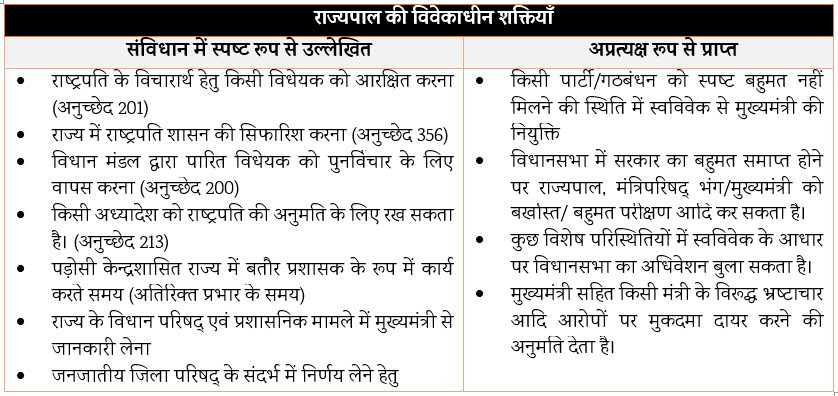
STEP-III: राज्‍यपाल के विवेकाधीन शक्तियों का परीक्षण

       भारत में संघ के समान राज्यों में भी संसदीय शासन प्रणाली को अपनाया गया है। अतः राज्यपाल राज्य का प्रथम नागरिक तथा राज्य कार्यपालिका का संवैधानिक प्रमुख होता है। भारतीय संविधान के अनुच्छेद 155 के अनुसार राज्यपाल की नियुक्ति राष्ट्रपति द्वारा की जाती है जो राज्य में केन्द्र सरकार का प्रतिनिधि होता है। संविधान के अनुच्छेद 163 के अनुसार राज्यपाल को मंत्रीपरिषद् के सुझावों पर कार्य करना होता है इसके अलावा राज्यपाल को विवेकाधीन शक्तियाँ भी प्राप्त है।
STEP-IV: निष्‍कर्ष

       भारतीय संविधान सभा ने संघात्‍मक शासन व्‍यवस्‍था को अपनाया था, जो केन्‍द्र एवं राज्‍य सरकार के बीच बेहतर समन्वय एवं संतुलन पर आधारित है। केन्‍द्र एवं राज्‍यों के बीच समन्‍वय में राज्‍यपाल की एक प्रमुख भूमिका रही है। अत: केन्‍द्र एवं राज्‍य सरकारों के बीच परस्‍पर विरोधी विचारधारा की सरकार होने के बावजूद भी दोनों सरकारों को संवैधानिक मर्यादा एवं संघात्‍मक भावना का ख्‍याल रखते हुए राज्‍यपाल के पद की गरिमा को सुनिश्चित करते हुए भारतीय संघवाद को विश्‍व पटल पर एक अद्वितीय उदाहरण के रूप में पेश करना चाहिए।
English Medium

Question

“When there is a change Government at the Center, the Governor’s also change.” In the context of this statement examine the role of Governor in India as a link between the Center and the States. Is it possible that Governor can act according to his/her discretion?


Model answer

STEP-I : Introduction

     According to Article 155 of the Indian Constitution, the Governor is appointed by the President in the states. Being the formal head of the state executive, the post of the Governor is very important in the governance of the state. Due to the powers and role given by the Indian Constitution, the post of the Governor acts as a bridge between the Center and the State. After independence, with the formation of non-Congress governments in the states, the post of the Governor became a major cause of dispute between the Center and the State, which has increased a lot in recent times. Due to which the concept of Indian federalism has been hurt somewhere.

STEP-II: Examining the role of the Governor as a link between the Centre and the States

     The Governor plays a crucial role as a link between the Centre and the States in India's federal setup. Though the Governor is a constitutional head of the state, he/she also acts as an agent of the Union Government, thereby performing a dual role. Here's how the Governor acts as a bridge between the Centre and the State and the role of Governor as a Link Between Centre and States can be seen from following points:

  • Appointment by the President (Centre): The Governor is appointed by the President of India and holds office during the President's pleasure. This inherently makes the Governor a representative of the Union in the state.

  • Constitutional Duties Towards Centre: Under Article 167(c), the Governor has the duty to send reports to the President on the administrative affairs of the state and constitutional breakdown. This includes:

®      Reporting a situation warranting President's Rule under Article 356

®      Highlighting any misuse of powers by the state government.

  • Assent to Bills and Reservation for President: The Governor can reserve certain state bills for the consideration of the President under Article 200, especially if the bill

®      Conflicts with central laws.

®      is of national importance.

®      Affects larger national interest.

  • Emergency Powers: During a constitutional emergency (President's Rule), the Governor becomes the chief executive on behalf of the President and thus executes central directives directly

  • Central Schemes and Coordination: The Governor ensures proper implementation of central laws, directives, and schemes (e.g., Ujjwala, PMGSY, MGNREGA) and reports their status to the Center.

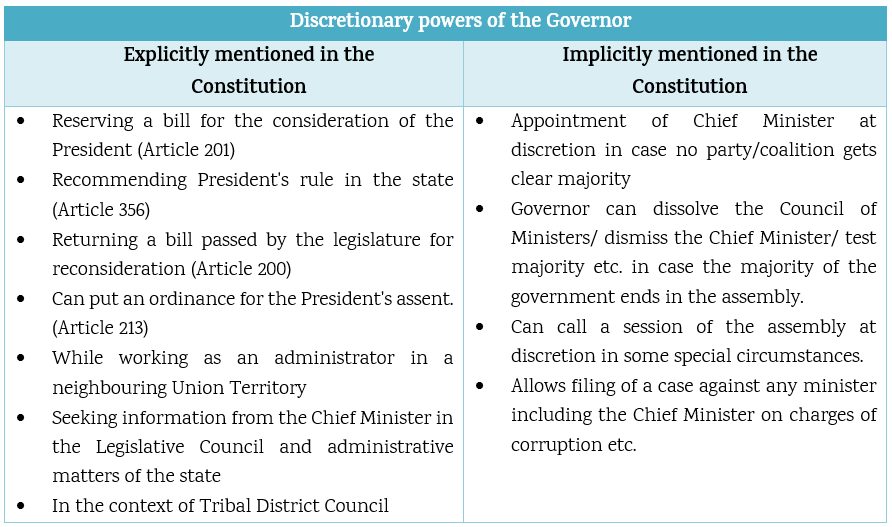
STEP-III: Examining the discretionary powers of the Governor

     In India, like the Union, the parliamentary system of government has been adopted in the states as well. Therefore, the Governor is the first citizen of the state and the constitutional head of the state executive. According to Article 155 of the Indian Constitution, the Governor is appointed by the President who is the representative of the Central Government in the state. According to Article 163 of the Constitution, the Governor has to work on the suggestions of the Council of Ministers. Apart from this, the Governor also has discretionary powers.

STEP-IV: Conclusion

       The Indian Constitutional Assembly had adopted a federal system of governance, which is based on better coordination and balance between the central and state governments. The Governor has played a major role in coordination between the Centre and the states. Therefore, despite the central and state governments having opposing ideologies, both the governments should present Indian federalism as a unique example on the world stage by ensuring the dignity of the post of the Governor while keeping in mind the constitutional dignity and federal spirit.

Practise it yourself. Get your copy evaluated, free.

New question every day at 10:00 PM IST · हर रात 10 बजे नया प्रश्न

Join PARAKH free