
EDU TERIA Logo
CartSign InSign UpEnroll Now

Emergency provisions in the Indian Constitution are both a ‘safety valve’ and a ‘potential threat to federalism’.” Examine.

BPSC Mains answer writing · · 8marks · model answer in Hindi & English

हिंदी माध्यम

प्रश्न

भारतीय संविधान में वर्णित आपातकालीन प्रावधान ‘सेफ्टी वाल्व’ और ‘संघवाद के लिए एक संभावित खतरा’ दोनों हैं।” परीक्षण कीजिए।


आदर्श उत्तर

भारतीय संविधान के आपातकालीन प्रावधान (अनुच्छेद 352–360) असाधारण परिस्थितियों में राष्ट्र की संप्रभुता, एकता, अखंडता और सुरक्षा की रक्षा करने के लिए बनाए गए हैं। ये एक संवैधानिक 'सेफ्टी वाल्व' के रूप में कार्य करते हैं, जिससे केंद्र सरकार राष्ट्रीय संकटों का प्रभावी ढंग से सामना कर सकती है। हालाँकि, इनका अत्यधिक या मनमाना उपयोग संघवाद, लोकतांत्रिक संस्थाओं और नागरिकों की स्वतंत्रता को कमजोर कर सकता है।
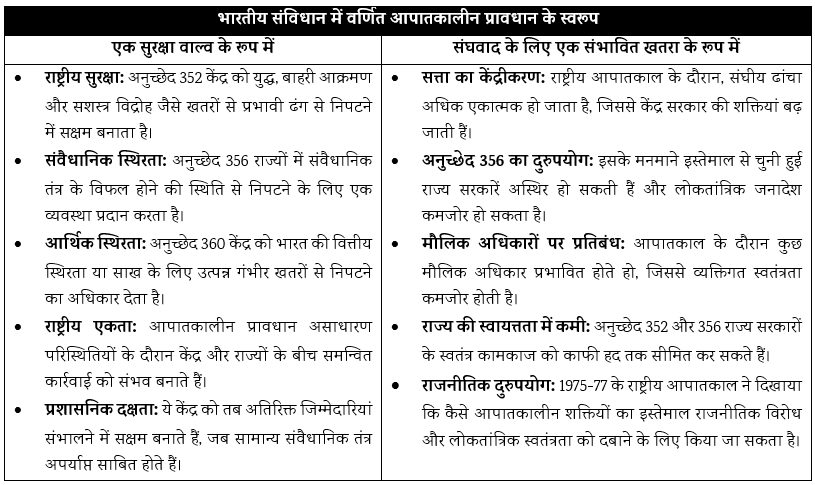
 

ये बात सही है कि भारतीय संविधान में वर्णित आपातकालीन प्रावधान दोधारी तलवार है। इसका स्‍वरूप इसके इस्‍तेमाल करने वालों के समझदारी पर निर्भर करता है। इसलिए इसके सकारात्‍मक पक्ष को प्रभावी/मजबूत बनाये रखने के लिए भारतीय संसद एवं न्‍यायपालिका द्वारा समय-समय पर निम्‍नलिखित संवैधानिक सुरक्षा-उपाय किए गए हैं-  

  • 44वां संवैधानिक संशोधन अधिनियम, 1978: इसने राष्ट्रीय आपातकाल के आधार के रूप में 'आंतरिक अशांति' को हटाकर 'सशस्त्र विद्रोह' को शामिल किया और कुछ अतिरिक्त सुरक्षा उपाय जोड़े।

  • लिखित सलाह: राष्ट्रीय आपातकाल की घोषणा केवल केंद्रीय मंत्रिमंडल की लिखित सिफारिश पर ही की जा सकती है।

  • संसदीय अनुमोदन: राष्ट्रीय आपातकाल के लिए एक महीने के भीतर संसद का विशेष बहुमत से अनुमोदन आवश्यक है।

  • न्यायिक समीक्षा: एस.आर. बोम्मई बनाम भारत संघ (1994) मामले के फैसले में यह तय किया गया कि अनुच्छेद 356 के तहत राष्ट्रपति शासन की घोषणा न्यायिक समीक्षा के दायरे में आती है।

  • फ्लोर टेस्ट: किसी राज्य सरकार के बहुमत का निर्धारण आमतौर पर विधानसभा के भीतर ही किया जाना चाहिए।

आपातकालीन प्रावधान राष्ट्रीय अखंडता और संवैधानिक व्यवस्था की रक्षा के लिए एक आवश्यक संवैधानिक तंत्र हैं। हालाँकि, इनकी वैधता इस बात पर निर्भर करती है कि इनका इस्तेमाल कितनी समझदारी और जवाबदेही के साथ किया जाता है। जैसा कि डॉ. बी.आर. अंबेडकर ने चेतावनी दी थी, ये प्रावधान सत्ता के केंद्रीकरण का जरिया नहीं बनने चाहिए। इसलिए, इन्हें संविधान के लिए एक 'सेफ्टी वाल्व' (सुरक्षा उपाय) के रूप में काम करना चाहिए, न कि संघवाद के खिलाफ किसी दबाव बिंदु के रूप में।
English Medium

Question

Emergency provisions in the Indian Constitution are both a ‘safety valve’ and a ‘potential threat to federalism’.” Examine.


Model answer

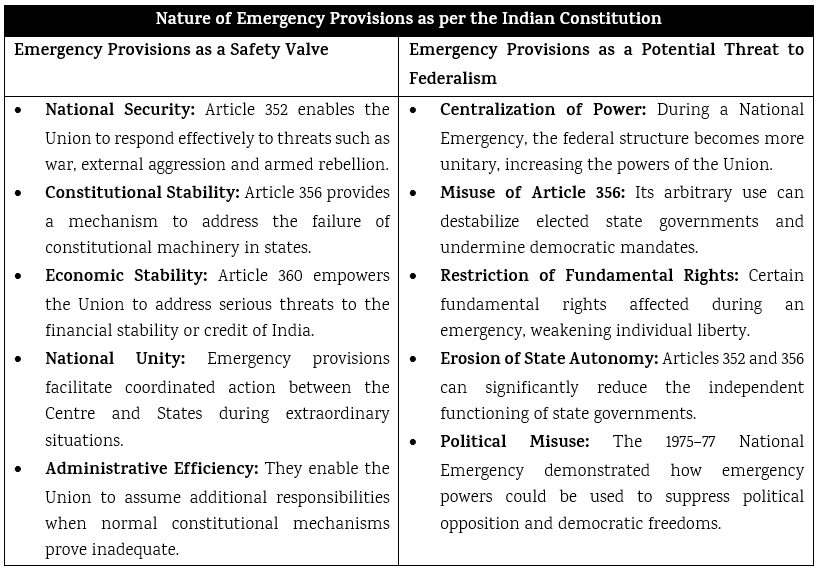
The Emergency Provisions (Articles 352–360) of the Indian Constitution are designed to protect the sovereignty, unity, integrity and security of the nation during extraordinary circumstances. They act as a constitutional safety valve by enabling the Union Government to respond effectively to national crises. However, their excessive or arbitrary use can undermine federalism, democratic institutions and civil liberties.


It is true that the emergency provisions enshrined in the Indian Constitution are a double-edged sword. Their nature depends on the wisdom of those who exercise them. Therefore, to ensure that their positive aspects remain effective and robust, the Indian Parliament and the Judiciary have, from time to time, implemented the following constitutional safeguards-

  • 44th Constitutional Amendment Act, 1978: Replaced 'internal disturbance' with 'armed rebellion' as a ground for National Emergency and introduced additional safeguards.

  • Written Advice: National Emergency can be proclaimed only on the written recommendation of the Union Cabinet.

  • Parliamentary Approval: A National Emergency requires parliamentary approval within one month by a special majority.

  • Judicial Review: The S.R. Bommai v. Union of India (1994) judgment established that the proclamation of President's Rule under Article 356 is subject to judicial review.

  • Floor Test: The majority of a state government should ordinarily be determined on the floor of the Legislative Assembly.

Emergency provisions represent a necessary constitutional mechanism to protect national integrity and constitutional order. However, their legitimacy depends on their judicious and accountable exercise. As Dr. B.R. Ambedkar cautioned, these provisions must not become instruments of centralization. Thus, they should function as a safety valve for the Constitution, not a pressure point against federalism.

Practise it yourself. Get your copy evaluated, free.

New question every day at 10:00 PM IST · हर रात 10 बजे नया प्रश्न

Join PARAKH free