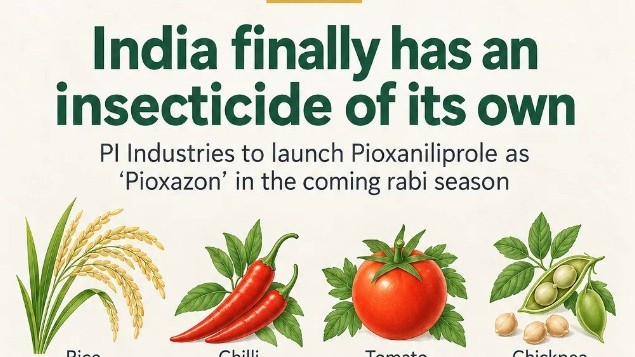
Pioxaniliprole: India’s First Indigenous Insecticide
Eduteria Insights · 30 Oct 2026
Why in News?
India's first indigenously discovered insecticide molecule, Pioxaniliprole, is set for commercial launch under the brand name ‘Pioxazon’ by PI Industries Ltd during the upcoming rabi season. It is expected to benefit farmers growing rice, chili, tomato, and chickpeas.
Key Highlights
Indigenous innovation: Pioxaniliprole is India's first insecticide molecule discovered domestically.
Regulatory approval: It has received approval from the Central Insecticides Board and Registration Committee (CIBRC) following regulatory studies and field trials.
Approved crops: rice, chili, tomato, and chickpea.
Target pests: Yellow stem borer, leaf folder, fall armyworm, tobacco cutworm, fruit borer, and pod borer.
Development investment: PI Industries reportedly invested around ₹2,000 crore and took over a decade to develop the molecule.
How Does Pioxaniliprole Work?
Pioxaniliprole belongs to the anthranilic diamide class of insecticides. It targets ryanodine receptors (calcium-release channels) in insect muscles.
By activating these receptors, it causes an uncontrolled release of calcium, leading to feeding cessation, muscle paralysis, and eventually the death of the target insect pests.
Significance
Boosts self-reliance: Strengthens India's indigenous agrochemical research and development capabilities.
Supports farmers: Offers a new crop-protection option against several damaging insect pests.
Reduces import dependence: Indigenous innovation can strengthen domestic capabilities in advanced pesticide development.
Promotes agricultural productivity: Effective pest management can help protect crops and reduce yield losses.
Swipe up (or press ↓) for the next news