
Recognizing Women Farmers: India’s Rural Backbone
Why in News?
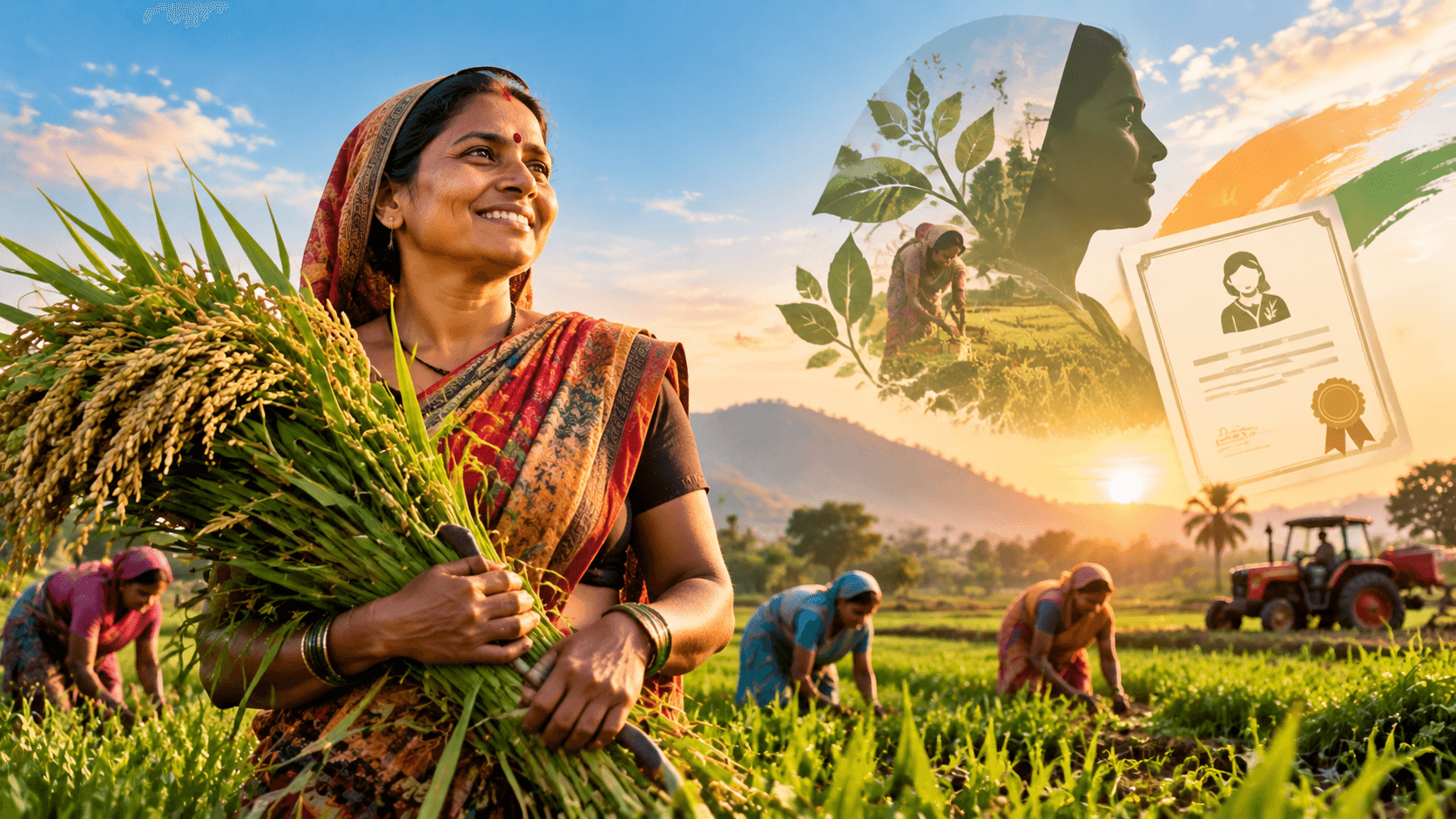
Maharashtra has become the first state in India to pass the Women Farmers Empowerment Bill, 2026. Under this law, women will get a 'Woman Farmer Certificate' and be legally recognized as farmers, even if they don't own land.
The move comes as the UN has declared 2026 as the International Year of the Woman Farmer, putting the spotlight on how women in farming are often left out of government schemes and benefits. The bill aims to recognize women as farmers based on their work, not land ownership, through a Woman Farmer Certificate.
It seeks to fix gaps in land records, farmer databases, and access to farm schemes. Focus on activity-based recognition, easy credit, integration with Agri Stack, support for women FPOs, and a stronger role in local governance can help women get better access to resources. This will promote gender equality, food security, and inclusive growth in agriculture.
Status of Women in Indian Agriculture
Growing Role, Feminization of Agriculture
Farming in India is seeing more women. As per PLFS 2023-24, 76.95% of rural working women are engaged in agriculture and allied activities.
Ownership Paradox
Despite doing most of the work, women own very little land. As per the Agricultural Census 2015-16, only 14% of operational land holdings are held by women, and only 12.8% have legal rights over farmland.
Excluded from Schemes
Most government schemes use land ownership to identify farmers. So, women get left out. For example, only 23% of PM-KISAN beneficiaries are women.
Unpaid Work
In 2025, there were about 110 million women and 127 million men in agriculture, almost equal. But 41% of women work as unpaid helpers in family farms, compared to just 20% of men. And 63% of men are own-account workers, compared to only 39% of women. So even though women's participation is rising, they still lack recognition, ownership, and economic security.
Why Recognizing Women as Farmers Matters
For Food Security: FAO says if women get the same resources as men, farm yields can rise by 20-30%, which could reduce hunger for 100-150 million people globally.
For Family Wellbeing: When women control farm income, they are more likely to spend it on nutrition, health, and education for the family.
For Climate Resilience: Women have rich traditional knowledge of seeds, biodiversity, and soil care. Empowering them helps in sustainable and climate-smart farming.
Major Challenges Women Farmers Face
Worker but not Owner: Land is usually in a man's name due to patriarchal norms. Since the government defines a farmer by land title, women remain invisible.
No Access to Credit: Without land as collateral, women can't get Kisan Credit Cards or bank loans easily and must depend on moneylenders.
Left Out of Welfare: Subsidies, seeds, fertilizers, crop insurance (PMFBY), and extension services are linked to land records, so women cultivators miss out.
Machines Not Made for Women: Most farm equipment is designed for men. Lack of lightweight, women-friendly tools adds to their physical burden.
Poor Market Access: Due to social barriers, lack of transport, and male-dominated mandis, women struggle to get fair prices and depend on middlemen.
India's Initiatives for Women Farmers
Mahila Kisan Sashaktikaran Pariyojana (MKSP):
Under DAY-NRLM, it trains women in farming skills to improve their participation and productivity.
Krishi Sakhi Convergence Program (KSCP):
Linked with the Lakhpati Didi scheme, rural women are trained as Krishi Sakhis to provide last-mile farm advisory services.
30% Allocation for Women:
The Ministry of Agriculture has made it mandatory to reserve at least 30% of the budget in central agri schemes for women farmers.
Women FPOs:
The government is promoting women-only Farmer Producer Organizations to help women get better prices and market access.
UP's Step for Land Ownership:
Uttar Pradesh gives a 1% concession in stamp duty if land or property is registered in a woman's name, to encourage female ownership.
Factors Driving Feminization of Agriculture in India
A. Economic Forces
Male Out-Migration: Low farm income pushes men to move to cities for construction and factory jobs. Women are left to manage family farms.
Covid Effect: During Covid, men lost urban jobs and returned to villages. They took back control of land and decisions, pushing women into unpaid and marginal farm work.
Cheaper Labor: Landowners hire women as casual labor because they are paid 20-30% less than men. Poor families also replace paid laborers with unpaid work of women at home to cut costs.
No Non-Farm Jobs: Low rural industrialization and less education/skilling for women means they don't get non-farm jobs and remain stuck in agriculture.
B. Socio-Cultural Forces
Care Burden & Less Mobility: Women are expected to take care of children, the elderly, and livestock, so they stay in villages while men migrate.
Farm Work Seen as Domestic Work: Tasks like transplanting, weeding, and harvesting are seen as an extension of household chores, so it's considered acceptable for women.
Barriers to Migration: Safety issues, social pressure, and caste norms discourage women from migrating alone to cities for work.
No Property Rights: Inheritance is usually in favor of sons. Without land, women remain in informal subsistence farming with no collateral to start their own enterprise.
Conclusion
The feminization of agriculture in India is real; women are doing most of the farm work, but without land, credit, or recognition as farmers. Maharashtra's Women Farmers Empowerment Bill, 2026, is an important step because it de-links farmer status from land ownership and gives activity-based recognition through a Woman Farmer Certificate. This model, if replicated across states and linked with Agri Stack, collateral-free KCC loans, women FPOs, and strong Gram Panchayats, can end the invisibility of women cultivators. Recognizing women as farmers is not just about gender equality; it is about higher yields, better nutrition, climate resilience, and truly inclusive agricultural growth.