India's 1st Blue Bond
Why in News?
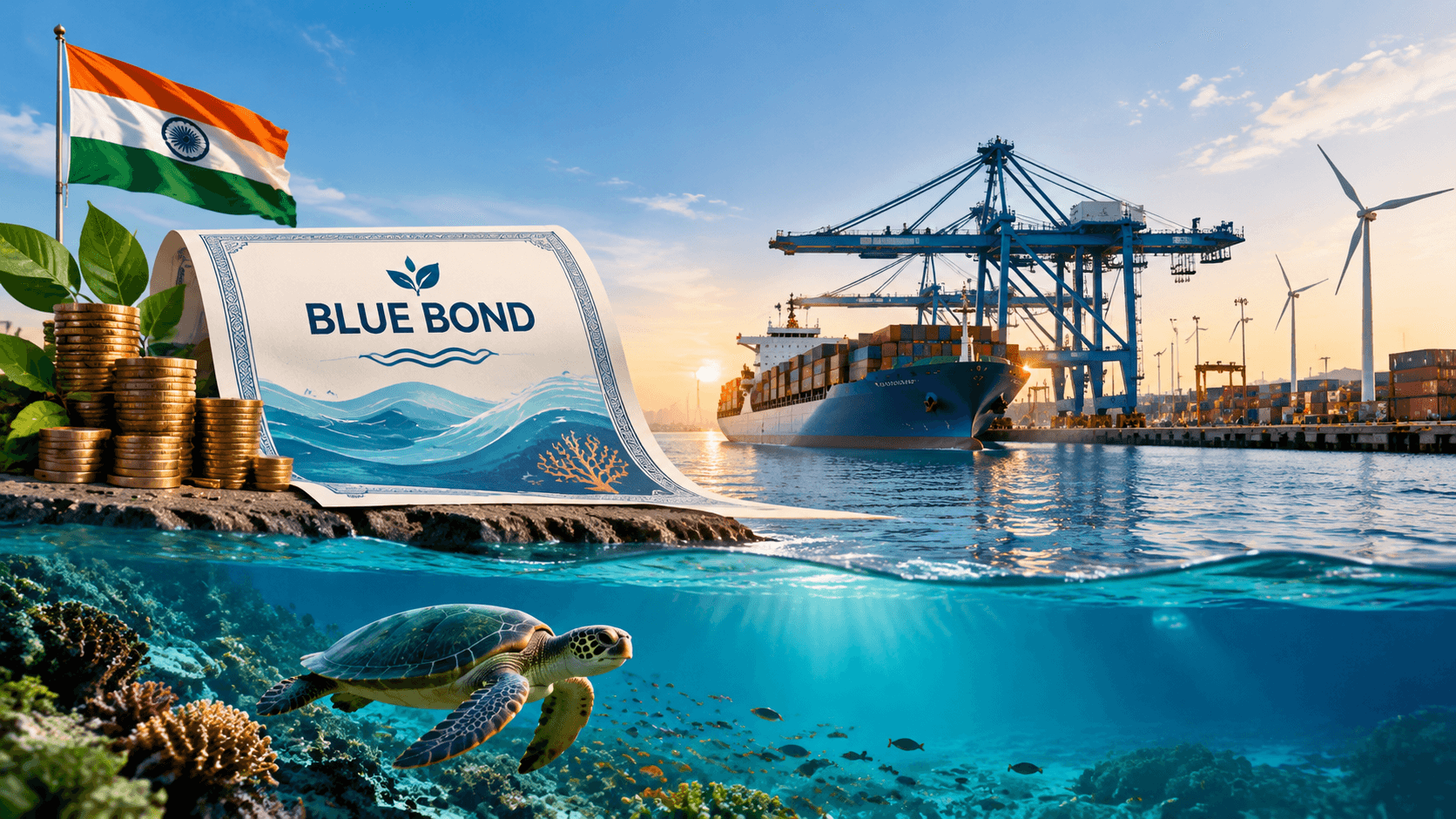
India is entering the blue finance market for the first time. Sagarmala Finance Corporation Limited (SMFCL), India's first maritime sector NBFC, will issue India's first-ever blue bond. The aim is to raise long-term funds for sustainable port infrastructure, the ocean economy, and green maritime projects. The first issue will raise Rs 600 crore through 10-year debt securities. This includes a base issue plus a greenshoe option of Rs 500 crore for over-subscription.
A bond is a financial instrument used by governments and corporations to raise capital by borrowing money from investors. As an investor in bonds, you lend money to the issuer for a predetermined period and coupon rate.
What are Blue Bonds?
Blue bonds are a type of green bond. They raise money to protect and sustainably use ocean and water resources. They can fund projects like sustainable shipping, ocean renewable energy, marine biodiversity protection, sustainable fisheries, water recycling, and coastal mapping.
Where Will the Money Go?
The funds will be used this financial year for maritime sector lending, building new greenfield ports, and expanding the coastal road network.
Who is managing it?
SBI Capital Markets is the arranger. It will bring in long-term investors like insurance companies and provident funds.
Municipal Push
After SMFCL, Vadodara Municipal Corporation in Gujarat plans to raise around Rs 200 crore through blue bonds. This will bring blue finance into the municipal debt market for the first time.
Global Examples
Seychelles issued the world's first sovereign blue bond in 2018 with World Bank support under its SWIOFish3 project. Belize used a debt-for-ocean swap in 2021 to fund marine conservation.
What Is a Bond?
A bond is a way for governments and companies to borrow money from investors. When you buy a bond, you lend money to the issuer for a fixed period. In return, you get regular interest (coupon) and your principal back at maturity.
There are 3 main types of bonds:
1. Corporate Bonds: Issued by private and public companies to raise capital.
Investment-Grade: Higher credit rating, lower risk, lower interest.
High-Yield: Lower credit rating, higher risk, but offers higher interest in return.
2. Municipal Bonds (Munis): Issued by states, cities, and other government bodies.
General Obligation Bonds: Repaid from general taxes, mainly property taxes. Considered very secure.
Revenue Bonds: Repaid from earnings of a specific project like highway tolls. If the project fails, bondholders may not get paid.
Conduit Bonds: Government issues the bond on behalf of a private entity like a hospital. That entity is responsible for repayment.
3. U.S. Treasuries: Issued by the U.S. Government. Safest investment, as they are backed by the full faith of the government.
T-Bills: Short-term, matures in days to 52 weeks.
T-Notes: Medium-term, matures in up to 10 years.
T-Bonds: Long-term, matures in 30 years.
TIPS: Its value adjusts with inflation and protects against rising prices.
Conclusion
India's first blue bond by SMFCL is a major step towards sustainable maritime growth. With Rs 600 crore to be deployed for green ports and coastal infrastructure, it opens a new source of long-term finance. The entry of municipal bodies like Vadodara and lessons from Seychelles and Belize show that blue finance can go beyond ports to clean oceans, resilient coasts, and sustainable livelihoods. If implemented with transparency and strong project monitoring, blue bonds can become a key tool for India's Blue Economy and climate goals.