Drought in India: Why Water Scarcity Is Rising
Why in News?
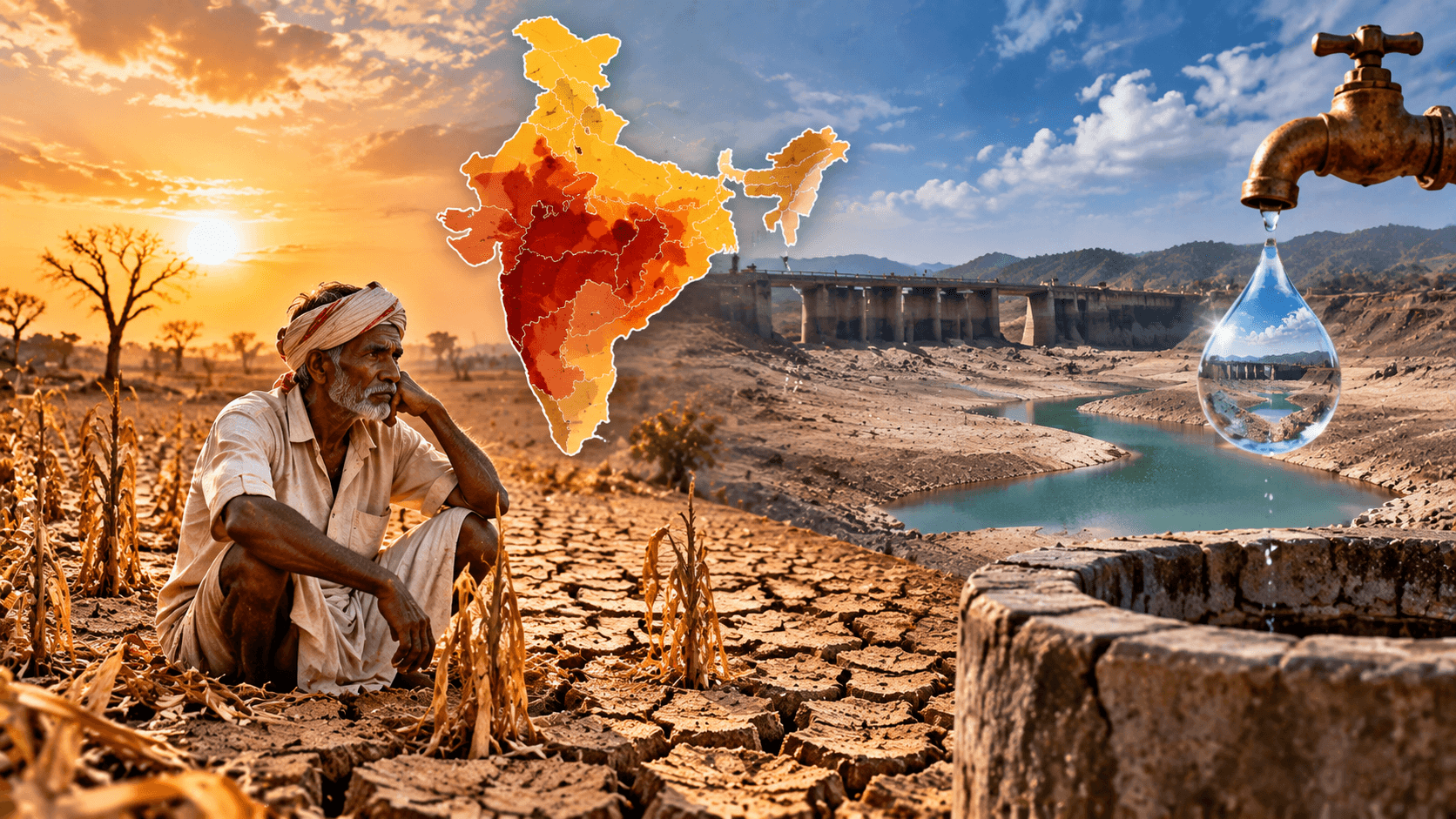
Maharashtra has declared drought in 265 out of 358 talukas, nearly 74% of the state, due to poor monsoon rains. Similar water stress and drought-like conditions are being seen in Karnataka, Telangana, Andhra Pradesh, and parts of Rajasthan.
This shows how vulnerable India is to water scarcity. Even though India has 18% of the world's population, it has only 4% of the world's freshwater. So, droughts directly hit farming, food security, rural livelihoods, and overall economic growth.
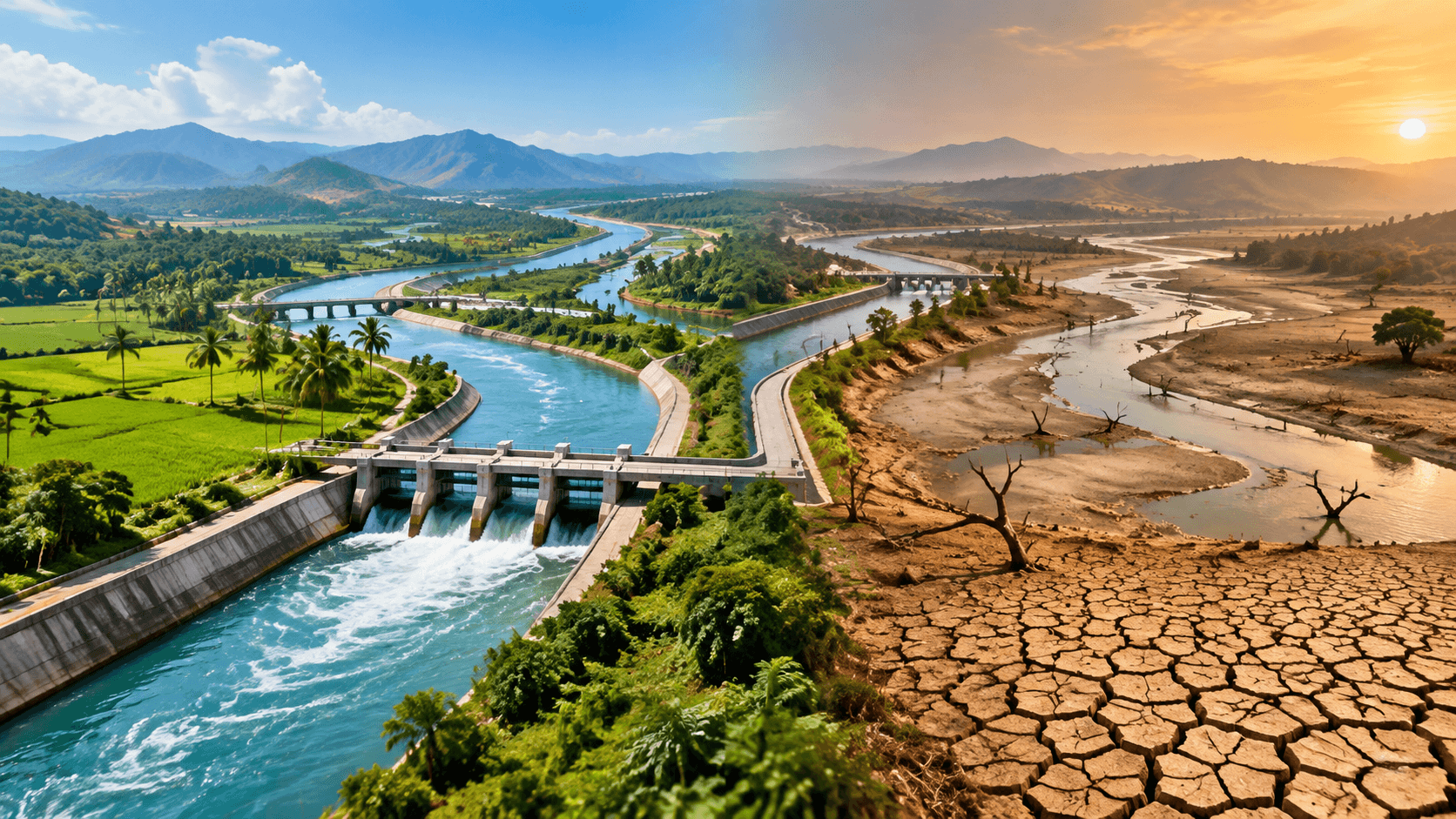
Drought in India is not just about less rain; it is linked to erratic monsoons, climate change, falling groundwater levels, and unsustainable farming practices. It affects food security, livelihoods, and water availability all at once.
That is why India needs to move from just giving relief after drought to drought-proofing the country with better early-warning systems, climate-resilient crops, micro-irrigation, better water management, and community-led conservation.
What is drought?
Drought is a long period of low or no rainfall that leads to water shortage, affecting crops, animals, and people.
Drought in India:
According to the Drought Atlas of India (1901–2020), almost two-thirds of India is drought-prone. About 56% of the country’s area has faced moderate to exceptional drought, affecting 300 million people and 150 million cattle. It has caused huge losses, around USD 8.7 billion in crop losses and a 3.1% fall in agricultural GDP.
The changing face of drought:
Earlier, drought was seen only in dry and semi-arid regions. Now even high-rainfall areas are facing scarcity. For example, Cherrapunji in Meghalaya, one of the wettest places on earth, now faces drought for almost 9 months a year, while western Jaisalmer in Rajasthan gets only about 9 cm of rain annually.
Types of Droughts
As per the 2009 Manual of Drought Management by the Ministry of Agriculture:
1. Meteorological Drought: This is when rainfall is much lower than the long-term average for a long period. It is usually the first stage and can trigger other droughts. A 26-50% rainfall deficit is moderate drought, and over 50% is severe drought.
2. Hydrological Drought: This happens when surface and groundwater levels fall, and rivers, reservoirs, and wells dry up. It can happen even when rainfall is normal if water use is more than available water.
3. Agricultural Drought: When soil moisture and rainfall are not enough for crops to grow, leading to crop stress and low yields. In India, it is defined as 4 consecutive weeks of severe meteorological drought (>50% deficit) or weekly rainfall ≤5 cm during the mid-May to mid-October (Kharif season) when 80% of crops are sown, or 6 consecutive weeks in the rest of the year.
How is a drought declared?
Earlier, District Collectors used the Annewari/Paisewari/Girdawari system, estimating crop loss after harvest, to recommend drought declaration. Now, for early declaration, the 2009 Manual recommends 4 tools:
1. Rainfall Deficiency: Drought can be declared if June-Sept rainfall is less than 75% of average, or June-July rainfall is less than 50%.
2. Area Under Sowing: If the sown area is less than 50% of the cultivable area by the end of July/August.
3. NDVI (Vegetation Index): Based on satellite data from NADAMS. Drought can be declared when NDVI deviation from normal is 0.4 or less—showing poor crop growth.
4. MAI (Moisture Adequacy Index): Measures weekly water balance. An MAI below 25 means severe agricultural drought.
Who declares, and what are the rules?
The state government is the final authority to declare a drought. The Centre has two reference documents, the Manual for Drought Management, 2009, and the NDMA Guidelines, 2010, but both are non-binding, so states can adapt them to local conditions. Financial help: First from State Disaster Response Fund (SDRF). If that runs out, a central team assesses losses, and help comes from NDRF. The Ministry of Home Affairs handles most disasters, but the Ministry of Agriculture is nodal for drought, hailstorms, and pest attacks. The Supreme Court says: In Swaraj Abhiyan vs Union of India (2016), the Court held drought is a "disaster" under the Disaster Management Act, 2005, and linked it to Article 21, not declaring drought can deny vulnerable people their right to live with dignity.
Causes of Drought in India
Climatic Causes:
1. Erratic Monsoon: India gets 70-80% rain in just 4 months. Delay in onset, long dry gaps, or early withdrawal causes drought.
2. El Niño: Warming of the Pacific Ocean disturbs wind circulation and usually leads to low rainfall in India.
3. Climate Change: Now we see short, heavy rains followed by long dry spells, which spoil soil moisture.
Human-Caused:
Wrong crops in wrong places: Because of MSP and free power, farmers grow water-heavy crops like sugarcane in dry Marathwada and paddy in Punjab/Haryana. This exports "virtual water" from dry areas. Groundwater overuse: India is the world's largest groundwater user. Uncontrolled borewells have dried up aquifers, causing hydrological drought. Ecological damage: Cutting forests, destroying wetlands, and encroaching on traditional water bodies like Johads, Baolis, and Eris has reduced natural water storage.
Key Challenges in Drought Management
Guidelines are not binding: The 2009 Manual and 2010 NDMA guidelines are only advisory, so states declare drought differently and often late.
Late declaration: Many states still wait for post-harvest crop-cutting (annewari) instead of using satellite data like NDVI, delaying relief from SDRF.
Fragmented governance: Surface water (CWC) and groundwater (CGWB) are managed separately, so no basin-level planning.
Relief, not prevention: Despite the Disaster Management Act, 2005 asking for risk reduction, focus is still on tankers and fodder, not long-term drought-proofing.
Low micro-irrigation: Drip and sprinkler under PMKSY is costly for small farmers, so adoption is low and concentrated in a few states.
What Needs to be Done?
1. Farming reforms: Grow crops as per water availability in that zone. Shift from paddy/sugarcane to millets (Shree Anna), pulses, and oilseeds with better MSP and procurement.
2. Use of Technology: Make states mandatorily use satellite data from NADAMS—NDVI and MAI for objective declaration. Scale up Per Drop More Crop under PMKSY for micro-irrigation.
3. Institutional changes: Create a unified National Water Commission as suggested by the Mihir Shah Committee (2016) for integrated water management.
4. Decentralized groundwater budgeting: Give powers to Gram Panchayats to monitor groundwater use and expand Atal Bhujal Yojana.
5. Revive traditional water bodies: Use VB-GRAM G Act, 2025 funds, and Jal Shakti Abhiyan to de-silt tanks and build check dams and rainwater harvesting structures.
Conclusion:
Drought in India is no longer a seasonal problem; it is a yearly climate reality affecting even high-rainfall areas. With 18% of the world's population and only 4% of its water, India cannot afford to depend only on relief after drought. The way forward is to shift from relief to resilience by declaring drought early using satellite data, aligning crops with water availability, using every drop efficiently through micro-irrigation, unifying water governance, and empowering communities to conserve and manage local water bodies. This proactive drought-proofing is key to protecting food security, livelihoods, and sustainable growth.