

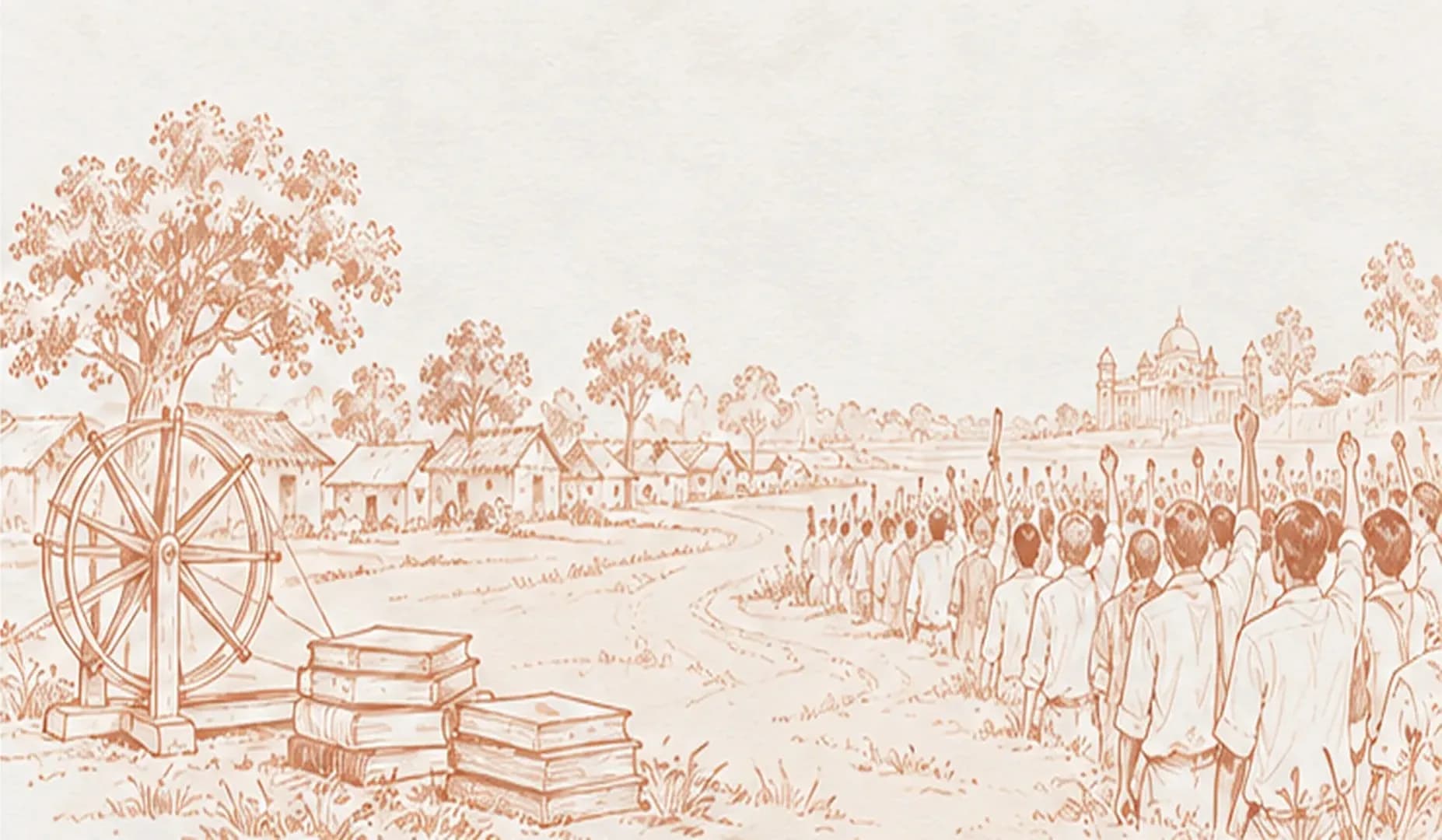
Five inequalities constituted five revolutions
- inequality between man and woman,
- inequality based on skin colour,
- caste-based inequality,
- colonial rule of some countries over others, and
- economic inequality.
Ram Manohar Lohia and Jayaprakash Narayan helped found the Congress Socialist Party and gave Indian socialism its most original ideas. Lohia joined Gandhi to socialism through caste, decentralisation and civil disobedience; JP moved from Marx to Gandhi and to Total Revolution.
 Lohia7Lohia's revolutions
five inequalities and two more.
 Lohia4Pillars of the state
village, mandal, province, centre.
 Lohia1959New Socialism
six elements, at Hyderabad.
 JP7JP's revolutions
that make Total Revolution.
 JP1974Total Revolution
popular after Gujarat and Bihar.
 JP1975People's Charter
submitted to Parliament.
Part 1 · Ram Manohar Lohia: Seven Revolutions and democratic socialism
Five inequalities and two freedoms, and a socialism that joined Gandhian ideals to socialist thought.
Two original thinkers
Ram Manohar Lohia and Jayaprakash Narayan were two prominent socialist leaders and among the most original thinkers of socialist movement in India during freedom struggle and post-independence era.
Both these leaders were founding members of the Congress Socialist Party and worked to give the freedom movement a socialist fervour. However, their contributions are not limited to the political activities but also significantly found in the realm of ideas.
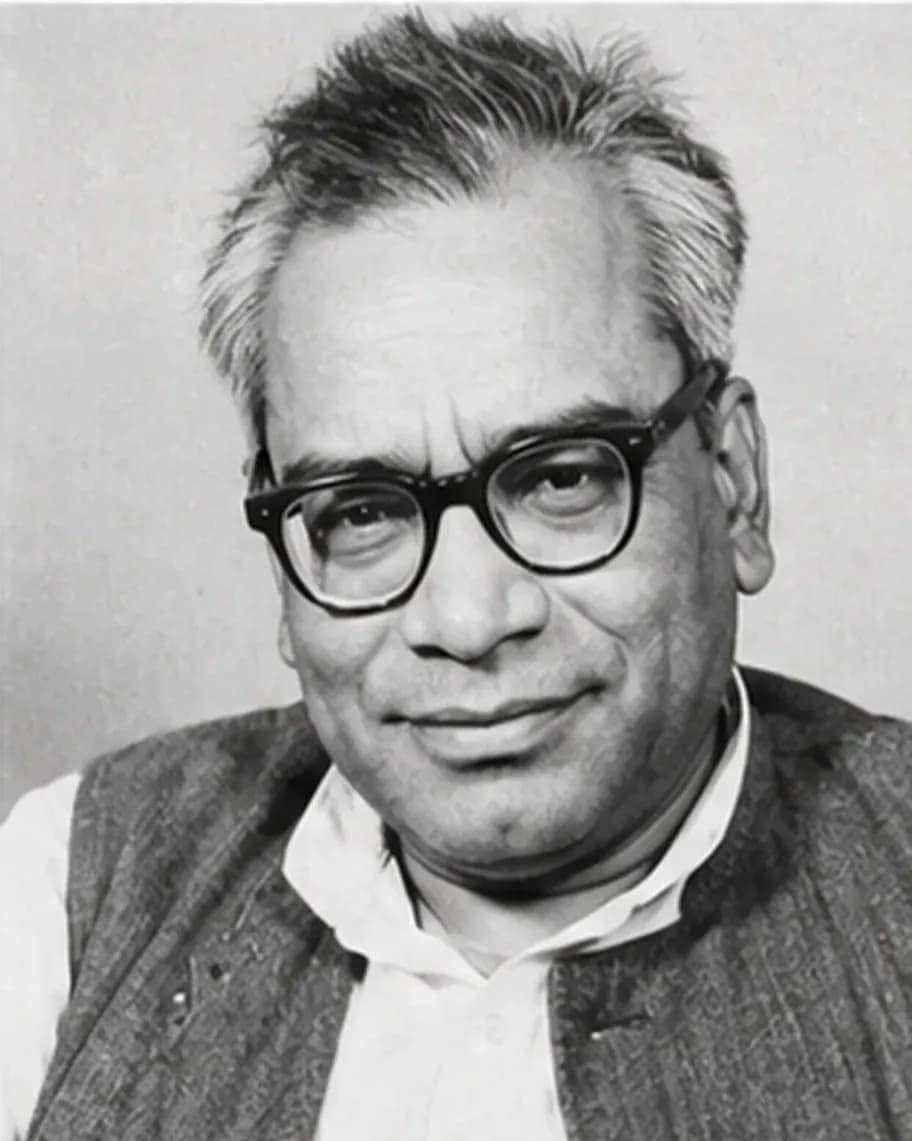
Ram Manohar Lohia articulated his approach in what he called Seven Revolutions. These revolutions reflect the basic elements of his thoughts.
In his book ‘Marx, Gandhi and Socialism’, Lohia made an analysis of principles of democratic socialism as an appropriate philosophy for the successful operation of constructive programmes.
Part 2 · Lohia on caste and class, decentralisation and New Socialism
History as a movement between caste and class, a decentralised economy, a four-pillar state and the New Socialism of 1959.
Although he was a supporter of dialectical materialism, he put greater emphasis on consciousness. He was of the opinion that through an internal oscillation between class and caste, historical dynamism of a country could be ensured.
“All human history has always been an internal movement between caste and classes – caste loosen into classes and classes crystallise into castes.”
He was an exponent of decentralised socialism.
He gave the idea of Four Pillar State concept. He considered village, mandal (district), province and central government as the four pillars of the state.
He propounded his theory of New Socialism at Hyderabad in 1959. This theory had six basic elements.
He highlighted the common fallacy of both capitalism and communism by arguing that the general aims of society do not inevitably flow out of certain economic aims.
Part 3 · Lohia on caste, civil disobedience, history, and religion and politics
Ending caste and male domination, a permanent peaceful rebellion against injustice, and the right relation between religion and politics.
“All those who think that with the removal of poverty through a modern economy, these segregations will automatically disappear, make a big mistake.”
Lohia was of the view that the universal male domination and obnoxious caste system were the two basic weaknesses of India's social structure and pleaded for their elimination at all levels.
He appealed to the youth to be at the forefront of the social reconstruction process to eliminate these social evils. For him the poverty and these social segregations are inter-linked and thrive ‘on each other's worms’.
“Religion is long term politics; and politics is short term religion. Religion should work for doing well and praising goodness. Politics should work for fighting the evil and condemning it. When the religion instead of doing something good confines itself to praising the goodness only, it becomes lifeless. And when politics, instead of fighting evil, only condemns it, it becomes quarrelsome.”
Part 4 · Jayaprakash Narayan: evolving thoughts
Disillusioned by the Soviet model, JP came to believe that violent revolution always ends in a new tyranny.
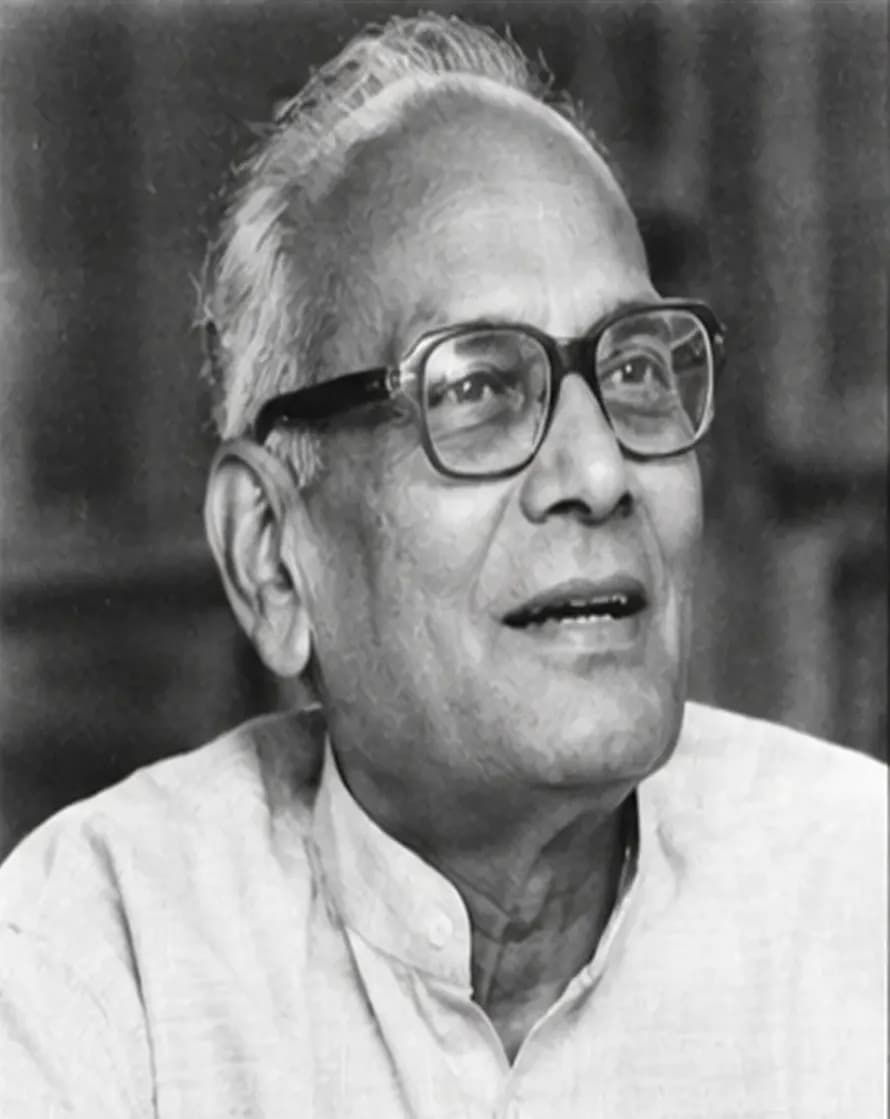
“A Soviet Revolution has two parts: destruction of the old order of society and construction of the new. In a successful violent revolution, success lies in the destruction of the old order from the roots. That indeed is a great achievement. But at that point, something vital happens which nearly strangles the succeeding process. During the revolution there is widespread organised revolutionary violence. A new instrument of power is created and whosoever among the revolutionaries succeeds in capturing this instrument becomes the master of the new state, and power passes from the hands of the people to them. It is not that violent revolutionaries deceive and betray; it is just the logic of violence working itself out. It cannot be otherwise.”
JP was very much critical of dialectical materialism on human development. He was convinced that this methodology would affect the spiritual development of man.
Part 5 · JP's concept of Total Revolution
Seven revolutions in one, rooted in Gandhian non-violence, popular after the movements of 1974 in Gujarat and Bihar.
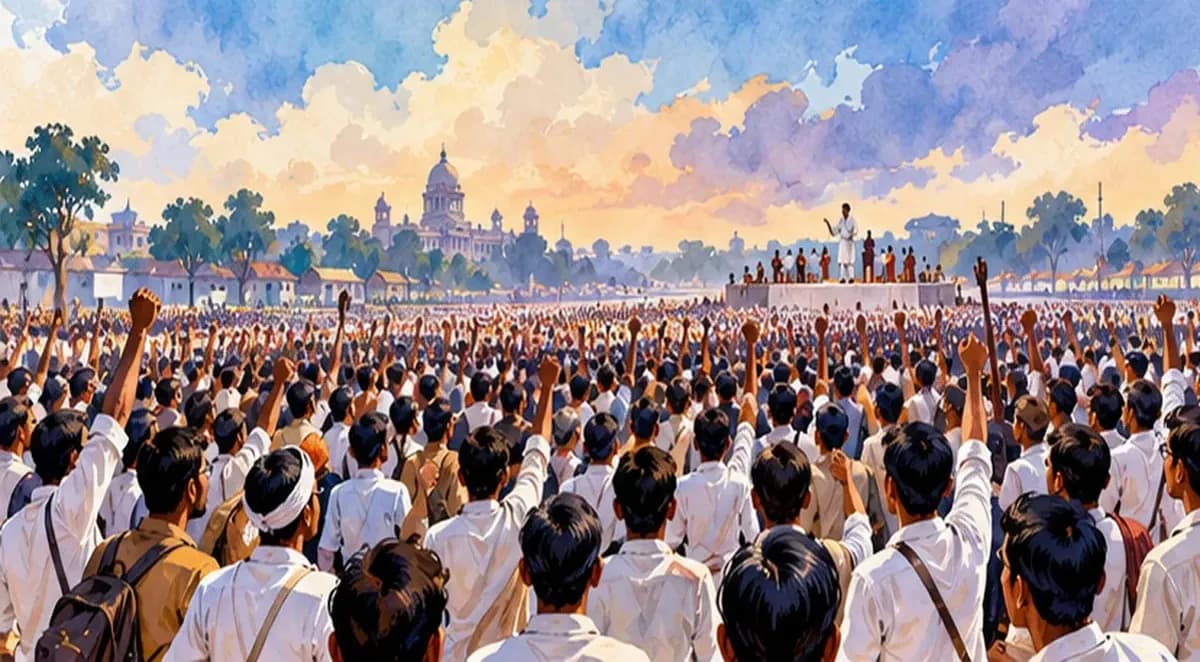
His concept of Total Revolution is a holistic one. He used this term Total Revolution for the first time in a British magazine called The Time in 1969.
The concept of Total Revolution as enunciated by JP is a confluence of his ideas on seven revolutions, i.e. social, economic, political, cultural, ideological and intellectual, educational and spiritual.
“Total revolution is a permanent revolution. It will always go on and keep on changing both our personal and social lives. This revolution knows no respite, no halt, certainly not complete halt. Of course according to the needs of the situation its forms will change, its programmes will change, its process will change. At an opportune moment there may be an upsurge of new forces which will push forward the wheels of change.”

Exam preparation
Every question this page prepares you for, with the parts that answer it.
“Total revolution is a permanent revolution. It will always go on and keep on changing both our personal and social lives.”
Curated for BPSC, UPSC & State PCS Civil Services Aspirants | Modern Indian Thought Master Module