
Some of the important pre-Congress campaigns
- For imposition of import duty on cotton (1875),
- For Indianisation of government service (1878-79),
- Against Lytton's Afghan adventure,
- Against Arms Act (1878),
- Against Vernacular Press Act (1878) etc.
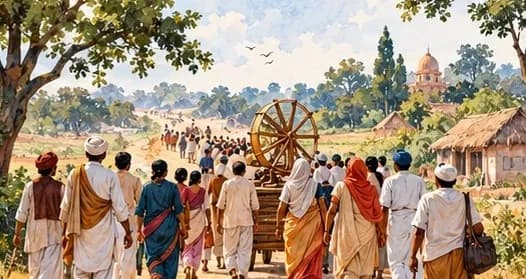
In the second half of the 19th century, a sense of nationhood grew out of the colonial experience itself. This page traces why it rose, how it moved from the Moderates' petitions to the Extremists' swadeshi and Gandhi's mass movements, and how Subhas Chandra Bose's Indian National Army carried the fight from outside India.
 Congress1885Indian National Congress
an all-India organisation.
 Moderates1885–1905Moderate phase
prayer, petition, constitutional agitation.
 Extremists1905–1918Extremist phase
swadeshi, boycott, passive resistance.
 Gandhi1919–1947Gandhian phase
a broad-based mass struggle.
 INA40,000Willing to join the INA
by the end of 1942.
 Azad Hind21 Oct 1943Provisional Government
of Free India, set up by Bose.
Part 1 · Factors behind the rise of Indian nationalism in the late 19th century
A new educated middle class, the press, a rediscovered past, reform movements, a unified country, railways and roads, economic exploitation and British arrogance together made Indians a nation.
A national awakening
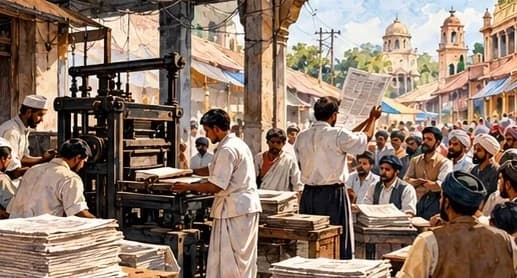
The second half of the 19th century witnessed the full flowering of national political consciousness and the growth of an organised national movement in India.
The rise and growth of Indian nationalism has been traditionally explained in terms of Indian response to the stimulus generated by the British Raj through creation of new institutions, new opportunities, etc.
In the answer, mention these factors only briefly; they are explained in full here for the sake of completeness. The main body of the answer is the evolution of nationalism, phase by phase.
Example: Lytton and Ripon pulled in opposite directions. Lytton gagged the vernacular press, disarmed Indians and held a lavish Durbar during a famine; Ripon repealed the press law and tried to let Indian judges try Europeans. When the European community forced the Ilbert Bill to be diluted, educated Indians saw that even a friendly Viceroy could not overcome racial privilege, and that they needed their own organisation.
Part 2 · Emergence of political organisations
From the 1830s, regional associations and campaigns built the habit of political work that culminated in the all-India Congress of 1885.
The emergence of political organisations started in the 1830s.
| Year | Organisation | Notes |
|---|---|---|
| 1838 | Landholders' Society | |
| 1843 | The Bengal British India Society | Later in 1851, both merged into the British Indian Association. |
| 1866 | The East Indian Association | Organised by Dadabhai Naoroji in London, to discuss the Indian issues. |
| 1867 | The Poona Sarvajanik Sabha | |
| 1875 | The Indian League | Started by Sisir Kumar Ghosh to stimulate the sense of nationalism amongst the people. |
| 1876 | The Indian Association of Calcutta | Superseded the India League; the most important of pre-Congress organisations. |
| 1884 | The Madras Mahajan Sabha | |
| 1885 | The Bombay Presidency Association |
This trend culminated into formation of Indian National Congress in 1885 as an All-India organisation to politicise and politically educate people, promote friendly relations among nationalist political workers from different parts of the country, develop and consolidate a feeling of national unity among people etc.
Part 3 · Moderates phase (1885–1905)
Constitutional agitation within the law, an economic critique of British rule, and a national awakening built on public opinion.
Educate and unite Indians
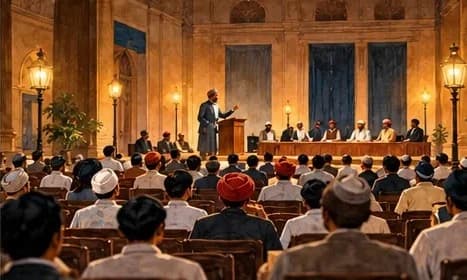
Create a strong public opinion to arouse consciousness and national spirit and then educate and unite people on common political questions.
Persuade the British
Persuade the British Government and British public opinion to introduce reforms in India on the lines laid out by the nationalists. They used the method of ‘prayer and petition’ and if that failed, they resorted to constitutional agitation.
Example: The ‘drain theory’ in one line: India paid for its own rulers. Salaries and pensions of British officials, interest on loans and profits of British firms flowed to England every year without any return, which Naoroji argued kept India poor.
Part 4 · Extremist phase (1905–1918)
Militant nationalists turned the anti-partition agitation into a mass struggle for independence, but their movement had its own contradictions.
After 1905, the Extremists acquired a dominant influence over the Swadeshi Movement in Bengal. There were three reasons for this:
“Political freedom is the lifebreath of a nation.”
Extremists and Moderates were reunited realising that the Surat split was not in national interest.
Home rule league movement was launched which was more effective and organised than other agitations. It also created the groundwork for the movements during Gandhian phase.
Part 5 · Gandhian phase (1919–1947)
Peasants, workers, women and princely-state subjects joined the struggle, new strands emerged on the left, and communalism grew alongside.
Moderates
Passes on: Partition of Bengal, 1905Extremists
Passes on: Gandhi's riseGandhian phase
Overall, the nationalism which emerged during late 19th century continued to acquire broader shape and percolated to every section of the society with time and resulted in realising the dream of Independence in 1947.
Part 6 · Subhas Chandra Bose and the INA
An army raised from Indian prisoners of war in Southeast Asia, revived by Bose in 1943 to liberate India from outside.
The Indian National Army
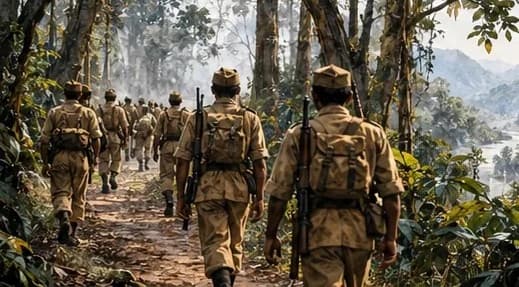
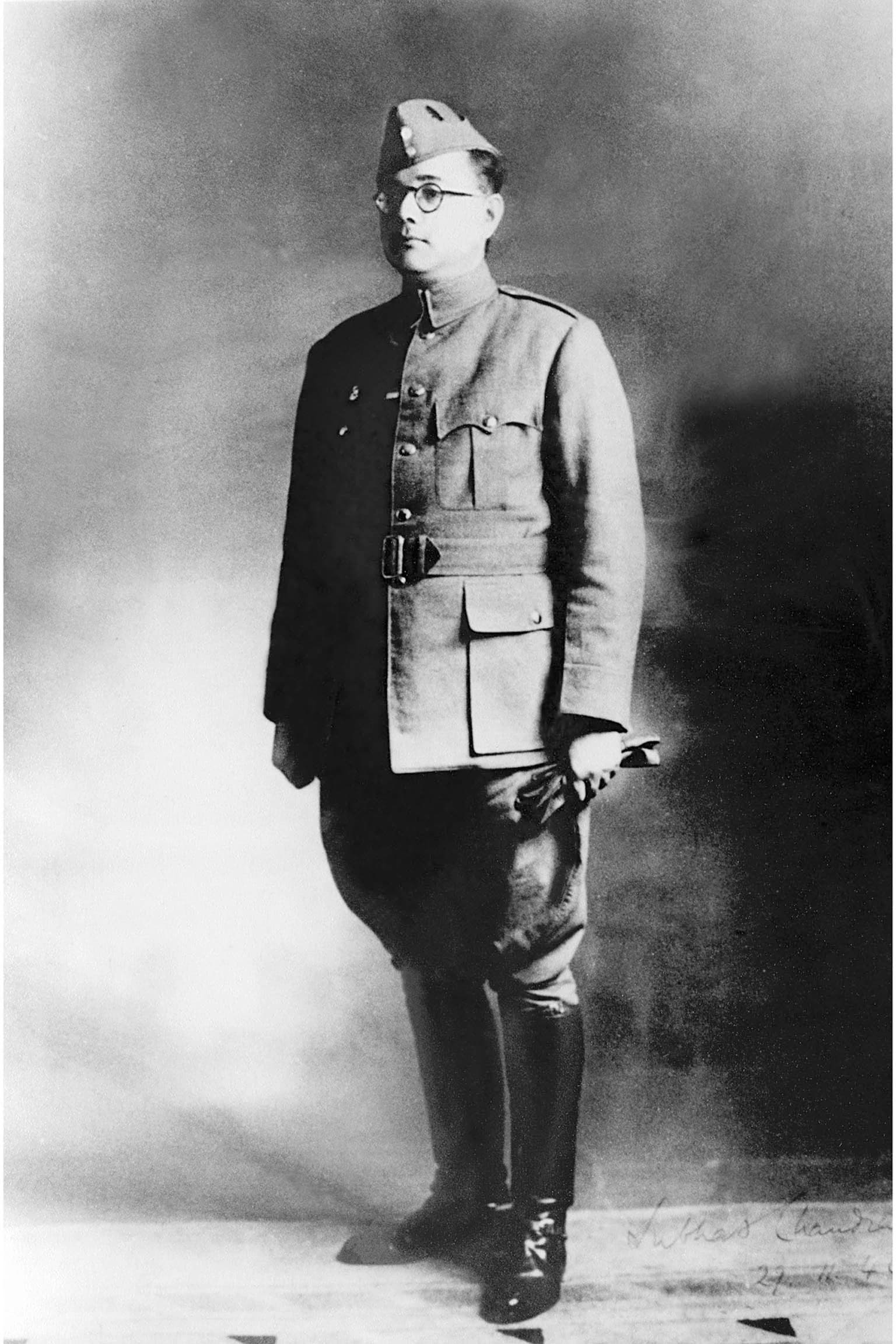
The Indian National Army was an armed force formed by Indian collaborationists and imperial Japan in Southeast Asia during World War II. During 1943, INA came under the leadership of Subhas Chandra Bose.
Subhas Chandra Bose saw it a golden opportunity to ally with British enemy to liberate India by launching military campaign from outside. With these basic ideas, he made good his escape from India and proceeded first to Germany and thence to Japan.
Mohan Singh's INA
Conceived in Malaya by Mohan Singh with Indian prisoners of war handed over by the Japanese. Collapsed by the beginning of 1943 over differences with the Japanese.
Passes on: Bose arrives, 2 July 1943Bose's INA
Provisional Government of Free India set up on 21 October 1943; Bose as supreme commander; fought in Burma and the Imphal campaign.
“Give me blood, and I shall give you freedom!”

Exam preparation
Every question this page prepares you for, with the parts that answer it.
“The nationalism which emerged during late 19th century continued to acquire broader shape and percolated to every section of the society, and resulted in realising the dream of Independence in 1947.”
Curated for BPSC, UPSC & State PCS Civil Services Aspirants | Modern Indian History Master Module