Introduction
- Menstruation is not “just a period”; it is a biological process of staggering intensity.
- Uterine contractions, powered by prostaglandins, are comparable to early labour pains. Conditions like dysmenorrhea, menorrhagia, fatigue, gastrointestinal distress, and mood swings make menstruation a significant medical event.
- Yet, societal and workplace attitudes often stigmatize menstruation, treating it as impure or taboo, creating barriers to education and employment for women.
Current Challenges in India
- Social Stigma and Education: Periods are considered polluting, leading to school absenteeism and dropouts.
- Lack of dignified sanitation facilities exacerbates exclusion.
- Workplace Barriers: Women often use sick leave to manage menstrual distress, facing humiliation and discomfort.
- There is a lack of structured workplace policies that accommodate menstrual health needs.
Legal Perspective
- Supreme Court Ruling: Dr Jaya Thakur v. Government of India & Ors. (2026) - Denying dignity during menstruation violates Article 21 (Right to Life and Dignity).
- Failure to provide clean toilets and sanitary products violates Article 21A (Right to Education).
- True equality must account for biological differences, not treat all employees identically.
- Principle: “Human dignity cannot be fragmented.”
Arguments for Menstrual Leave
- Normalising Biological Realities: Similar to maternity leave, menstrual leave recognises women as long-term assets requiring temporary accommodation for biological events.
- Workforce Stability: Evidence shows gender-sensitive policies improve job satisfaction, reduce stress, and increase employee loyalty (Verma, Bhal, Vrat, 2013).
- Concerns that menstrual leave discourages hiring women are historically unfounded, similar to initial opposition to maternity and sick leave.
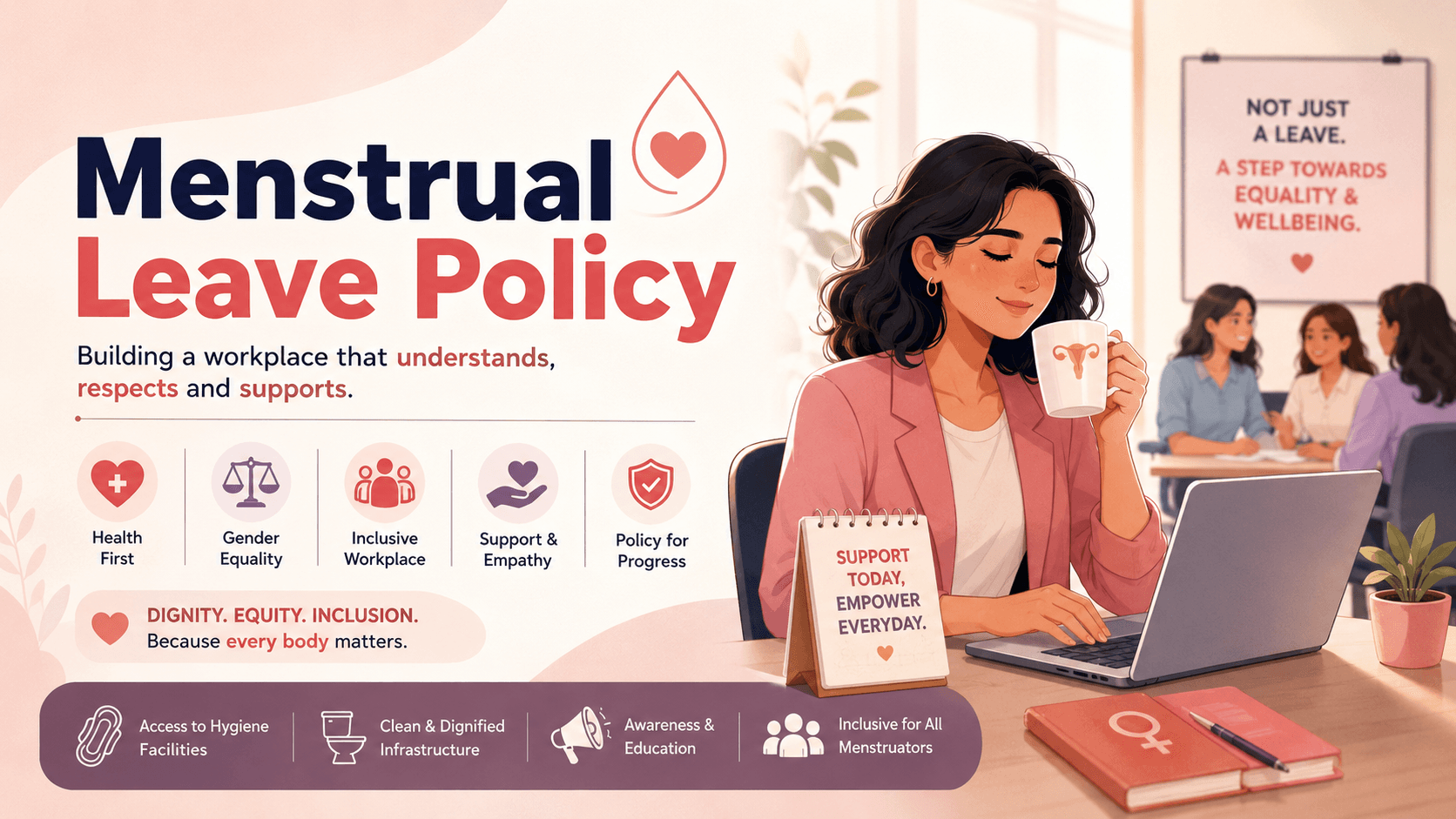
- Policy Implementation: Menstrual leave should extend beyond a few days, integrating:
- Free sanitary products
- Hygienic toilets and disposal facilities
- Awareness campaigns to reduce stigma
Inclusivity in Menstrual Leave
- Policies must cover all menstruators, including:
- Unorganised-sector workers
- Trans and non-binary individuals who menstruate
- This ensures equity and social justice, making the policy truly nuanced and inclusive.
Policy Recommendations
- Government-Led Framework: Develop uniform menstrual leave policies across states and workplaces.
- Integrate with public health and labour regulations.
- Workplace Implementation: Encourage private and public employers to adopt inclusive menstrual leave policies.
- Ensure supportive infrastructure and awareness alongside leave.
- Educational Integration: Include menstrual health education in schools and workplaces to destigmatize periods.
Conclusion
- Menstrual leave is not a privilege but a necessary policy for dignity, equity, and workforce inclusion.
- A nuanced, inclusive approach benefits individuals and organisations by:
- Improving health outcomes
- Enhancing job satisfaction
- Normalising gender-sensitive workplace practices
Key Takeaway: Menstrual leave policies must be comprehensive, equitable, and inclusive, addressing both biological realities and social inequities.
Question:
"Menstrual leave policies are not just a matter of workplace convenience but a question of dignity, equity, and social justice. Critically examine the need for a nuanced and inclusive menstrual leave policy in India. Discuss the challenges in implementation and suggest measures to make it effective across sectors."
SOURCE: Menstrual leave policy must be nuanced, inclusive | The Indian Express
Why does the article describe menstruation as more than "just a period"?
It describes menstruation as a biological process of staggering intensity, noting that uterine contractions powered by prostaglandins are comparable to early labour pains.
What medical conditions linked to menstruation does the article mention?
The article lists dysmenorrhea, menorrhagia, fatigue, gastrointestinal distress, and mood swings as conditions that make menstruation a significant medical event.
What did the Supreme Court rule in Dr Jaya Thakur v. Government of India & Ors. (2026)?
The Court held that denying dignity during menstruation violates Article 21 (Right to Life and Dignity), and that failing to provide clean toilets and sanitary products violates Article 21A (Right to Education).
What social challenges related to menstruation does the article identify in India?
It cites social stigma that leads to school absenteeism and dropouts, lack of dignified sanitation facilities, and workplace barriers where women use sick leave to manage menstrual distress while facing humiliation.
What evidence does the article cite for the benefits of gender-sensitive workplace policies?
It cites Verma, Bhal, and Vrat (2013), whose evidence shows gender-sensitive policies improve job satisfaction, reduce stress, and increase employee loyalty.
Are concerns that menstrual leave discourages hiring women valid, according to the article?
No, the article states such concerns are historically unfounded, similar to the initial opposition raised against maternity and sick leave.
Who should inclusive menstrual leave policies cover, per the article?
The article says policies must cover all menstruators, including unorganised-sector workers and trans and non-binary individuals who menstruate.
What should effective menstrual leave policy implementation include beyond leave days?
It should integrate free sanitary products, hygienic toilets and disposal facilities, and awareness campaigns to reduce stigma.
What is the article's core conclusion about menstrual leave?
It concludes that menstrual leave is not a privilege but a necessary policy for dignity, equity, and workforce inclusion, and must be comprehensive and inclusive.
Is this topic part of the BPSC/UPSC syllabus?
Yes, as a Social Issues topic it is relevant to GS1 and GS2, covering gender, workplace equity, and constitutional rights under Article 21.