EDU TERIA Logo
CartSign InSign UpEnroll Now
Back Science & Technology
BPSC Mains GS-2 Masterclass · Science & Technology

Waste Management & Waste-to-EnergyFrom Garbage Mountains to Power

Urban India throws away tens of millions of tonnes of waste a year and processes only a small part of it. This page covers the types of waste, the ways of managing it, the science that can treat it, and how much electricity India's waste could generate.

Waste62 MtUrban waste a year

may reach 165 Mt in 2030.

Gap~15%Waste processed

less than 60% collected.

Potential5,690 MWEnergy potential

urban and industrial organic waste.

Projects96WtE projects

installed so far.

Landfill90%Volume cut

by waste-to-energy plants.

Policy1,500 kcal/kgMinimum for WtE

only such waste should reach the plant.

Part 1 · Waste and its types

India's Waste Problem and the Types of Waste

Population growth, materialism and unplanned cities have built mountains of garbage; managing it starts with knowing what kind of waste it is.

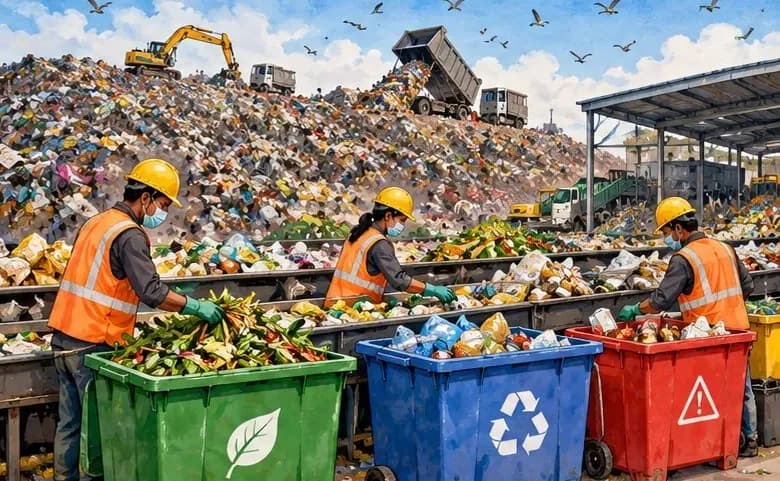
Illustration contrasting a towering city landfill with workers segregating waste into wet, dry and hazardous bins

A growing crisis

Ever-rising population, materialism as well as un-planned urbanization and waste management system have led to the problem of waste management. This problem is manifested in form of humongous landfill crisis around cities e.g. Ghazipur and Okhla landfill near Delhi.

According to one estimate, urban India generates 62 million tonnes of waste (MSW) annually, and it has been predicted that this will reach 165 million tonnes in 2030. Out of the total generated waste, less than 60% is collected and around 15% processed.

What is waste management?

Waste management includes the activities and actions required to manage waste from its inception to its final disposal. This includes the collection, transport, treatment and disposal of waste, together with monitoring and regulation of the waste management process.

Waste can be solid, liquid, or gas and each type has different methods of disposal and management. Waste management deals with all types of waste, including industrial, biological and household.

The wastes are of various types

Municipal waste

e.g. household waste, construction and demolition debris, sanitation residue, plastic waste and waste from streets.

Hazardous waste

e.g. industrial and hospital waste containing toxic substance.

E-waste

Discarded and end-of-life electronic products like computers, equipments used in ICT etc.

“Waste reduction is better than any kind of waste management.”
— BPSC Mains answer · Waste management

Curated for BPSC, UPSC & State PCS Civil Services Aspirants | Science & Technology Master Module