The Great Uprising of 1857:The Bihar Epicenter, Veer Kunwar Singh & Historiographical Synthesis
An exhaustive, archive-grounded study of the 1857 Revolution: from the pre-1857 tradition of armed resistance and the Danapur-Shahabad outbreak to Babu Kunwar Singh's mobile campaigns, Peel Commission restructuring, and the Dr. R.C. Majumdar debate.
Outbreak12 June 1857First Spark in Bihar
Rohini (Deoghar): 32nd Native Infantry mutiny.
Supreme General80 YearsVeer Kunwar Singh
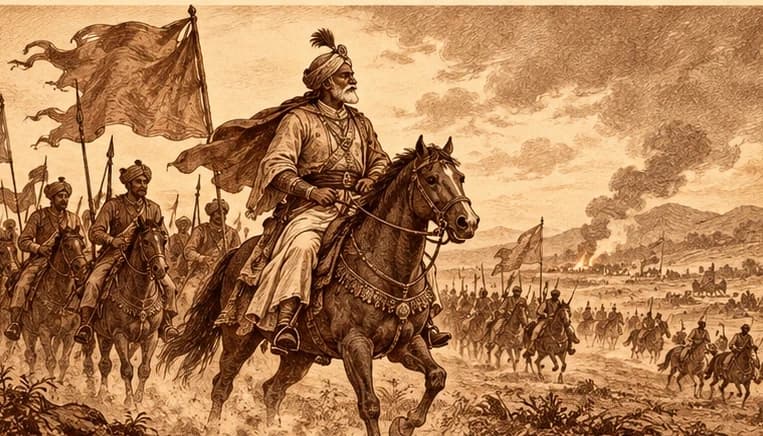
Octogenarian chief who led the multi-state resistance.
Garrison Revolt3 RegimentsDanapur Mutiny
Crossed river Sone on 25 July 1857 to join Shahabad.
Company abolished; Crown direct governance instituted.
Historical continuum
Before 1857: The Long Tradition of Armed Resistance
1857 was not a sudden bolt from the blue. For nearly a century, dispossessed rulers, tribal clans, peasant militias, and Indian sepoys repeatedly rose against British fiscal extortion and cultural insults.
1790Malabar & South India
Poligars Revolt of Malabar
Leader / Force: Poligar Chieftains
Armed defiance against East India Company revenue extortion and feudal subjugation in South India.
Significance: Showed early military resistance against colonial taxation networks.
1794Northern Circars, Andhra
Raja of Vizianagaram Uprising
Leader / Force: Raja Ananda Gajapati Raju
Revolted when the Company demanded Rs 3 lakh gift and military disbandment, leading to Battle of Padmanabham.
Significance: Early example of dispossessed regional royalty challenging Company supremacy.
1806Vellore, Tamil Nadu
Vellore Sepoy Mutiny
Leader / Force: Indian Sepoys of Madras Army
Revolt triggered by strict bans on turbans, sectarian marks, earrings, and the imposition of a leather cockade.
Significance: The earliest major religious-military revolt preceding the 1857 greased cartridge crisis.
1817Khurda, Odisha
Paika Rebellion
Leader / Force: Bakshi Jagabandhu Bidyadhar
Traditional landed militia (Paikas) rose in mass armed revolt after Company rent hikes and currency manipulation.
Significance: Formally recognized as one of India's earliest organized mass wars of independence.
1824 - 1825Gujarat
Kolis Uprising
Leader / Force: Koli Tribesmen
Armed rebellion against Company administrative encroachment and the destruction of indigenous policing rights.
Significance: Demonstrated fierce indigenous tribal resistance in Western India.
1824Kolhapur, Maharashtra
Kolhapur Uprising & Gadkari Revolt
Leader / Force: Gadkari Hereditary Soldiers
Revolt against Company's direct revenue superintendence and disbandment of local garrisons.
Significance: Early martial caste rebellion in the Deccan.
1826 - 1832Saurashtra, Kathiawar
Saurashtra Revolts
Leader / Force: Regional Chiefs & Kathis
Series of armed guerilla skirmishes challenging British paramountcy and tax jurisdiction.
Significance: Persistent defiance across Western Indian coastal belts.
1841Satara, Maharashtra
Satara Uprising
Leader / Force: Dhar Rao & Chhatrapati Loyalists
Armed defiance following the deposition and banishment of Raja Pratap Singh of Satara.
Significance: Direct precursor to Dalhousie's Doctrine of Lapse annexation of Satara in 1848.
1855 - 1856Damin-i-Koh (Rajmahal Hills, Bihar/Jharkhand)
Santhal Hul (Rebellion)
Leader / Force: Sidhu, Kanhu, Chand & Bhairav
Over 60,000 Santhals rose in mass armed insurrection against the unholy nexus of British collectors, Mahajans, and Zamindars.
Significance: The most formidable pre-1857 tribal peasant uprising, shattering British security in Bengal and Bihar.
The Explosive Initiation (March - May 1857)
From Barrackpore to the Ramparts of the Red Fort
On 29 March 1857, Mangal Pandey of the 34th Native Infantry at Barrackpore struck down British officers Hughson and Baugh. By 10 May 1857, Meerut sepoys broke jail, routed their commanders, and rode overnight to Delhi. Acclaiming the Mughal Emperor Bahadur Shah Zafar as Shahenshah-e-Hindustan, the soldiers transformed a garrison mutiny into a continental war of liberation.
Analytical anatomy
The 360° Crucible: Complete Causes of the 1857 Outbreak
The revolt was not caused by greased cartridges alone. It was the explosive convergence of economic ruin, political annexations, administrative corruption, missionary anxieties, military discontent, and the shattering of the myth of British invincibility.
Colonial fiscal policies systematically destroyed the peasant economy, de-industrialized Indian handicrafts, and expropriated traditional landed aristocracy.
High Taxation & Coercive Revenue Systems
Permanent Settlement, Ryotwari, and Mahalwari crushed the rural peasantry.
▹Exorbitant land revenue demands forced cultivators into the clutches of moneylenders (Mahajans/Sahukars).
▹Default on revenue resulted in immediate auction and eviction from ancestral lands.
▹Peasants lost their customary occupancy rights, turning into landless tenants and impoverished wage labourers.
Historical Evidence & Citations:
•Permanent Settlement in Bihar created ruthless intermediaries.
•Moneylenders charged usurious interest rates (up to 50-100% per annum).
De-Industrialisation & Collapse of Handicrafts
One-way free trade and tariff manipulation destroyed world-renowned Indian textiles.
▹British industrial factory goods flooded Indian markets duty-free, while high protective tariffs were imposed on Indian cotton and silk in Britain.
▹Loss of royal court patronage following the annexation of native states rendered millions of artisans, weavers, and craftsmen destitute.
▹The complete collapse of rural handicrafts triggered massive overcrowding and pressure on agricultural land.
Historical Evidence & Citations:
•Dhaka muslin and Bhagalpur silk industries collapsed under British import duties.
•Sir Charles Trevelyan admitted the catastrophic de-urbanization of textile hubs.
Dispossession of the Landed Aristocracy & Inam Commission
Confiscation of tax-free estates alienated traditional zamindars and taluqdars.
▹Lord Dalhousie's Inam Commission in Bombay alone confiscated over 20,000 landed estates that failed to produce title deeds.
▹In Awadh, the Summary Settlement of 1856 dispossessed over 50% of taluqdars from their ancestral forts and estates.
▹Babu Kunwar Singh faced continuous harassment and estate seizure threats from the Board of Revenue.
Historical Evidence & Citations:
•Inam Commission scrutinized hereditary Sanads and confiscated 21,000 estates.
•Babu Kunwar Singh's Jagdishpur estate was burdened with heavy court-managed debts.
Interactive Military Cartography (1857-1859)
Genesis to Retribution: Master Chronology
Follow the geographic and tactical arc of the 1857 revolution: from the Barrackpore spark and Meerut outbreak, through Pir Ali’s urban defiance in Patna, the Danapur regiments' crossing of the Sone, Veer Kunwar Singh's offensive at Arrah and central campaigns, to Amar Singh's 18-month guerrilla bastion in the Kaimur hills.
Tactical Phases
15 Historic Hubs
Theatre Span
Delhi ➔ Bihar ➔ Bengal
1857-1859 Tactical Strategic Grid
Bihar, Avadh & Bengal Operational Theater
The Spark Bihar Civil Theatres Kunwar Singh March Kaimur Guerrilla
Click any waypoint to inspect field dispatch
Phase 06 of 1525 July 1857 Danapur Cantonment (25.63°N, 85.04°E)
Danapur Garrison Mutiny & Sone River Crossing
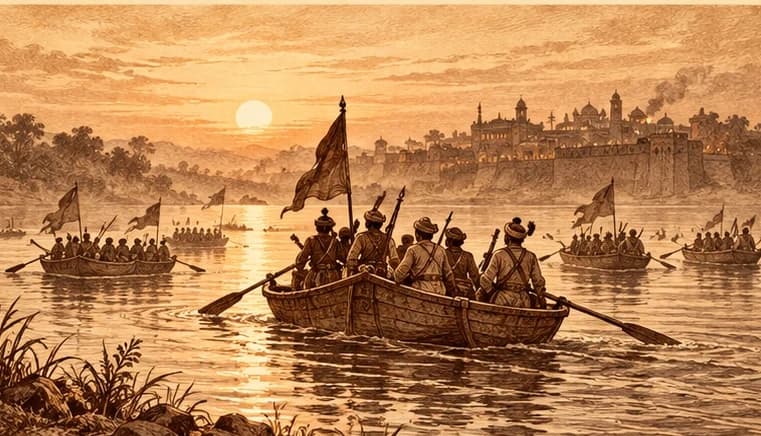
The 7th, 8th, and 40th Regiments of the Bengal Native Infantry stationed at Danapur mutinied, defied General Lloyd, crossed the river Sone, and converged on Jagdishpur under 80-year-old Veer Kunwar Singh.
⚔️ Combatants: 7th, 8th & 40th Bengal Native Infantry (3,000 Sepoys) vs Major General George Lloyd, 10th Foot Regiment
🎯 Tactical Action: Transformed an isolated garrison revolt into a massive, organized civil-military revolution across Bihar.
Chronological Expedition Stream
15 Sequential Tactical Phases (1857-1859)
Showing 15 of 15 Historic Phases
01
29 March 1857Initial Outbreak
Barrackpore, Bengal(22.76°N, 88.37°E)
Theater: Lower Bengal & Hooghly Cantonment
The Barrackpore Spark & Mangal Pandey
Mangal Pandey of the 34th Native Infantry openly defied British orders and killed English officers Lieutenant Baugh and Sergeant-Major Hughson, shouting against the greased Enfield cartridge.
Rebel Vanguard & Leaders:
Mangal Pandey (34th Bengal Native Infantry)
British Command & Regiments:
Lieutenant Baugh, Sergeant-Major Hughson, General Hearsey
🎯 Tactical Execution & Outcome: Mangal Pandey was court-martialled and hanged on 8 April 1857; 34th Native Infantry was disbanded, triggering widespread underground unrest.
"Pandey's solitary act of defiance electrified every native cantonment from Calcutta to Peshawar within weeks."
— Bengal Military Records, 1857
Phase 01 / 15 • I
02
10 May 1857Pan-India Outbreak
Meerut & Delhi(28.98°N, 77.70°E)
Theater: Upper Doab & Imperial Red Fort
The Meerut Outbreak & Midnight March to Delhi
85 sepoys of the 3rd Native Cavalry who refused cartridges were imprisoned. Comrades mutinied, broke open Meerut jail, killed European officers, and marched overnight to Delhi.
Rebel Vanguard & Leaders:
3rd Native Cavalry, 11th & 20th Native Infantry
British Command & Regiments:
General Hewitt, Captain Simon Fraser
🎯 Tactical Execution & Outcome: Seized Delhi on 11-12 May and proclaimed Mughal Emperor Bahadur Shah Zafar as 'Shahenshah-e-Hindustan', creating a unified national symbol.
"The overnight march from Meerut to the Kashmere Gate turned a localized mutiny into a war for Indian sovereignty."
— Charles Ball's History of the Indian Mutiny
Phase 02 / 15 • II
03
12 June 1857First Spark in Bihar
Rohini, Santhal Parganas(24.48°N, 86.70°E)
Theater: East Bihar & Santhal Uplands
First Spark in Bihar: The Rohini Mutiny
Three soldiers of the 5th Irregular Cavalry revolted, killing Major Norman Leslie and Dr. Grant. Major MacDonald ruthlessly suppressed the outbreak.
Rebel Vanguard & Leaders:
5th Irregular Cavalry (32nd Regiment Sepoys)
British Command & Regiments:
Major Norman Leslie, Major MacDonald, Dr. Grant
🎯 Tactical Execution & Outcome: Three rebel sepoys were sentenced to death and hanged; the regiment headquarters was immediately relocated to Bhagalpur in panic.
"The swift revolt at Rohini showed the British administration that Bihar's irregular cavalry units were deeply radicalized."
— District Gazetteers of Santhal Parganas
Phase 03 / 15 • III
04
3 July 1857Urban Civilian Revolt
Patna City (Gurhatta)(25.61°N, 85.14°E)
Theater: Central Bihar & Ganges Trade Capital
Patna Civil Uprising Led by Pir Ali Khan
Bookseller Pir Ali Khan led an armed civilian uprising through the streets of Patna. Opium Agent Dr. R. Lyell attempted to quell the revolt with his troops but was killed.
Rebel Vanguard & Leaders:
Pir Ali Khan, Ghasita Khalifa, 200 Armed Citizens
British Command & Regiments:
Commissioner William Tayler, Opium Agent Dr. R. Lyell
🎯 Tactical Execution & Outcome: Tayler burned Pir Ali's house/shop, arrested Wahabi leaders under preventive detention, and hanged Pir Ali along with 16 patriots on 7 July.
"Pir Ali met his death with cold fortitude. He told me: 'There are some cases in which it is better to die than to live.'"
— William Tayler, 'Our Crisis' (1858)
Phase 04 / 15 • IV
05
25 July 1857Planter Garrison Revolt
Muzaffarpur, Tirhut(26.12°N, 85.39°E)
Theater: North Bihar & Tirhut Division
Muzaffarpur Indigo Station Outbreak
Disgruntled soldiers killed English officers at the indigo plantation headquarters. Magistrate E.F. Lautour proclaimed martial law and armed loyal zamindars and indigo planters with magisterial powers.
Rebel Vanguard & Leaders:
12th Irregular Cavalry Detachments & Peasantry
British Command & Regiments:
Magistrate E.F. Lautour, Indigo Planters Corps
🎯 Tactical Execution & Outcome: European planters barricaded estates; heavy bounties were declared for rebel captures across Tirhut and Champaran.
"Planters abandoned rural outposts and fortified Muzaffarpur court premises as peasant uprisings erupted across North Bihar."
— Tirhut Collectorate Records, 1857
Phase 05 / 15 • V
06
25 July 1857Garrison Mutiny & River Crossing
Danapur Cantonment(25.63°N, 85.04°E)
Theater: Danapur Cantonment & Shahabad Gateway
Danapur Garrison Mutiny & Sone River Crossing
The 7th, 8th, and 40th Regiments of the Bengal Native Infantry stationed at Danapur mutinied, defied General Lloyd, crossed the river Sone, and converged on Jagdishpur under 80-year-old Veer Kunwar Singh.
🎯 Tactical Execution & Outcome: Transformed an isolated garrison revolt into a massive, organized civil-military revolution across Bihar.
"General Lloyd's hesitation allowed 3,000 seasoned sepoys to cross the Sone unhindered and place their muskets at Kunwar Singh's feet."
— Innes' Sepoy Revolt: Its Causes and Consequences
Phase 06 / 15 • VI
07
27 July 1857First Major Triumph & Civil Rule
Arrah, Shahabad(25.56°N, 84.67°E)
Theater: Shahabad Heart & Arrah House
Liberation of Arrah & Proclamation of Independent Rule
Kunwar Singh and his allied sepoys captured Arrah, besieged the British garrison in the 'Arrah House', and proclaimed independent sovereign administration. Captain Dunbar's relief column was ambushed and decimated.
🎯 Tactical Execution & Outcome: Dunbar's 400-strong relief force was trapped in a night ambush; over 150 British troops were killed. Kunwar Singh established a rebel civil judiciary and treasury in Arrah.
"The defeat of Dunbar's column before Arrah sent shockwaves to Calcutta, temporarily extinguishing British authority throughout western Bihar."
— Sir John Kaye, 'Sepoy War in India'
Phase 07 / 15 • VII
08
3 August 1857Pivot to Guerrilla War
Bibiganj & Jagdishpur Forests(25.48°N, 84.42°E)
Theater: Bhojpur Jungle Corridor & Gangi River
Battle of Bibiganj & Shift to Mobile Warfare
Major Vincent Eyre arrived with fresh heavy artillery and relief forces. After a fierce pitched battle at Bibiganj, Kunwar Singh strategically shifted tactics to mobile guerrilla warfare and moved outside Bihar.
Rebel Vanguard & Leaders:
Kunwar Singh & Jagdishpur Retainers
British Command & Regiments:
Major Vincent Eyre (Bengal Artillery), Captain L'Estrange
🎯 Tactical Execution & Outcome: Kunwar Singh evacuated Jagdishpur Fort before British artillery could pin him down, preserving his 10,000-strong strike force for wider central campaigns.
"Eyre destroyed the Jagdishpur palace and temples, but Kunwar Singh's army melted into the jungles completely intact."
— Eyre's Military Despatches to Govt of India, Aug 1857
Phase 08 / 15 • VIII
09
August 1857Prison Break & Insurgency
Gaya & Nawada(24.79°N, 85.00°E)
Theater: South Bihar & Magadh Plains
Gaya Jailbreak & Peasant Insurgency
Rebel forces attacked the Gaya central jail, liberated 400 prisoners, attacked the pro-British Tekari Raj estate, looted Rs 10,000, and rallied local peasantry under Haidar Ali Khan.
Rebel Vanguard & Leaders:
Haidar Ali Khan, Ghulam Ali, Gaya Urban Rebels
British Command & Regiments:
Magistrate Alonzo Money, Captain Rattray's Sikhs
🎯 Tactical Execution & Outcome: Disrupted British revenue collectors across South Bihar, cut off Grand Trunk Road communication lines, and established rebel control in Rajgir and Nawada.
"The liberated prisoners and insurgent peasantry drove the civil authorities out of Nawada, proclaiming Kunwar Singh's supreme sovereignty."
— Patna Divisional Commissioner's Confidential Letter
Phase 09 / 15 • IX
10
Aug 1857 - March 1858Strategic Coalition
Rewa, Kanpur & Azamgarh(26.07°N, 83.18°E)
Theater: Central India, Bundelkhand & Avadh
Pan-Indian Mobile Offensive: Rewa, Banda, Kanpur & Azamgarh
Kunwar Singh forged strategic alliances with Peshwa Nana Saheb and Tantia Tope at Kanpur, participated in the re-capture of Kanpur, and was welcomed in Lucknow with a Robe of Honour, Rs 12,000, and the royal firman for Azamgarh.
Rebel Vanguard & Leaders:
Kunwar Singh, Nana Saheb, Tantia Tope, Awadh Royal Forces
British Command & Regiments:
Colonel Milman, Colonel Dames, Sir Edward Lugard
🎯 Tactical Execution & Outcome: Outmaneuvered Colonel Milman and Colonel Dames at Atraulia, captured Azamgarh fort on 22 March 1858, and tied down multiple British divisions.
"Kunwar Singh showed extraordinary tactical agility, moving across three provinces at age 80 without losing an entire supply column."
— Malleson, 'History of the Indian Mutiny'
Phase 10 / 15 • X
11
20 September 1857Imperial Center Falls
Delhi (Red Fort & Ridge)(28.61°N, 77.20°E)
Theater: Imperial Capital Sector
Fall of Delhi to British Siege Forces
British forces under John Nicholson stormed Delhi after a protracted siege. Bahadur Shah Zafar was captured at Humayun's Tomb and his sons were shot dead at Khooni Darwaza by William Hodson.
Rebel Vanguard & Leaders:
General Bakht Khan, Delhi Sepoys, Mughal Princes
British Command & Regiments:
Brigadier John Nicholson, Lt. William Hodson, Archdale Wilson
🎯 Tactical Execution & Outcome: With the fall of Delhi, rebel leadership shifted decisively to provincial theaters like Shahabad, Awadh, and Central India.
"The capture of the Mughal Emperor ended the central symbol, but scattered ferocious regional leaders who fought without a crown."
— Imperial Records Department, New Delhi
Phase 11 / 15 • XI
12
17 April 1858Immortal Sacrifice
Shivpur Ghat (River Ganges)(25.75°N, 84.15°E)
Theater: Ballia-Bhojpur Border & Ganges Crossing
Battle of Shivpur Ghat & Immortal Sacrifice to Ganga
Pursued by Lord Lugard and Brigadier Douglas with a Rs 25,000 bounty on his head, Kunwar Singh crossed the Ganges. When a British bullet shattered his left wrist, he severed his own arm with his sword and offered it to Mother Ganga.
Rebel Vanguard & Leaders:
Veer Kunwar Singh & Veteran Bhojpur Guards
British Command & Regiments:
Brigadier Douglas, Colonel Cumberlege, Sir Edward Lugard
🎯 Tactical Execution & Outcome: Severed his shattered arm with a single clean sword stroke and declared: 'He Ganga Maiya, tohar charan me hamar e bhent ba' (O Mother Ganga, accept this humble offering).
"Even British chroniclers recorded the legendary courage of the octogenarian chieftain crossing the great river under heavy grapeshot fire."
— Sir George Trevelyan, 'Cawnpore'
Phase 12 / 15 • XII
13
23 - 26 April 1858Triumphant Undefeated Stand
Jagdishpur Fort, Bhojpur(25.48°N, 84.42°E)
Theater: Jagdishpur Citadel & Bhojpur Forests
Final Triumph over Captain Le Grand & Death of Kunwar Singh
Despite severe injury and loss of blood, Kunwar Singh rallied his forces at Jagdishpur and completely routed Captain Le Grand's British detachment on 23 April. He passed away undefeated on 26 April 1858.
Rebel Vanguard & Leaders:
Veer Kunwar Singh & Jagdishpur Rebel Army
British Command & Regiments:
Captain Le Grand (killed), Danapur Naval Brigade
🎯 Tactical Execution & Outcome: Captain Le Grand was killed in action, British artillery was seized, and 102 British soldiers fell. Kunwar Singh died a free, sovereign ruler in his liberated capital.
"Kunwar Singh died as he lived—in possession of his ancestral estates, with his flags flying over the British guns he captured three days earlier."
— Calcutta Review, Vol. XXXII, 1859
Phase 13 / 15 • XIII
14
May 1858 - Dec 1859Guerrilla Bastion
Kaimur Hills & Rohtas(24.63°N, 83.90°E)
Theater: Kaimur Plateau, Rohtas Fort & Nepal Terai
Babu Amar Singh assumed supreme command, turning the Kaimur jungles into an impregnable base. He paralyzed British logistics on the Grand Trunk Road and outfought Sir Edward Lugard's divisions.
Rebel Vanguard & Leaders:
Babu Amar Singh, Harkishan Singh, Nishan Singh
British Command & Regiments:
Sir Edward Lugard, Brigadier Douglas, Jung Bahadur (Nepal)
🎯 Tactical Execution & Outcome: Maintained a parallel rebel tax collection and weapon foundry for 18 months before retreating to Nepal Terai; captured Dec 1859, died in Gorakhpur jail on 3 Jan 1860.
"Amar Singh operated with such stealth that whole British brigades combed the Kaimur hills for months without making contact."
— Military Despatches of Sir Edward Lugard, 1858
Phase 14 / 15 • XIV
15
1 November 1858End of Company Rule
Allahabad Darbar(25.43°N, 81.84°E)
Theater: Allahabad Sangam & Imperial Darbar
Queen Victoria's Proclamation & End of Company Rule
Lord Canning read Queen Victoria's Proclamation at Allahabad. The Government of India Act 1858 abolished the East India Company and transferred Indian administration directly to the British Crown.
Rebel Vanguard & Leaders:
Indian Resistance Subdued / Martial Race Commission
British Command & Regiments:
Lord Canning (First Viceroy), Queen Victoria
🎯 Tactical Execution & Outcome: Doctrine of Lapse was formally revoked, native princely states guaranteed, and the Indian Army drastically reorganized along martial vs non-martial racial lines.
"The 1857 revolt fundamentally destroyed the mercantile raj of the East India Company, giving birth to direct British imperial rule."
— Government of India Act 1858 Parliamentary Papers
Phase 15 / 15 • XV
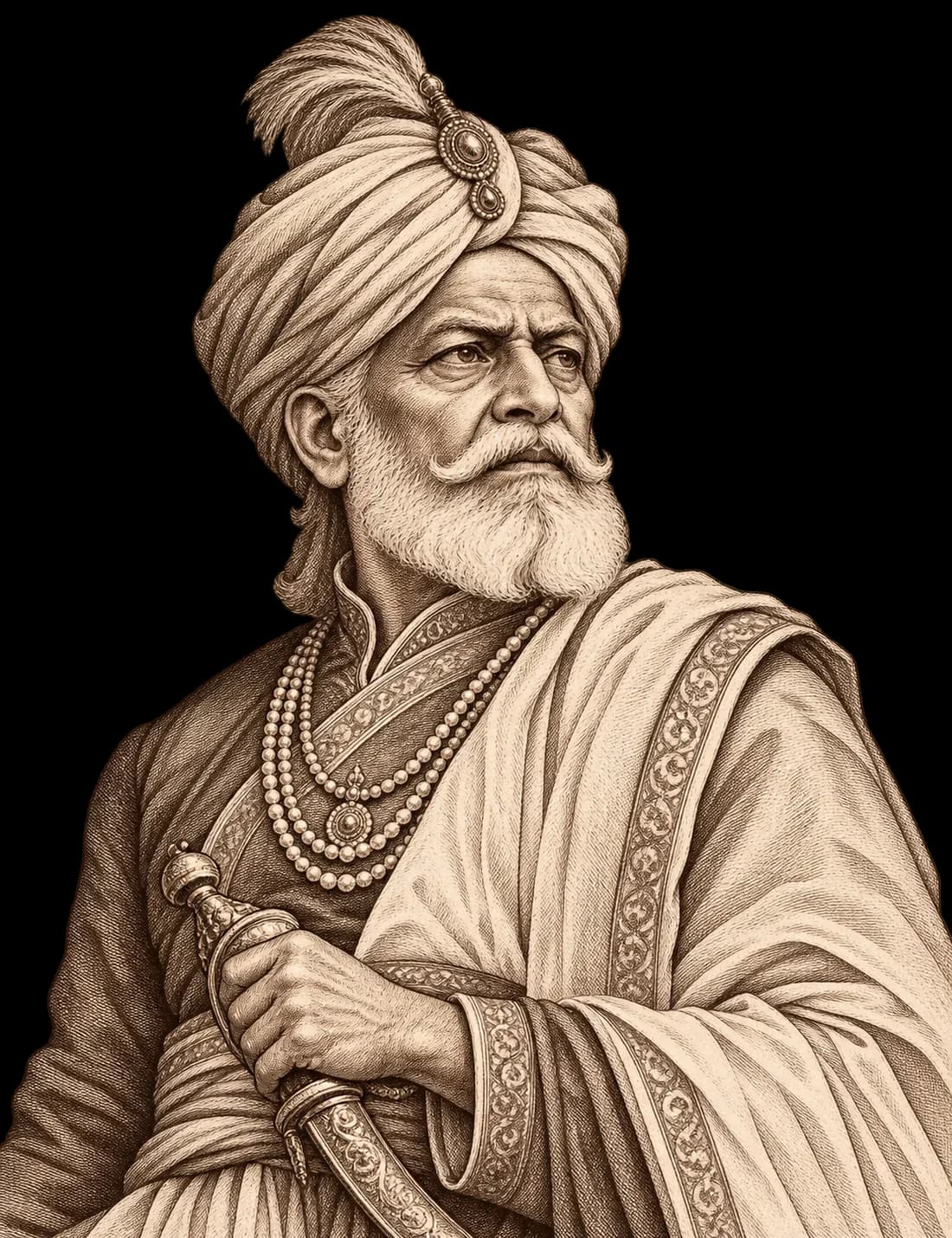
Veer Kunwar Singh
1777 – 26 April 1858
Supreme General of the Bihar Revolution
Babu Kunwar Singh & Babu Amar Singh
The Strategic Genius of Jagdishpur & The Kaimur Jungle Bastion
"The supremacy of the English and the Company is at an end, and it is now Kunwar Singh's reign." — Statement of a captured Bihar rebel during the British court martial trial of 1857
At the age of 80, when most men retire from active life, Babu Kunwar Singh organized a clandestine armament factory in Jagdishpur, rallied 10,000 elite fighters, stockpiled grain for 20,000 for 6 months, and outmaneuvered seasoned British generals like Vincent Eyre, Sir Edward Lugard, and Brigadier Douglas across Bihar, Uttar Pradesh, and Madhya Pradesh.
01
Logistical Mastermind
Pre-Planned Logistics & Arsenal
Clandestine arms foundry in Jagdishpur, fort repairs, 10,000 disciplined troops, and 6 months food supplies for 20,000 people before open mutiny broke out.
02
First Major Triumph
Liberation of Arrah & Dunbar Rout
On 27 July 1857, captured Arrah, ambushed and routed Captain Dunbar's relief force from Danapur, and proclaimed independent civil administration.
03
Tactical Mobility
Master of Mobile Guerrilla Strategy
After the Bibiganj standoff with Vincent Eyre, he refused to get trapped in static sieges, maintaining a fast-moving offensive across Mirzapur, Rewa, and Banda.
04
Inter-State Coalition
Pan-Indian Alliances & Azamgarh Victory
United with Peshwa Nana Saheb and Tantia Tope at Kanpur; received at Lucknow with a Robe of Honour, ₹12,000, and royal Firman; defeated Col. Milman and Col. Dames at Azamgarh.
05
Legendary Valor
The Immortal Ganga Sacrifice
Severed his own bullet-shattered left wrist and offered it to Mother Ganga at Shivpur Ghat. Reached Jagdishpur and routed Captain Le Grand's British force on 23 April 1858 before passing away undefeated on 26 April.
06
Guerrilla Legacy
Amar Singh's Kaimur Jungle Campaign
Babu Amar Singh assumed command, paralyzing the Grand Trunk Road from Kaimur forests, fighting Sir E. Lugard, and joining Nana Saheb in Nepal Terai until his capture in Dec 1859.
Geographical spread
Regional & Tribal Theatres across Bihar & Jharkhand
The 1857 uprising in Bihar was a truly broad-based movement. Explore each district front to examine how zamindars, urban artisans, tribal warriors, and sepoys challenged colonial supremacy.
The epic 3 July street uprising in Gurhatta. Pir Ali organized civilian underground networks. Opium Agent Dr. Lyell was shot dead. Commissioner William Tayler executed 16 rebels and detained top Wahabi leaders under preventive detention.
Key Historical Incidents:
▹Killing of Opium Agent Dr. Lyell at Gurhatta street battle.
▹Arrest of Wahabi leaders Ahmadullah, Waiz-ul-Haq, and Mohd. Hussain.
▹Martyrdom of Pir Ali Khan; hailed for stern resolution in Tayler's 'Our Crisis'.
The undisputed nerve center of the Bihar revolution. Armed fort, ammunition foundry, liberation of Arrah, decimation of Dunbar's force, mobile central Indian offensive, and Amar Singh's epic Kaimur guerrilla campaign.
Key Historical Incidents:
▹Capture and independent administration of Arrah (27 July 1857).
▹Guerilla pivot after Battle of Bibiganj against Vincent Eyre.
▹Final victory over Captain Le Grand at Jagdishpur (23 April 1858).
▹Amar Singh's Grand Trunk Road blockade from Kaimur forests.
Rohini (Deoghar)Initial Spark of Bihar Uprising
Leader: Soldiers of 5th Irregular Cavalry (32nd Native Infantry)
Forces: Bengal Native Army Mutineers
The earliest military spark in Bihar on 12 June 1857. Rebels assassinated Major Norman Leslie and Dr. Grant before Major MacDonald brutally executed three soldiers.
Key Historical Incidents:
▹Assassination of Major Norman Leslie on 12 June 1857.
▹Court martial and hanging of three patriotic sepoys.
▹Regimental Headquarters permanently shifted to Bhagalpur.
Muzaffarpur & TirhutIndigo Belt Resistance
Leader: Rebel Detachments & Disgruntled Sepoys
Forces: Cavalry troopers and local agricultural peasantry
On 25 July 1857, mutinous troops attacked British officers. Magistrate E.F. Lautour declared martial law and gave European indigo planters and loyal zamindars summary magistrate powers.
Key Historical Incidents:
▹Attacks on British indigo factory stations.
▹Enforcement of martial law across Tirhut division.
▹Mobilization of planter-magistrates to hunt deserters.
Rebels stormed the Gaya jail in August 1857, liberating 400 prisoners. They attacked the British-allied Tekari Raj, looted Rs 10,000 from the treasury, and captured Rajgir under Haidar Ali Khan.
Key Historical Incidents:
▹Gaya Central Jail break & liberation of 400 prisoners.
▹Attack on pro-British Tekari Raj estate.
▹Capture and defense of Rajgir pass against British columns.
PalamuTribal Guerrilla Bastion
Leader: Nilambar & Pitambar (Bhogta Brothers)
Forces: Bhogta & Chero Clans, Tribal Warriors
The two brave brothers united the Bhogtas and Chero zamindars into a formidable guerrilla alliance, attacking British outposts at Chainpur and Lesliganj, keeping British forces tied down for two years.
Key Historical Incidents:
▹Assault on British police posts and factories at Lesliganj.
▹Destruction of colonial communications in Chotanagpur.
▹Captured and executed at Lesliganj in 1859 after intense jungle warfare.
Singhbhum & PorahatChotanagpur Forest Theatre
Leader: Raja Arjun Singh of Porahat
Forces: Kol & Ho Indigenous Tribes
Raja Arjun Singh mobilized thousands of Kol and Ho fighters, defending the forested terrain of Singhbhum and resisting British expeditions under Captain Birch.
Key Historical Incidents:
▹Revolt of Singhbhum auxiliary sipahis.
▹Unified Kol and Ho tribal guerrilla campaigns.
▹Arjun Singh's exile to Banaras after prolonged resistance.
Raja Nilmoni Singh incited the Santhal populace and local sipahis to revolt against the Company administration, refusing revenue and challenging colonial magistrates until his arrest.
Key Historical Incidents:
▹Santhal-sepoy armed convergence against Company courts.
▹Arrest of Raja Nilmoni Singh and imprisonment in Alipore Jail.
Champaran & SaranBorder Garrison Mutiny
Leader: 12th Irregular Cavalry at Sugauli
Forces: Sugauli Garrison Troopers
The mutiny of the 12th Irregular Cavalry at Sugauli near the Indo-Nepal border resulted in the assassination of Major Holmes and severed British telegraphic links to Nepal.
Key Historical Incidents:
▹Assassination of Major Holmes and European officers at Sugauli.
▹Disruption of British border logistics and communications.
Local chieftains rallied forest dwellers to cut off Grand Trunk Road supply lines, ambushing British postal couriers and military columns.
Key Historical Incidents:
▹Disruption of communication routes between Patna and Calcutta.
▹Attacks on British supply depots.
Purnea & Jalpaiguri FrontNorthern Terai Theatre
Leader: Soldiers of 73rd Native Infantry
Forces: Mutinous Sepoys from Jalpaiguri
Rebel sepoys marched across North Bengal into Purnea, threatening British planters and seeking shelter in the Terai jungles of Nepal.
Key Historical Incidents:
▹Clashes with British detachment under Captain Richardson.
▹Movement of mutineers towards the Nepal border.
Critical analysis
Why the Revolt Failed: Structural Defects & The Collaborators
A rigorous historical examination of the 5 primary structural limitations of 1857, along with the princely and zamindari collaborators who served as 'breakwaters to the storm'.
Geographical Limitation
Absence of All-India Territorial Spread
The revolt was heavily concentrated in North and Central India (Awadh, Rohilkhand, Bihar, Bundelkhand, Delhi). South India (Madras and Bombay Presidencies) remained almost entirely quiet. Punjab and Bengal were only marginally affected, allowing the British to draw fresh loyal Sikh and Gurkha troops to suppress Delhi and Awadh.
Evidence & Primary Data:
•By contemporary estimates, less than one-fourth of total Indian territory and one-tenth of the population was directly involved.
•Earlier regional revolts in South India had already been crushed ruthlessly, creating political exhaustion.
Feudal Treachery
Collaborators & Princely 'Breakwaters to the Storm'
Major ruling princes and big landlords actively backed the British, providing soldiers, supplies, and sanctuary. Lord Canning famously declared: 'If the Scindia joins the mutiny, I shall have to pack off tomorrow. These princes served as breakwaters to the storm.'
Evidence & Primary Data:
•Scindia of Gwalior and Holkar of Indore supplied cavalry and intelligence to British forces.
•Nizam of Hyderabad, Raja of Jodhpur, Nawab of Bhopal, and rulers of Patiala, Nabha, Jind, and Kashmir gave unconditional military support.
•In Bihar: Darbhanga Maharaj converted his palace into a fortified haven for European indigo planters; Zamindars of Dumra, Deoria, and Bakhra ('Bakhra Babu') actively captured rebel sepoys.
Class Divide
Alienation of Educated Middle Class & Merchants
The newly emerging western-educated Indian middle class in Calcutta, Bombay, and Madras viewed the revolt as a backward-looking feudal restoration that would undo modern educational and social reforms. Moneylenders (Mahajans) and traders, who were attacked and looted by mutineers, staunchly allied with the Company for property security.
Evidence & Primary Data:
•Educated Bengalis held public prayer meetings in Calcutta for British victory.
•Mutineers burned debt ledgers and targeted moneylenders in Delhi, Bareilly, and Shahabad.
Military Disparity
Technological Superiority: Enfield Rifles & Electric Telegraph
British troops were equipped with state-of-the-art Enfield Rifles (accurate up to 800 yards) and heavy siege artillery, while Indian sepoys fought largely with traditional swords, spears, and outdated muskets. Crucially, the newly installed Electric Telegraph network allowed the British Commander-in-Chief to track rebel movements in real time.
Evidence & Primary Data:
•A captured rebel in Delhi famously pointed to the telegraph wire and muttered: 'There is the cord that strangled us.'
•British gunboats controlled the Ganges, cutting off rebel reinforcements.
Strategic Deficit
Lack of Centralized Coordination & Forward-Looking Ideology
The rebellion lacked a unified supreme command. While Kunwar Singh, Rani Lakshmibai, Nana Saheb, and Maulvi Ahmadullah showed extraordinary personal courage, they fought primarily in regional silos without a common strategic masterplan. The movement lacked a modern political program, seeking only to restore the old, decaying feudal order.
Evidence & Primary Data:
•Rebel generalship was outmatched by seasoned British commanders (Lawrence brothers, Nicholson, Outram, Havelock, Campbell, Eyre, Lugard).
•Sepoys at Delhi squabbled over daily pay and lacked logistical command structures.
Lord Canning's "Breakwaters to the Storm"
Collaborator Registry: Princely & Feudal Allies of the British
Scindia of Gwalior
Maratha Princely Ruler
Action: Fled to Agra to assist British command; Prime Minister Dinkar Rao kept Gwalior troops from joining the rebellion until forced.
Outcome: Praised by Canning as the chief 'breakwater' saving the British empire in Central India.
Holkar of Indore
Maratha Princely Ruler
Action: Refused to lead insurgent sepoys; sheltered European officers in Indore residency.
Outcome: Restored to full honors and territories post-1858.
Nizam of Hyderabad
Deccan Monarch & Salar Jung I
Action: Minister Salar Jung ruthlessly suppressed the Hyderabad city revolt and prevented South India from rising.
Outcome: Awarded territorial concessions and debt write-offs by the Crown.
Supplied thousands of fresh troops, protected the Grand Trunk Road, and spearheaded the siege of Delhi under British command.
Rewarded with titles, land grants, and preferential military recruitment rights.
Maharaja of Kashmir (Gulab Singh / Ranbir Singh)
Himalayan Monarch
Dispatched a contingent of 2,000 mountain infantry and artillery to aid the British storming of Delhi.
Secured hereditary dynastic rule recognized by the British Crown.
Maharaja of Darbhanga (Darbhanga Raj)
Premier Zamindar of Bihar
Converted his palace into a fortified refuge for European indigo planters; supplied elephants, bullocks, and intelligence to British forces.
Highly commended by the Lieutenant-Governor of Bengal and granted extensive administrative favors.
Zamindars of Dumra, Deoria & Bakhra ('Bakhra Babu')
North Bihar Zamindars
Actively hunted down mutineers and deserters; exercised summary magistrate powers on behalf of Magistrate Lautour.
Bakhra Babu received formal British accolades, revenue remissions, and title enhancements.
Nilaha Sahibs (European Indigo Planters)
Commercial Plantation Owners
Formed armed vigilante cavalry units to patrol Tirhut, Champaran, and Saran, crushing local peasant defiance.
Given permanent magisterial and police powers, leading to the oppressive Tinkathia system.
Transformation of empire
Outcomes & Consequences: The Birth of the British Raj
The revolt forced the abolition of the East India Company, introduced the Government of India Act 1858, and triggered the Peel Commission's military overhaul.
British Administration
Government of India Act 1858 & Abolition of Company Rule
The dual control of the Court of Directors and Board of Control was abolished; the British East India Company was liquidated.
Indian administration was transferred directly to the British Crown, acting through the Secretary of State for India and a 15-member advisory Council.
The Governor-General was given the additional prestigious title of 'Viceroy' (the direct representative of the British Monarch), with Lord Canning becoming the first Viceroy.
Impact on Bihar & India: Bihar's administrative machinery was brought under direct Crown oversight under the Bengal Presidency.
British Administration
Queen Victoria's Proclamation (1 Nov 1858) - The 'Magna Carta'
Announced at the Grand Darbar in Allahabad: 'We desire no extension of our present territorial possessions' — the Doctrine of Lapse was abandoned forever.
Guaranteed strict non-interference in Indian religious practices, worship, and social traditions, ending the era of state-sponsored socio-religious reforms.
Promised equal and impartial protection under law to all subjects, paving the way for the Indian Civil Service Act of 1861.
Granted general amnesty to all rebels, mutineers, and zamindars, except those directly guilty of murdering British subjects.
Impact on Bihar & India: Landed zamindars who surrendered were restored to their estates, but Jagdishpur remained confiscated.
Peel Commission
Military Reorganisation & The Peel Commission
European-to-Indian soldier ratio was drastically altered from 1:5 to 1:2 in the Bengal Army, and 1:3 in Madras and Bombay Armies.
All heavy artillery units and advanced munitions were placed strictly under European monopoly; Indian artillery batteries were disbanded.
Army recruitment policy was overhauled based on the invented theory of 'Martial vs Non-Martial Races'.
Recruitment was drastically curtailed from rebellious regions (Awadh, Bihar, Central UP) and shifted heavily to loyalist regions (Sikhs, Gurkhas, Pathans, Dogras).
Impact on Bihar & India: Demilitarization of Bihar: Bihari youths who had formed the backbone of the Bengal Army were branded 'non-martial' and excluded from military careers.
Divide & Rule
Institutionalized Divide and Rule & Feudal Alliance
Terrified by the powerful Hindu-Muslim unity seen in 1857, the British consciously adopted an institutional policy of communal and caste separation.
Army regiments were strictly segregated along caste and religious lines (e.g. Sikh Regiments, Dogra Regiments, Gurkha Rifles) to prevent future fraternization.
The British Crown abandoned modernizing reforms and entered into a reactionary alliance with conservative taluqdars and orthodox priests to serve as conservative bulwarks.
Impact on Bihar & India: The British empowered loyalist zamindars across Bihar as a conservative barrier against emergent nationalist ideas.
Bihar & National Legacy
Colonial Economic Drain & Rise of Modern Nationalism
The entire military cost of suppressing the 1857 rebellion — over £40 million — was dumped directly onto Indian taxpayers as part of the 'Indian Debt'.
The failure of traditional fort-based feudal resistance forced the next generation to abandon swords and embrace modern constitutional, legal, and mass political agitation.
The heroic sacrifices of Veer Kunwar Singh, Rani Lakshmibai, Pir Ali Khan, and Hazrat Mahal became immortal foundational legends of the Indian Freedom Struggle.
Impact on Bihar & India: Kunwar Singh's valor sowed the seeds of anti-colonial consciousness that flowered during the Champaran Satyagraha (1917) and Quit India Movement (1942).
Critical historiography
The Great Historiographical Debate: The R.C. Majumdar Thesis
"The so-called first national war of independence of 1857 is neither first, nor national, nor a war of independence." Deconstruct Majumdar's critique alongside modern nationalist syntheses.
Dimension Analysis: 1. Not First War of Independence
Pre-1857 Resistance vs Unprecedented Scale
Dr. R.C. Majumdar's Critique
From "The Sepoy Mutiny and the Revolt of 1857"
✗Rebellion against British rule was a continuous feature long before 1857 (e.g. 1790 Malabar Poligars, 1806 Vellore Mutiny, 1817 Paika Rebellion, 1824 Kolis, 1855 Santhal Hul).
✗The 1857 sepoys were motivated by immediate service grievances (greased cartridges, bhatta, caste taboos) identical to earlier mutinies.
✗The Government of India has also officially recognized the Paika Rebellion of 1817 as an earlier war of independence.
Modern Nationalist Counter-View
Dr. S.N. Sen, V.D. Savarkar, Jawaharlal Nehru & Subaltern Archives
✓Earlier peasant and tribal revolts were strictly local, isolated, and ethnic in character.
✓1857 was the first time civil population and military regiments forged an interconnected, multi-state front spanning from Delhi and Bihar to the Narmada.
✓The simultaneous collapse of British authority across entire provinces was unprecedented in Indian history.
BPSC Exam Synthesis
While not chronologically the first armed uprising, 1857 was unquestionably the first civil-military challenge of continental magnitude against the British Empire.
The Proto-Democratic Experiment: Delhi Court of Administrators
In liberated Delhi, the rebels formed a Court of Administrators consisting of 10 members (6 from the army, 4 from civilian departments) that conducted state business through majority voting under the nominal titular emperor Bahadur Shah Zafar. British contemporaries noted it was an embryonic form of a constitutional council — demonstrating that the rebels were not merely looking backwards.
Exam preparation repository
BPSC Mains Question Bank & Model Answer Blueprints
Master-level model answer outlines for all major BPSC GS-1 history questions on 1857, structured with high-scoring introductions, analytical headings, and historical citations.
Model Answer Introduction (100 words):
The Revolt of 1857 was the cumulative eruption of a century of British expansionist aggression, ruthless economic exploitation, and socio-religious interference. It was not an isolated sepoy mutiny but an unprecedented popular upsurge. In Bihar, the revolt became an inseparable, militant theatre connecting garrison mutinies with deep civilian and tribal discontent.
Core Analytical Dimensions & 38-Mark Framework:
11. 360° Causes of the Outbreak
▹Economic: Permanent Settlement tax extortion, peasant indebtedness, destruction of handicrafts (Bhagalpur silk/cotton), Inam Commission confiscations, and ruination of landed aristocracy.
▹Political: Dalhousie's Doctrine of Lapse (Satara, Jhansi, Nagpur), Wellesley's Subsidiary Alliance, humiliating annexation of Awadh (1856), and stripping of Mughal imperial titles.
▹Administrative: Rampant grassroots corruption by Darogas and clerks; total racial exclusion of Indians from high administrative offices.
▹Socio-Religious: Aggressive Christian missionary activities, Religious Disabilities Act 1856 (Lex Loci), Sati Abolition 1829, taxation of temple/mosque lands, and racial slurs.
▹Military Grievances: General Service Enlistment Act 1856 (Kala Pani sea taboo), pay disparity (Rs 7/month vs European wages), ceiling at Subedar, Bhatta withdrawal in Sindh/Punjab, and Awadh sepoy indignation.
▹Immediate Spark: Bone dust in flour rumors and the Enfield rifle greased cartridge (cow and pig fat).
22. The Effect & Chronology of the Revolt in Bihar
▹12 June 1857 (Rohini, Deoghar): 32nd Native Infantry mutinied, killed Norman Leslie; HQ shifted to Bhagalpur.
▹3 July 1857 (Patna): Bookseller Pir Ali Khan led an armed street battle in Gurhatta; Opium Agent Dr. Lyell killed; William Tayler hanged Pir Ali and 16 rebels.
▹25 July 1857 (Muzaffarpur & Danapur): Indigo station mutiny; 3 Danapur regiments (7th, 8th, 40th NI) mutinied, crossed river Sone, and joined 80-year-old Veer Kunwar Singh.
▹27 July 1857 (Arrah): Kunwar Singh liberated Arrah, destroyed Dunbar's relief detachment, and established independent civil rule.
▹August 1857 (Gaya & Tribal Theatres): Gaya jailbreak (400 prisoners freed), Nilambar-Pitambar in Palamu, Raja Arjun Singh in Singhbhum, Raja Nilmoni Singh in Manbhum.
33. Long-Term Impact on Bihar
▹Military Exclusion: Peel Commission branded Biharis 'non-martial', drastically reducing army recruitment from Shahabad and Awadh.
▹Rise of Modern Political Consciousness: Transitioned Bihar from sporadic feudal insurrections to modern organized constitutional agitation.
Model Conclusion & Exam Synthesis:
Though suppressed militarily by 1859, 1857 forged a resilient legacy of resistance in Bihar, cementing Veer Kunwar Singh and Pir Ali as immortal symbols who inspired the Champaran Satyagraha and 1942 Quit India Movement.
Scoring Keywords:Cumulative EruptionPeasant in UniformDoctrine of LapseRohiniPir AliVeer Kunwar SinghPeel CommissionNon-Martial
"Ab chod re firangiyal hamar deswa, lutpat kaile tuhun majwa udaile..."
— Folk Bhojpuri Ballad of 1857 recording popular anti-colonial consciousness in Bihar
Curated for BPSC, UPSC & State PCS Civil Services Aspirants | Modern Indian History Master Module