

Autonomy
Demanding greater powers for the states.
e.g. The National Conference in Jammu and Kashmir.
Why regional parties have multiplied, whether they are the bane or the boon of Indian politics (and of Bihar’s), how the party system evolved through six stages, and why India has learnt to live with regionalism.
 Growth55 → 464Parties contesting
From 1952 to 2014.
 ECI8National parties
And more than 50 recognised state parties.
 CoalitionsSince 1989Coalition role
Regional parties shape national power.
 Federalism23Regional parties in power
Sharing power at the Centre since 1996.
 Languages22Constitutional languages
And around 1,635 mother tongues.
 Causes9 factorsBehind regionalism
From geography to past traditions.
Regional parties in India
In a democracy, political parties give society an agency to gather different views on various issues and present them to the government. They bring representatives together so that a responsible government can be formed. India has a multi-party system.
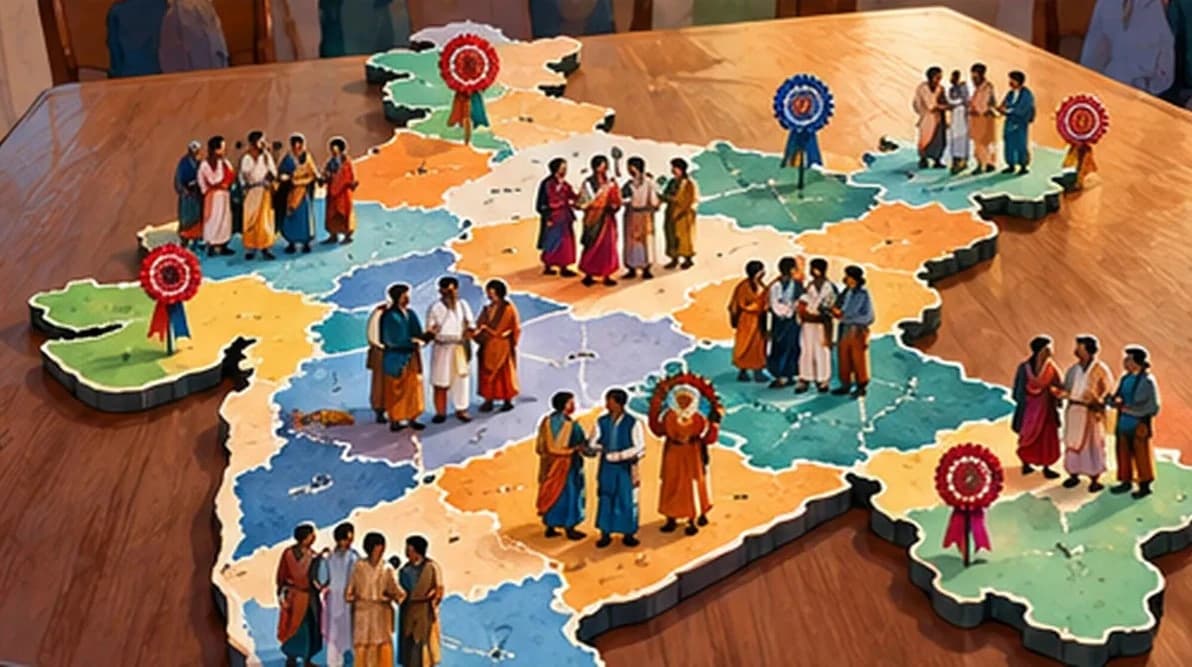
According to the Election Commission of India, there are over 2,000 political parties in India, including eight ‘recognised national’ and more than 50 ‘recognised state’ parties. The number of parties has constantly increased since independence: parties contesting elections rose from 55 in the 1952 general election to 464 in 2014.
The 8 national parties (as listed in the source)
Other than the 8 national parties, most major parties of the country are classified by the Election Commission as ‘State parties’. These are commonly called regional parties.
Yet these parties need not be regional in ideology or outlook. Some are all-India parties that happen to have succeeded only in some states.
The presence of many ethnic, cultural, linguistic, religious and caste groups in Indian society is greatly responsible for the origin and growth of regional parties.
Demanding greater powers for the states.
e.g. The National Conference in Jammu and Kashmir.
Fighting for an independent state within the country.
e.g. The Telangana Rashtra Samithi’s demand for a separate Telangana.
Fighting for recognition of a group’s cultural rights.
e.g. The Shiv Sena in Maharashtra, or the DMK fighting for the identity of the Dalits.
Regional parties believing that only they can bring development to the people of a particular region.
Sometimes regional parties create these ‘cultural specificities’ for electoral gains.
Regional parties existed in India even before independence — e.g. the Justice Party. Over the last four decades, the number and strength of regional parties has expanded.
Implications of growing regional parties
No national party is able to secure a majority in the Lok Sabha on its own. So national parties are compelled to form alliances with state parties; regional parties have played a crucial role in coalition politics since 1989.
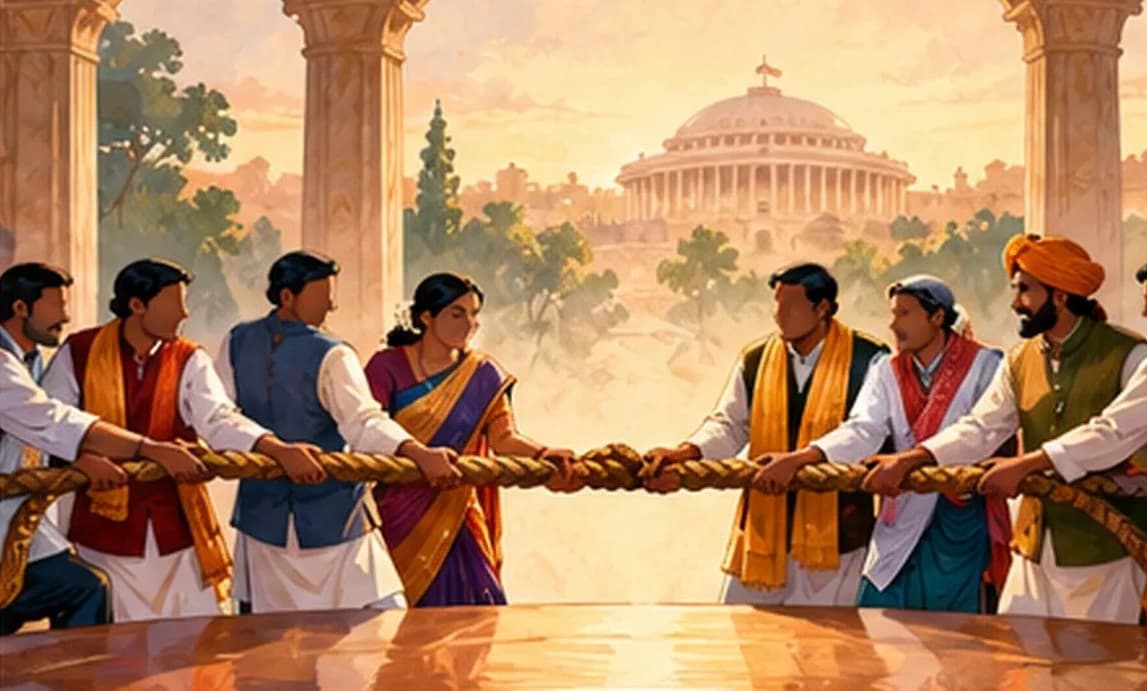
The rise of coalition politics has come about as a consequence of the growth of regional parties.
Competition for vote banks based on caste and community — e.g. the RJD, LJP, etc.
Opportunistic alliances and frequent elections.
The period 1996–1999 had three general elections, which cost a lot of money.
The rise of regionalism: promoting regional interests at the cost of national interests, through narrow political considerations based on regional or sectional loyalties and ideologies.
They sometimes interfere with foreign policy — e.g. the TMC during the India–Bangladesh river water negotiations.
They sometimes obstruct decision-making, leading to policy paralysis.
With multiple parties getting their hands in the pot, there is more corruption.
In other countries, regional parties have led to the disintegration of nations.
In 1992 Czechoslovakia broke into two countries, the Czech Republic and Slovakia; political thinkers widely agree regional parties played a major role.
The same was the case with Yugoslavia, which broke up into different countries.
Some regional parties act against the idea of one citizenship and a national economy — e.g. Andhra passed a bill for reservation for locals in private industries.
Many regional parties mobilise public support on the basis of regional identity, which works as an obstacle to psychological national integration.
Some parties, like the Shiv Sena, function on double exclusion by invoking Maratha and Hindu pride — creating artificial differences by highlighting differences and ignoring commonalities.
Similarly, the DMK has a double-exclusionary ideology of Dravidians and non-Brahmins.
Inner-party conflicts.
Regional political parties in Bihar — all of them associate themselves with some caste:
…and others.
Various stages of the Indian party system
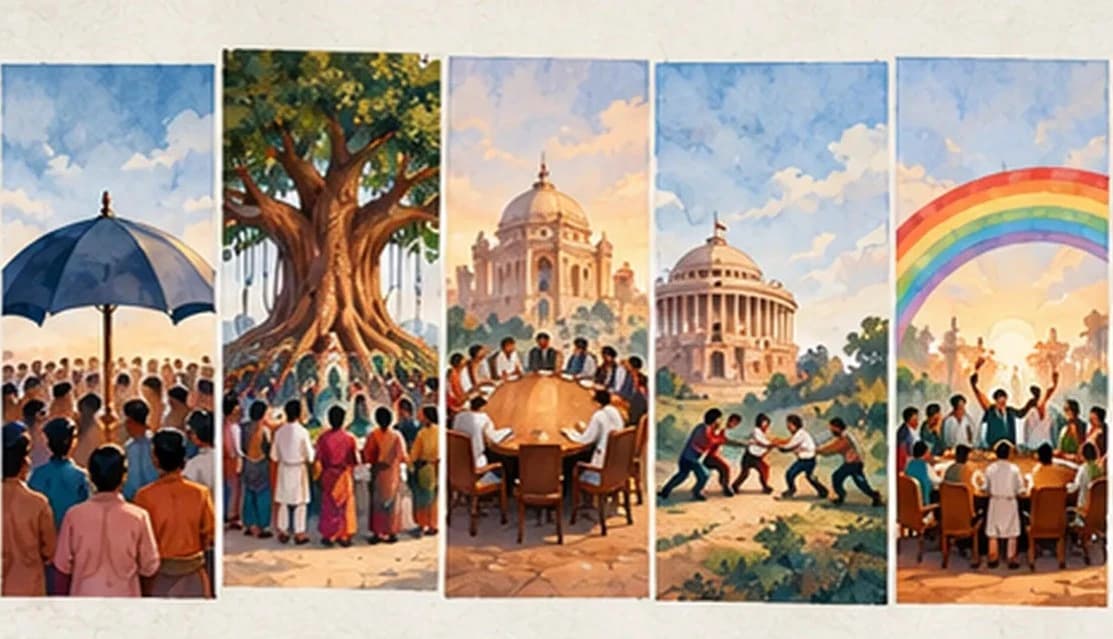
Six stages in the evolution of India’s party system, and the changing place of regional parties in each.
1952–64
Regional parties have made a strong impact on the nature of Centre–state relations in India.
They are a natural consequence of a democratic system based on adult franchise in multi-ethnic, multi-racial, multi-religious and multi-linguistic societies like India. So their growth is in synergy with the entire spirit of democracy.
Regionalism in Indian politics
Regionalism is a strong attachment to one’s own region. For example, in India people identify themselves by their states — as a Tamilian, a Bengali, a Bihari, etc. — more than as an ‘Indian’.
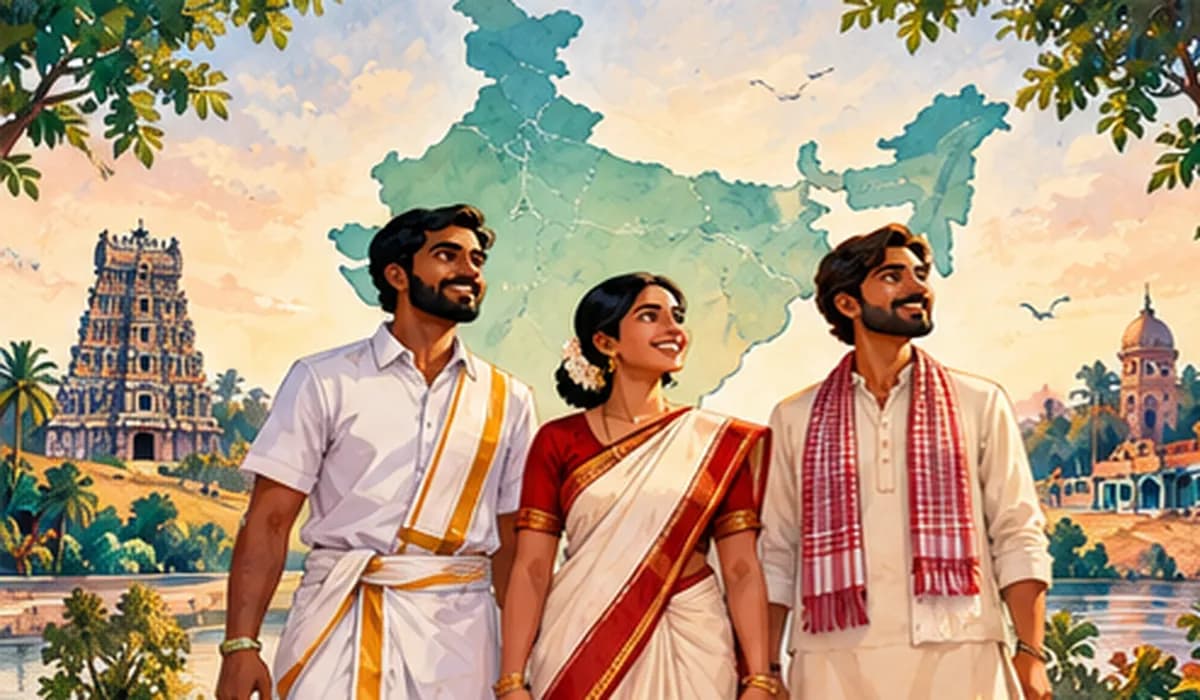
In Indian politics, regionalism is visible in different regions in varying forms — e.g.:
India adopted a democratic approach to diversity. Democracy allows political expression of regional aspirations and does not see them as anti-national; parties and groups may address people on the basis of their regional identity, aspirations and specific problems. So in the course of democratic politics, regional aspirations get strengthened — and regional issues also receive adequate attention and accommodation in policy-making.
Such an arrangement may sometimes lead to tensions: sometimes concern for national unity may overshadow regional needs, and at other times concern for the region alone may blind us to the larger needs of the nation. So political conflicts over the power of regions, their rights and their separate existence are common to nations that want to respect diversity while forging and retaining unity.
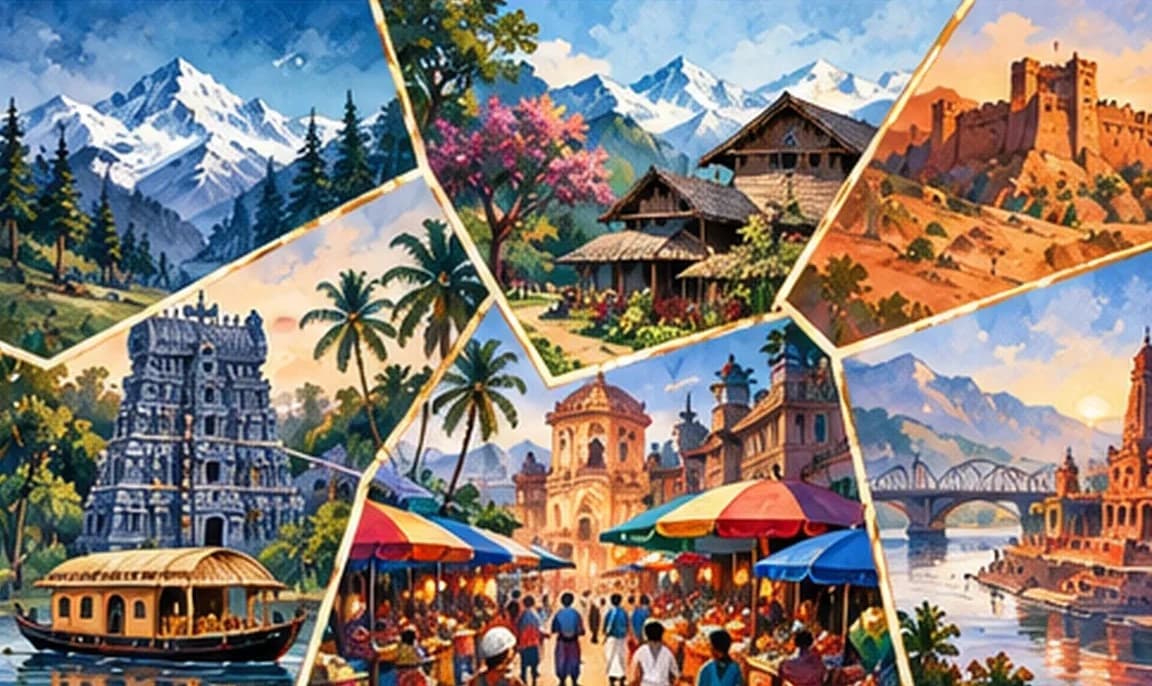
Causes of regionalism
Geography, history, language, religion, politics, economics, ethnicity, culture and past traditions all feed regional identity.
Approach to deal with regionalism
The 1980s may be seen as a period of rising regional aspirations for autonomy, often outside the framework of the Indian Union. These movements frequently involved armed assertion by the people, repression by the government, and a collapse of the political and electoral processes.
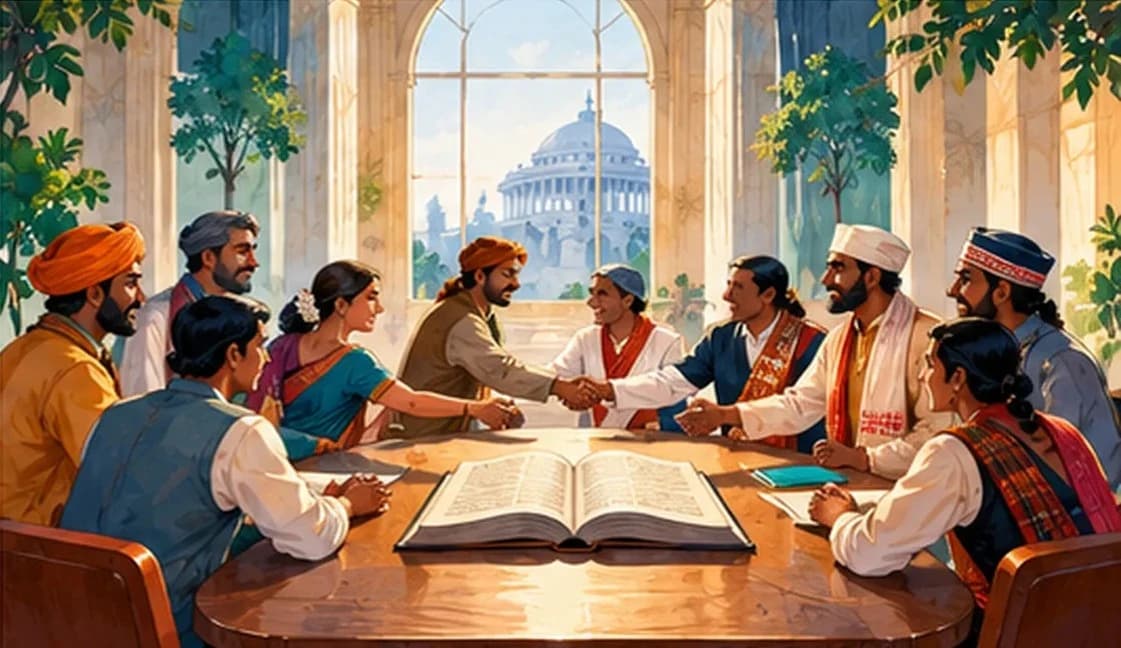
The 1980s: conflicts and accords
Regional aspirations are very much a part of democratic politics; their expression is not an aberration. Even smaller countries like the United Kingdom have regional aspirations — in Scotland, Wales and Northern Ireland.
The best way to respond to regional aspirations is through democratic negotiation rather than suppression — e.g. Punjab, Mizoram, etc.
There should be significant power sharing. A formal democratic structure is not enough; groups and parties from the region must get a share of power at the state level.
Similarly, it is not enough to say the states or regions have autonomy in their own matters. The regions together form the nation, so they must have a share in deciding its destiny; otherwise, feelings of injustice and alienation can spread.
These cases show the farsightedness of our Constitution’s makers in dealing with diversity.
India’s federal system is a flexible arrangement: while most states have equal powers, there are special provisions for some states, like J&K and the north-eastern states.
The Sixth Schedule allows different tribes complete autonomy to preserve their practices and customary laws.
What distinguishes India from many other countries facing similar challenges is that its constitutional framework is much more flexible and accommodative. So regional aspirations are not encouraged to espouse separatism, and politics in India has succeeded in accepting regionalism as part and parcel of democratic politics.

Exam preparation
Every question this page prepares you for, with the parts that answer it.
“The regions together form the nation.”
Curated for BPSC, UPSC & State PCS Civil Services Aspirants | Indian Polity Master Module