
EDU TERIA Logo
CartSign InSign UpEnroll Now
Back Science & Technology
BPSC Mains GS-2 Masterclass · Science & Technology

Meeting India's & Bihar's Power NeedsDemand, Discoms, UDAY & Uranium

India's demand for electricity keeps rising while coal, oil and gas run down, and much of the power that is made is lost before it is billed. This page covers the science and technology that can close the gap, Bihar's own power needs, the UDAY rescue of the discoms, and Bihar's uranium oxide.

Capacity373 GWIndia's grid capacity

installed, 2020.

India1,181 kWhPer capita use, India

2018-19; low by world standards.

Bihar311 kWhPer capita use, Bihar

lowest in India; up 114% since 2012-13.

Losses21.4%AT&C losses

India's average.

UDAYNov 2015UDAY launched

to rescue state discoms.

Technology~50%HVDC saving

cut in transmission losses vs HVAC.

Part 1 · Ever-rising electricity demand

Why India Needs Ever More Electricity

A growing economy, a growing population and new connections push demand up, while the coal, oil and gas that meet most of it are running down.

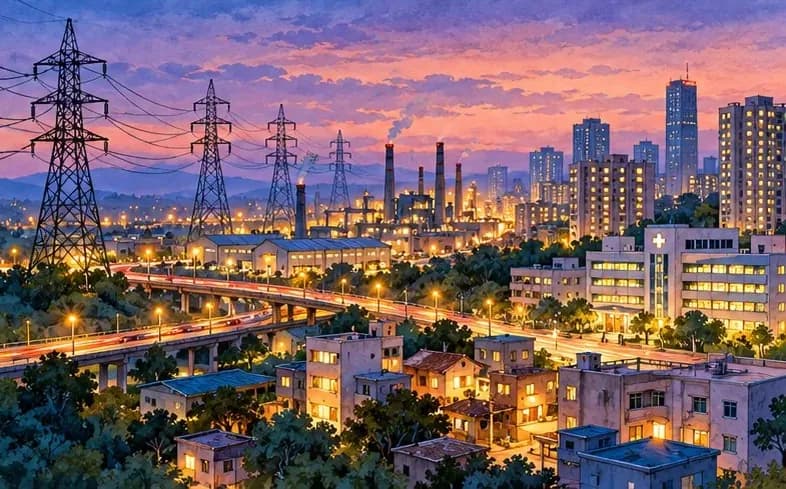
Illustration of an Indian city at dusk with lit homes, factories and high-voltage transmission towers

Electricity drives growth

Electricity is critical to fuel the economic growth of India. The country is on the fast trajectory of development but to keep the momentum of growth high, availability of uninterrupted power supply is a must.

India needs electricity to fuel the growth of every industry, be it large-scale or small scale, manufacturing, healthcare or education.

Ever-rising electricity demand and depleting conventional energy resources

  • Currently (in 2020), the national electric grid in India has an installed capacity of 373 GW. However, with rising population and growing economy the energy demand has ever-rising trend.
  • India's energy consumption is expected to grow 4.5 percent every year for the next 25 years.
  • According to one estimate, India's energy demand could double by 2040, with electricity demand potentially tripling as a result of increased appliance ownership and cooling needs.
  • According to NITI Aayog exercise, the energy demand in India is likely to go up by 2.7-3.2 times between 2012 and 2040 and thus import demand could increase from 31% in 2012 to 36-55% in 2040.
  • Average electricity use (2018-19) was 1,181 kWh per capita. The per capita electricity consumption is low compared to most other countries despite India having a low electricity tariff. With economic growth and rising standard of living the demand of electricity would only increase in future.
  • The country has made huge strides to ensure full access to electricity, bringing power to more than 700 million people since 2000. As of now, 304 million Indians live without access to electricity. Once, these people get access to electricity, there will be further boost in the energy demand.
  • At present, most of the current energy demands are met by the conventional energy sources like natural gas, oil, coal, or nuclear which is 63% of the total installed energy capacity. But, these sources are non-replenishable in nature and are getting depleted as we use them.
    • Based on BP's Statistical Review of World Energy 2016, we'd have about 115 years of coal production, and roughly 50 years of both oil and natural gas remaining.

Years of production remaining (BP, 2016)

  • Coal115 years
  • Oil50 years
  • Natural gas50 years

Oil and natural gas: roughly 50 years each.

“The Indian government has vowed to provide 24X7 power supply to every village and every house in India. The fulfilment of this dream will rest upon a sustainable power sector.”
— BPSC Mains answer · UDAY

Curated for BPSC, UPSC & State PCS Civil Services Aspirants | Science & Technology Master Module