


How institutions define poverty
- The World Bank conceptualises poverty as deprivation in well-being, low income and the inability to acquire the basic goods and services necessary for survival with dignity.
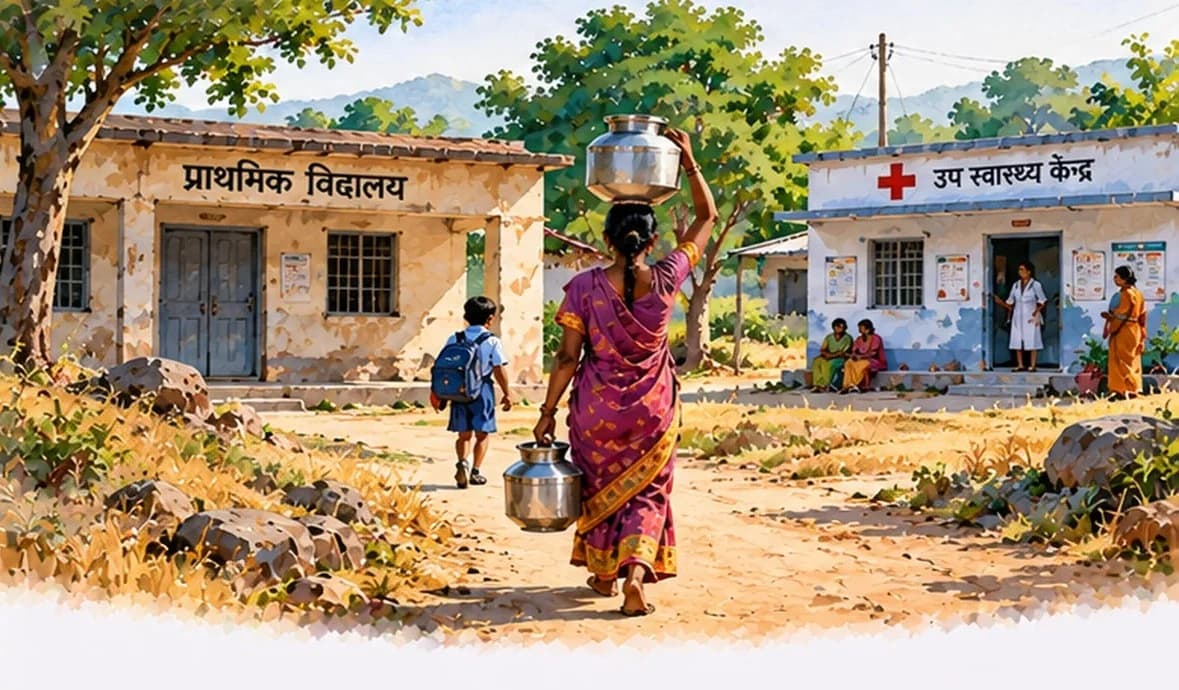
- Poverty also encompasses low levels of health and education, poor access to clean water and sanitation, inadequate physical security, lack of voice, and insufficient capacity and opportunity to better one's life.
- In ADB's view, poverty is a deprivation of essential assets and opportunities to which every human is entitled.
- UNDP measures poverty in terms of a new parameter, namely, Multidimensional Poverty Index (MPI) which considers average value of living standard, health and education.
- It is a socio-economic problem that goes beyond the boundaries of economic arena and covers other aspects such as the inability to participate in social and political life (United Nations Report, 2010).
- Poverty is multidimensional in nature. Apart from the income approach to poverty, there are other ways to conceptualise poverty, i.e., deprivation in other areas such as literacy, schooling, life expectancy, child mortality, malnutrition, safe water and sanitation.
- Poverty exists in all countries and in all societies and has various aspects viz., lack of income, productive resources, hunger and malnutrition, illiteracy, homelessness and inadequate housing, unsafe environment, social discrimination and exclusion. The meaning of poverty has changed over time and varies not only from society to society but it also varies within the same society at different points of time.
