

Simple majority of Parliament
Done just like ordinary legislation.
- Formation of new states.
- Privileges of Parliament, its members and its committees.
- Abolition or creation of legislative councils in states.
How the Constitution is amended, how many times it has been, and how the 73rd Amendment gave India’s villages a constitutional government of their own — its objectives, provisions, features and performance.
 ConstitutionPart IXArticles 243 – 243O
‘The Panchayats’, added in 1992.
 Functions29Subjects
In the new Eleventh Schedule.
 Structure3 tiersVillage · block · district
Except states under 20 lakh people.
 Reservation1/3Seats for women
And one-third of chairpersons’ offices.
 Tenure5 yearsFixed term
Elections within six months of dissolution.
 Eligibility21 yearsMinimum age
To contest panchayat elections.
Article 368
Like any other written Constitution, the Constitution of India provides for its own amendment, so that it can adjust to changing conditions and needs. Its amendment procedure is neither as easy as in Britain nor as difficult as in the USA — the Indian Constitution is neither flexible nor rigid, but a synthesis of both.
Done just like ordinary legislation.
Governed by Article 368.
Special majority of Parliament and the ratification of half of the state legislatures. Also governed by Article 368.
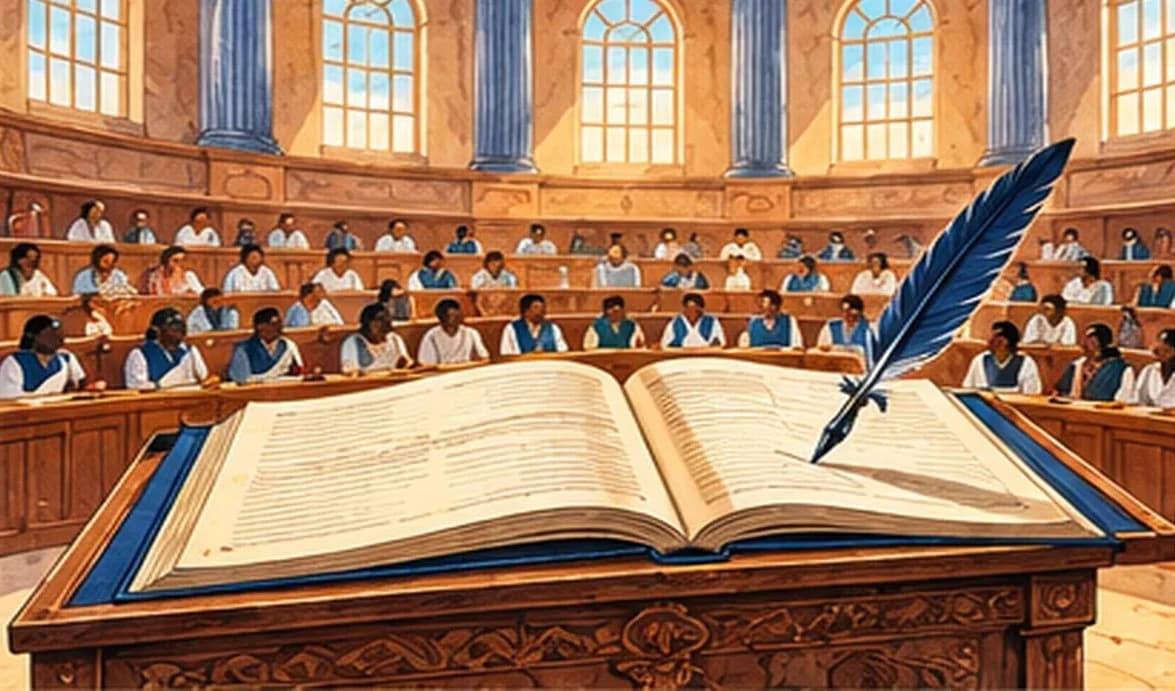
An amendment can be initiated only by introducing a bill in either House of Parliament — not in the state legislatures.
The bill can be introduced by a minister or a private member, and does not need the President’s prior permission.
Each House must pass the bill by a special majority: a majority (more than 50%) of the total membership of the House, and a majority of two-thirds of the members present and voting.
Each House must pass the bill separately. If the Houses disagree, there is no provision for a joint sitting to deliberate on and pass it.
If the bill seeks to amend the federal provisions, it must also be ratified by the legislatures of half the states, by a simple majority — a majority of members present and voting.
Once passed by both Houses, and ratified by the states where necessary, the bill is presented to the President for assent.
The President must give his assent. He can neither withhold it nor return the bill for reconsideration.
After the President’s assent, the bill becomes a Constitutional Amendment Act, and the Constitution stands amended accordingly.
Parliament’s constituent power is limited: it cannot amend the provisions that form the ‘basic structure’ of the Constitution. This was ruled by the Supreme Court in the Kesavananda Bharati case.
Example: Kesavananda Bharati v. State of Kerala was decided in 1973 by a 13-judge bench.
How many amendments?
Till date, there have been 104 amendments of the Constitution of India.

Made several changes to the Fundamental Rights provisions:
Since then there have been several amendments, of which the 42nd and 44th Amendment Acts are considered major amendments.
Recently enacted, it extended the reservation of seats for SCs and STs in the Lok Sabha and state assemblies.
Thus, the blend of rigidity and flexibility has enabled the Constitution to keep evolving with the needs of the time.
Rural local self-government
The term Panchayati Raj in India signifies the system of rural local self-government.
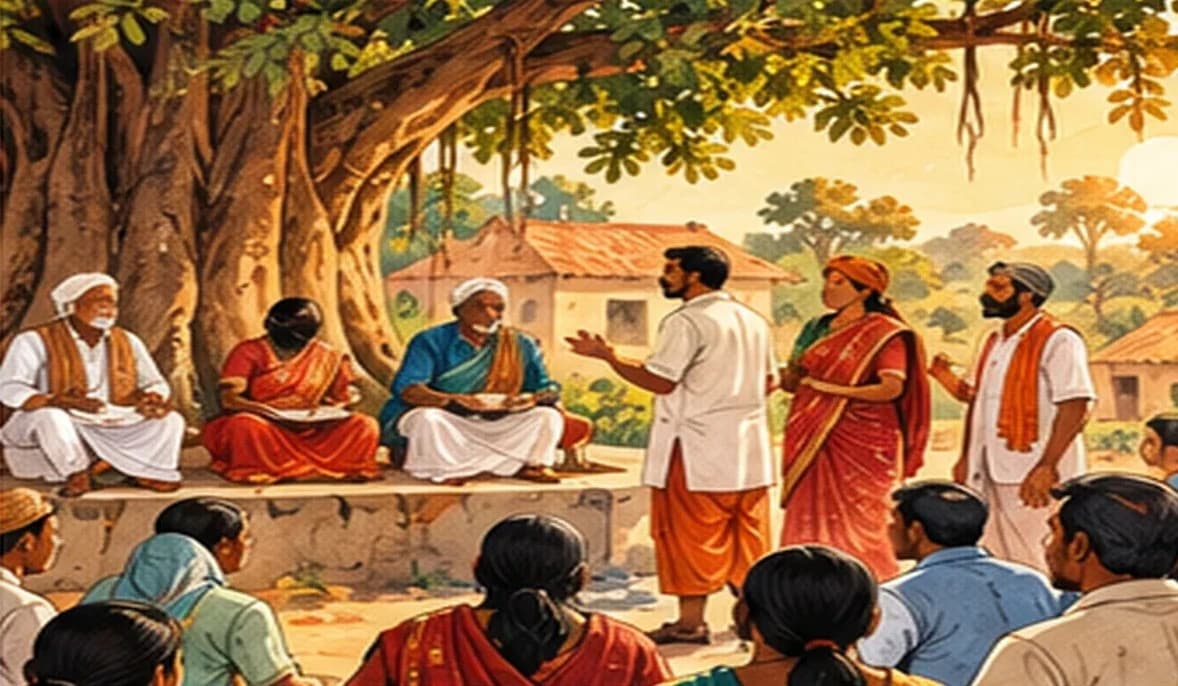
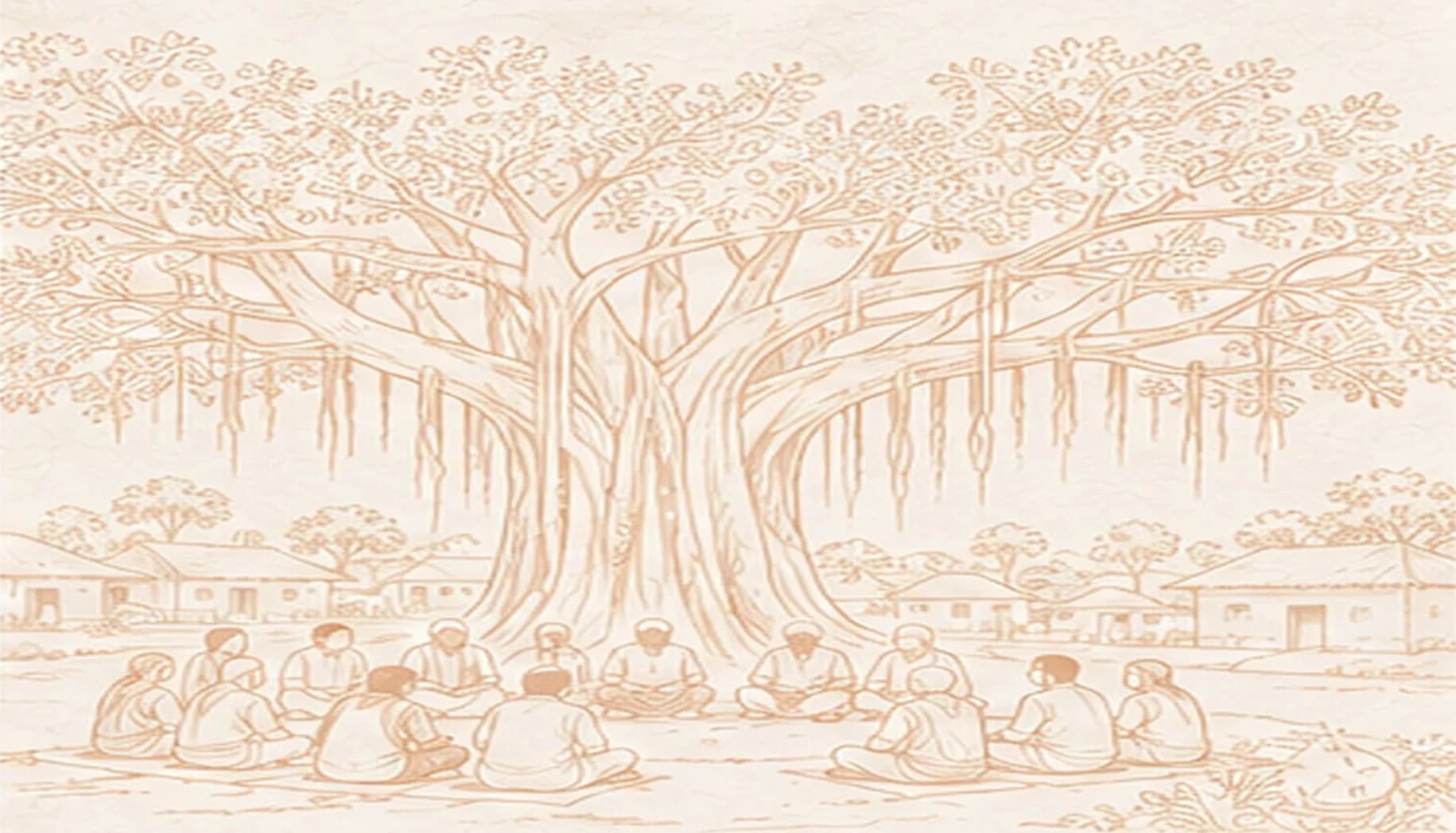
‘Panchayat’ literally means an assembly (yat) of five (panch) wise and respected elders, chosen and accepted by the village community. Traditionally, they settled disputes between individuals and villages.
Though the philosophy of Panchayati Raj is deeply rooted in the tradition and culture of rural India, in formal terms it was established in most states by Acts of the state legislatures in the 1960s, and was constitutionalised through the 73rd Constitutional Amendment Act of 1992.
Example: Rajasthan was the first state to establish Panchayati Raj, inaugurated at Nagaur on 2 October 1959.
Why Panchayati Raj?
From democratic decentralisation to Gandhi’s Gram Swaraj: what Panchayati Raj sets out to achieve.
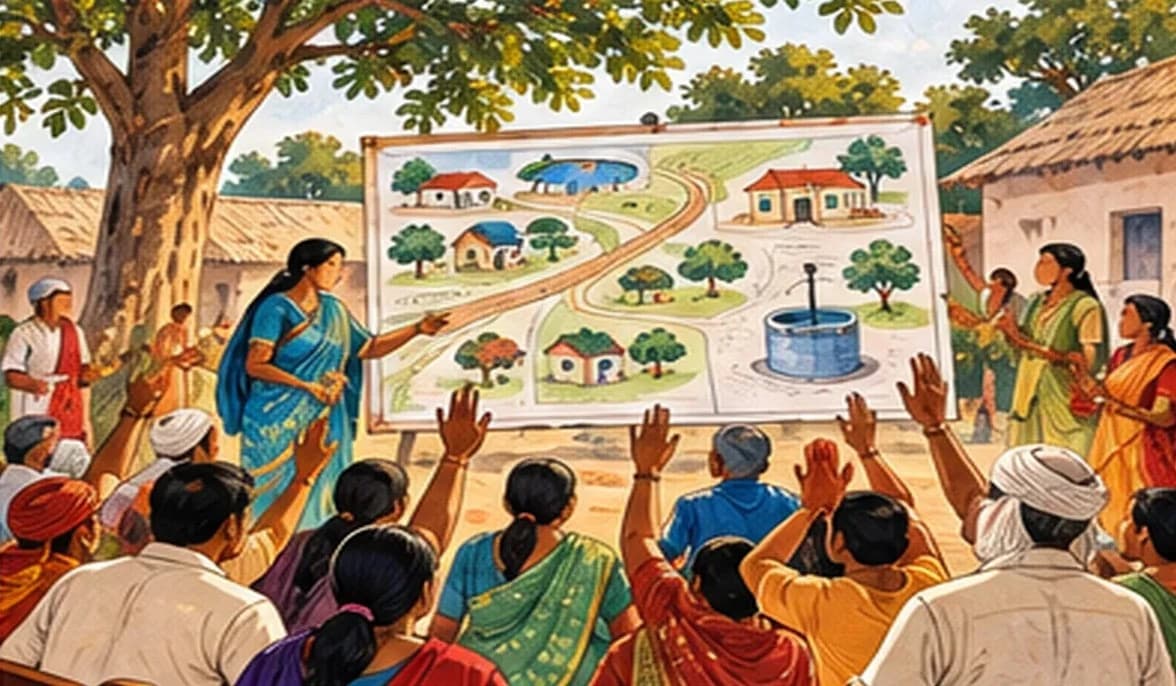
The main objective underlying the Act is democratic decentralisation of administration.
To build democracy at the grassroots, and politically empower people at the grassroots to shape their own destiny.
Local institutions made up of popular local leaders can increase people’s participation in planning and implementing schemes, thereby mobilising additional resources for development.
Local institutions can assist and guide the state in making Five-Year Plans, and help government officials implement projects and schemes — e.g.:
To build proper relations between the individual and his community through self-management of the community’s problems:
To curb poverty, raise living standards in rural areas, and build a healthy, wealthy society by creating awareness of hygiene and sanitation and eradicating illiteracy.
To realise Gandhi’s vision of ‘Gram Swaraj’ and fulfil the constitutional directive under Article 40.
Empowering women and backward classes — for this, reservation for women, SCs, STs and OBCs has been introduced in Panchayati Raj.
To bring about a political, social and economic revolution that will not only enhance the democratic character of society, but also be a perennial source of energetic, honest and competent leaders.
73rd Constitutional Amendment Act, 1992
A new Part, a new Schedule, compulsory and voluntary provisions, a three-tier structure — and the articles that hold it together.
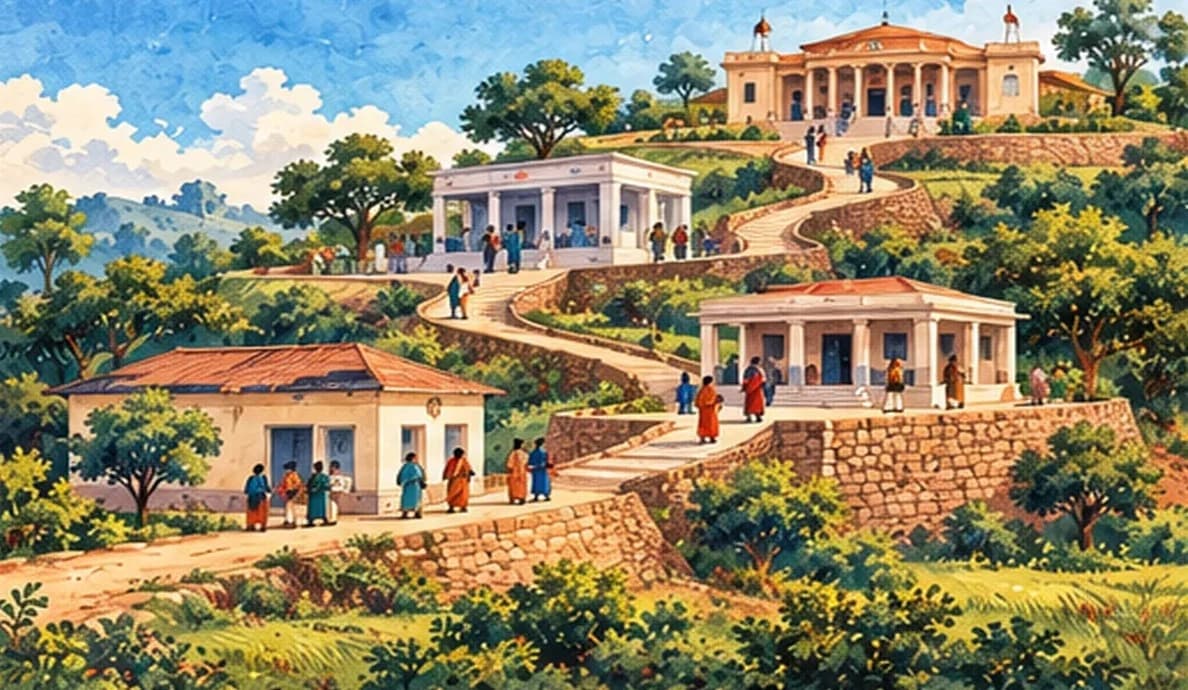
The Act added a new Part IX to the Constitution, entitled ‘The Panchayats’, consisting of Articles 243 to 243O.
It also added a new Eleventh Schedule containing 29 functional items of the panchayats. It deals with Article 243G.
It gave practical shape to Article 40, which directs the State to organise village panchayats with adequate functions and powers.
Compulsory provisions
Compulsory (mandatory or obligatory) provisions must be included in the state laws creating the new Panchayati Raj system — e.g.:
Voluntary provisions
Voluntary provisions may be included at the discretion of the states — e.g.:
It organises Gram Sabhas (villages), comprising all the adult members registered as voters.
It forms a three-tier system of panchayats at the village, intermediate (block / taluk / mandal) and district levels — except in states with a population below 20 lakh (Article 243B).
Example: In Bihar the three tiers are the Gram Panchayat, the Panchayat Samiti and the Zila Parishad.
Seats at all levels to be filled by direct elections.
Seats reserved for SCs and STs, and the chairpersons of panchayats at all levels also reserved for SCs and STs, in proportion to their population.
One-third of the total seats reserved for women (including seats reserved for SC and ST women).
One-third of the offices of chairpersons at all levels reserved for women.
Example: Bihar went further: in 2006 it became the first state to reserve 50% of panchayat seats for women.
A uniform five-year term, with elections to constitute new bodies completed before the term expires.
In the event of dissolution, elections compulsorily within six months.
An independent Election Commission in each state for the superintendence, direction and control of the electoral rolls.
Panchayats to prepare plans for economic development and social justice on the subjects devolved to them by law, including those illustrated in the Eleventh Schedule.
A State Finance Commission constituted every five years to review the financial position of the panchayats.
Example: The State Finance Commission is provided for in Article 243-I.
Some areas are exempted because of socio-cultural and administrative considerations — e.g. Scheduled Areas listed under the Fifth Schedule; the states of Nagaland, Meghalaya and Mizoram; the hill areas of Darjeeling district in West Bengal, and those of Manipur.
Thus, the 73rd Amendment Act was comprehensive legislation; if the states adhere to its provisions in letter and spirit, it will definitely help realise Gandhi’s vision of Gram Swaraj.
Features of Panchayati Raj
The features of Panchayati Raj in India are derived from the 73rd Constitutional Amendment Act.
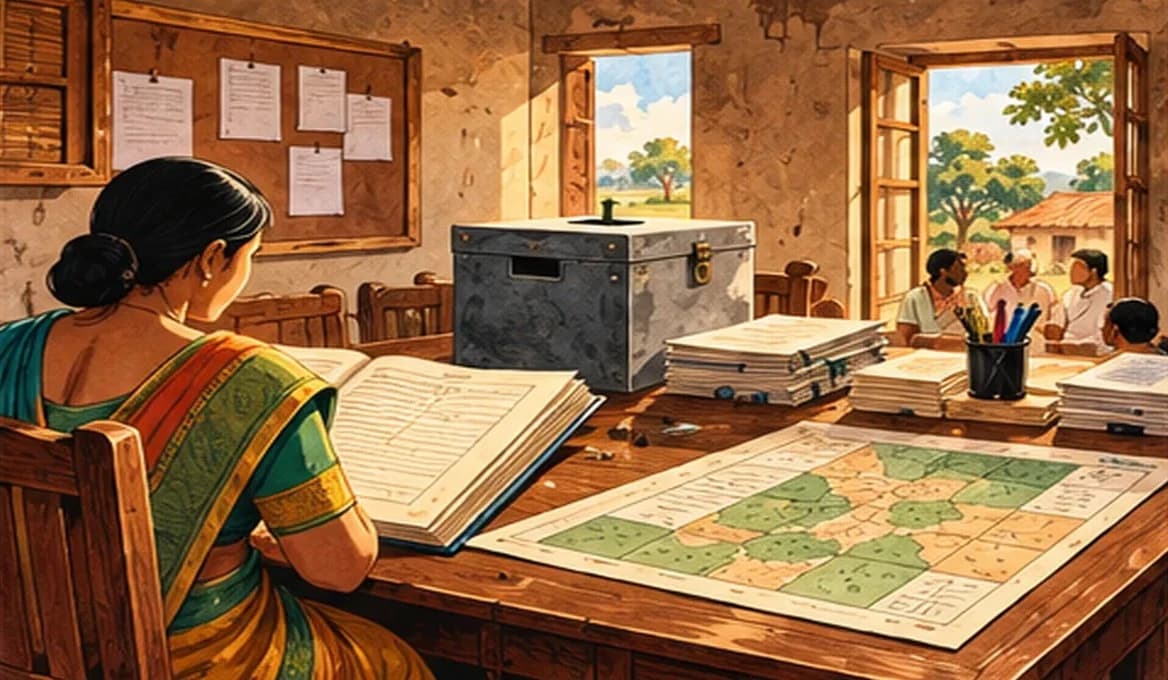
How well has it worked?
Panchayati Raj in India is yet to perform up to a satisfactory level. The major reasons for under-performance:
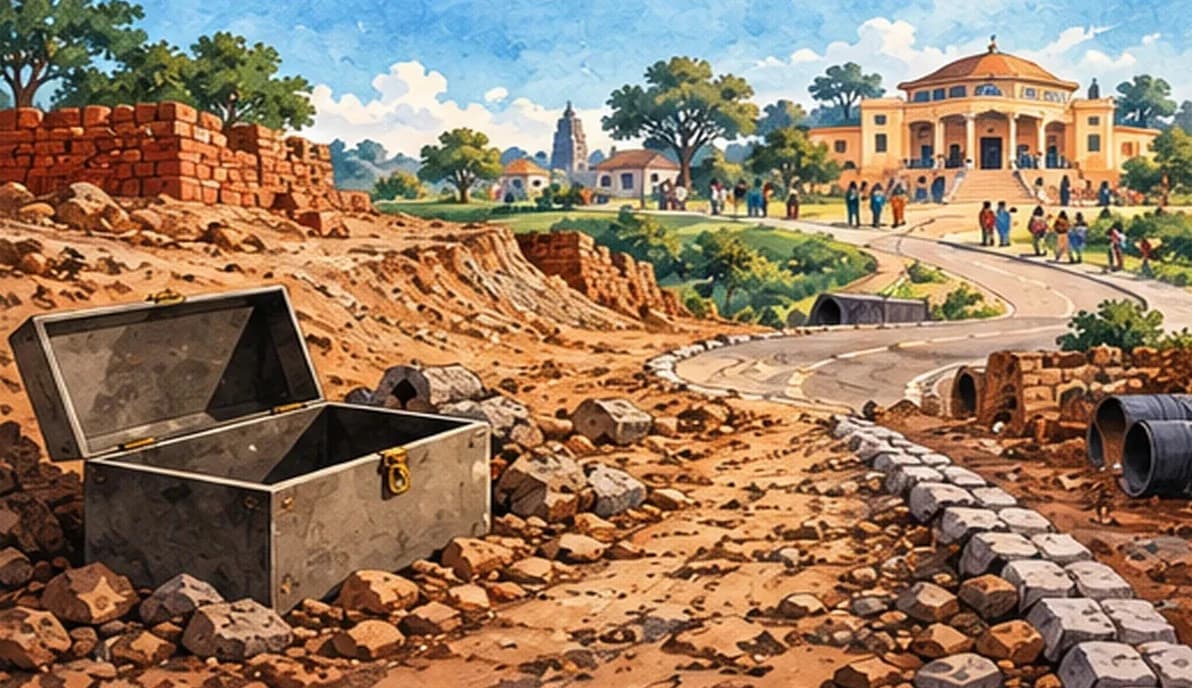
The Economic Survey 2017-18 points out that urban local governments (ULGs) generate about 44% of their revenue from their own sources, against only 5% by rural local governments (RLGs).
Share of revenue from own sources
Thus, if we are to realise the aims and objectives of Panchayati Raj, we need to revisit several of its features and adequately strengthen it as a real institution of government.

Exam preparation
Every question this page prepares you for, with the parts that answer it.
“Certainty, continuity and strength” for India’s village governments.
Curated for BPSC, UPSC & State PCS Civil Services Aspirants | Indian Polity Master Module