

The money set apart for them is inadequate to meet their basic requirements.
BackBack to Beyond the Book Indian Polity · Bihar
BPSC Mains GS-2 Masterclass · Indian Polity
Grassroots Governance in BiharFrom the Mukhiya to the Mobile
How rural local governments have worked since 1991, Bihar’s long road to panchayat elections, the gaps in funds, functions and functionaries — and how far e-governance has reached the state.
 Scale8,969PRIs in Bihar
With 1,35,725 elected representatives.
 Revival2001Panchayat polls return
The first since 1978.
 Reservation50%Seats for women
Bihar was the first state to do it.
 Gaps79%Zila Parishad posts vacant
Too few functionaries.
 Funds5%Own revenue (rural)
Economic Survey 2017-18.
 Digital8 awardsFor e-governance
Including a 2009 gold for ‘Jankari’.
Rural local government since 1991
From a Bill in 1991 to Panchayats in Every Village
In 1991 the government introduced a constitutional amendment bill in the Lok Sabha. It became the 73rd Constitutional Amendment Act, 1992, and came into force on 24 April 1993. The Act gives constitutional status to Panchayati Raj institutions and gives practical shape to Article 40 of the Constitution.
The Gram Sabha
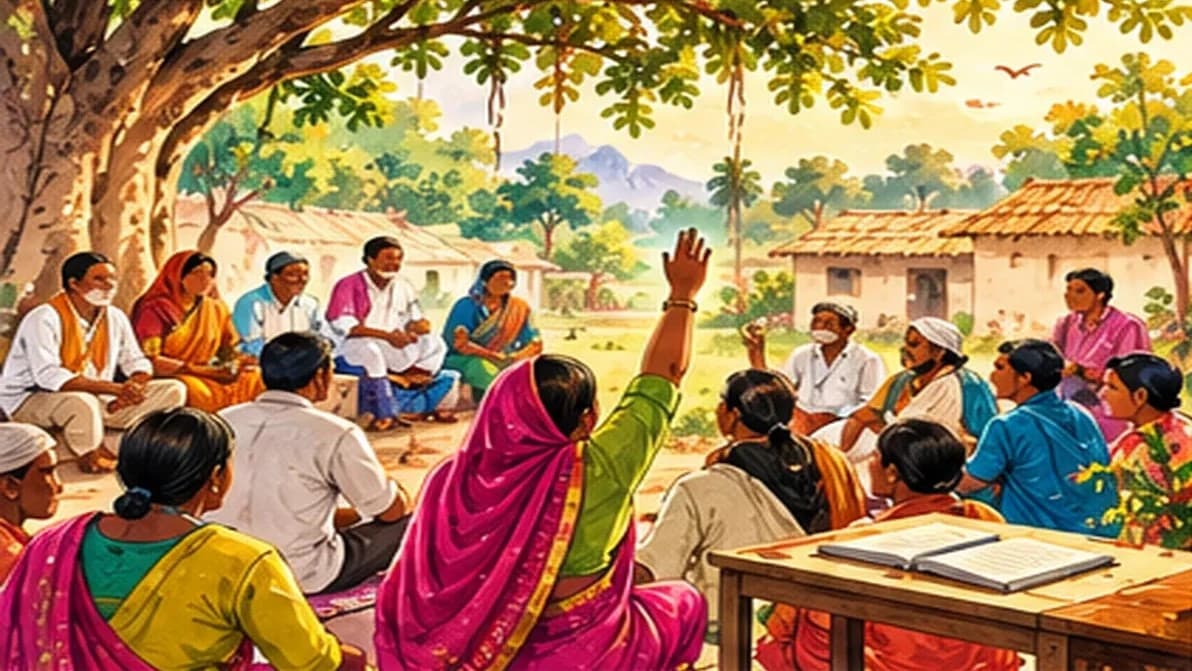
The Act organises Gram Sabhas (villages) of all adult members registered as voters. Gram Sabhas are envisaged as the foundation of the Panchayati Raj system.
- In the Panchayati Raj system, the Gram Sabha is the only permanent unit; panchayat members and chairpersons have a term of only five years.
- Empowering the Gram Sabha means strengthening the Panchayati Raj Institutions (PRIs). The success or failure of the system depends on the strength of the Gram Sabha.
- The Gram Sabha may exercise such powers and perform such functions at village level as the state legislature may by law provide.
Three tiers
Local government is a three-tier system of panchayats at village, intermediate (block / taluk / mandal) and district levels, except in states with a population below 20 lakh (Article 243B). Seats at all levels are filled by direct election (Article 243C(2)).
29 subjects and the power to tax
The Eleventh Schedule, created by the 73rd Amendment, lists 29 subjects on which panchayats shall have administrative control. The Act empowers the state legislature to provide by law for panchayats to impose taxes, etc.
- Before imposing any levy or tax in the village, panchayats would obviously need clearance from the Gram Sabha.
- Drafting and implementing development plans for village uplift would be vetted and monitored by the Gram Sabhas.
Devolution: a design weakness?
The Constitution mandates that panchayats be elected every five years, and enjoins states to devolve functions and responsibilities to them through law.
- This is regarded as a design weakness, but on closer look it is not one. Given diverse habitation patterns and political and social histories, it makes sense to leave it to the states to assign functions to local governments.
- A study for the Fourteenth Finance Commission by the Centre for Policy Research shows that all states have formally devolved five core functions to gram panchayats: water supply, sanitation, roads and communication, streetlights, and management of community assets.
Water supply Sanitation Roads & communication Streetlights Community assets
Problems with the functioning
Why Rural Local Governments Remain Weak
In spite of about 32 lakh people’s representatives being elected to them every five years, local governments remain hamstrung and ineffective — mere agents doing the bidding of higher levels of government.

Much of the money is tied to schemes; even the untied grants mandated by the Union and State Finance Commissions come with several conditions that constrain their use.
There is little investment in enabling local governments to raise their own taxes and user charges.
The Economic Survey 2017-18 points out that rural local governments generate only 5% of their revenue from their own sources.
Functioning in Bihar
Bihar’s Panchayat Story: From the Mukhiya to 2001 and Beyond
Before the 73rd Amendment, Bihar had well-organised and efficiently functioning Panchayati Raj Institutions. The Mukhiya (chairman) of the Gram Panchayat — the lowest unit of PRIs at village level — was the kingpin at the grassroots.
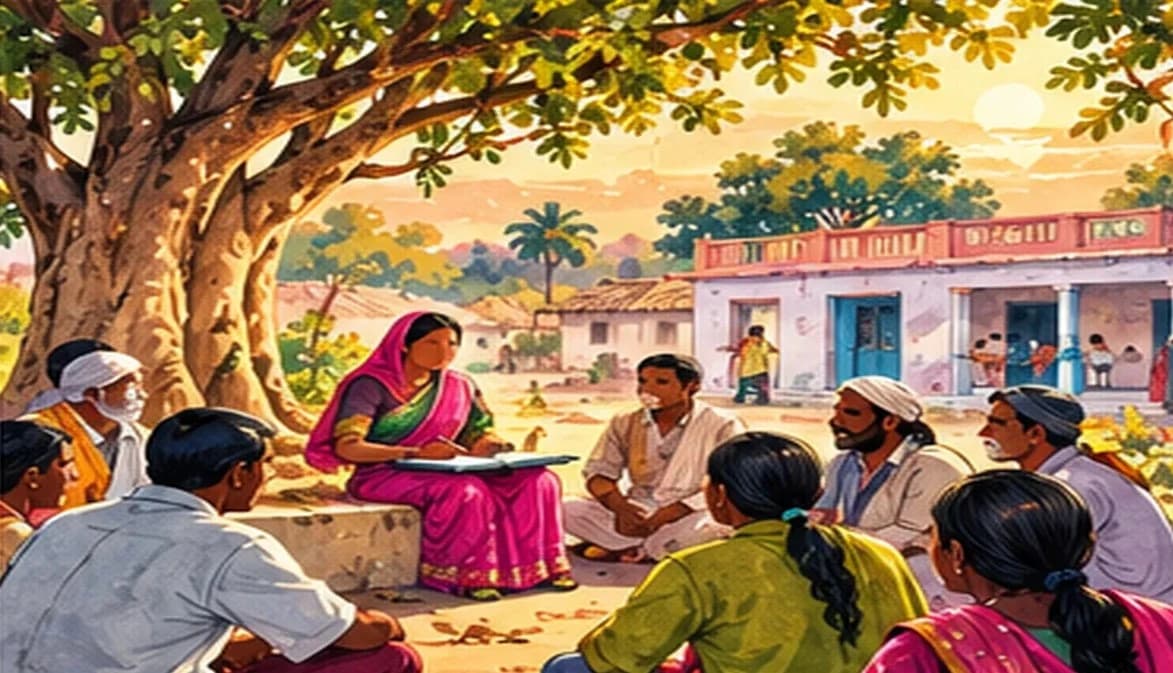
Though most Mukhiyas generally represented the feudal elements of the village, their apparently benevolent gestures and prompt response to the needs of affected people made the institution of Mukhiya very popular among rural people.
1978
The previous election to PRIs in Bihar was held in 1978; after that the PRIs had no popular mandate.
The long road back to elections
After 1993 No elections
After the 73rd Amendment Act came into force, elections to PRIs could not be held.
1993 Bihar Panchayat Raj Act
After the 73rd Amendment, Bihar enacted the Bihar Panchayat Raj Act, 1993, providing reservation for Scheduled Castes, Scheduled Tribes, women and backward classes.
Patna HC Reservation provisions quashed
The Patna High Court quashed certain reservation provisions of the Act. The net result:
Seats can be reserved for SCs, STs and women, but chairpersons’ offices cannot be reserved, as they are to be treated as single posts.
Reservation for backward classes was quashed, with a direction to revise the list of backward classes.
Supreme Court Special Leave Petition
The state filed a Special Leave Petition. The Supreme Court passed an interim order observing that the matter should be placed before an appropriate Constitution Bench.
The state concluded that the Apex Court had stayed the panchayat elections, and postponed the proposal to hold them.
Patna HC (PIL) “An insult to the Constitution”
Hearing another PIL, the High Court found the state could not produce any stay order from the Supreme Court, and said the Supreme Court’s order had been misinterpreted.
“…not to hold election (of Gram Panchayats) would be a clear abnormality and against the mandate of the Constitution… Local government without elected representatives is an insult to the Constitution of India.”
Supreme Court No bar on elections
The state again approached the Supreme Court for clarification of its order. The Court held: “there is no bar for holding elections to different Panchayats in accordance with law, as it stands today”.
Oct 2000 → Apr 2001 Elections at last
The process of election to PRIs began in October 2000, and the first actual election was held in April 2001.
Elections every five years
20012006201120162021*
Since then local elections have been held regularly every five years — in 2006, 2011 and 2016. The next election is scheduled in 2021. The increasing voter turnout is a good sign.
2011 turnout62%
2016 turnout65%
* “Next election is scheduled in 2021”, as stated in the source.
8,969PRIs
1,35,725Elected representatives
There are 8,969 PRIs in the state, with 1,35,725 elected representatives.
- Bihar is the first state to give 50% reservation to women (in 2005) in Panchayati Raj institutions — many states followed, and the Centre is also thinking about it.
- It has also provided 20% reservation to EBCs in the three-tier PRI bodies.
Organisational set-up, audit & accountability
Who Runs Bihar’s Panchayats — and Who Checks Them
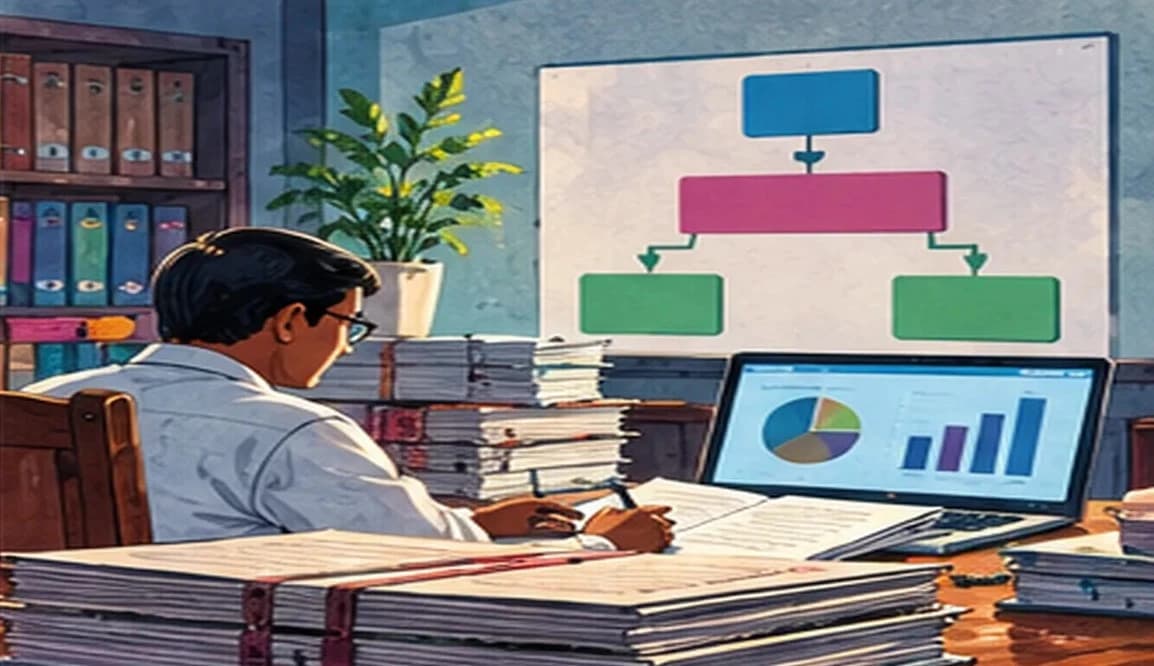
At state level, the Panchayati Raj Department (PRD) coordinates and monitors the functioning of PRIs.
Tier
Elected head
Executive head / in charge
Zila Parishad
Adhyaksha
Deputy Development Commissioner (DDC)
Panchayat Samiti
Pramukh
Block Development Officer (BDO)
Gram Panchayat
Mukhiya
Panchayat Secretary — in charge of the GP office, accounts and records
The Adhyaksha, Pramukh and Mukhiya are elected representatives of their PRIs; the DDC and BDO are the executive heads of the ZP and PS.
Audit arrangements
The Examiner of Local Accounts (ELA), Bihar is the prescribed ‘authority’ for audit of PRIs. In 2015-16, of the 8,969 PRIs in the state, 1,102 were audited by the ELA under the AG (Audit), Bihar.
Audited by ELA, 2015-161,102 / 8,969 (~12%)
PRIs were also audited by the Directorate of Local Fund Audit (DLFA), set up by the Finance Department, Government of Bihar, without overlapping the units audited by the ELA.
- However, PRIs responded poorly to the Inspection Reports (IRs) containing audit findings.
- The CEOs of ZPs, the EOs of PSs and the Mukhiyas of GPs were required to respond to the IR observations and send compliance reports to the ELA within three months — but their response was not satisfactory.
Accountability mechanisms
Lok Prahari (Ombudsman)
Under the Bihar Panchayat Raj (Amendment) Act, 1993, a Lok Prahari (Ombudsman) is to be appointed by the state government for Panchayats and Gram Kutchahary. But the rules for the appointment were not finalised, so Lok Praharis for PRIs are yet to be appointed by the PRD.
Model Accounting System · PRIASoft
- In Bihar, the Model Accounting System (MAS) was implemented through the Panchayati Raj Institutions Accounting Software (PRIASoft), developed by the National Informatics Centre (NIC).
- MAS was prescribed by the Government of India in consultation with the CAG, for proper control and better accountability. So the PRD, Government of Bihar notified (2010) that PRI accounts would be kept in MAS formats.
Funds · functions · functionaries
Bihar’s Gaps: Money, Powers and Staff
The problems of rural local government across India also apply to Bihar. In fact, in Bihar local tax collection at panchayat level is almost nil.
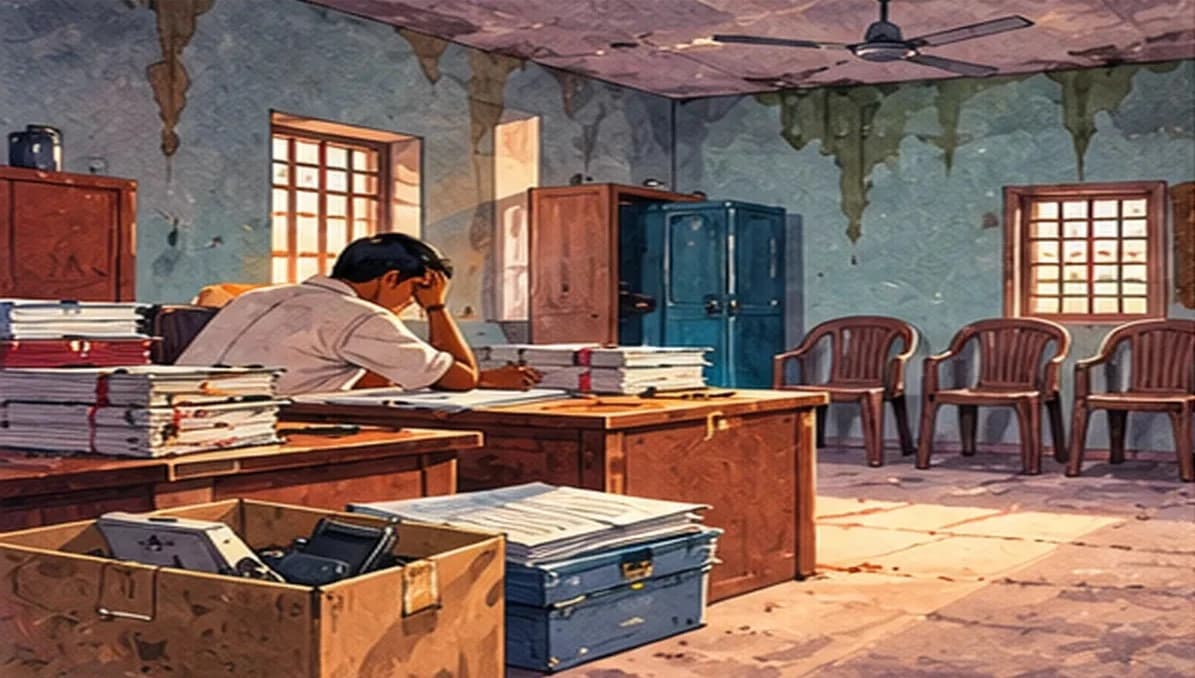
Money
- Currently, no taxes are levied and collected by PRIs, despite the recommendation of the Fourth State Finance Commission and the provisions of the BPRA, 2006 — because the state government did not notify the tax rates.
- As per the Fifth SFC report, funds available to PRIs from various sources were grossly inadequate for their assigned functions.
- Further, they could not use even the allocated funds because of capacity constraints — serious shortages of skilled manpower, office space, IT facilities, equipment, etc.
Powers
- The full powers assigned to PRIs under the 73rd Amendment, or even under the Bihar Panchayat Raj Act 1993, have not been delegated.
- The Fifth SFC observed (February 2016) that progress on department-wise and subject-wise activity mapping was unsatisfactory, and parastatal bodies were also carrying out PRI functions.
- Rules empowering the functioning of PRIs are yet to be notified.
- The Patna High Court, in various writ applications, has been observing against the state government on this abnormal delay in transferring actual power to PRIs.
- This has affected the morale of the elected representatives. The absence of training facilities has left them unaware of their role as agents of economic development for their constituents, and of participative, accountable grassroots administration.
Staff
- Zila Parishads do not have adequate staff to discharge the devolved functions — about 79% of sanctioned posts are vacant.
- At GP level, 3,160 Panchayat Secretary posts — about 38% of the total 8,397 — are vacant.
- Observing the acute shortage of staff at all levels of PRIs, the Fifth SFC recommended a revised staffing pattern, which has not been followed.
Vacant posts
Zila Parishad sanctioned posts vacant79%
Panchayat Secretary posts vacant (3,160 of 8,397)38%
Thus, there is a serious need to revisit the functioning of rural local government in India, and especially in Bihar. If we are to achieve participative democracy, local governments must be strengthened.
ICT for governance
What Is E-Governance?
Electronic governance or e-governance is the application of information and communication technology (ICT) for delivering government services, exchanging information, and communication transactions between customers, business and other stakeholders.
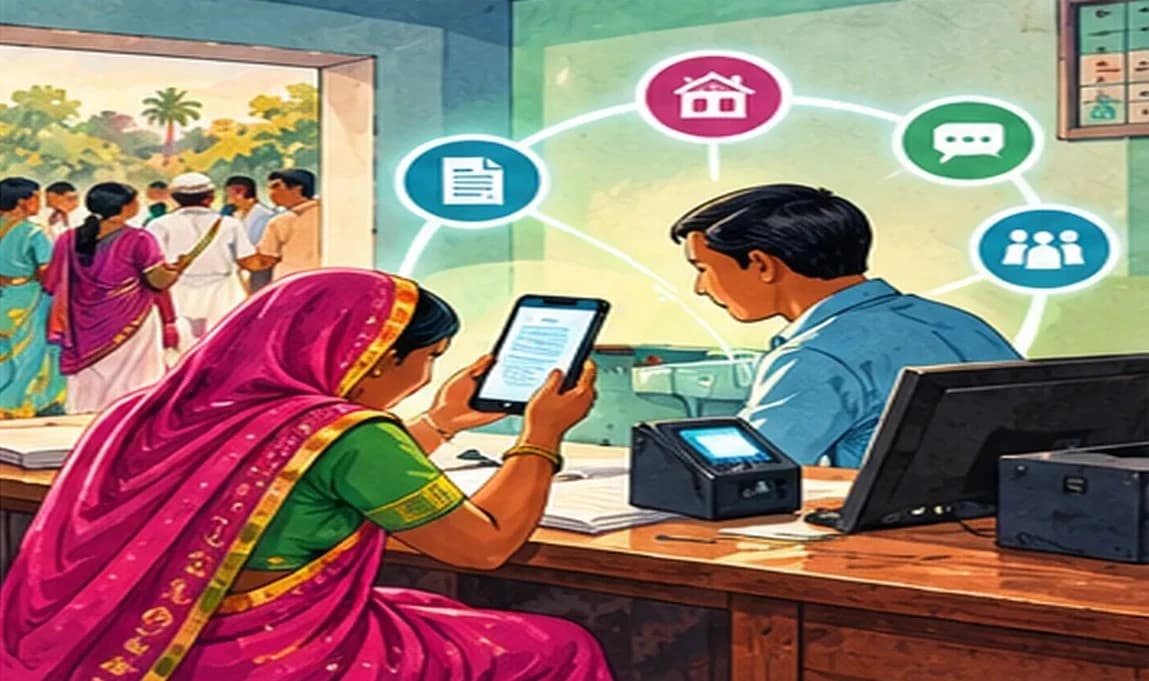
The primary role
The primary role of e-governance is to simplify governance — making it more convenient, speedy, responsive, efficient, transparent and accountable using ICT.
ConvenientSpeedyResponsiveEfficientTransparentAccountable
Four pillars
People
Process
Technology
Resources
Four models of e-governance
Government to Citizens (G2C)
Delivery of services to citizens in an efficient and economical manner, and strengthening the relationship between government and citizens using technology.
- Paying bills online — electricity, water, telephone, etc.
- Online registration of applications
- Copies of land records
- Online filing of complaints
Government to Government (G2G)
Services shared between governments.
- Khajane Project in Karnataka — a comprehensive online treasury computerisation project of the Government of Karnataka
Government to Employees (G2E)
Through this model, the bond between the private sector and government increases.
- Information shared includes collection of taxes, rejection and approval of patents, payment of bills and penalties, and sharing of all kinds of information, rules and data.
Government to Business (G2B)
This model increases transparency between government and its employees. Employees can keep a check on the functioning of government, and government can keep a check on its employees.
The position in Bihar
E-Governance in Bihar: Where the State Stands
Bihar has received as many as eight prestigious awards for e-governance. For example, in 2009 it won the e-governance gold medal from the Union Ministry of Personnel (Administrative Reforms) for its ‘Jankari’ call centre project.
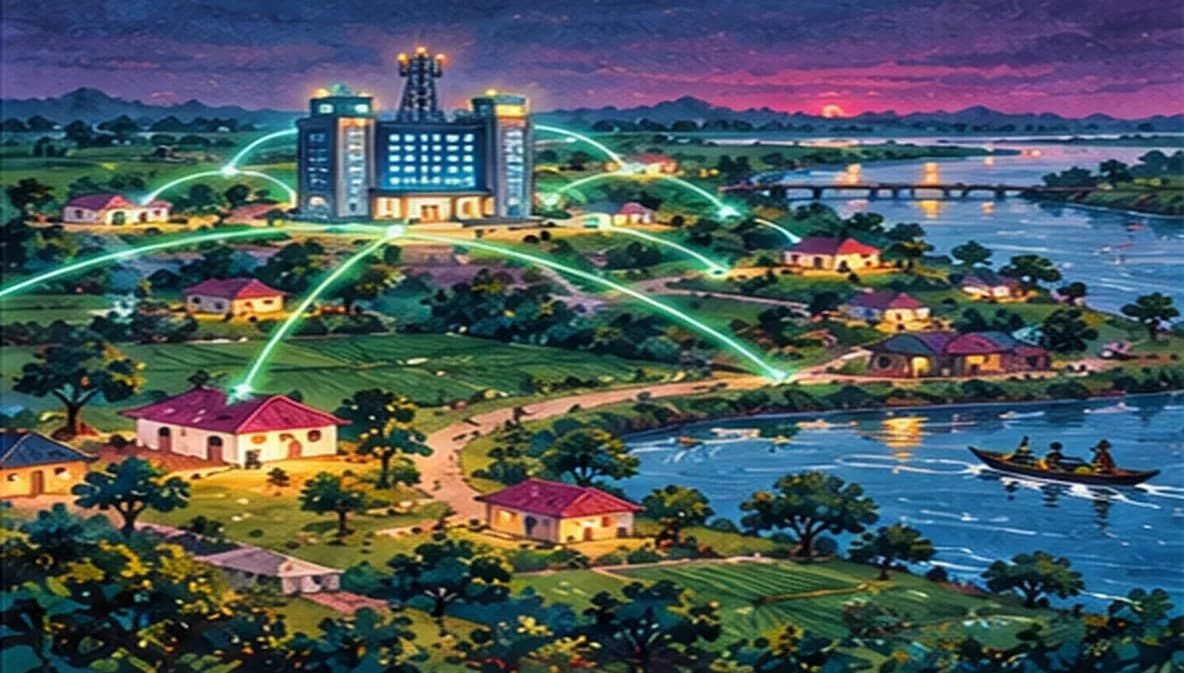
Centre for e-Governance · 2005-06
The Centre for e-Governance was set up in 2005-06 with a dual purpose: it is primarily responsible for conducting ICT training programmes, and it also provides internal IT support.
ICT infrastructure has been strengthened through:
BSWANSecLANState Data CentreCommon Service CentresWi-Fi projectsAadhaarBharatNetExpansion of IT institutions
IT institutions
- IT cityRajgir (Nalanda)
- IT tower & IT parkPatna
- Software Technology Parks of India (STPI)Darbhanga, Bhagalpur, Patna
- NIELIT centresBihta, Buxar, Muzaffarpur
- Incubation Centre for Medical ElectronicsIIT Patna (Bihta)
These have either been completed or are in progress.
E-governance across departments
Law & order
ICT plays an important role through CCTNS, cyber security, e-Prison, CCTV and VC, the Bihar Police Help Line, e-Court, the Child Labour Tracking System, e-Municipality Bihar, e-Office, etc., to enforce law and order and speed up a peaceful environment.
Public finance
ICT is used for public finance management: the state implemented the CFMS in 2019.
Welfare (e-Labharthi)
Nearly all departments run e-governance programmes. e-Labharthi provides e-services such as social security pensions, disability allowance, payments for dress and reading materials, and scholarships, across departments like Education, Social Welfare, SC/ST Welfare, Backward and Most Backward Castes Welfare, and Minority Welfare.
Food supply
For smooth, leakage-proof management of the food supply chain, an IT module tracks doorstep delivery through GPS and SMS alerts. Another IT module handles beneficiaries’ grievance redressal through the Project Management Unit.
All paddy procurement is done online through procurement software, and payment is released within 48 hours through RTGS/NEFT to registered farmers.
Disasters
E-governance plays a crucial role in disaster-related services, before and after disasters.
Disaster awareness is ensured through alerts sent to citizens to prepare for disasters, through WRD scheme implementation.
ICT is used for the Monitoring System, Flood Forecast Model, River Behavioural Analysis Model, Embankment Asset Management System, Real-Time Data Acquisition System, Mathematical Modelling Centre, distribution of Gratuitous Relief (GR) and Tatkal Sahayata, etc.
Procurement & monitoring
Many e-governance programmes provide transparent bidding and public procurement, and monitoring and evaluation of physical infrastructure projects.
Land, skills & productivity
E-governance also includes digitisation and updating of land records, skill development and employment promotion, and support to enhance productivity.
Environment
Concerned about climate change and the environment, the state has started many IT-enabled programmes such as the Forest Management Information System.
Other e-governance initiatives
Bihar’s E-Governance Initiatives — and the Road Ahead
Bihar has been consistently moving towards e-governance, but a lot remains to be done.
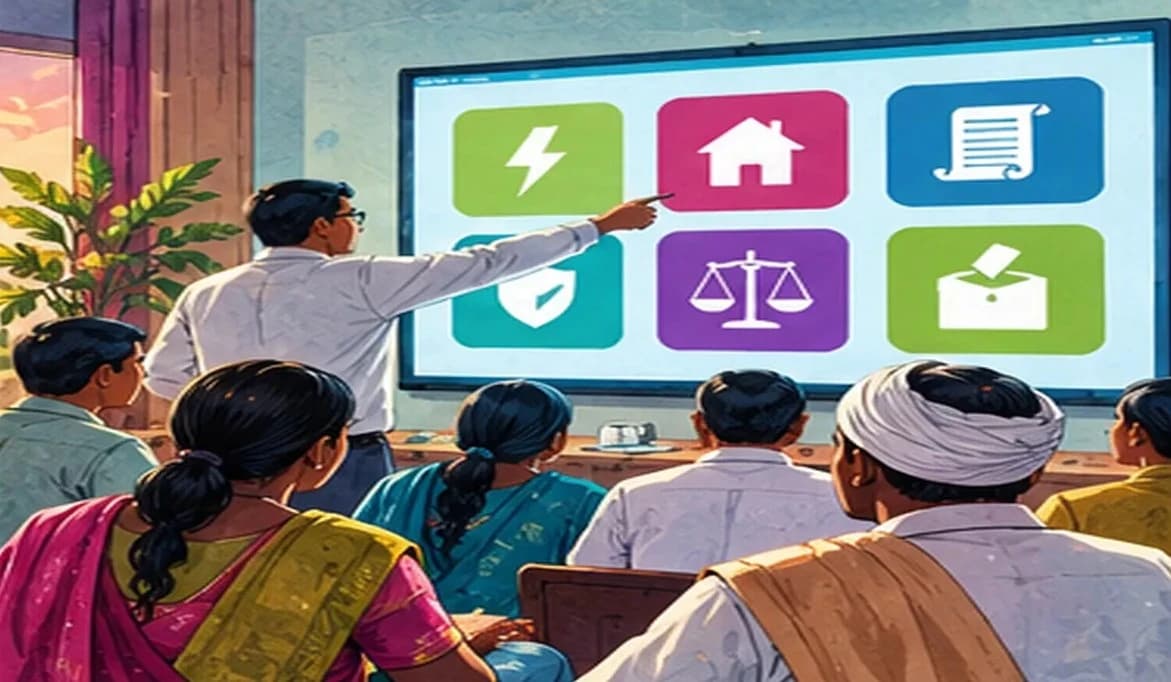
Online Grievance Registration
For redressal of grievances.
Jankari
A phone-based RTI support system: RTI complaints can be registered and information obtained.
E-Kamaan
Helps district administrations allot duties among home guards for maintaining law and order.
Bihar SPARROW
Smart Performance Appraisal Report Recording Online Window — for all officers of Bihar.
E-Municipality Bihar
Integrated end-to-end facilities to citizens in a transparent, time-bound manner.
E-Office
More efficient, effective and transparent inter- and intra-government transactions and processes.
HRMS
Human Resource Management System: record-keeping of personnel information, service agreements, other payable benefits, etc.
E-Niwas
Allotting government quarters through online applications.
GeM
Government e-Marketplace, implemented in Bihar since 1 April 2018, to enhance transparency, efficiency and speed in public procurement.
E-Procurement System
A real-time bidding solution letting users take part in tendering through the online solution TENDERWIZARD.
Online Enrolment in Electoral Roll
- Online enrolment for new electors
- Status check of enrolment
Online Electricity Bill Payment
- Bill and arrear details
- Application for new connections and other services
- Online submission of grievances
e-Gazette
- Government notifications and gazettes
- In PDF format, easily downloadable and readable
- Available in Hindi and English
- Search by gazette number
Information & Public Relations Dept.
- State cabinet decisions in Hindi
- Decisions in downloadable PDF
- Latest press releases and government advertisements
Website Directory
- Category-wise listing of institutions
- Legislative, judiciary, executive, state departments, schools and colleges, districts, etc.
Government Tender
- Tender notices of various departments
- Tender notices by email
District e-Governance Societies
Headed by District Collectors, formed to implement e-governance initiatives at district level.
ServicePlus
The Department of Information Technology is implementing the project on the ‘ServicePlus’ framework developed by NIC — an open-source, web-enabled service delivery and grievance management platform.
Award for agriculture
Bihar Agricultural University, Bhagalpur won the ‘National e-Governance Awards 2020’ from the central government for developing and deploying an ICT-based agricultural extension model.
In the first National e-Governance Service Delivery Assessment (NeSDA) 2019, Bihar was not considered for the rankings at all, as it failed to provide adequate data.
What holds it back
- Digital divide
- High cost of implementing and operating e-governance projects
- Concerns about privacy and security of personal data
- Lack of local languages in e-governance applications
- Hesitation to move from paper-based to web-based interaction
The way forward
- 1Create an inclusive digital ecosystem
- 2e-Literacy for inclusiveness
- 3Improve accessibility for higher uptake
- 4Embrace new-age technologies for better service delivery
- 5Participate effectively in the National e-Governance Plan

Exam preparation
BPSC Mains Previous Year Questions
Every question this page prepares you for, with the parts that answer it.
Q1BPSC (2009)
Analyse the functioning of the rural local governments in India since 1991 with special reference to Bihar.
Q265th BPSC (2020)
What do you understand by e-governance? Discuss the position of e-governance implementation in Bihar.
“Local government without elected representatives is an insult to the Constitution of India.”
Curated for BPSC, UPSC & State PCS Civil Services Aspirants | Indian Polity Master Module