
Champaranचंपारण
Peasant inquiryकिसान-जाँच
A detailed study of Gandhi's philosophy, political method, social and economic thought, education, language, critique of modernity, and Bihar's role in the mass movement.गांधी के दर्शन, राजनीतिक पद्धति, सामाजिक एवं आर्थिक विचार, शिक्षा, भाषा, आधुनिकता की आलोचना तथा बिहार की जन-आंदोलन में भूमिका का विस्तृत अध्ययन।
Peasant inquiryकिसान-जाँच
Mass actionजन-कार्रवाई
Nai Talimनई तालीम
Do or Dieकरो या मरो
Philosophical foundationsदार्शनिक आधार
गांधीवादी राजनीति के पीछे का नैतिक ढाँचा
Truth was the central moral value of Gandhian thought. Gandhi's formulation developed from “God is Truth” to “Truth is God”, making truth a lived discipline in thought, speech and action.गांधीवादी विचार में सत्य केंद्रीय नैतिक मूल्य था। गांधी की अभिव्यक्ति “ईश्वर सत्य है” से विकसित होकर “सत्य ही ईश्वर है” तक पहुँची; इसलिए सत्य विचार, वचन और कर्म-तीनों में जीने का अनुशासन बना।
Ahimsa was not merely the absence of physical violence. It required the rejection of hatred and ill-will and the courage to resist injustice without reproducing violence.अहिंसा केवल शारीरिक हिंसा से बचना नहीं थी। इसमें घृणा और द्वेष का त्याग तथा अन्याय का प्रतिरोध करते हुए स्वयं हिंसा का सहारा न लेने का साहस शामिल था।
Satyagraha was truth-force: a disciplined method of resisting injustice through non-violence, self-suffering, non-cooperation, fasting, picketing and civil disobedience. Gandhi distinguished it from passive resistance.सत्याग्रह सत्य-शक्ति था: अन्याय के विरुद्ध अहिंसक, अनुशासित प्रतिरोध की पद्धति, जिसमें आत्म-कष्ट, असहयोग, उपवास, धरना और सविनय अवज्ञा जैसे साधन शामिल थे। गांधी ने इसे निष्क्रिय प्रतिरोध से अलग माना।
Swaraj meant more than transfer of political power. It involved self-discipline, responsibility, swadeshi, village reconstruction and the ability of individuals and communities to govern themselves ethically.स्वराज केवल राजनीतिक सत्ता के हस्तांतरण का नाम नहीं था। इसमें आत्म-अनुशासन, उत्तरदायित्व, स्वदेशी, ग्राम-पुनर्निर्माण और व्यक्ति तथा समुदाय की नैतिक आत्म-शासन क्षमता शामिल थी।
Gandhi's religious outlook was moral and humanist: a doctrine that conflicted with reason or morality could not command obedience, and religion had to express itself through service to humanity.गांधी की धार्मिक दृष्टि नैतिक और मानवतावादी थी: जो सिद्धांत तर्क या नैतिकता से टकराए, वह स्वीकार्य नहीं था; धर्म की सार्थकता मानव-सेवा में प्रकट होनी चाहिए।
The change in formulation captures Gandhi's effort to make truth a universal ethical principle rather than a claim restricted to one religious doctrine.अभिव्यक्ति में यह परिवर्तन गांधी के उस प्रयास को दिखाता है जिसमें सत्य को किसी एक धार्मिक सिद्धांत तक सीमित न रखकर सार्वभौमिक नैतिक सिद्धांत बनाया गया।
Political methodराजनीतिक पद्धति
सत्याग्रह से जन-लामबंदी तक
Gandhi regarded satyagraha as an active moral force. The satyagrahi sought to convert the opponent rather than defeat or humiliate the opponent.गांधी सत्याग्रह को सक्रिय नैतिक शक्ति मानते थे। सत्याग्रही का उद्देश्य प्रतिद्वंद्वी को पराजित या अपमानित करना नहीं, बल्कि उसके विवेक को प्रभावित कर परिवर्तन लाना था।
Suffering was accepted voluntarily by the satyagrahi as a means of demonstrating sincerity and exposing injustice without hatred.सत्याग्रही स्वेच्छा से कष्ट स्वीकार करता था। इसका उद्देश्य अपनी प्रतिबद्धता दिखाना और बिना घृणा के अन्याय को उजागर करना था।
An unjust law could be broken openly, non-violently and with willingness to accept the legal consequence. This made law-breaking a moral and public act rather than secret evasion.अन्यायपूर्ण कानून को खुले रूप में, अहिंसक ढंग से तोड़ा जा सकता था और उसके कानूनी परिणाम को स्वीकार किया जाता था। इस प्रकार कानून-भंग छिपी चोरी नहीं, बल्कि नैतिक और सार्वजनिक कृत्य बनता था।
Bihar in the national movementराष्ट्रीय आंदोलन में बिहार
चंपारण से भारत छोड़ो तक
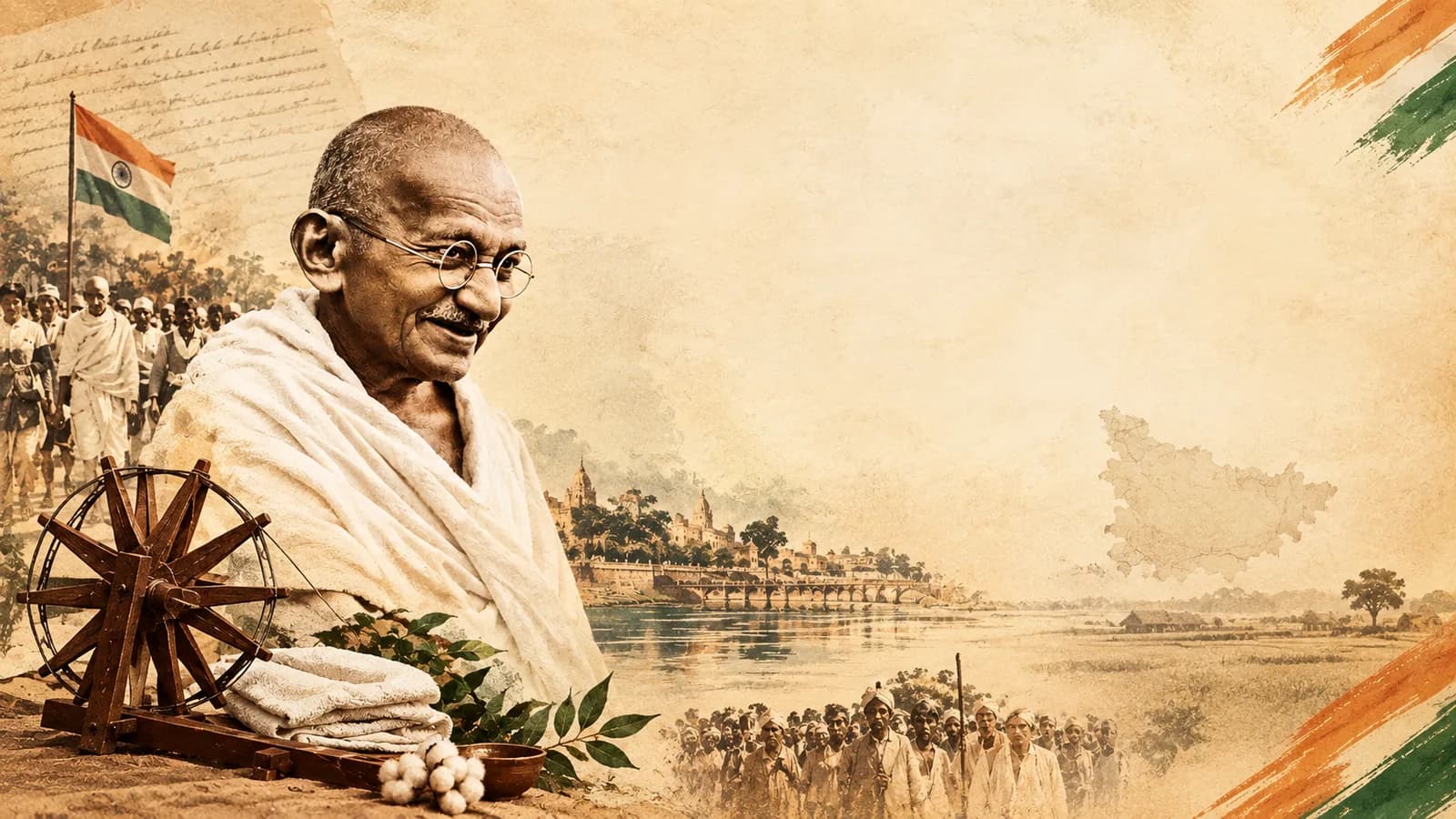
At Raj Kumar Shukla's request, Gandhi investigated indigo cultivators' grievances under tinkathia. Gandhi and colleagues recorded roughly 8,000 peasant statements. The inquiry recommended abolition of the system and a refund; 25% was accepted as the settlement. The Champaran Agricultural Act followed in November 1918.राज कुमार शुक्ल के आग्रह पर गांधी ने तिनकठिया व्यवस्था के अंतर्गत नील किसानों की शिकायतों की जाँच की। गांधी और सहयोगियों ने लगभग 8,000 किसानों के बयान दर्ज किए। जाँच ने व्यवस्था समाप्त करने और धन-वापसी की सिफारिश की; 25% वापसी समझौते के रूप में स्वीकार हुई। नवंबर 1918 में चंपारण कृषि अधिनियम आया।
Gandhi's December 1920 visit to Bihar, with Shaukat Ali and Abul Kalam Azad, renewed the campaign. Bihar Rashtriya Mahavidyalaya and Vidyapeeth provided alternatives to government education; Gandhi inaugurated the Vidyapeeth on 6 February 1921. The movement was withdrawn after Chauri Chaura.दिसंबर 1920 में शौकत अली और अबुल कलाम आजाद के साथ गांधी की बिहार यात्रा ने अभियान को गति दी। बिहार राष्ट्रीय महाविद्यालय और विद्यापीठ ने सरकारी शिक्षा के विकल्प दिए; गांधी ने 6 फरवरी 1921 को विद्यापीठ का उद्घाटन किया। चौरी-चौरा के बाद आंदोलन वापस लिया गया।
Inland Bihar adapted the salt-law campaign through processions, picketing, foreign-cloth boycott, khadi and refusal of chaukidari tax. Women participated in demonstrations and local organisation. About 900 satyagrahis were jailed in Bihar before the movement ended in 1934.अंतर्देशीय बिहार ने नमक कानून के आंदोलन को जुलूस, धरना, विदेशी कपड़े के बहिष्कार, खादी और चौकीदारी कर के विरोध के रूप में अपनाया। महिलाओं ने प्रदर्शन और स्थानीय संगठन में भाग लिया। 1934 में आंदोलन समाप्त होने से पहले बिहार में लगभग 900 सत्याग्रही जेल गए।
Gandhi's Bihar work included village service and anti-untouchability campaigning. His interpretation of the 1934 earthquake as retribution for untouchability was criticised by Rabindranath Tagore as an unscientific explanation.गांधी के बिहार कार्य में ग्राम-सेवा और अस्पृश्यता-विरोधी अभियान शामिल थे। 1934 के भूकंप को अस्पृश्यता के लिए दैवी दंड बताने वाली उनकी व्याख्या की रवीन्द्रनाथ टैगोर ने अवैज्ञानिक कहकर आलोचना की।
Selected satyagrahis publicly opposed India's participation in the war effort. Bihar participants included Shri Krishna Singh, identified here as the first satyagrahi in Bihar, and Anugraha Narayan Singh.चयनित सत्याग्रहियों ने युद्ध में भारत की भागीदारी का सार्वजनिक विरोध किया। बिहार में श्रीकृष्ण सिंह-जिन्हें बिहार का प्रथम सत्याग्रही बताया गया है-और अनुग्रह नारायण सिंह शामिल थे।
The “Do or Die” call triggered mass action. The Bihar account records seven students killed while attempting to hoist the national flag at the Patna Secretariat, underground organising including the Azad Dasta, and violence that Gandhi could not fully control.“करो या मरो” के आह्वान ने व्यापक जन-कार्रवाई को जन्म दिया। बिहार के विवरण में पटना सचिवालय पर राष्ट्रीय ध्वज फहराने के प्रयास में सात छात्रों की मृत्यु, आजाद दस्ता जैसे भूमिगत संगठन और ऐसी हिंसा का उल्लेख है जिसे गांधी पूरी तरह नियंत्रित नहीं कर सके।
Economic thoughtआर्थिक विचार
स्वदेशी, खादी, रोटी का श्रम और न्यासिता
Gandhi derived swadeshi from the Gita's idea of swadharma and applied it to the immediate environment: use and serve what is near rather than automatically preferring distant goods or institutions.गांधी ने स्वदेशी को गीता के स्वधर्म की धारणा से जोड़ा और उसे निकटतम परिवेश पर लागू किया: दूर की वस्तुओं या संस्थाओं को स्वतः प्राथमिकता देने के बजाय अपने आसपास की वस्तुओं और संस्थाओं का उपयोग तथा सेवा करना।
Swadeshi was broad. In religion it meant serving one's inherited tradition by reforming its defects; in politics, strengthening indigenous institutions; in economics, preferring goods produced by immediate neighbours and improving local industry.स्वदेशी का अर्थ व्यापक था। धर्म में अपनी परंपरा की कमियों को सुधारते हुए उसकी सेवा; राजनीति में स्वदेशी संस्थाओं को मजबूत करना; और अर्थव्यवस्था में पड़ोस में बनी वस्तुओं को प्राथमिकता देकर स्थानीय उद्योगों को बेहतर बनाना इसका हिस्सा था।
Gandhi was not presented as an absolute opponent of foreign trade. Foreign goods could be used where necessary, and international exchange could be accepted when it did not exploit or injure others. The ethical principle was patriotic preference and neighbourhood responsibility.गांधी को विदेशी व्यापार के पूर्ण विरोधी के रूप में प्रस्तुत नहीं किया गया। आवश्यकता में विदेशी वस्तुओं का उपयोग और ऐसा अंतरराष्ट्रीय विनिमय स्वीकार्य था जो शोषण या हानि पर आधारित न हो। नैतिक सिद्धांत था देशहित की प्राथमिकता और पड़ोस के प्रति उत्तरदायित्व।
Khadi linked consumption to rural employment. Gandhi saw spinning and village industry as a way to address unemployment, reduce dependence on imported cloth and reconnect urban consumers with rural producers.खादी ने उपभोग को ग्रामीण रोजगार से जोड़ा। गांधी चरखा और ग्रामोद्योग को बेरोजगारी कम करने, आयातित कपड़े पर निर्भरता घटाने और शहरी उपभोक्ताओं को ग्रामीण उत्पादकों से जोड़ने का साधन मानते थे।
The urban population benefited from economic structures that impoverished villages. Gandhi therefore argued that city people had a responsibility to support village industries and make reparation through fairer consumption and service.शहरी आबादी को उन आर्थिक व्यवस्थाओं से लाभ मिलता था जो गाँवों को गरीब बनाती थीं। इसलिए गांधी शहरों के लोगों पर ग्रामोद्योग को सहारा देने तथा न्यायपूर्ण उपभोग और सेवा के माध्यम से अपनी नैतिक जिम्मेदारी निभाने का आग्रह करते थे।
A political-economic practice linking clothing, local production and rural employment.वस्त्र, स्थानीय उत्पादन और ग्रामीण रोजगार को जोड़ने वाली राजनीतिक-आर्थिक साधना।
Physical work as a universal obligation and a bridge between classes.शारीरिक श्रम को सार्वभौमिक दायित्व और वर्गों के बीच सेतु मानना।
Property as a social trust rather than an unrestricted private entitlement.संपत्ति को असीमित निजी अधिकार के बजाय सामाजिक न्यास के रूप में देखना।
Education, language & healthशिक्षा, भाषा और स्वास्थ्य
नई तालीम ने शिक्षा को चरित्र, श्रम और सेवा से जोड़ा
The Wardha proposals envisaged at least seven years of primary education and linked learning with productive activity rather than separating the hand from the mind.वर्धा योजना में कम-से-कम सात वर्ष की प्राथमिक शिक्षा की परिकल्पना थी और शिक्षा को उत्पादक कार्य से जोड़ा गया, ताकि हाथ और मस्तिष्क को अलग न किया जाए।
Spinning, carding, dyeing, tailoring, toy-making, book-binding and paper-making were among the productive crafts mentioned as educational activities.चरखा-कताई, धुनाई, रंगाई, सिलाई, खिलौना-निर्माण, पुस्तक-बाँधना और कागज बनाना जैसे उत्पादक शिल्पों को शैक्षिक गतिविधियों से जोड़ा गया।
Education was to be conducted through the mother tongue, introduce children to cultural heritage, and cultivate ethical and moral values.शिक्षा का माध्यम मातृभाषा हो, बच्चों को सांस्कृतिक विरासत से परिचित कराया जाए और नैतिक-मूल्यों का विकास किया जाए-यह गांधी की शिक्षा-दृष्टि का हिस्सा था।
The scheme connected education with truth, non-violence, character formation, physical and intellectual growth, and a cooperative community in which social service was a dominant motive.योजना में शिक्षा को सत्य, अहिंसा, चरित्र-निर्माण, शारीरिक और बौद्धिक विकास तथा ऐसे सहयोगी समुदाय से जोड़ा गया जिसमें सामाजिक सेवा प्रमुख प्रेरणा हो।
Gandhi also emphasised adult education, women's education and education of deprived sections, and connected education with rural reconstruction and youth service in villages.गांधी ने वयस्क शिक्षा, महिला शिक्षा और वंचित वर्गों की शिक्षा पर भी जोर दिया तथा शिक्षा को ग्राम-पुनर्निर्माण और युवाओं की ग्राम-सेवा से जोड़ा।
Gandhi and modernityगांधी और आधुनिकता
औद्योगिक सभ्यता की आलोचना, तकनीक का सरल निषेध नहीं
Gandhi criticised industrialisation when large-scale production displaced livelihoods, intensified unemployment or reduced people to instruments of production. His concern was not technology alone but the social and moral structure around it.गांधी ने उस औद्योगीकरण की आलोचना की जिसमें बड़े पैमाने का उत्पादन आजीविकाएँ नष्ट करे, बेरोजगारी बढ़ाए या मनुष्य को उत्पादन के साधन में बदल दे। उनकी चिंता केवल तकनीक नहीं, बल्कि उससे जुड़ी सामाजिक और नैतिक व्यवस्था थी।
He questioned forms of division of labour that separated mental and physical work and created dependence, hierarchy or loss of human dignity. Bread labour was one answer to this separation.उन्होंने ऐसे श्रम-विभाजन पर प्रश्न उठाया जो मानसिक और शारीरिक श्रम को अलग कर निर्भरता, पदानुक्रम या मानवीय गरिमा की हानि पैदा करे। रोटी का श्रम इस विभाजन के विरुद्ध एक उत्तर था।
Gandhi's critique did not require rejection of every machine. Useful technology could be accepted when it remained subordinate to human welfare, employment, ethical responsibility and social control.गांधी की आलोचना का अर्थ हर मशीन को अस्वीकार करना नहीं था। उपयोगी तकनीक स्वीकार्य हो सकती थी, यदि वह मानव कल्याण, रोजगार, नैतिक उत्तरदायित्व और सामाजिक नियंत्रण के अधीन रहे।
Gandhi's critique also emphasised that rational calculation or scientific advance alone cannot answer moral questions about justice, exploitation, human dignity and the ends of development.गांधी की यह चिंता थी कि केवल तर्कसंगत गणना या वैज्ञानिक प्रगति न्याय, शोषण, मानवीय गरिमा और विकास के उद्देश्य जैसे नैतिक प्रश्नों का उत्तर नहीं दे सकती।
Critical assessmentआलोचनात्मक मूल्यांकन
प्रभाव और अनसुलझे अंतर्विरोध
The strongest criticism concerns the gap between Gandhi's defence of hereditary varna in parts of his thought and his campaign against untouchability. Ambedkar and others regarded caste/varna as structurally connected to the problem Gandhi sought to remove.सबसे महत्वपूर्ण आलोचना गांधी के विचार के उन चरणों और उनकी अस्पृश्यता-विरोधी सक्रियता के बीच के अंतर पर है जहाँ उन्होंने वंशानुगत वर्ण का समर्थन किया। आंबेडकर आदि ने जाति/वर्ण को उस समस्या से संरचनात्मक रूप से जुड़ा माना जिसे गांधी हटाना चाहते थे।
Critics question whether voluntary moral transformation among property holders can resolve structural inequality, ownership and labour conflict. Gandhi's answer relied more heavily on ethical conversion than coercive redistribution.आलोचक पूछते हैं कि क्या संपत्ति-स्वामियों का स्वैच्छिक नैतिक परिवर्तन संरचनात्मक असमानता, स्वामित्व और श्रम-संघर्ष का समाधान कर सकता है। गांधी का उत्तर बाध्यकारी पुनर्वितरण की अपेक्षा नैतिक परिवर्तन पर अधिक निर्भर था।
The village-centred programme offered a moral and employment-oriented alternative to industrial capitalism, but critics question its capacity to meet the needs of a large modern population and a technologically changing economy.ग्राम-केंद्रित कार्यक्रम ने औद्योगिक पूँजीवाद का नैतिक और रोजगार-केंद्रित विकल्प दिया, लेकिन आलोचक प्रश्न करते हैं कि क्या यह बड़ी आधुनिक आबादी और तकनीकी रूप से बदलती अर्थव्यवस्था की आवश्यकताओं को पूरा कर सकता है।
Religious language helped Gandhi communicate moral politics and build inter-faith cooperation, yet critics worried that religious idioms could carry communal meanings or complicate secular political mobilisation.धार्मिक भाषा ने गांधी को नैतिक राजनीति व्यक्त करने और अंतरधार्मिक सहयोग बनाने में मदद की, लेकिन आलोचकों को आशंका थी कि धार्मिक शब्दावली साम्प्रदायिक अर्थ ग्रहण कर सकती है या धर्मनिरपेक्ष राजनीतिक लामबंदी को जटिल बना सकती है।
Some critics argue that Gandhi's control over the timing and withdrawal of mass movements limited more radical social possibilities. Nehru also disagreed with the struggle–truce–struggle strategy and wider disagreements with Tagore, Ambedkar and Subhas Chandra Bose.कुछ आलोचक मानते हैं कि जन-आंदोलनों के समय और वापसी पर गांधी के नियंत्रण ने अधिक क्रांतिकारी सामाजिक संभावनाओं को सीमित किया। नेहरू के संघर्ष–विराम–संघर्ष दृष्टिकोण से मतभेद तथा टैगोर, आंबेडकर और सुभाष चंद्र बोस के साथ व्यापक वैचारिक मतभेद भी दर्ज करती है।
Gandhi expanded women's public participation and opposed several oppressive practices, but his preference for women as householders and caregivers reveals a tension between equality in public life and conventional gender roles.गांधी ने महिलाओं की सार्वजनिक भागीदारी का विस्तार किया और कई दमनकारी प्रथाओं का विरोध किया, लेकिन महिलाओं को गृहिणी और देखभालकर्ता के रूप में प्राथमिकता देने से सार्वजनिक समानता और पारंपरिक लैंगिक भूमिकाओं के बीच तनाव दिखाई देता है।
BPSC mains preparationBPSC मुख्य परीक्षा तैयारी
पिछले प्रश्नों के विषय और उत्तर-ढाँचे
Social and cultural thoughtसामाजिक एवं सांस्कृतिक विचार
Reform extended into caste, community, work and everyday life
सुधार का विस्तार जाति, समुदाय, श्रम और दैनिक जीवन तक
Varna and casteवर्ण और जाति
Gandhi distinguished an idealised four-fold varna from the many-caste hierarchy. In parts of his thought he defended hereditary varna as a natural regulatory principle while rejecting privileges, superiority and inferiority attached to birth.गांधी ने आदर्शीकृत चार-वर्ण व्यवस्था को बहुजातीय जाति-व्यवस्था से अलग माना। अपने विचार के कुछ चरणों में उन्होंने वंशानुगत वर्ण को प्राकृतिक नियामक सिद्धांत के रूप में स्वीकार किया, लेकिन जन्म पर आधारित विशेषाधिकार, श्रेष्ठता और हीनता का विरोध किया।
Untouchabilityअस्पृश्यता
He campaigned for temple entry, education, dignity of labour and material improvement of the Depressed Classes. The Anti-Untouchability League of 1932 later became the Harijan Sevak Sangh after Gandhi adopted the term Harijan.उन्होंने मंदिर-प्रवेश, शिक्षा, श्रम की गरिमा और दलित/वंचित वर्गों के सामाजिक-आर्थिक सुधार के लिए अभियान चलाया। 1932 की एंटी-अनटचेबिलिटी लीग बाद में गांधी द्वारा ‘हरिजन’ शब्द अपनाने के बाद हरिजन सेवक संघ बनी।
The evolving positionबदलता हुआ मत
Gandhi later stated that caste had to go “root and branch” if untouchability was to be completely eradicated. This evolution creates the central tension between his earlier defence of hereditary varna and his anti-untouchability activism.गांधी ने बाद में कहा कि अस्पृश्यता को पूरी तरह समाप्त करना हो तो जाति को “जड़ और शाखा सहित” जाना होगा। इससे वंशानुगत वर्ण की उनकी प्रारंभिक स्वीकृति और अस्पृश्यता-विरोधी सक्रियता के बीच केंद्रीय तनाव सामने आता है।
Religion, morality & serviceधर्म, नैतिकता और सेवा
Religion meant self-realisation, knowledge of the self and a search for truth. Gandhi rejected any religious doctrine that conflicted with reason or morality and selected principles from religious traditions that could serve humanity, especially the downtrodden.धर्म का अर्थ आत्म-साक्षात्कार, आत्म-ज्ञान और सत्य की खोज था। गांधी उस धार्मिक सिद्धांत को अस्वीकार करते थे जो तर्क या नैतिकता से टकराए। उन्होंने धार्मिक परंपराओं से ऐसे सिद्धांतों को महत्व दिया जो मानवता, विशेषकर वंचितों, की सेवा करें।
Religious diversity & the Stateधार्मिक विविधता और राज्य
Gandhi saw different religions as paths toward truth, was deeply influenced by Hinduism, and called himself a Sanatani Hindu. Yet he opposed a State religion and treated religion as a personal concern while the State handled secular welfare.गांधी विभिन्न धर्मों को सत्य की ओर जाने वाले मार्ग मानते थे, हिंदू धर्म से गहराई से प्रभावित थे और स्वयं को सनातनी हिंदू कहते थे। फिर भी वे राज्य-धर्म के विरोधी थे और धर्म को व्यक्तिगत विषय मानते थे, जबकि राज्य का कार्य लौकिक कल्याण था।
Hindu-Muslim amityहिंदू-मुस्लिम एकता
Gandhi treated Hindu-Muslim unity as essential to national freedom. He supported the Khilafat issue as an opportunity for cooperation and stressed trust, mutual respect and give-and-take between communities.गांधी हिंदू-मुस्लिम एकता को राष्ट्रीय स्वतंत्रता के लिए आवश्यक मानते थे। उन्होंने खिलाफत प्रश्न को सहयोग का अवसर माना और समुदायों के बीच विश्वास, पारस्परिक सम्मान तथा लेन-देन/समझौते पर जोर दिया।