

EDU TERIA Logo
CartSign InSign UpEnroll Now
BPSC Mains GS-2 Masterclass · Indian Polity

Fundamental Rights, Property & DutiesWhat the Constitution Gives, Limits and Asks in Return

The six rights of Part III and their limits, how courts turned Article 21 into a charter of dignity, why property stopped being a Fundamental Right, and the eleven duties every citizen owes.

LocationArt 12–35Part III

Where the Fundamental Rights are enshrined.

Count6 RightsToday

Seven at the start; property was removed in 1978.

RemediesArt 32Heart & Soul

The right to enforce rights is itself a right.

Turning Point1978Maneka Gandhi

Article 21 widened to a fair, just procedure.

PropertyArt 300ARight to Property

Now a legal right, not a Fundamental Right.

Duties11 DutiesArticle 51A

Added in 1976; the 11th in 2002.

Part III · Articles 12–35

The Six Fundamental Rights

The Fundamental Rights are enshrined in Part III of the Constitution, from Article 12 to Article 35. The framers drew inspiration from the Constitution of the USA (its Bill of Rights). India’s Fundamental Rights are more elaborate than those of any other country in the world, including the USA.

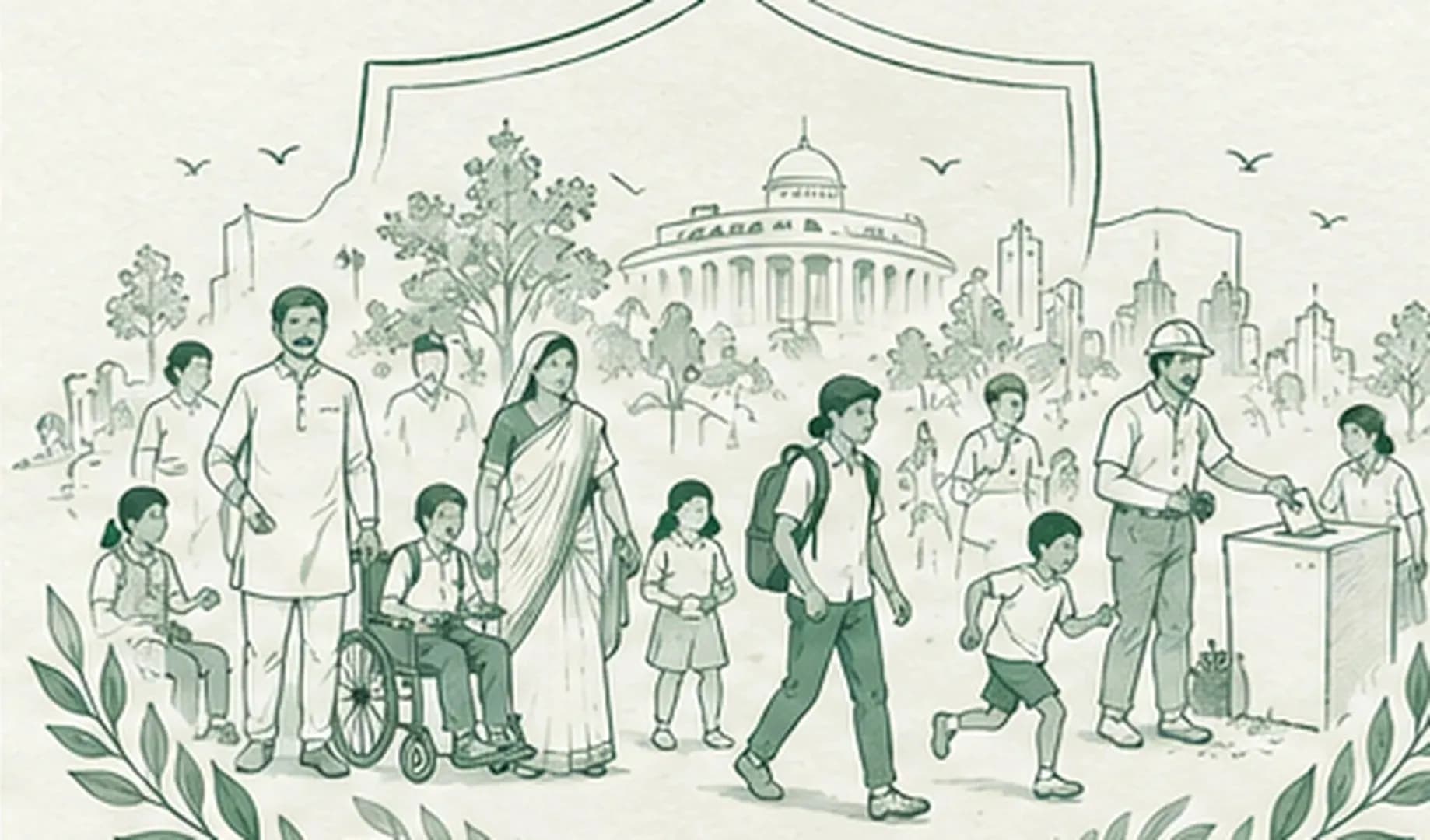
Six citizens of different backgrounds standing under one large protective canopy shaped like a shield

A government of laws, not of men

  • They are guaranteed to all persons without any discrimination, and uphold the equality of all individuals, the dignity of the individual, the larger public interest and the unity of the nation.
  • They promote the ideal of political democracy. They prevent authoritarian and despotic rule and protect people’s liberties and freedoms against invasion by the State.
  • They act as limits on the tyranny of the executive and on arbitrary laws of the legislature — in short, they aim at ‘a government of laws and not of men’.

Why “fundamental”?

  1. 1They are guaranteed and protected by the Constitution, which is the fundamental law of the land.
  2. 2They are most essential for the all-round development — material, intellectual, moral and spiritual — of individuals.
1

Right to Equality

Art 14–18
  • Art 14Equality before law and equal protection of laws.
  • Art 15Prohibition of discrimination on grounds of religion, race, caste, sex or place of birth.
  • Art 16Equality of opportunity in matters of public employment.
  • Art 17Abolition of untouchability and prohibition of its practice.
  • Art 18Abolition of titles, except military and academic ones.

Example: Reservations in jobs and education are allowed under Articles 15(4) and 16(4) as special provisions for backward classes.


2

Right to Freedom

Art 19–22
  • Art 19Protection of six freedoms:speech and expressionassemblyassociationmovementresidenceprofession
  • Art 20Protection in respect of conviction for offences.
  • Art 21Protection of life and personal liberty.
  • Art 21ARight to elementary education.
  • Art 22Protection against arrest and detention in certain cases.

Example: Article 21A (added by the 86th Amendment, 2002) is given effect by the Right to Education Act, 2009.

3

Right against Exploitation

Art 23–24
  • Art 23Prohibition of traffic in human beings and forced labour.
  • Art 24Prohibition of employment of children in factories, etc.

Example: Article 23 makes begar (forced, unpaid labour) and bonded labour unconstitutional.

4

Right to Freedom of Religion

Art 25–28
  • Art 25Freedom of conscience and free profession, practice and propagation of religion.
  • Art 26Freedom to manage religious affairs.
  • Art 27Freedom from payment of taxes for promotion of any religion.
  • Art 28Freedom from attending religious instruction or worship in certain educational institutions.
5

Cultural & Educational Rights

Art 29–30
  • Art 29Protection of the language, script and culture of minorities.
  • Art 30Right of minorities to establish and administer educational institutions.
6

Right to Constitutional Remedies

Art 32
  • Art 32Right to move the Supreme Court to enforce Fundamental Rights, including through five writs:habeas corpusmandamusprohibitioncertiorariquo warranto

Example: Habeas corpus (“produce the body”) lets a court order anyone holding a person to bring them before it and justify the detention.

“It is the very soul of the Constitution and the very heart of it.”
— Dr. B.R. Ambedkar, on Article 32

Curated for BPSC, UPSC & State PCS Civil Services Aspirants | Indian Polity Master Module