

Every five years
Elections to the Lok Sabha and the state Legislative Assembly must take place every five years, unless called earlier.
How an election in Bihar is called, fought and counted, how parties campaign and what the law forbids, why mid-term polls divide opinion, and how crime and politics came to share a stage.
 LawArt 324–329Constitutional basis
Elections in Bihar follow the Constitution.
 Campaign48 hoursCampaign silence
The official campaign ends before polling closes.
 Polling1,500Voters per booth (max)
With a booth within 2 km of every voter.
 ChoiceNOTASince 2013
The right to a negative vote.
 Nexus58%Bihar MLAs (2015)
142 of 243 faced criminal charges.
 History1957First booth-capturing
Hired goons and political protection.
Articles 324–329
Elections in Bihar are conducted in accordance with the Constitution of India (Articles 324 to 329).
The Bihar Assembly makes laws on the conduct of local body elections on its own, while any changes it makes to the conduct of state-level elections need the approval of the Parliament of India.
Elections to the Lok Sabha and the state Legislative Assembly must take place every five years, unless called earlier.
The President can dissolve the Lok Sabha and call a general election before five years are up, if the government can no longer command the confidence of the Lok Sabha and no alternative government is available. For the state legislature, the Governor takes the call.
Elections to the Rajya Sabha are held at regular intervals, with one-third of the members retiring in a staggered manner. Members of the Vidhan Sabha elect the state’s representatives to the Rajya Sabha.
When the five-year limit is up, or the legislature has been dissolved and new elections called, the Election Commission puts the election machinery into effect.
The Constitution says no more than six months can pass between the last session of the dissolved Lok Sabha or state legislature and the recalling of the new House, so elections must be concluded before then.
The Commission normally announces the election schedule at a major press conference a few weeks before the formal process begins.
The Model Code of Conduct for candidates and political parties comes into effect immediately after the announcement.
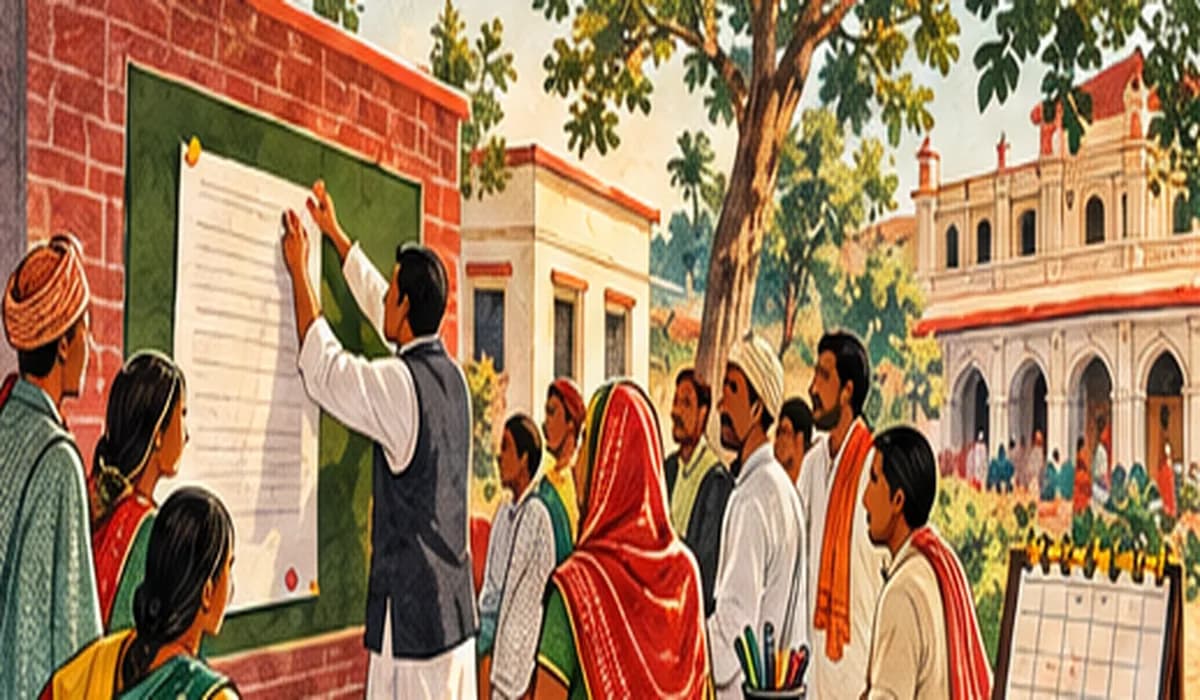
The formal process starts with the Notification(s) calling upon the electorate to elect members of a House.
As soon as the Notifications are issued, candidates can file nominations in the constituencies they wish to contest.
A candidate must make and subscribe an oath or affirmation before an officer authorised by the Election Commission.
After the last date for nominations — about a week later — the Returning Officer of the constituency scrutinises them.
A nomination not found in order can be rejected after a summary hearing.
Validly nominated candidates can withdraw from the contest within two days of the date of scrutiny.
Electoral process in Bihar · continued
Once nominations close, the process moves through the campaign, polling day, postal votes, oversight, counting and — if needed — the courts.
Local body elections are held in a somewhat similar manner, but under the supervision of the State Election Commission.
Thus, Bihar has a very comprehensive election process. Though several ills are associated with elections — such as money power and the casteisation of politics — the electoral process has definitely helped deepen the roots of democracy in Bihar.
What is an election campaign?
An election campaign is an organised effort by political parties and candidates to influence and persuade people to vote for their candidates and parties.
How long does it last?
People discuss who is a better representative, which party will make a better government, or what is a good policy.
Parties try to focus public attention on some big issues, and get people to vote for them on that basis.
Candidates contact voters, leaders address election meetings and parties mobilise supporters. Newspapers and TV news are full of election stories and debates.
Once an election is called, parties issue manifestos setting out the programmes they would implement if elected, the strengths of their leaders, and the failures of opposing parties and leaders.
Slogans popularise and identify parties and issues; pamphlets and posters are distributed to the electorate.
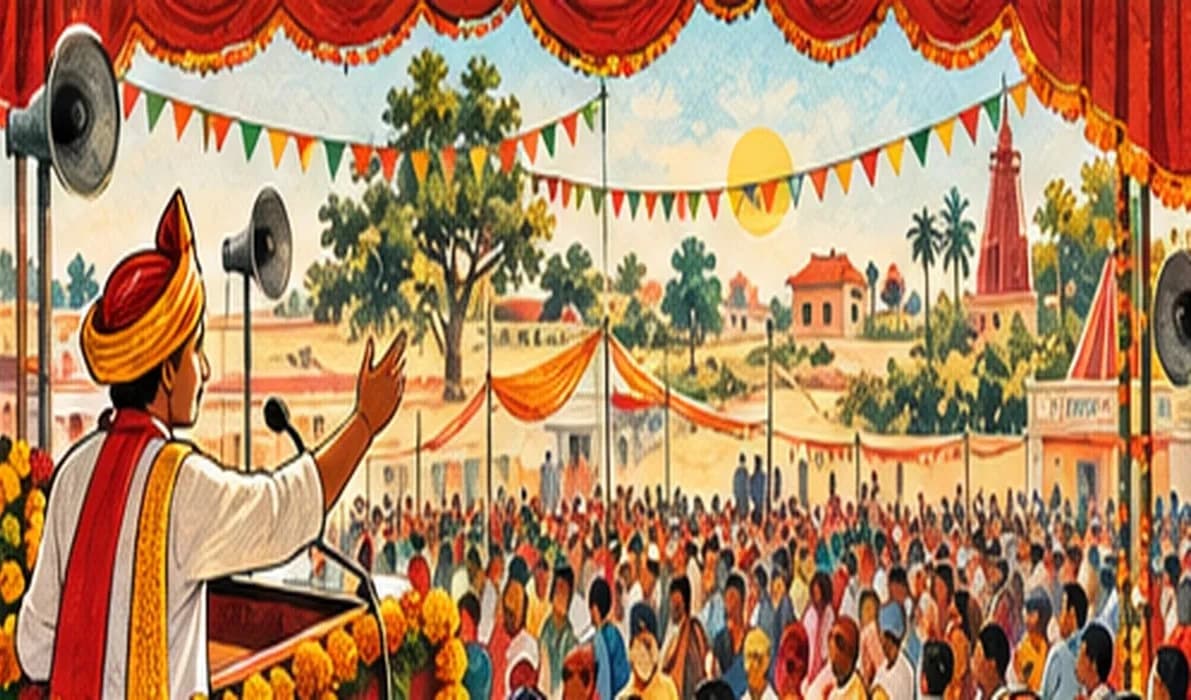
Rallies and meetings are held throughout constituencies, where candidates try to persuade, cajole and enthuse supporters, and denigrate opponents.
During the campaign, parties and candidates are expected to abide by a Model Code of Conduct evolved by the Election Commission on the basis of a consensus among political parties.
The model code lays down broad guidelines on how parties and candidates should conduct themselves during the campaign.
Important methods of election campaign in Bihar
Since campaigning is a multi-faceted set of activities, the number of techniques that can be used is virtually unlimited.
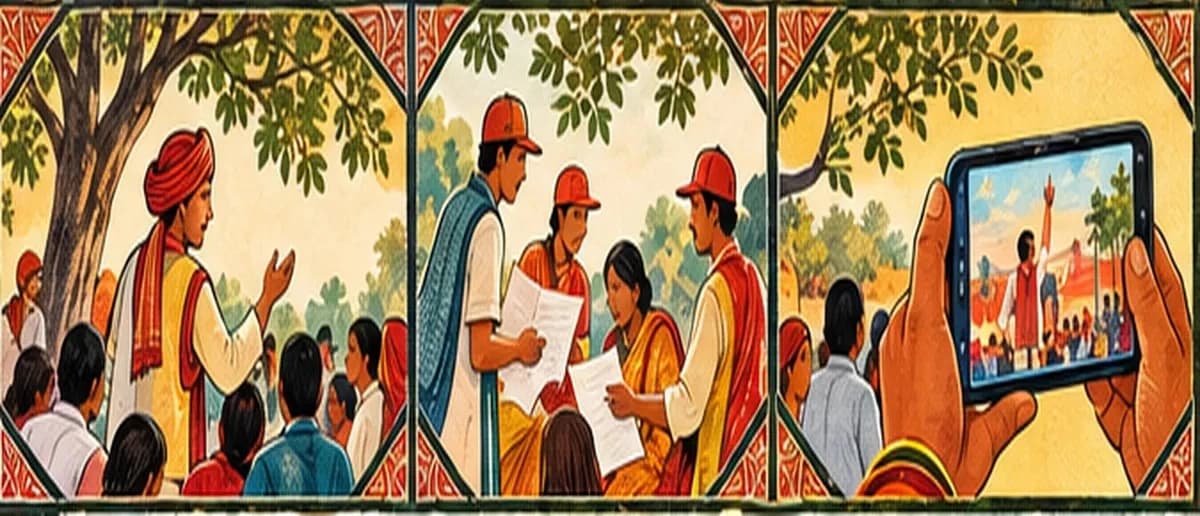
Posters, radio and TV announcements.
Purchased space or time in media such as newspapers or radio.
Attracting media attention, e.g. with press conferences and stunts.
Debates, discussions and so on.
Demonstrations, rallies, marches and other forms of mass meetings.
Slogans to popularise parties, leaders and issues — e.g. ‘Aage badhta rahe Bihar’, ‘Phir ek baar Nitish Kumar’, ‘Jai jai Bihar, BJP sarkar’.
Using traditional arts to raise awareness or start community dialogue — e.g. political leaders wearing local dress.
Recalling local leaders of specific areas — e.g. recalling Kunwar Singh while campaigning in Ara district.
Electronic action-alerts via the internet and mobile phones.
Spreading messages through new media channels — social networks, videos, blogs, Twitter, etc.
Mobilising volunteer campaign activists to influence peer groups, e.g. by organising community events or private house parties.
Distributing campaign merchandise such as caps, bags and wristbands.
Organising or taking part in specialised conferences.
A new technique that helps identify and target small demographic slices of voters.
A campaign surrogate — a celebrity or person of influence campaigning on a candidate’s behalf.
Recently, the ‘virtual rally’ over the internet, used by the BJP.
In a democracy it is best to leave parties and candidates free to campaign as they want. But campaigns sometimes need regulating so that every party and candidate gets a fair and equal chance to compete.
Under our election law, no party or candidate can:
If they do, their election can be rejected by the court even after they have been declared elected.
In addition, all political parties have agreed to a Model Code of Conduct, under which no party or candidate can:
Why elections matter
An election is a mechanism by which people can choose their representatives at regular intervals, and change them if they wish.
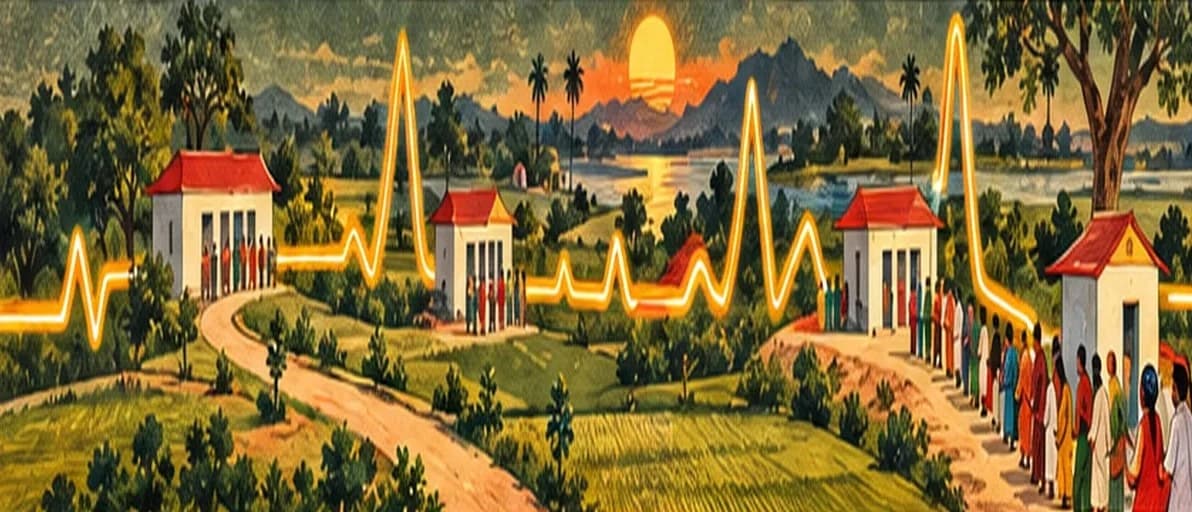
In an election, voters make many choices:
Too fast, too irregular?
Frequent and irregular elections, the argument goes, mean the collapse of democracy. Others say they deepen it. Here are both sides.
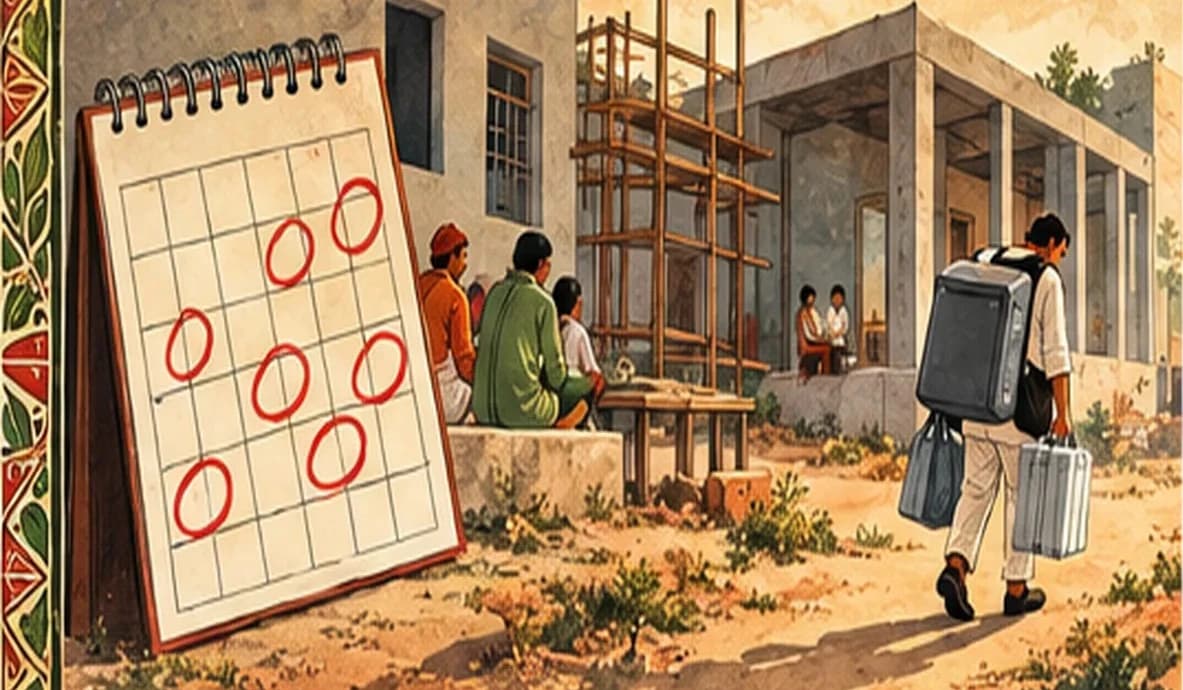
Free and fair elections are integral to democracy — but so are continuity, consistency and governance. Irregular elections mean a lack of consistency.
They result in policy paralysis and a governance deficit.
Political leaders remain constantly in election mode, holding rallies and so on.
Legislative work is hampered, because the compulsion to win the next election makes short-term political imperatives the immediate priority.
Frequent elections tend to merge the means (elections) with the ends, which does not serve democracy well.
For governance and development programmes, enforcing the Model Code of Conduct is detrimental. If we are busy with local body and Assembly elections all year round, where is the time for development work?
Elections remain a conduit for black money and corruption. Frequent cycles disrupt normal public life and the delivery of essential services, and give unscrupulous elements chances to tear the social fabric.
Elections are known to be the mother of all forms of corruption.
Frequent elections are a huge burden on manpower and money. Security personnel and officials are on election duty for many months a year — teachers repeatedly put on election duty means students suffer. The cost runs into thousands of crores and keeps rising; for a resource-constrained developing economy, the opportunity cost is too high to ignore.
Mid-term elections are generally caused when no party has adequate numbers in the legislature — reflecting that no party enjoys the people’s trust.
Such frequent elections are sometimes caused by defecting members of legislatures. Even after the anti-defection law, defection tendencies have not been checked.
Example: In 2024 the Union government introduced the Constitution (129th Amendment) Bill to enable ‘One Nation, One Election’; it was referred to a Joint Parliamentary Committee.
Thus, if elections are conducted in the ideal manner, truly abiding by the constitutional provisions, they are always good for democracy.
The politician–criminal nexus
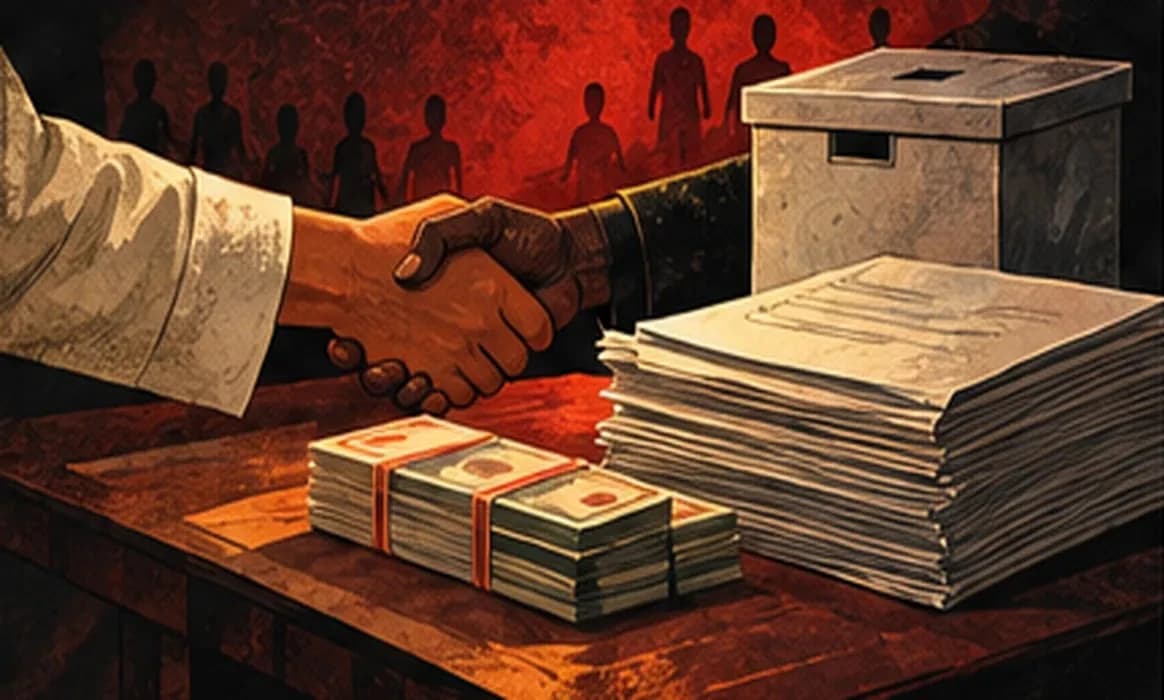
Crime and politics in India are deeply intertwined, as reports of the Association for Democratic Reforms (ADR) show. This criminalisation of politics is the ultimate result of the politician–criminal nexus.
Newly elected Lok Sabha MPs with criminal charges (233 MPs)
ADR · up from 34% in the 16th Lok Sabha
Of the cases relate to rape, murder, attempt to murder or crimes against women
ADR
Bihar MLAs elected in 2015 facing criminal charges (142 of 243)
1 point up from 57% in 2010
Criminals need the patronage of politicians in public office to continue their activities; politicians need the money and muscle power criminals can offer to win elections.
In time, the nexus led criminals to contest elections themselves.
The first instances of ‘booth-capturing’ were reported in 1957: hired goons mobilised or suppressed turnout, or voted on behalf of disenfranchised voters. In return, politicians protected them from prosecution.
Example: The 1957 case is usually traced to Rachiyari village in Begusarai, Bihar.
Until the late 1960s incumbents were usually re-elected, so goons were fairly sure of favours after helping a politician win. As competition increased, re-election became uncertain — so criminals entered politics themselves to control their own survival and protection.
Elections grew costlier — a rising population, more competition (political parties rose from 55 in the 1952 general election to 464 in 2014), and the trend of freebies for votes.
Parties began a competitive search for underground financing, playing into the hands of criminals and racketeers who could raise and spend large amounts of cash undetected.
Parties fielded tainted candidates because they could fight elections without burdening the party’s limited funds.
Data from past elections show the strategy worked: candidates with criminal cases were three times more likely to win than ‘clean’ candidates.
The link between criminality and the chance of winning is reinforced when we look at a candidate’s winnability.
Some politicians think most voters are manoeuvrable and purchasable — individually timid and collectively cowardly — so winning their support is easier for the corrupt.
The Vohra Committee Report recorded official agencies’ observations on a criminal network virtually running a parallel government, and on criminal gangs enjoying the patronage of politicians of all parties and the protection of government functionaries.
Toothless laws against convicted criminals standing for elections further encourage the process.
Lack of awareness, and acceptance, among voters.
Criminality, far from deterring voters, can attract them — it signals the candidate can deliver on promises and secure the interests of the community and constituency.
Some instances from Bihar cited in the source answer:
Anant Singh
Former MLA from Mokama.
Ajeet Sharma
MLA from Bhagalpur.
Mohammad Shahabuddin
Former MP from Siwan. Disqualified from contesting elections after his conviction on kidnapping and murder charges; known to be a close aide of a former Bihar Chief Minister. He fought the 2004 election from prison and won.
Surajbhan Singh
Former Member of Parliament, convicted on murder charges.
The major problem is that law-breakers become law-makers.
According to ADR, about 34% of members elected to the 16th Lok Sabha (2014) faced criminal charges, making Parliament less efficient in enacting the laws needed for effective administration. Parliament loses credibility and the Council of Ministers loses legitimacy.
It increases the circulation of unaccounted (black) money during and after elections, diluting probity in public life.
It introduces a culture of violence in society and sets a bad precedent for the youth to follow.
Decriminalising politics
What still needs to be done, and what the law and the Supreme Court have already done.
Under the Representation of the People Act, those involved in promoting enmity, booth-capturing and similar offences are to be disqualified.
The forms prescribed by the Election Commission require candidates to disclose their convictions, pending cases and so on in their nomination papers — a step in the right direction if applied properly.
In a historic ruling, the Supreme Court held that every candidate contesting an election to Parliament, state legislatures or a municipal corporation must declare their criminal record, financial record and educational qualifications.
The Supreme Court held that a sitting MP or MLA is also subject to disqualification from contesting elections if convicted and sentenced to not less than two years’ imprisonment.
The Supreme Court held Section 8(4) of the Representation of the People Act, 1951 unconstitutional — the provision that allowed convicted MPs and MLAs to stay in office until their appeal was decided.
The Supreme Court asked the Election Commission to give voters a ‘None of the Above’ option, so they can express no confidence in all the candidates in the fray.
A Supreme Court order made it mandatory for political parties to upload on their websites detailed information on candidates with pending criminal cases, along with the reasons for selecting them.
The rule of law is among the fundamental bases for democracy to succeed. If India is to sustain its status as the largest democracy in the world, it must deal with the politician–criminal nexus.

Exam preparation
Every question this page prepares you for, with the parts that answer it.
“Elections are like the heart beats of a democracy.”
Curated for BPSC, UPSC & State PCS Civil Services Aspirants | Indian Polity Master Module