

Equal powers & pay
The CEC and the two other Election Commissioners have equal powers and receive equal salary, allowances and other perquisites, similar to those of a Supreme Court judge.
How the Election Commission is built and kept independent, what it can do under Article 324, what makes an election free and fair, why the voter ID card matters, and how the bureaucracy runs the world’s largest election.
 MandateArticle 324Superintendence & control
Of elections to Parliament, legislatures, President & VP.
 Composition3 membersMulti-member since 1993
A CEC and two Election Commissioners.
 Tenure6 yrs / 65Term of office
Whichever is earlier.
 EPIC1993Electoral Identity Card
Introduced under CEC T.N. Seshan.
 Powers3 rolesAdministrative · Advisory · Quasi-judicial
How the EC’s functions are classified.
 Machinery6 kindsElection observers
General, expenditure, police, awareness, micro…
Article 324
The Election Commission of India is a permanent and independent body under Article 324. It is an all-India body, in the sense that it is common to both the Central government and the state governments.
Article 324 vests in the Election Commission the power of superintendence, direction and control of elections to Parliament, the state legislatures, and the offices of the President and the Vice-President of India.
The Election Commission of India is considered among the most powerful election commissions in the world.
Appointment and composition — the provisions under Article 324:
Functioned as a single-member body consisting only of the Chief Election Commissioner.
The President appointed two more Election Commissioners to cope with the extra work caused by lowering the voting age from 21 to 18 years.
Example: The voting age was lowered by the 61st Constitutional Amendment Act, 1988.
The two posts of Election Commissioners were abolished, and the Commission went back to its earlier single-member form.
The President again appointed two more Election Commissioners. Since then it has functioned as a multi-member body of three election commissioners.
Independence & service conditions
In India, elections are conducted by an independent and very powerful Election Commission. It enjoys the same kind of independence that the judiciary enjoys.
The Chief Election Commissioner
Article 324 makes these provisions to safeguard the independent and impartial functioning of the Commission:
Security of tenure
The Chief Election Commissioner has security of tenure — the same as a Supreme Court judge.
Protection for other ECs
The other Election Commissioners cannot be removed except on the recommendation of the CEC.
The CEC and the two other Election Commissioners have equal powers and receive equal salary, allowances and other perquisites, similar to those of a Supreme Court judge.
If the CEC and/or the two other ECs differ, the Commission decides the matter by majority.
They hold office for six years or until they reach 65 years of age, whichever is earlier. They can resign at any time, or be removed before their term ends.
Superintendence, direction & control
The EC takes decisions on every aspect of the conduct and control of elections — from the announcement of elections to the declaration of results.
Running the machinery of elections across the country.
Part of the basic structure
Free and fair elections are the hallmark of a working democracy. The Supreme Court has held in earlier judgments that the principle of free and fair elections is part of the basic structure of the Constitution.
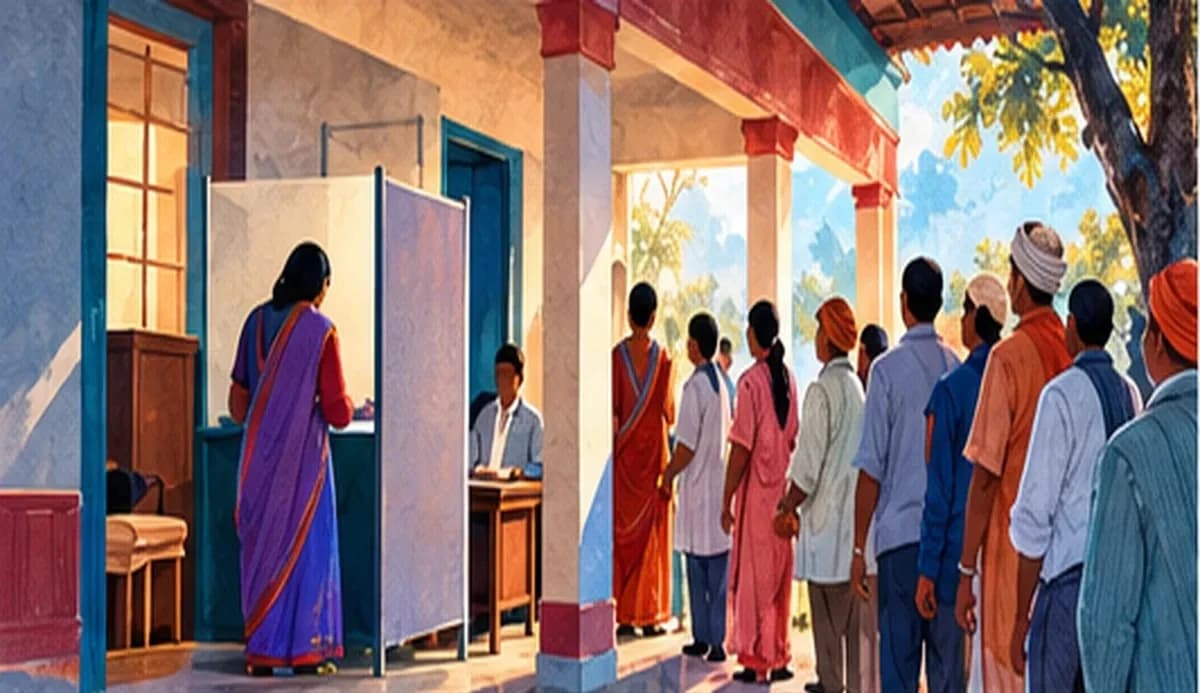
For democracy and the electoral process to succeed, elections must be free and fair. A free and fair election means:
Every aspiring candidate must have unfettered freedom to offer himself as a candidate and to campaign in his own way, so long as he stays within the law.
Every voter must be equally free to vote as he likes, without fear of any consequences and without being unduly influenced by improper inducement or pressure of any kind.
The secrecy of the voter’s choice or preference for any candidate must be maintained.
The election machinery must function honestly and impartially at every stage.
In India, these conditions are ensured through constitutional provisions, statutory laws and regulations, such as:
Guardian of the ballot
From the Model Code of Conduct to repolls, the Commission uses 20 kinds of tools to keep elections free and fair. They fall into six groups.
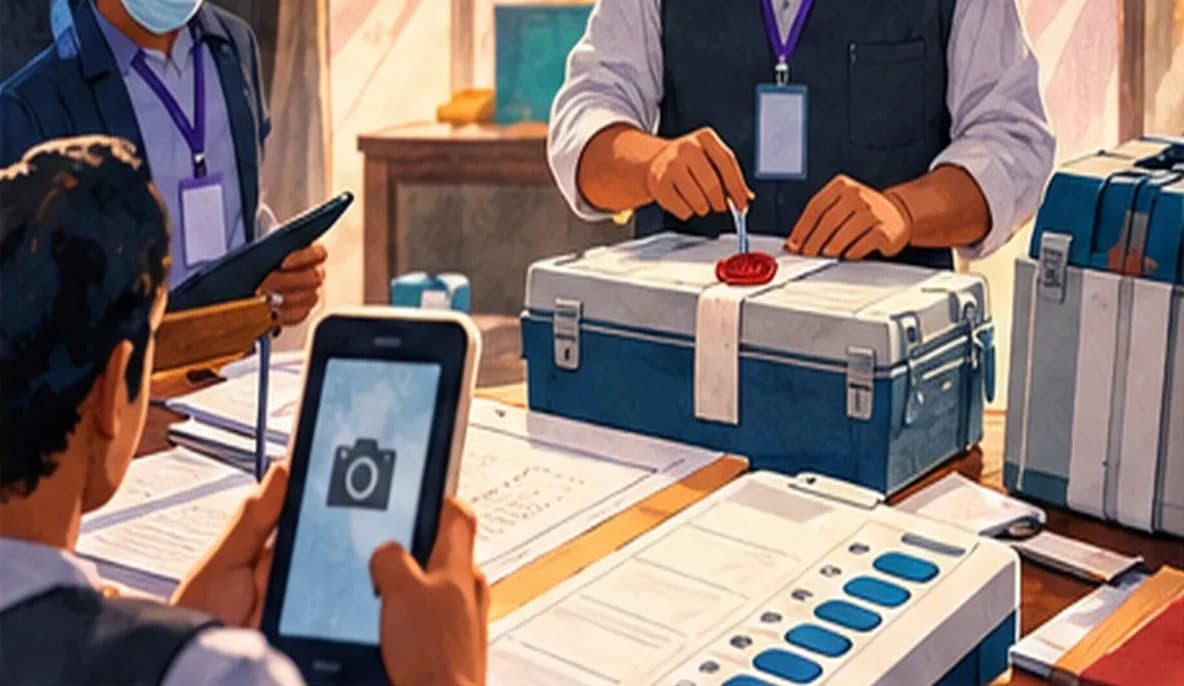
Ensures free and fair elections by enforcing and maintaining a Model Code of Conduct before elections, and punishes any candidate or party that violates it.
It has gone as far as disciplining political parties with the threat of de-recognition if they fail to maintain inner-party democracy.
Under the RPA, the Commission can disqualify a candidate who fails to lodge an account of his election expenses within the time and in the manner prescribed by law.
Example: This power is under Section 10A of the Representation of the People Act, 1951.
To decriminalise politics, it has approached the Supreme Court for a lifetime ban on convicted politicians contesting elections.
It prohibits the dissemination or publication of voting trends, through opinion polls or exit polls, that seek to influence voters.
Wide jurisdiction
The jurisdiction of the Election Commission is wide enough to include all powers necessary for the smooth conduct of elections. The word ‘elections’ is used in a wide sense, covering the entire process, which has several stages and many steps.
The limit
The limitation on the plenary character of its power: when Parliament or a state legislature has made a valid law relating to elections, the Commission must act in conformity with it.
When the law is silent
But if the law is silent on any situation, Article 324 gives the Election Commission all the power needed to hold free and fair elections.
EPIC · since 1993
One card, many jobs: keeping the rolls clean, stopping impersonation at the booth, and doubling as everyday proof of identity.
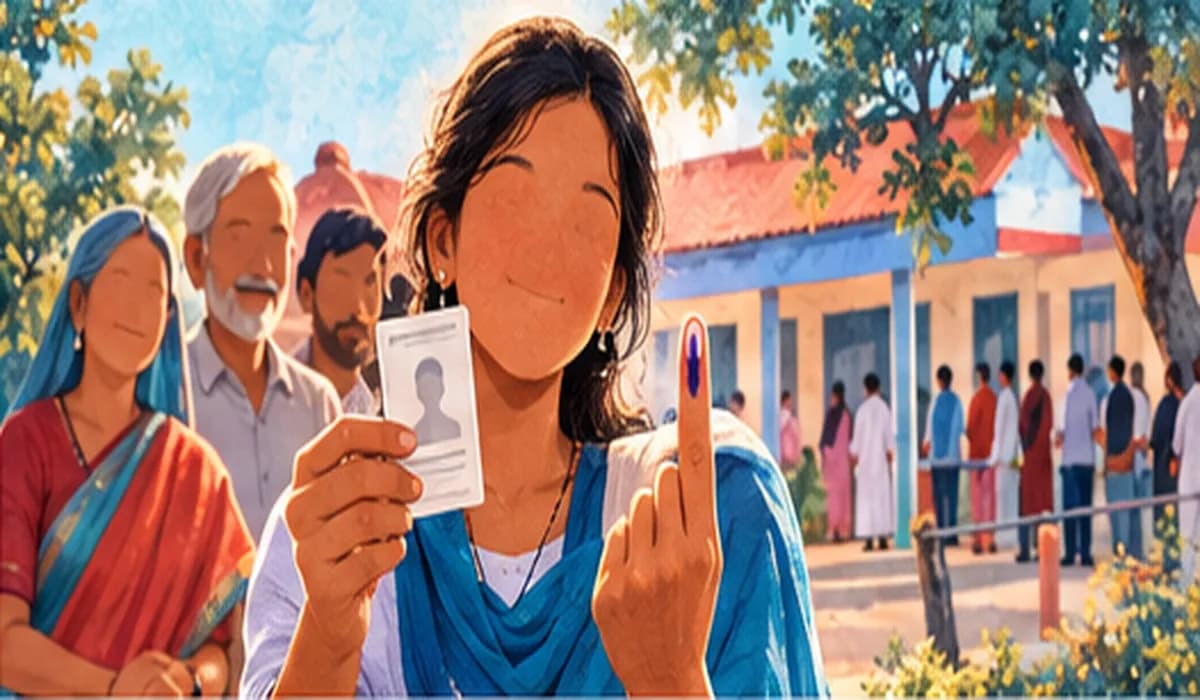
The Electoral Identity Card was first introduced in 1993, during the tenure of Chief Election Commissioner T.N. Seshan. It is an identity document issued by the Election Commission of India to adult domiciles of India who have reached the age of 18, and it primarily serves as identity proof for Indian citizens while casting their ballot.
Its primary purpose is to improve the accuracy of the electoral roll and help prevent electoral fraud.
It also serves as identification proof when individuals cast their vote.
The government has tried to give this card to every person on the voters’ list. Voters are required to carry it when they go to vote, so that no one can vote in someone else’s name.
It also serves as general proof of identity, address and age for other purposes, such as buying a mobile SIM card or applying for a passport.
Bureaucracy under the EC’s guidance
The bureaucracy is the administrative machinery staffed by non-elected, permanent executives — trained and skilled officers who, as permanent government employees, assist ministers in formulating policies and implementing them.
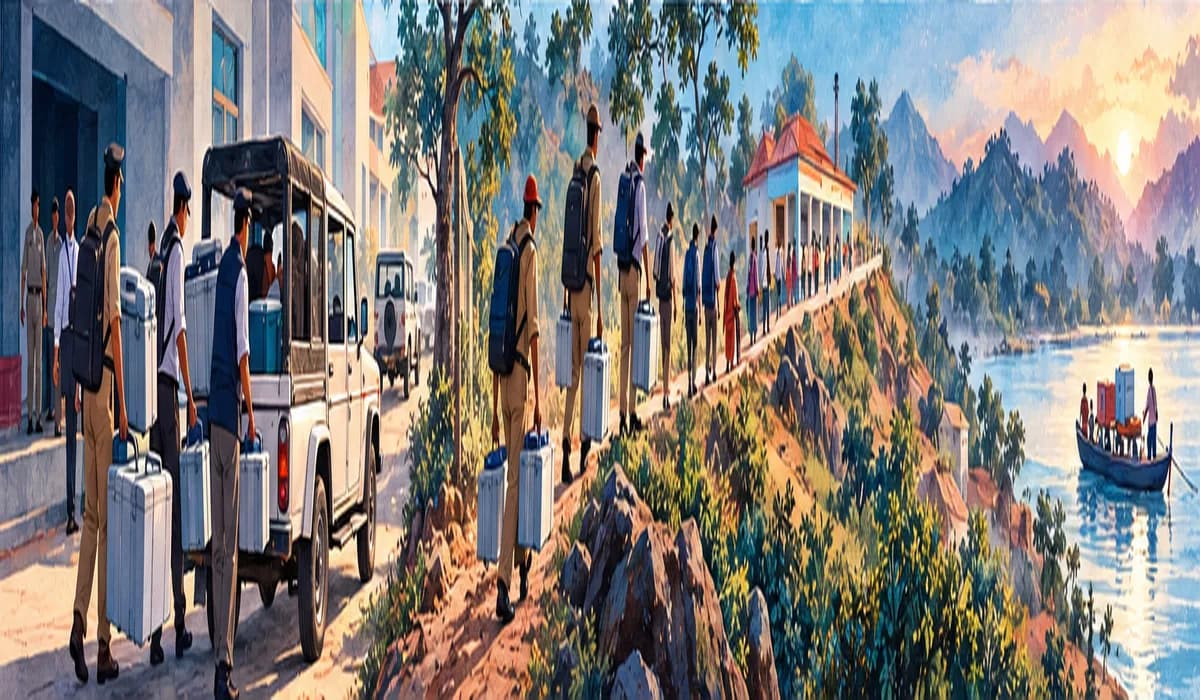
Today the Indian bureaucracy is an enormously complex system: the All-India Services, state services, employees of local governments, and the technical and managerial staff running public sector undertakings.
Under Article 324, the Election Commission has the power of superintendence, direction and control of elections. The ECI is a three-member body, and generally top bureaucrats are appointed as Election Commissioners.
RoleSupervises election work in the state or UT, subject to the overall superintendence, direction and control of the Election Commission.
Who appointsThe ECI nominates or designates an officer of the state / UT government as CEO, in consultation with that government.
RoleSupervises election work in a district, subject to the superintendence, direction and control of the CEO.
Who appointsThe ECI nominates or designates a state government officer as DEO, in consultation with the state government. Generally, the Collector acts as the district election / returning officer.
RoleResponsible for conducting the election in a parliamentary or assembly constituency.
Who appointsThe ECI nominates or designates an officer of the government or a local authority as RO for each constituency, in consultation with the state / UT. It also appoints one or more Assistant Returning Officers to help the RO.
RoleResponsible for preparing the electoral rolls for a parliamentary / assembly constituency.
Who appointsThe ECI, in consultation with the state / UT government, appoints an officer of the government or local authority as ERO. It also appoints one or more Assistant EROs to help prepare and revise the rolls.
RoleThe Presiding Officer, assisted by polling officers, conducts the poll at a polling station.
Who appointsThe DEO appoints the Presiding Officers and Polling Officers. In Union Territories, the Returning Officers make these appointments.
The ECI also nominates government officers as Observers for parliamentary and assembly constituencies:
Ensure the smooth conduct of elections, keeping a close watch on every stage of the process to ensure free and fair elections.
Keep a close watch on candidates’ election expenditure and ensure no inducement is offered to electors during the entire election process.
IPS officers deployed at state and district levels, depending on the sensitivity of the constituency.
First deployed in the 16th Lok Sabha elections (2014) as Central Awareness Observers, to oversee field-level management mainly in voter awareness and facilitation.
Deployed in addition to General Observers, to watch the poll proceedings on poll day in selected critical polling stations. They are chosen from Central Government / Central PSU officials.
Appointed for each assembly segment, in addition to Expenditure Observers, to ensure all major campaign events are videographed and complaints of electoral malpractice are promptly attended to.
So almost all the top positions in the election machinery are manned by the bureaucracy. To ensure their impartiality and non-partisanship, the Election Commission has been given control over the bureaucracy during the election period.
The criticism
Some experts point out that an excessive role for the bureaucracy goes in favour of the ruling party, which can manipulate the election by securing the support of bureaucrats.
The record
Thus, despite several allegations, the bureaucracy manning the election machinery has performed fairly well in conducting free and fair elections — well symbolised by former Chief Election Commissioner T.N. Seshan, who was a retired IAS officer.
Example: T.N. Seshan was CEC from 1990 to 1996 and is remembered for strictly enforcing the Model Code of Conduct.

Exam preparation
Every question this page prepares you for, with the parts that answer it.
“Free and fair elections are the hallmark of a working democracy.”
Curated for BPSC, UPSC & State PCS Civil Services Aspirants | Indian Polity Master Module