

Fewer, bigger schemes
Limit the number of CSS. Keep only schemes needed as part of a broader convergence process, with large outlays that make an impact across states; weed out the rest or merge them with other schemes.
Why Centrally Sponsored Schemes divide the Centre and the states, where the friction lies today, how federalism moved through four phases, whether the states deserve more autonomy, and what the NCTC debate teaches.
 Schemes29Centrally Sponsored Schemes
6 ‘core of the core’ + 23 ‘core’ schemes.
 Finance42%States’ Tax Share
Up from 32% of the divisible pool (14th FC).
 GST1/3Centre’s GST Vote
Enough to block any GST Council decision.
 History4 PhasesFederal Journey
From one-party dominance to coalitions.
 Security26/11Birth of NCTC idea
An apex counter-terror body the states resisted.
 Way aheadSarkaria& Punchhi
The commissions still guiding the debate.
Central money, state delivery
Centrally Sponsored Schemes (CSS) are schemes implemented by state governments but largely funded by the Central Government, with a fixed share paid by the state.
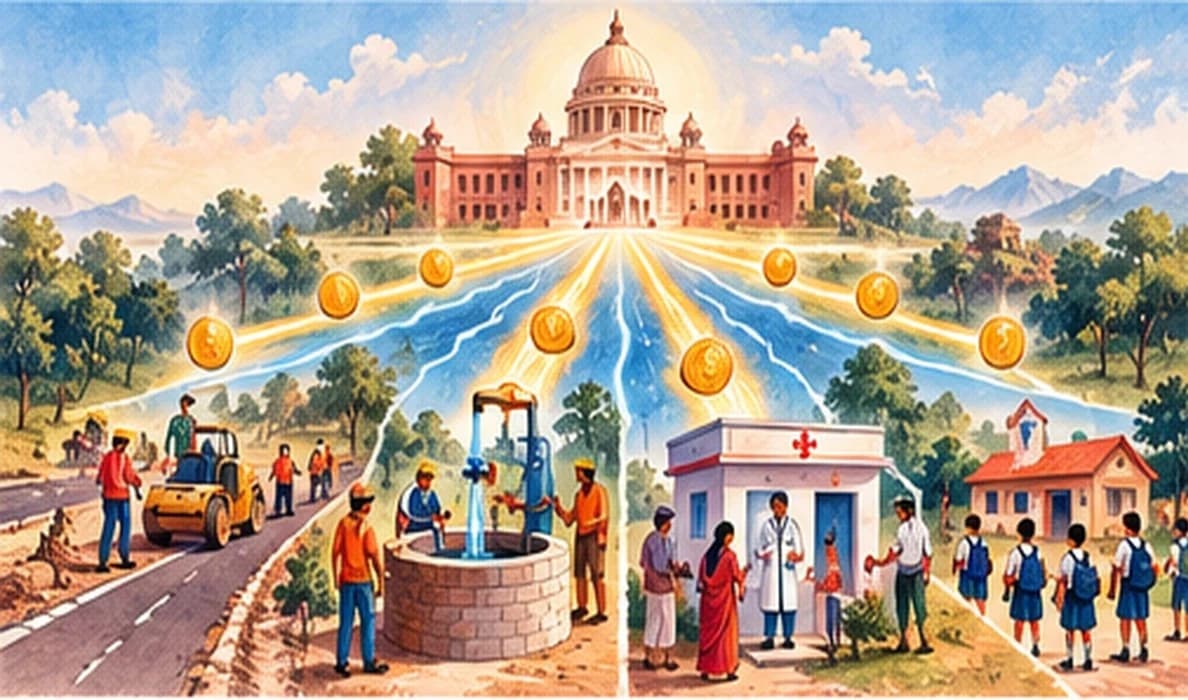
The subject of such schemes usually lies in the State List.
They exist to achieve national objectives and uniform implementation across the country — social goals such as reducing poverty, improving health services and raising food production.
Example: For most CSS today the Centre–state funding ratio is 60:40, and 90:10 for the North-Eastern and Himalayan states.
Too many schemes
States have long criticised the growing number of Centrally Sponsored Schemes.
A National Development Council (NDC) committee recommended capping CSS at one-sixth (1/6) of central Plan assistance to the states.
Central ministries kept introducing new schemes, and the financial limit was exceeded.
The number of CSS grew from 45 in 1969 to 190 by the end of the Fifth Five-Year Plan.
To resolve the states’ concerns, the NDC set up an Expert Group under K. Ramamurty. It reported that the criteria for continuing old schemes or starting new ones were too broad, and that fulfilling an important national objective must be an essential criterion.
Later, the Narasimha Rao Committee laid down criteria for forming a new CSS:
The committee suggested that schemes without high national importance could be transferred to the State Plans.
Restructuring & reform
After the 14th Finance Commission, the schemes were restructured into 29 Centrally Sponsored Schemes, in two categories: ‘core of the core’ and ‘core’ schemes.
Note: The restructuring itself followed the recommendations of a NITI Aayog sub-group of Chief Ministers (2015), after the 14th Finance Commission raised the states’ tax share.
Six schemes are ‘core of the core’ — the most crucial schemes for the Government of India:
The other 23 are ‘core’ schemes, for example:
The Chaturvedi Committee, appointed by the Planning Commission, suggested these measures:
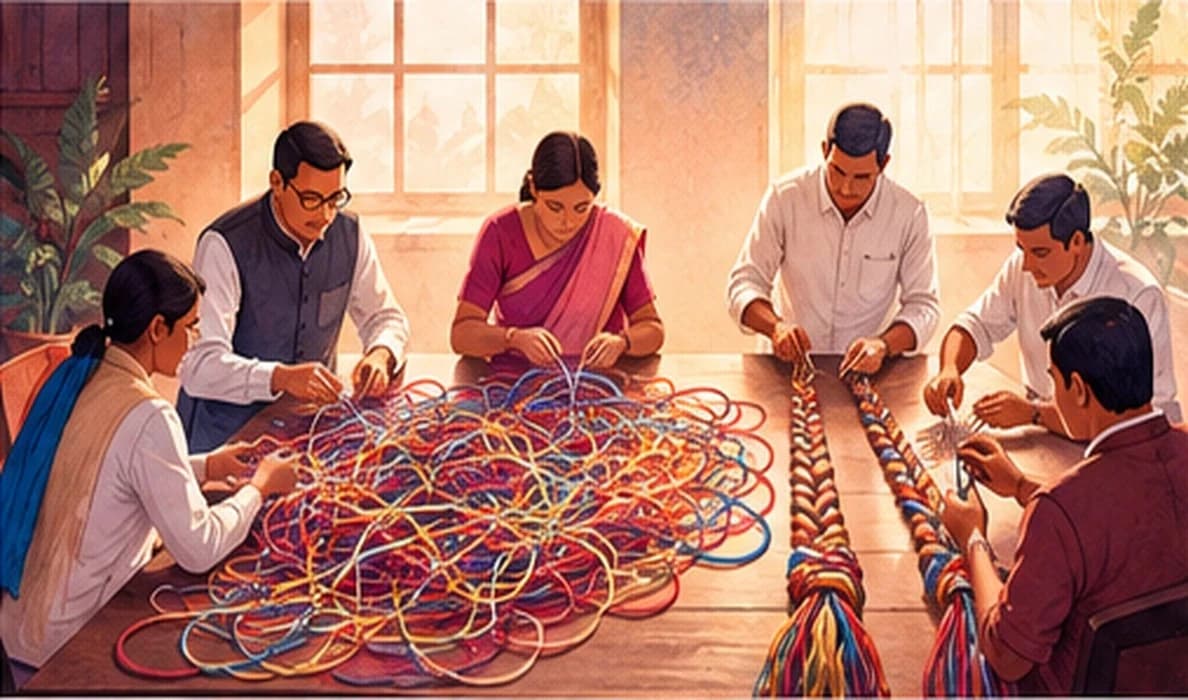
Limit the number of CSS. Keep only schemes needed as part of a broader convergence process, with large outlays that make an impact across states; weed out the rest or merge them with other schemes.
Group existing CSS into Flagship schemes (large outlays, major national issues), major sub-sectoral schemes (development problems of big sectors like agriculture, education and health), and sector-umbrella schemes (the range of problems in a sector).
Distribute CSS funds among states on transparent, notified guidelines posted on the ministries’ websites. States may be given incentives to spend more on health, education, skill development and rural infrastructure.
Vary the physical and financial norms according to each state’s needs, with a mechanism for flexibility against the normal CSS prescription.
Every CSS should have 20% flexi-funds (10% for Flagship schemes), which states use to design schemes suited to their own needs.
Each Flagship programme should provide a flexible pool of money to encourage and reward innovative practices.
CSS should be monitored and evaluated concurrently by independent monitors, with results put on the websites of the ministry concerned and the Planning Commission.
Where the friction lies
Friction between the Union and the states shows up in four broad areas: the use of constitutional offices and powers, money, policy and lawmaking, and security and crises.

Example: Bihar has long demanded special category status.
Emerging trends
Indian federalism is being pulled two ways at once: states assert themselves and gain fiscal room, while the Centre has grown stronger and more centralised in style. The GST Council shows both pulls in one institution.

Regional parties are pushing regional agendas — for example, the YSR Congress in Andhra Pradesh trying to enact a law reserving jobs for locals.
An indigenous working class that can be mobilised by the politics of cultural nationalism.
States have raised their voice against the amendments to the UAPA and the NIA Act.
Andhra Pradesh and West Bengal withdrew the ‘general consent’ they had given to the Central Bureau of Investigation (CBI).
Linguistic states have grown more united in asserting their identity.
Separatist and secessionist tendencies have given rise to regional movements in many parts of India — for example, in the North-East and in Jammu and Kashmir.
The formation of NITI Aayog brought the states into the planning process.
On the 14th Finance Commission’s advice, the states’ share of tax devolution rose from 32% to 42% of the divisible pool, but many CSS were withdrawn. Net result: states now have more autonomy in deciding how to spend — and should spend wisely.
A strong Centre and weakened regional parties, which have not been able to stop the ruling party from implementing its agenda.
Changes to Article 370 in Jammu and Kashmir were made without the approval of an elected state assembly.
The Citizenship Amendment Act and the proposed National Register of Citizens were largely unilateral decisions, taken amid strong protests from states.
A highly centralised style of governance:
Note: The three farm laws of 2020 were repealed in 2021 after farmers’ protests; agriculture is a State List subject.
The GST Council — made up of state finance ministers, with the Union Finance Minister as chairperson — is a superb template for cooperative federalism. It charts a new course for fiscal federalism, built on cooperation instead of self-interest.
How a decision is passed
Every decision needs a majority of at least three-fourths (75%) of the weighted votes of members present and voting.
The Centre’s vote carries one-third (33.3%) of the total weight and the states together carry two-thirds (66.6%). So the states cannot reach 75% without the Centre — the Centre has kept an effective veto.
States’ share of central taxes rose by ten percentage points — but many Centrally Sponsored Schemes were withdrawn in return, so the real gain is freedom over how money is spent.
1950 to the coalition era
How Centre–state relations changed as politics changed: from one-party dominance, through confrontation and the Emergency, to demands for autonomy and finally the coalition era.

1950–67
Example: The government dismissed was E.M.S. Namboodiripad’s.
The case for decentralisation
Yes — for reasons of principle, of practice and of development. Here is the case, with examples from Bihar and other states.

The principle of subsidiarity says social and political issues should be handled at the most immediate, local level.
India is multi-regional and multilingual, with people of many hues; decentralisation is the need of the hour.
States are the first to respond in a crisis.
States know local issues better.
More autonomy means more diverse policies, from which best practices emerge:
Some central policies, such as the freight equalisation policy, obstructed industrial development in states like Bihar.
Example: Under freight equalisation (1952–1993), minerals like coal and iron cost the same anywhere in India, so mineral-rich Bihar (including today’s Jharkhand) lost its natural advantage for setting up industries.
Sub-nationalism helps states develop: it is said to have contributed to the development of Tamil Nadu, Kerala and Maharashtra, while backward states like Bihar and Uttar Pradesh lack such sub-national consciousness.
For the 2016 question on Union–Bihar relations, these points from the answer apply directly to Bihar:
Freight equalisation held back Bihar’s industrial development.
Bihar’s 50% reservation for women in local bodies has become a model for other states and the Centre.
Bihar is cited as lacking the sub-national consciousness that helped southern states develop.
The demand for special category status is one of the live tension areas.
Indian political modernisation seems to have reached a stage where an open, decentralised system can cope with its problems while pushing ahead towards economic, social and political modernity.
Ultimately, Indian federalism — in the future as in the past — is likely to remain cooperative in nature. Going forward, the measures suggested by the Sarkaria and Punchhi Commissions should be taken into consideration.
Administrative relations · case study
The idea of a National Counter Terrorism Centre (NCTC) was born after the 26/11 Mumbai attacks, where many intelligence and operational failures showed the need for a federal agency with real-time, actionable intelligence to counter terrorist acts.

Example: The 26/11 attacks took place in November 2008; the government notified the NCTC order in February 2012, but it was put on hold after opposition from several Chief Ministers.
Giving the NCTC powers to search, arrest and investigate independently, without involving the state government, is seen as infringing the states’ powers — and it raised a political storm.
It breaks the principle of not giving intelligence agencies the power of arrest, which may cause operational problems for them.
The NCTC could be an ideal agency for all counter-terror intelligence, but that needs a strategic planning body, investigation and execution arms besides the intelligence unit — and the planning body must be kept separate from the execution agencies, each under its own professional head.
Any operation to search, catch or arrest a militant should include the state police for local help — navigation, translators, medical aid, and handling the dead, wounded and legal issues. Sustained investigation and surveillance are hard without local police.
The role of state police in prevention, containment and investigation cannot be ignored.
State police capacity should be strengthened — intelligence, surveillance, sophisticated weapons, modern technology and trained manpower.
So the central agency should work in coordination with the state police, not independently. A centralised NCTC is not acceptable to the states; we need a balanced approach with more local involvement.

Exam preparation
Every question this page prepares you for, with the parts that answer it.
“Indian federalism — in the future, as in the past — is likely to remain cooperative in nature.”
Curated for BPSC, UPSC & State PCS Civil Services Aspirants | Indian Polity Master Module