
Pillars, stupas, caves, sculpture and NBPW.स्तंभ, स्तूप, गुफाएँ, मूर्तियाँ और NBPW।
Bihar Art & Culture / बिहार की कला एवं संस्कृति
Art and Culture of Biharबिहार की कला और संस्कृतिFrom Mauryan Pillars to Folk Traditionsमौर्य स्तंभों से लोक परंपराओं तक
Explore Bihar's architecture, sculpture, painting and performing arts through their forms, techniques, sites and artists.बिहार के स्थापत्य, मूर्तिकला, चित्रकला और प्रदर्शन कलाओं को उनके रूपों, तकनीकों, स्थलों और कलाकारों के माध्यम से जानिए।
Sculpture, terracotta, painting and architecture.मूर्तिकला, टेराकोटा, चित्रकला और स्थापत्य।
Everyday life, fine lines and direct brushwork.दैनिक जीवन, महीन रेखाएँ और सीधा कूची-कार्य।
Constitutional duties to safeguard heritage.विरासत की रक्षा के संवैधानिक दायित्व।
Bihar's artistic inheritance / बिहार की कलात्मक विरासत
A connected history of court, community and craftदरबार, समुदाय और शिल्प का जुड़ा हुआ इतिहास
Mauryan and Gupta examples, Pala patronage, regional painting styles and Bihar's performing arts.मौर्य और गुप्त उदाहरण, पाल संरक्षण, क्षेत्रीय चित्र शैलियाँ और बिहार की प्रदर्शन कलाएँ।
Bihar has a rich historical past and was the cradle of many ancient civilisations. It has inherited various forms of art and painting from its past. The prominent art forms found in Bihar are painting, dance, music, sculpture and drama.बिहार का समृद्ध ऐतिहासिक अतीत रहा है और यह अनेक प्राचीन सभ्यताओं का उद्गम स्थल रहा है। इसे अपने अतीत से कला और चित्रकला के विविध रूप विरासत में मिले हैं। बिहार के प्रमुख कला रूप चित्रकला, नृत्य, संगीत, मूर्तिकला और नाटक हैं।
Mauryan foundationsमौर्यकालीन आधार
- •Art forms first developed to an advanced stage during the Mauryan period and are classified into court art and folk art.मौर्य काल में पहली बार कला रूप उन्नत अवस्था तक विकसित हुए; इन्हें दरबारी कला और लोक कला में वर्गीकृत किया जाता है।
- •Court art includes the 80-pillared assembly hall at Kumhrar, cave sites, monolithic pillars, stupas and sculpture; folk art is mainly sculpture and pottery.दरबारी कला में कुम्हरार का 80 स्तंभों वाला सभा भवन, गुफा स्थल, एकाश्म स्तंभ, स्तूप और मूर्तियाँ शामिल हैं; लोक कला मुख्यतः मूर्तियों और मृद्भांडों के रूप में है।
- •Large-scale stupa building (84,000 stupas) took place under Ashoka; Northern Black Polished Ware is found at Pataliputra among other sites.अशोक के शासन में बड़े पैमाने पर स्तूप निर्माण (84,000 स्तूप) हुआ; उत्तरी काली पॉलिशदार मृद्भांड अन्य स्थलों के साथ पाटलिपुत्र में मिले हैं।
After the Mauryasमौर्योत्तर निरंतरता
- •The development of the arts continued after the decline of the Mauryas; stupas continued to be built on a large scale.मौर्यों के पतन के बाद भी कलाओं का विकास जारी रहा; बड़े पैमाने पर स्तूपों का निर्माण चलता रहा।
- •Hundreds of caves were cut out of solid rock, mainly for monastic purposes.सैकड़ों गुफाएँ ठोस चट्टानों को काटकर बनाई गईं, मुख्यतः मठवासी उद्देश्यों के लिए।
- •General building activity followed, more or less, the Mauryan tradition. The influence of Gupta art is also seen in Bihar, and the Pala era was another phase of patronage.सामान्य निर्माण गतिविधि कमोबेश मौर्य परंपरा पर चली। बिहार में गुप्त कला का प्रभाव भी दिखता है, और पाल युग कला-संरक्षण का एक और चरण था।
Painting and performing artsचित्रकला और प्रदर्शन कलाएँ
- •Apart from Pala painting, Patna Kalam, Madhubani and Manjusha are important painting styles of Bihar.पाल चित्रकला के अतिरिक्त पटना कलम, मधुबनी और मंजूषा बिहार की महत्त्वपूर्ण चित्र शैलियाँ हैं।
- •The impact and examples of Sanjhi, Thangka and rock painting are also found in Bihar.सांझी, थांका और शैल चित्रकला के प्रभाव और उदाहरण भी बिहार में मिलते हैं।
- •Folk music, dance and drama are further forms of fine art, performed on different occasions in different regions.लोक संगीत, नृत्य और नाटक ललित कला के अन्य रूप हैं, जो अलग-अलग क्षेत्रों में अलग-अलग अवसरों पर किए जाते हैं।
Mauryan art and culture / मौर्य कला और संस्कृति
Stone, imperial patronage and folk practiceपत्थर, राजकीय संरक्षण और लोक परंपरा
Mauryan art combined imperial monuments with independent folk practice, in stone, brick, clay and pottery.मौर्य कला में राजकीय स्मारकों के साथ स्वतंत्र लोक परंपरा भी थी-पत्थर, ईंट, मिट्टी और मृद्भांडों में।
The Mauryan settingमौर्यकालीन पृष्ठभूमि
- •The Mauryas were the earliest empire builders and ruled over a vast geographical area.मौर्य सबसे आरंभिक साम्राज्य निर्माता थे, जिन्होंने विशाल भौगोलिक क्षेत्र पर शासन किया।
- •A strong political base, a centralised administrative system and favourable economic and environmental conditions created surplus production. This led to urbanisation and paved the way for a renaissance in art and culture.मज़बूत राजनीतिक आधार, केंद्रीकृत प्रशासनिक व्यवस्था तथा अनुकूल आर्थिक और पर्यावरणीय परिस्थितियों से अधिशेष उत्पादन हुआ। इससे नगरीकरण हुआ और कला-संस्कृति के क्षेत्र में पुनर्जागरण का मार्ग प्रशस्त हुआ।
- •After an interregnum of more than a thousand years since the Indus Valley Civilisation-which had full command over stone cutting and sculpting-sculptural art revived in the Mauryan period, with a transition from wood to stone.पत्थर तराशने और मूर्तिकला पर पूर्ण अधिकार रखने वाली सिंधु घाटी सभ्यता के अंत के बाद एक हज़ार से अधिक वर्षों के अंतराल पर मौर्य काल में मूर्तिकला का पुनरुत्थान हुआ और लकड़ी के स्थान पर पत्थर का उपयोग होने लगा।
- •Mauryan art flourished mainly under royal patronage, while folk art also developed alongside. It is best studied in two parts: (1) court art and (2) folk art.मौर्य कला मुख्यतः राजकीय संरक्षण में फली-फूली, साथ ही लोक कला का भी अच्छा विकास हुआ। इसका अध्ययन दो भागों में करना उचित है: (1) दरबारी कला और (2) लोक कला।
Court art: the palaceदरबारी कला: राजप्रासाद
- •The 80-pillared hall discovered at Kumhrar (Patna) is believed to be the site of the Mauryan palace.कुम्हरार (पटना) में मिला 80 स्तंभों वाला भवन मौर्य राजप्रासाद का स्थल माना जाता है।
- •The city of Pataliputra had wooden fortifications.पाटलिपुत्र नगर की क़िलेबंदी लकड़ी की थी।
- •In the words of Megasthenes: “The city formed a parallelogram, nine miles by one and a half miles, surrounded by a ditch 200 yards wide, and protected by a timber palisade with loopholes for the archers. The palisade was reinforced by 570 towers and had 64 gateways.”मेगस्थनीज़ के शब्दों में: “नगर नौ मील लंबा और डेढ़ मील चौड़ा एक समांतर चतुर्भुज था, जो 200 गज़ चौड़ी खाई से घिरा था और धनुर्धारियों के लिए छिद्रों वाली लकड़ी की प्राचीर से सुरक्षित था। प्राचीर 570 बुर्जों से सुदृढ़ थी और उसमें 64 द्वार थे।”
Pillars: types and purposeस्तंभ: प्रकार और उद्देश्य
- •Mauryan pillars are of two types: those attached to a hall (e.g. the pillars of Kumhrar's 80-pillared hall), which have no capital; and Ashoka's independent, free-standing pillars.मौर्य स्तंभ दो प्रकार के हैं: भवन से जुड़े स्तंभ (जैसे कुम्हरार के 80 स्तंभों वाले भवन के स्तंभ), जिनमें कोई शीर्ष नहीं है; और अशोक के स्वतंत्र, अकेले खड़े स्तंभ।
- •Free-standing pillars are in turn of two kinds: one with animal capitals and the other without any capital.स्वतंत्र स्तंभ भी दो प्रकार के हैं: पशु-शीर्ष वाले और बिना किसी शीर्ष वाले।
- •Free-standing pillars were symbols of political power and authority, meant to spread Buddhist ideology and court orders across the Mauryan empire.स्वतंत्र स्तंभ राजनीतिक शक्ति और सत्ता के प्रतीक थे; इनका उद्देश्य पूरे मौर्य साम्राज्य में बौद्ध विचारधारा और राजाज्ञाओं का प्रसार करना था।
Ashokan pillars in Bihar and beyondबिहार और अन्यत्र अशोक स्तंभ
- •Kolhua (Vaishali): lion capital but no inscription; the largest of all Mauryan pillars.कोल्हुआ (वैशाली): सिंह-शीर्ष है पर कोई अभिलेख नहीं; यह सभी मौर्य स्तंभों में सबसे बड़ा है।
- •Lauriya Areraj: no animal capital, but an inscription-one of Ashoka's first six pillar edicts, in early Brahmi characters.लौरिया अरेराज: पशु-शीर्ष नहीं, पर अभिलेख है-यह आरंभिक ब्राह्मी लिपि में अशोक के पहले छह स्तंभ-लेखों में से एक है।
- •Lauriya Nandangarh: with a lion capital.लौरिया नंदनगढ़: सिंह-शीर्ष के साथ।
- •Rampurva: two pillars, one with a lion capital and one with a bull capital.रामपुरवा: दो स्तंभ-एक सिंह-शीर्ष और एक वृषभ-शीर्ष वाला।
- •Ashokan pillars have also been found at Meerut, Topra (Delhi), Allahabad, Sankisa, Sanchi, Sarnath, Lumbini, Nigalisagar, Basarh and Kosam.अशोक स्तंभ मेरठ, टोपरा (दिल्ली), इलाहाबाद, संकिसा, साँची, सारनाथ, लुंबिनी, निगालीसागर, बसाढ़ और कोसम में भी मिले हैं।
Features of Mauryan pillarsमौर्य स्तंभों की विशेषताएँ
- •Usually made of buff-grey sandstone from the Chunar region (near Banaras); some of spotted red-and-white sandstone from the Mathura region.प्रायः चुनार क्षेत्र (बनारस के पास) के धूसर-भूरे बलुआ पत्थर से बने; कुछ मथुरा क्षेत्र के चित्तीदार लाल-सफ़ेद बलुआ पत्थर से भी।
- •Most edicts were in Pali and Prakrit; a few were written in Greek or Aramaic.अधिकांश स्तंभ-लेख पाली और प्राकृत में थे; कुछ यूनानी या अरामाइक भाषा में भी लिखे गए।
- •Four parts: a long shaft of a single stone (monolith); a lower capital shaped like an inverted lotus or inverted bell; a middle capital (abacus)-a circular or rectangular base engraved with animal figures or floral designs, with spoked wheels at Sarnath and Sanchi; and a vigorous capital figure (usually a bull, lion or elephant) standing on a square or circular abacus.चार भाग: एक ही पत्थर (एकाश्म) का लंबा दंड; उल्टे कमल या उल्टी घंटी के आकार का निचला शीर्ष; मध्य शीर्ष (फलक)-पशु आकृतियों या पुष्प अलंकरणों से उत्कीर्ण गोलाकार या आयताकार आधार, सारनाथ और साँची में आरेदार चक्र के साथ; और वर्गाकार या गोलाकार फलक पर खड़ी ओजस्वी शीर्ष आकृति (प्रायः वृषभ, सिंह या हाथी)।
- •Capital figures: four lions at Sanchi and Sarnath; a single bull at Rampurva; a single elephant at Sankisa.शीर्ष आकृतियाँ: साँची और सारनाथ में चार सिंह; रामपुरवा में एक वृषभ; संकिसा में एक हाथी।
- •Polished by agate burnishing; no base; circular in shape; tapering towards the top; monolithic; plain, without ornamentation.अकीक घिसाई (एगेट बर्निशिंग) तकनीक से पॉलिश; कोई आधार नहीं; गोलाकार; ऊपर की ओर पतले होते हुए; एकाश्म; बिना अलंकरण के, सादे।
- •The Sarnath pillar was built to mark the Buddha turning the wheel of law.सारनाथ स्तंभ बुद्ध द्वारा धर्मचक्र प्रवर्तन की स्मृति में बनाया गया था।
Similarities with Persian (Achaemenian) pillarsफ़ारसी (अखामनी) स्तंभों से समानताएँ
- •Both used polished stone and share sculptural motifs such as the lotus; both are made of stone and have animal figures as capitals.दोनों में पॉलिश किए पत्थर और कमल जैसे साझा मूर्ति-अलंकरण हैं; दोनों पत्थर के बने हैं और दोनों के शीर्ष पर पशु आकृतियाँ हैं।
- •The Mauryan idea of inscribing proclamations (Buddhist teachings and court orders) on pillars is traced to Persian pillars; inscriptions of both empires begin in the third person and move to the first person.स्तंभों पर घोषणाएँ (बौद्ध शिक्षाएँ और राजाज्ञाएँ) उत्कीर्ण कराने के मौर्य विचार का मूल फ़ारसी स्तंभों में माना जाता है; दोनों साम्राज्यों के अभिलेख तृतीय पुरुष में आरंभ होकर प्रथम पुरुष में आते हैं।
- •The 80-pillared hall at Kumhrar has many similarities with the ‘Hall of 100 Pillars’ built by Darius at his capital, Persepolis.कुम्हरार का 80 स्तंभों वाला भवन दारा (डेरियस) द्वारा अपनी राजधानी पर्सेपोलिस में बनवाए गए ‘100 स्तंभों वाले भवन’ से कई समानताएँ रखता है।
- •D.B. Spooner and Ananda K. Coomaraswamy held that Mauryan pillars were modelled on Achaemenian columns: such a stone tradition was absent in India before 300 BC, and Darius's conquest of north-western India created close cultural contact between Iran and India.डी.बी. स्पूनर और आनंद के. कुमारस्वामी का मत था कि मौर्य स्तंभ अखामनी स्तंभों के आदर्श पर बने: 300 ई.पू. से पहले भारत में ऐसी पाषाण परंपरा नहीं थी, और दारा द्वारा उत्तर-पश्चिमी भारत की विजय से ईरान और भारत के बीच घनिष्ठ सांस्कृतिक संपर्क बने।
- •Some Ashokan pillars using the Kharoshthi script and the Aramaic language further strengthen this view.खरोष्ठी लिपि और अरामाइक भाषा वाले कुछ अशोक स्तंभ इस मत को और बल देते हैं।
Differences from Achaemenian pillarsअखामनी स्तंभों से असमानताएँ
- •Historian Niharranjan Ray questioned the view of Achaemenian influence.इतिहासकार निहाररंजन रे ने अखामनी प्रभाव के इस मत पर प्रश्न उठाया।
- •Capital figures were absent on the Mauryan pillars of the Kumhrar hall, while Persepolis pillars have elaborate ones. Achaemenian capitals show two animals seated back to back; Ashokan capitals have four animals or one. Unicorns and inverted cups appear only on Achaemenian pillars, elephants only on Mauryan ones; Achaemenian pillars have no abacus.कुम्हरार भवन के मौर्य स्तंभों में शीर्ष आकृति नहीं थी, जबकि पर्सेपोलिस के स्तंभों में विस्तृत शीर्ष आकृतियाँ हैं। अखामनी शीर्षों में दो पशु पीठ से पीठ सटाकर बैठे हैं, जबकि अशोक स्तंभों में चार या एक पशु। गेंडा (यूनिकॉर्न) और उल्टा प्याला केवल अखामनी स्तंभों में और हाथी केवल मौर्य स्तंभों में है; अखामनी स्तंभों में फलक नहीं है।
- •The shape of the Mauryan lotus differs from the Persian; most Persian pillars have a fluted (ridged) surface, while Mauryan pillars are smooth.मौर्य कमल का आकार फ़ारसी से भिन्न है; अधिकांश फ़ारसी स्तंभों की सतह खाँचेदार है, जबकि मौर्य स्तंभ चिकने हैं।
- •Achaemenid pillars were generally part of a larger, more complex architectural scheme; Ashokan pillars were simple, independent, free-standing monuments.अखामनी स्तंभ प्रायः किसी बड़ी और जटिल स्थापत्य योजना का भाग थे; अशोक स्तंभ सरल, स्वतंत्र और अकेले खड़े स्मारक थे।
- •Persian shafts were built of separate stone segments placed one above another and stand on an inverted-lotus base; Mauryan shafts are monolithic and Ashokan pillars have no base.फ़ारसी दंड एक के ऊपर एक रखे पत्थर के अलग-अलग खंडों से बने हैं और उल्टे कमल के आधार पर खड़े हैं; मौर्य दंड एकाश्म हैं और अशोक स्तंभों का कोई आधार नहीं है।
- •Achaemenian pillars represent military victory; Ashokan pillars represent victory in terms of Dhammavijaya.अखामनी स्तंभ सैन्य विजय के प्रतीक हैं; अशोक स्तंभ धम्मविजय के प्रतीक हैं।
- •The sudden emergence of this stone tradition is also explained by the growth of empire and imperial taste.इस पाषाण परंपरा के अचानक उदय को साम्राज्य के विस्तार और राजसी रुचि के आलोक में भी समझाया जाता है।
Stupasस्तूप
- •A stupa is a burial mound covered with a hemispherical structure-a solid dome usually made of brick or stone.स्तूप एक समाधि-टीला है जिस पर अर्धगोलाकार संरचना होती है-प्रायः ईंट या पत्थर का ठोस गुंबद।
- •After the Buddha's departure (Mahaparinirvana), his physical remains were divided into eight parts and stupas were built over them. Pre-Mauryan stupas were built over relics (dhatu); of the eight, remains have been found at the Piprahwa stupa.बुद्ध के महापरिनिर्वाण के बाद उनके भौतिक अवशेष आठ भागों में बाँटे गए और उन पर स्तूप बनाए गए। मौर्यपूर्व स्तूप धातु (अवशेषों) पर बनाए गए थे; आठ में से पिपरहवा स्तूप के अवशेष मिले हैं।
- •Stupas were really built during Ashoka's reign; he is said to have built over 84,000 stupas.स्तूपों का वास्तविक निर्माण अशोक के शासनकाल में हुआ; कहा जाता है कि उन्होंने 84,000 से अधिक स्तूप बनवाए।
- •Examples: the Mahastupa at Sanchi by Ashoka (later developed during the Shunga period) and the Dharmarajika stupa at Sarnath by Ashoka.उदाहरण: अशोक द्वारा निर्मित साँची का महास्तूप (बाद में शुंग काल में विकसित) और सारनाथ में अशोक द्वारा निर्मित धर्मराजिका स्तूप।
Stupa architecture and materialsस्तूप की संरचना और सामग्री
- •A stupa consists of a cylindrical drum with a circular anda, and a harmika and chhatra on top.स्तूप में एक बेलनाकार ढोल पर गोलाकार अंड, और शीर्ष पर हर्मिका तथा छत्र होते हैं।
- •Anda: a hemispherical mound symbolising the mound of earth used to cover the Buddha's remains (many stupas held actual relics). Harmika: a square railing on top of the mound. Chhatra: a central pillar supporting a triple umbrella.अंड: बुद्ध के अवशेषों को ढकने वाली मिट्टी के टीले का प्रतीक अर्धगोलाकार टीला (कई स्तूपों में वास्तविक अवशेष रखे गए)। हर्मिका: टीले के ऊपर वर्गाकार वेष्टनी। छत्र: तिहरी छतरी को थामे केंद्रीय स्तंभ।
- •Vedika: a railing all round, built of stone and brilliantly polished. Torana: gateways on the four sides.वेदिका: चारों ओर की वेष्टनी, पत्थर की बनी और चमकदार पॉलिश वाली। तोरण: चारों दिशाओं में प्रवेश द्वार।
- •The core was of unburnt brick and the outer surface of burnt brick, covered with a thick layer of plaster and medhi; the toranas were decorated with wooden sculptures.भीतरी भाग कच्ची ईंटों का और बाहरी सतह पकी ईंटों की होती थी, जिस पर प्लास्टर और मेधि की मोटी परत चढ़ाई जाती थी; तोरणों को लकड़ी की मूर्तियों से सजाया जाता था।
- •The whole structure was itself a place of worship; the vedika and torana carry beautiful engravings on the stambha and ushnisha, with folk and Buddhist symbols.पूरी संरचना स्वयं उपासना-स्थल थी; वेदिका और तोरण के स्तंभ तथा उष्णीष पर लोक और बौद्ध प्रतीकों से जुड़ी सुंदर नक्काशी है।
Cave architectureगुफा स्थापत्य
- •Cave architecture began under the Mauryas by cutting the rocks of hills; though excavated in hard granite, the interior walls are polished like glass.मौर्य काल में पहाड़ियों की चट्टानें काटकर गुफा स्थापत्य आरंभ हुआ; कठोर ग्रेनाइट में खोदे जाने के बावजूद भीतरी दीवारें काँच की तरह चमकदार हैं।
- •Caves were generally used as viharas (living quarters) by Jain and Buddhist monks. Ashoka and his grandson Dasharatha built them for the Ajivikas to reside in.गुफाएँ प्रायः जैन और बौद्ध भिक्षुओं के विहार (निवास) के रूप में प्रयुक्त होती थीं। अशोक और उनके पौत्र दशरथ ने इन्हें आजीविकों के निवास के लिए बनवाया।
- •In Gaya, three caves can be seen in the Nagarjuni hills and four in the Barabar hills-including the Sudama, Karna Chaupar and Lomas Rishi (most famous) caves.गया में नागार्जुनी पहाड़ियों पर तीन और बराबर पहाड़ियों पर चार गुफाएँ देखी जा सकती हैं-जिनमें सुदामा, कर्ण चौपड़ और लोमस ऋषि (सबसे प्रसिद्ध) गुफाएँ हैं।
- •The Lomas Rishi cave in the Barabar hills has an ornamented arched entrance.बराबर पहाड़ियों की लोमस ऋषि गुफा का प्रवेश द्वार अलंकृत मेहराबदार है।
Sculpture: court and folkमूर्तिकला: दरबारी और लोक
- •Mauryan sculpture includes both court and folk art; sculptures are made of stone, metal and clay.मौर्य मूर्तिकला में दरबारी और लोक-दोनों कलाएँ शामिल हैं; मूर्तियाँ पत्थर, धातु और मिट्टी की हैं।
- •Court stone sculpture is found in three forms: cut from rock, carved on monolithic pillars, and made as independent sculptures.दरबारी पाषाण मूर्तियाँ तीन रूपों में मिलती हैं: चट्टान काटकर बनी, एकाश्म स्तंभों पर उत्कीर्ण, और स्वतंत्र रूप से बनी।
- •The elephant cut from the rock at Dhauli (Odisha) looks natural, as if ready to emerge from the stone; an elephant is also engraved on the Kalsi (Dehradun) rock. Both show the excellence achieved in stone sculpture.धौली (ओडिशा) में चट्टान काटकर बना हाथी स्वाभाविक दिखता है, मानो पत्थर से बाहर आने को तैयार हो; कालसी (देहरादून) की चट्टान पर भी हाथी उत्कीर्ण है। दोनों पाषाण मूर्तिकला की उत्कृष्टता के आदर्श उदाहरण हैं।
- •Kautilya mentions metal sculptures.कौटिल्य ने धातु की मूर्तियों का उल्लेख किया है।
- •Folk sculpture: independently made sculptures and clay sculptures are found mostly in folk art.लोक मूर्तिकला: स्वतंत्र रूप से बनी मूर्तियाँ और मिट्टी की मूर्तियाँ अधिकतर लोक कला में मिलती हैं।
Folk art and potteryलोक कला और मृद्भांड
- •Folk art was developed by independent artisans without any royal patronage.लोक कला का विकास स्वतंत्र कारीगरों ने बिना किसी राजकीय संरक्षण के किया।
- •Examples: the Yaksha from Parkham village (Mathura district), also called Manibhadra; the Didarganj (Patna) Yakshini of polished sandstone, displayed at Patna Museum; a laughing boy from Bulandibagh; two nude images of Jain saints from Lohanipur (Patna); and a three-faced Yaksha from Rajghat (Varanasi).उदाहरण: मथुरा ज़िले के परखम गाँव से मिली यक्ष प्रतिमा, जिसे मणिभद्र भी कहते हैं; पटना संग्रहालय में प्रदर्शित, पॉलिशदार बलुआ पत्थर की दीदारगंज (पटना) यक्षिणी; बुलंदीबाग से हँसता हुआ बालक; लोहानीपुर (पटना) से जैन संतों की दो नग्न प्रतिमाएँ; और राजघाट (वाराणसी) से त्रिमुखी यक्ष प्रतिमा।
- •These images are of grey sandstone still sparkling with Mauryan polish; their bodies are decorated with clothes and ornaments.ये प्रतिमाएँ धूसर बलुआ पत्थर की हैं, जो आज भी मौर्य पॉलिश से चमकती हैं; इनके शरीर वस्त्रों और आभूषणों से सजे हैं।
- •Mauryan pottery is known as Northern Black Polished Ware (NBPW): black paint and a highly lustrous finish, generally used as a luxury item. Kosambi and Pataliputra were its centres.मौर्य मृद्भांड उत्तरी काली पॉलिशदार मृद्भांड (NBPW) कहलाते हैं: काला रंग और अत्यधिक चमकदार सतह, प्रायः विलासिता की वस्तु के रूप में प्रयुक्त। कौशांबी और पाटलिपुत्र इसके केंद्र थे।
Conclusion / निष्कर्ष
Mauryan art not only revived art and culture in India but also laid a solid foundation for it to flourish in the days to come.मौर्य कला ने न केवल भारत में कला और संस्कृति को पुनर्जीवित किया, बल्कि आने वाले समय में उसके फलने-फूलने की ठोस नींव भी रखी।
Gupta-era examples in Bihar / बिहार में गुप्तकालीन उदाहरण
Sculpture, terracotta, stupas and findsमूर्तिकला, टेराकोटा, स्तूप और प्राप्तियाँ
Sculpture, terracotta, stupas, coins and seals mark the Gupta-era examples found across Bihar.मूर्तियाँ, टेराकोटा, स्तूप, सिक्के और मुहरें बिहार में मिले गुप्तकालीन उदाहरण हैं।
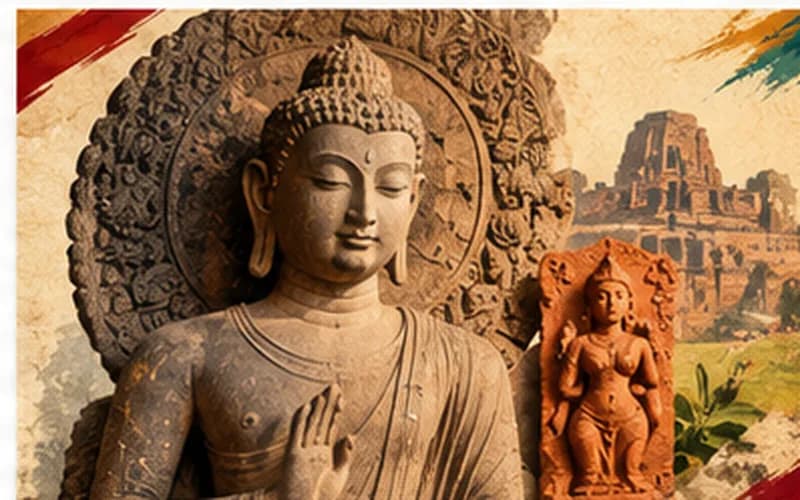
Sculpture and terracottaमूर्तिकला और टेराकोटा
- •The influence of Gupta art is seen in Bihar. Its sculpture shares the refinement, rhythmic balance, sensitive modelling and spiritual glow of Mathura and Sarnath, the main centres of Gupta art.बिहार में गुप्त कला का प्रभाव दिखता है। यहाँ की मूर्तिकला में गुप्त कला के प्रमुख केंद्रों-मथुरा और सारनाथ-जैसा परिष्कार, लयबद्ध संतुलन, संवेदनशील गढ़न और आध्यात्मिक आभा है।
- •Examples: the Bodh Gaya image of the Buddha, and a stone head of the Buddha found at Kumhrar.उदाहरण: बोधगया की बुद्ध प्रतिमा, और कुम्हरार में मिला बुद्ध का पाषाण शीर्ष।
- •Numerous terracotta human and animal figurines, and terracotta plaques representing the Buddha, mithunas, gandharvas and dwarapalas.अनेक टेराकोटा मानव और पशु मूर्तियाँ, तथा बुद्ध, मिथुन, गंधर्व और द्वारपालों की आकृतियों वाली टेराकोटा पट्टिकाएँ।
- •A rare masterpiece of Gupta art is the colossal bronze image of the Buddha from Sultanganj.गुप्त कला की एक दुर्लभ उत्कृष्ट कृति सुल्तानगंज की विशाल कांस्य बुद्ध प्रतिमा है।
Stupas, coins and sealsस्तूप, सिक्के और मुहरें
- •Gupta-era stupas are cylindrical in shape and are found at Giriak in Patna and Kesariya in East Champaran.गुप्तकालीन स्तूप बेलनाकार हैं और पटना के गिरियक तथा पूर्वी चंपारण के केसरिया में मिलते हैं।
- •Different forms of Gupta coins and seals have been recovered from Hajipur, Vaishali and Patna.हाजीपुर, वैशाली और पटना से गुप्तकालीन सिक्कों और मुहरों के विभिन्न रूप मिले हैं।
Pala art and architecture / पाल कला और स्थापत्य
Bronze, basalt, terracotta and monastic centresकांस्य, बेसाल्ट, टेराकोटा और मठ केंद्र
Pala patronage linked sculpture, terracotta, painting and architecture, especially around Buddhist centres.पाल संरक्षण ने मूर्तिकला, टेराकोटा, चित्रकला और स्थापत्य को जोड़ा, विशेषकर बौद्ध केंद्रों के आसपास।
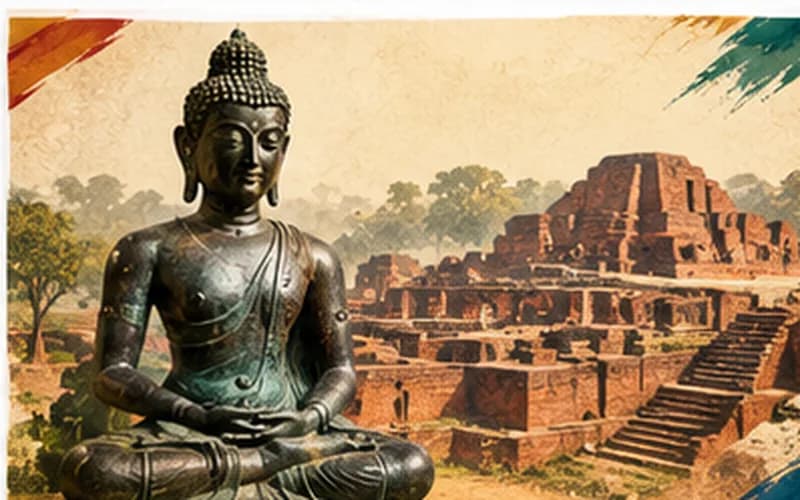
The Pala era / पाल युग
The Pala dynasty ruled the Bihar and Bengal region from the 8th to the 12th century. Besides being astute diplomats and military conquerors, the Pala rulers were great patrons of art and architecture; the new style that developed under their patronage is called Pala art. It is studied under sculpture, terracotta figurines, painting and architecture.पाल वंश ने 8वीं से 12वीं शताब्दी तक बिहार और बंगाल क्षेत्र पर शासन किया। कुशल कूटनीतिज्ञ और सैन्य विजेता होने के साथ पाल शासक कला और स्थापत्य के महान संरक्षक भी थे; उनके संरक्षण में विकसित नई शैली पाल कला कहलाती है। इसका अध्ययन मूर्तिकला, टेराकोटा मूर्तियों, चित्रकला और स्थापत्य के अंतर्गत किया जाता है।
The Pala school of sculptureपाल मूर्तिकला शैली
- •Recognised as a distinct phase of Indian art and noted for the artistic genius of Bengal's sculptors; a new style of stone and bronze sculpture emerged.भारतीय कला के एक विशिष्ट चरण के रूप में मान्य और बंगाल के मूर्तिकारों की कलात्मक प्रतिभा के लिए प्रसिद्ध; पत्थर और कांस्य मूर्तिकला की नई शैली उभरी।
- •Its main exponents were Dhiman and Vithpal, contemporaries of Dharmapala and Devapala respectively.इस शैली के प्रमुख प्रवर्तक धीमान और विठपाल थे, जो क्रमशः धर्मपाल और देवपाल के समकालीन थे।
Bronze sculptureकांस्य मूर्तिकला
- •Bronze was cast by the cire perdue (lost-wax) method; the sculptures are generally ornamented.कांस्य की ढलाई ‘सिरे पर्ड्यू’ (मधूच्छिष्ट/लुप्त-मोम) विधि से होती थी; मूर्तियाँ प्रायः अलंकृत हैं।
- •The Buddhist centres of Kukrihar and Nalanda were the main centres; at Nalanda it appears to have formed part of the curriculum.कुर्किहार और नालंदा के बौद्ध केंद्र इसके प्रमुख केंद्र थे; नालंदा में यह पाठ्यक्रम का अंग प्रतीत होता है।
- •Themes are largely Buddhist; a few Brahmanical images of Tantric influence-Ganga, Balarama (also from Kukrihar), Vishnu and Surya-have been recovered from Nalanda.विषय मुख्यतः बौद्ध हैं; तांत्रिक प्रभाव वाली कुछ ब्राह्मणवादी प्रतिमाएँ-गंगा, बलराम (कुर्किहार से भी), विष्णु और सूर्य-नालंदा से मिली हैं।
- •Bronzes from Nalanda and Kukrihar mostly portray the Buddha and Bodhisattvas-Avalokiteshvara, Manjushri, Maitreya and Vajrapani-and Buddhist deities such as Jambhala, Hayagriva, Tara, Prajnaparamita, Vasudhara, Hariti and Parnashavari.नालंदा और कुर्किहार की कांस्य प्रतिमाएँ अधिकतर बुद्ध और बोधिसत्वों-अवलोकितेश्वर, मंजुश्री, मैत्रेय और वज्रपाणि-तथा जम्भल, हयग्रीव, तारा, प्रज्ञापारमिता, वसुधारा, हारीति और पर्णशबरी जैसे बौद्ध देवी-देवताओं को दर्शाती हैं।
- •The Buddha is shown standing with the right hand in varada (blessing) or abhaya mudra, or seated in bhumisparsha (enlightenment) and dharmachakra (first sermon) mudras.बुद्ध को दाहिने हाथ की वरद (आशीर्वाद) या अभय मुद्रा में खड़े, अथवा भूमिस्पर्श (ज्ञान-प्राप्ति) और धर्मचक्र (प्रथम उपदेश) मुद्रा में बैठे दिखाया गया है।
Notable bronzesप्रमुख कांस्य प्रतिमाएँ
- •The largest bronze image was recovered from Sultanganj and is now in the Birmingham Museum, UK (Sultanganj Buddha).सबसे बड़ी कांस्य प्रतिमा सुल्तानगंज से मिली, जो अब बर्मिंघम संग्रहालय, ब्रिटेन में है (सुल्तानगंज बुद्ध)।
- •Crowned image of the Buddha, Kukrihar.बुद्ध की मुकुटधारी प्रतिमा, कुर्किहार।
- •The standing Buddha from Nalanda with the right hand in abhaya mudra is one of the finest bronzes of the Eastern School for its dignity, convincing modelling and inner poise.नालंदा की अभय मुद्रा वाली खड़ी बुद्ध प्रतिमा अपनी गरिमा, विश्वसनीय गढ़न और आंतरिक संतुलन के कारण पूर्वी शैली की श्रेष्ठतम कांस्य कृतियों में है।
- •Standing Tara from Nalanda; a bronze Balarama from Kurkihar.नालंदा की खड़ी तारा; कुर्किहार की कांस्य बलराम प्रतिमा।
Stone sculptureपाषाण मूर्तिकला
- •Elegant in style, precise and technically accomplished, with a hard outline akin to metal work.शैली में सुरुचिपूर्ण, सटीक और तकनीकी रूप से दक्ष, धातु-कार्य जैसी कठोर रूपरेखा के साथ।
- •Mostly made of black basalt, readily available in the hills of the Santhal Pargana region and Munger district.अधिकतर काले बेसाल्ट पत्थर की, जो संथाल परगना क्षेत्र और मुंगेर ज़िले की पहाड़ियों में सहज उपलब्ध था।
- •Generally only the front of the body is shown; the back is hardly worked artistically.प्रायः शरीर का अग्रभाग ही दिखाया गया है; पिछले भाग पर कलात्मक काम मुश्किल से हुआ है।
- •Most images are of gods and goddesses, especially Bodhisattvas, with key events of the Buddha's life specially depicted; Brahmanical gods such as Vishnu and Shiva and Jain sculptures are found but are fewer.अधिकांश प्रतिमाएँ देवी-देवताओं, विशेषकर बोधिसत्वों की हैं, और बुद्ध के जीवन की प्रमुख घटनाओं का विशेष चित्रण है; विष्णु, शिव जैसे ब्राह्मणवादी देवता और जैन मूर्तियाँ भी हैं, पर अपेक्षाकृत कम।
- •All the images are excellent and show the artist's mature craftsmanship; ornamental decoration makes them more attractive.सभी प्रतिमाएँ उत्कृष्ट हैं और कलाकार के परिपक्व शिल्प-कौशल को दर्शाती हैं; अलंकरण इन्हें और आकर्षक बनाता है।
Limitations of Pala sculptureपाल मूर्तिकला की सीमाएँ
- •Criticised for lacking originality and the simple aesthetic sense easily found in Gupta sculpture.मौलिकता की कमी और गुप्त मूर्तिकला में सहज दिखने वाले सरल सौंदर्यबोध के अभाव के लिए आलोचना होती है।
- •Images are heavily loaded with ornaments, giving them an artificial look.प्रतिमाएँ आभूषणों से अत्यधिक लदी हैं, जिससे वे कृत्रिम-सी लगती हैं।
- •Human beauty is imposed even on images of gods and goddesses; Tantric influence shows in intertwined female figures with apparent sensuousness.देवी-देवताओं की प्रतिमाओं में भी मानवीय सौंदर्य आरोपित करने का प्रयास है; तांत्रिक प्रभाव से गुँथी स्त्री आकृतियों में स्पष्ट कामुकता दिखती है।
Terracotta figurinesटेराकोटा मूर्तियाँ
- •Artistic and charming; notable images have been recovered from the remains of Vikramashila Mahavihara. They were made to adorn walls.कलात्मक और मनोहर; विक्रमशिला महाविहार के अवशेषों से उल्लेखनीय प्रतिमाएँ मिली हैं। इन्हें दीवारों की सजावट के लिए बनाया गया था।
- •They depict religious as well as day-to-day scenes, so the living standards, dress and activities of ordinary people of the period can be reconstructed from them.इनमें धार्मिक और दैनिक जीवन-दोनों के दृश्य हैं, इसलिए इनके आधार पर उस काल के आम लोगों के जीवन-स्तर, वेशभूषा और गतिविधियों का इतिहास पुनर्निर्मित किया जा सकता है।
- •Along with the Buddha and Bodhisattvas, images of Vishnu, Varaha, Surya, Hanuman and Ardhanarishvara show the influence of Hinduism.बुद्ध और बोधिसत्वों के साथ विष्णु, वराह, सूर्य, हनुमान और अर्धनारीश्वर की प्रतिमाएँ हिंदू धर्म के प्रभाव को दर्शाती हैं।
- •A seated lady holds a mirror in one hand, admiring her beauty, and applies vermilion to her head with the other; she is beautified not only by ornaments but by an innocent face, slender waist and prominent bust.एक बैठी स्त्री एक हाथ में दर्पण लेकर अपने सौंदर्य को निहार रही है और दूसरे हाथ से माँग में सिंदूर लगा रही है; उसे केवल आभूषणों से ही नहीं, बल्कि चेहरे की मासूमियत, पतली कमर और उभरे वक्ष से भी सुंदर रूप दिया गया है।
Manuscript paintingपांडुलिपि चित्रकला
- •Pala paintings survive in two forms: manuscript painting and mural painting.पाल चित्र दो रूपों में उपलब्ध हैं: पांडुलिपि चित्रकला और भित्ति चित्रकला।
- •Illustrated manuscripts were generally written on palm leaves-Ashtasahasrika, Prajnaparamita and Panchraksha, now preserved at Cambridge University, with around a hundred miniatures.चित्रित पांडुलिपियाँ प्रायः ताड़पत्रों पर लिखी जाती थीं-अष्टसाहस्रिका, प्रज्ञापारमिता और पंचरक्षा, जो अब कैम्ब्रिज विश्वविद्यालय में संरक्षित हैं और जिन पर लगभग सौ लघुचित्र हैं।
- •They depict scenes from the Buddha's life and Mahayana gods and goddesses in various poses.इनमें बुद्ध के जीवन के दृश्य और विभिन्न मुद्राओं में महायान संप्रदाय के देवी-देवता हैं।
- •Colours: primary-red, white, blue and black; secondary-green, violet, light pink and grey.रंग: प्राथमिक-लाल, सफ़ेद, नीला और काला; द्वितीयक-हरा, बैंगनी, हल्का गुलाबी और धूसर।
- •They continue the Ajanta tradition with the sensuous bias of eastern India; delicate and nervous lines, sensuous elegance and a linear, decorative accent mark them. Tantric influence is evident, and some qualities resemble Nepalese and Burmese art.ये पूर्वी भारत के ऐंद्रिक झुकाव के साथ अजंता परंपरा को आगे बढ़ाते हैं; कोमल और चपल रेखाएँ, ऐंद्रिक लालित्य और रैखिक-अलंकारिक बल इनकी पहचान हैं। तांत्रिक प्रभाव स्पष्ट है और कुछ गुण नेपाली तथा बर्मी कला से मिलते हैं।
Mural paintingभित्ति चित्रकला
- •Mural painting has been found at Sarai Sthal, Nalanda. At the base of a granite platform, geometric flowers and images of animals and humans remain visible even after fading.नालंदा के सराय स्थल पर भित्ति चित्र मिले हैं। ग्रेनाइट के एक चबूतरे के निचले भाग पर ज्यामितीय फूल और पशुओं तथा मनुष्यों की आकृतियाँ धुँधली होने के बाद भी दिखती हैं।
- •Images of elephants, horses, dancers and Bodhisattvas can be seen.हाथियों, घोड़ों, नर्तकियों और बोधिसत्वों की आकृतियाँ देखी जा सकती हैं।
- •The influence of Ajanta and Bagh cave painting is clear, as the way of making images and the manner of painting are almost the same.अजंता और बाघ गुफा चित्रों का प्रभाव स्पष्ट है, क्योंकि आकृतियाँ बनाने और चित्रण का ढंग लगभग समान है।
Monasteries (viharas)विहार
- •Pala kings contributed significantly to architecture-mostly in brick, some in stone-influenced by religion, especially Buddhism, and by Hindu temples.पाल राजाओं ने स्थापत्य में उल्लेखनीय योगदान दिया-अधिकतर ईंट और कुछ पत्थर से-जो धर्म, विशेषकर बौद्ध धर्म, और हिंदू मंदिरों से प्रभावित था।
- •They built viharas and temples at Nalanda, Vikramashila, Odantapuri and Somapura in different styles; the viharas served as residences for monks and as centres of learning.उन्होंने नालंदा, विक्रमशिला, ओदंतपुरी और सोमपुर में अलग-अलग शैलियों में विहार और मंदिर बनवाए; विहार भिक्षुओं के निवास और शिक्षा केंद्र थे।
- •Odantapuri monastery, built by Devapala, was so significant that it served as the model for the first monastery built in Tibet.देवपाल द्वारा निर्मित ओदंतपुरी महाविहार इतना महत्त्वपूर्ण था कि वह तिब्बत में बने पहले मठ का आदर्श बना।
- •Vikramashila monastery, built by Dharmapala, is the most important and most discussed; ruins of a temple and a stupa have been found there. Somapura monastery (present-day Bangladesh) is attributed to Dharmapala, though this is not clear.धर्मपाल द्वारा निर्मित विक्रमशिला महाविहार सबसे महत्त्वपूर्ण और सर्वाधिक चर्चित है; वहाँ एक मंदिर और एक स्तूप के अवशेष मिले हैं। सोमपुर महाविहार (वर्तमान बांग्लादेश) धर्मपाल का माना जाता है, यद्यपि यह स्पष्ट नहीं है।
Templesमंदिर
- •Pala temples express the local Vanga style; Mahipala built hundreds of temples and buildings at Kashi.पाल मंदिर स्थानीय वंग शैली को व्यक्त करते हैं; महिपाल ने काशी में सैकड़ों मंदिर और भवन बनवाए।
- •The Vishnupad temple at Gaya has an umbrella-like hemispherical mandapa; the Shiva temple at Konch (Gaya district) is architecturally important for its pinnacle and corbelled lattice window.गया के विष्णुपद मंदिर में छतरी जैसा अर्धगोलाकार मंडप है; गया ज़िले के कोंच का शिव मंदिर अपने शिखर और टोड़ेदार जालीदार खिड़की के कारण स्थापत्य की दृष्टि से महत्त्वपूर्ण है।
- •The 9th-century rock-cut temple at Kahalgaon (Bhagalpur) has a gabled vaulted roof, characteristic of South Indian architecture.कहलगाँव (भागलपुर) का 9वीं शताब्दी का शैलकृत मंदिर अपनी ढलवाँ मेहराबी छत के कारण रोचक है, जो दक्षिण भारतीय स्थापत्य की विशेषता है।
- •The 9th-century Siddheshwara Mahadeva temple at Barakar (Burdwan district), with a tall curving shikhara crowned by a large amalaka, is an example of the early Pala style.बर्दवान ज़िले के बराकर का 9वीं शताब्दी का सिद्धेश्वर महादेव मंदिर, जिसके ऊँचे वक्र शिखर पर बड़ा आमलक है, आरंभिक पाल शैली का उदाहरण है।
- •Many 9th–12th-century temples at Telkupi (Purulia district), showing awareness of all known Nagara sub-types, were submerged when dams were built. Several surviving Purulia temples use black-to-grey basalt and chlorite stone pillars and arched niches.तेलकुपी (पुरुलिया ज़िला) के 9वीं–12वीं शताब्दी के अनेक मंदिर, जिनमें सभी ज्ञात नागर उप-प्रकारों की जानकारी झलकती थी, बाँध बनने पर जलमग्न हो गए। पुरुलिया के बचे हुए मंदिरों में काले से धूसर बेसाल्ट और क्लोराइट पत्थर के स्तंभ तथा मेहराबदार ताख़ हैं।
- •Local vernacular building traditions of Bengal also shaped temple style-most prominently the curved, sloping bamboo roof of the Bengali hut.बंगाल की स्थानीय लोक निर्माण परंपराओं ने भी मंदिर शैली को प्रभावित किया-सबसे प्रमुख रूप से बंगाली झोपड़ी की बाँस की वक्र, ढलवाँ छत।
Other worksअन्य निर्माण
- •Rampala founded a new town, Ramavati, and built several buildings and temples there.रामपाल ने रामावती नामक नया नगर बसाया और वहाँ अनेक भवन और मंदिर बनवाए।
- •The remains at Antichak and some buildings of Nalanda show the maturity of Pala architecture.अंतीचक के अवशेष और नालंदा के कुछ भवन पाल स्थापत्य की परिपक्वता दर्शाते हैं।
- •Ponds were also built adjoining chaityas and viharas.चैत्यों और विहारों से सटे तालाब भी बनवाए गए।
Conclusion / निष्कर्ष
Through its quality sculpture, magnificent architecture and interesting painting-especially manuscript painting-the Pala era gave continuity to the growth of art and culture in this eastern region.अपनी उत्कृष्ट मूर्तिकला, भव्य स्थापत्य और रोचक चित्रकला-विशेषकर पांडुलिपि चित्रकला-के माध्यम से पाल युग ने इस पूर्वी क्षेत्र में कला और संस्कृति के विकास को निरंतरता दी।
Patna School of Painting / पटना स्कूल ऑफ पेंटिंग
Patna Kalam: common life, paintedपटना कलम: आम जीवन का सजीव चित्रण
A miniature tradition shaped by Mughal, Company and local influences, which made ordinary people and their work its subject.मुगल, कंपनी और स्थानीय प्रभावों से बनी लघुचित्र परंपरा, जिसने आम लोगों और उनके कामकाज को अपना विषय बनाया।
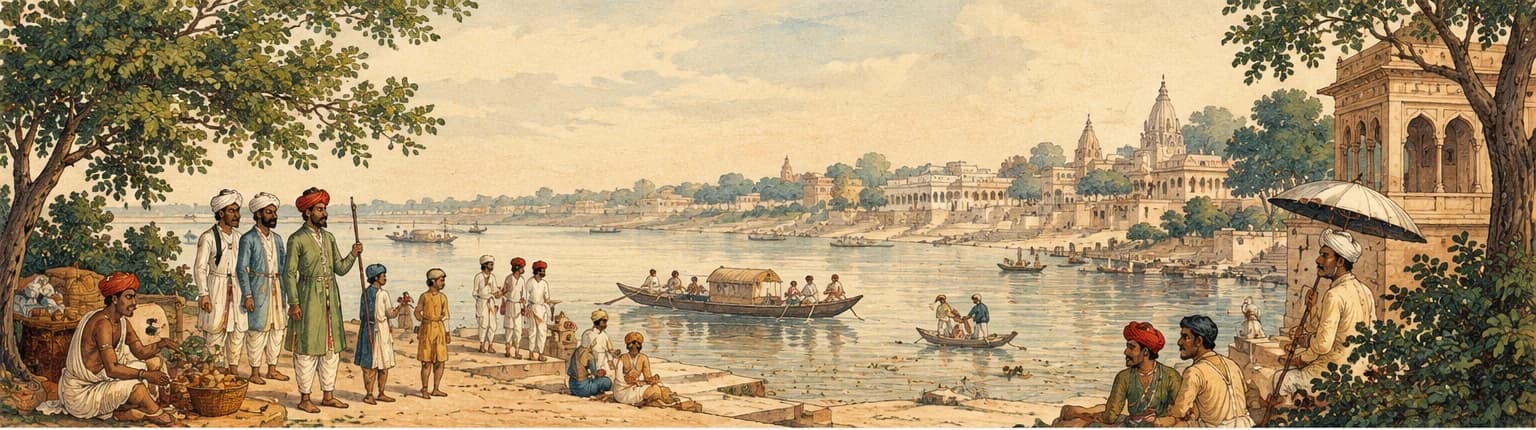
The Patna School of Painting-also known as Patna Qalam, Patna Kalam or Company painting-is a style of Indian painting that existed in Bihar in the 18th and 19th centuries. It was the world's first independent school of painting to deal exclusively with commoners, and their lifestyle also helped the paintings gain popularity. Its principal centres were Patna, Danapur and Arrah.पटना स्कूल ऑफ पेंटिंग-जिसे पटना क़लम, पटना कलम या कंपनी पेंटिंग भी कहा जाता है-भारतीय चित्रकला की एक शैली है, जो 18वीं और 19वीं शताब्दी में बिहार में विद्यमान थी। यह चित्रकला का विश्व का पहला स्वतंत्र स्कूल था जिसने विशेष रूप से आम लोगों को विषय बनाया, और उनकी जीवनशैली ने भी इन चित्रों को लोकप्रिय बनाने में मदद की। इसके प्रमुख केंद्र पटना, दानापुर और आरा थे।
From Delhi to Patnaदिल्ली से पटना तक
Late 17th–early 18th century / 17वीं सदी का उत्तरार्ध–18वीं सदी का आरंभ
Painters leave Delhiदिल्ली से चित्रकारों का पलायन
Under Aurangzeb, artisans faced mass persecution and aversion towards art and painting. Painters left Delhi in search of shelter; one group moved east and settled in Murshidabad under the patronage of the Nawab of Bengal and other local aristocrats.औरंगज़ेब के शासनकाल में कारीगरों को व्यापक उत्पीड़न और कला-चित्रकला के प्रति अरुचि का सामना करना पड़ा। चित्रकार आश्रय की तलाश में दिल्ली छोड़ गए; एक समूह पूर्व की ओर बढ़ा और बंगाल के नवाब तथा अन्य स्थानीय अभिजात वर्ग के संरक्षण में मुर्शिदाबाद में बस गया।
Mid-18th century / 18वीं सदी का मध्य
The move to Patnaपटना की ओर प्रस्थान
After the fall of the Nawab of Bengal and the subsequent decline of Murshidabad, the artisans began moving to Patna, the next biggest city in the east. Patna Kalam emerged in the mid-18th century.बंगाल के नवाब के पतन और फिर मुर्शिदाबाद के ह्रास के बाद कारीगर पूर्व के अगले सबसे बड़े नगर पटना की ओर जाने लगे। पटना कलम का उदय 18वीं सदी के मध्य में हुआ।
In Patna / पटना में
New patrons, a new formनए संरक्षक, नई शैली
In Patna they came under the patronage of the local aristocracy and often of Indophile scions of the early East India Company, and began a unique form of painting that came to be known as Company painting, or Patna Kalam.पटना में उन्हें स्थानीय अभिजात वर्ग और प्रायः आरंभिक ईस्ट इंडिया कंपनी के भारत-प्रेमी वंशजों का संरक्षण मिला, और उन्होंने चित्रकला का एक अनूठा रूप आरंभ किया, जो कंपनी पेंटिंग या पटना कलम के नाम से जाना गया।
By 1770 / 1770 तक
Firmly establishedदृढ़ता से स्थापित
By 1770 the style was firmly established, with Patna, Danapur and Arrah as its principal centres.1770 तक यह शैली दृढ़ता से स्थापित हो चुकी थी, और पटना, दानापुर तथा आरा इसके प्रमुख केंद्र थे।
1850–1880 / 1850–1880
The peakउत्कर्ष का काल
The style reached its peak between 1850 and 1880, when Shiv Lal and Shiv Dayalji built the great reputation of the Patna School.1850 से 1880 के बीच यह शैली अपने उत्कर्ष पर पहुँची, जब शिव लाल और शिव दयालजी ने पटना स्कूल की महान प्रतिष्ठा बनाई।
A distinctive synthesis / विशिष्ट समन्वय
Three influences, one local styleतीन प्रभाव, एक स्थानीय शैली
Patna Kalam took its basis from Mughal painting but developed its own approach and subject matter.पटना कलम ने मुगल चित्रकला से आधार लिया, लेकिन अपना अलग दृष्टिकोण और विषय-वस्तु विकसित की।
Mughal paintingमुगल चित्रकला
- •Patna Kalam is an offshoot of Mughal painting and was built on its basic features, though its subject matter was quite different.पटना कलम मुगल चित्रकला की एक शाखा है और उसकी मूल विशेषताओं पर आधारित है, यद्यपि इसकी विषय-वस्तु काफ़ी अलग थी।
- •The colours and lining of the portraits clearly come from the Mughal style.चित्रों के रंग और रेखांकन स्पष्ट रूप से मुगल शैली से आए हैं।
- •It lacks the splendour of the Mughal style and does not have the large paintings of kings and courts found predominantly in Mughal painting.इसमें मुगल शैली का वैभव नहीं है और मुगल चित्रों में प्रमुखता से मिलने वाले राजाओं और दरबारों के बड़े चित्र भी नहीं हैं।
Company (British) styleकंपनी (ब्रिटिश) शैली
- •Though an offshoot of Mughal painting, Patna Kalam carried the influence of European and local styles.मुगल चित्रकला की शाखा होते हुए भी पटना कलम पर यूरोपीय और स्थानीय शैलियों का प्रभाव था।
- •Shading was adopted from the British style.छायांकन ब्रिटिश शैली से अपनाया गया।
- •For shading, unlike Delhi artists, the Patna painters used a slanting-dot system.छायांकन के लिए पटना के चित्रकारों ने दिल्ली के कलाकारों से भिन्न तिरछे बिंदुओं की पद्धति अपनाई।
Local specialityस्थानीय विशेषता
- •It reflects the influence of Mughal painting, the Company (British) style and local speciality-a synthesis of all three.इसमें मुगल चित्रकला, कंपनी (ब्रिटिश) शैली और स्थानीय विशेषता-तीनों का प्रभाव है; यह तीनों का संश्लेषण है।
- •Diverging from the Mughal style of wide, exquisitely decorated borders, Patna Kalam focused primarily on the subject of the painting; its works are largely borderless.मुगल शैली की चौड़ी, अत्यंत अलंकृत किनारियों से हटकर पटना कलम ने मुख्यतः चित्र के विषय पर ध्यान दिया; इसके चित्र प्रायः किनारी-रहित हैं।
In essence / सार
Mughal colour and line, British shading, and subjects drawn from local everyday life.मुगल रंग और रेखांकन, ब्रिटिश छायांकन, और स्थानीय दैनिक जीवन से लिए गए विषय।
The painter's process / चित्रकार की प्रक्रिया
Fine brushes, direct linesसूक्ष्म कूची, सहज रेखांकन
The surface, the tools and the method of painting were all distinctive marks of this style.चित्र का आधार, उपकरण और चित्रण-पद्धति-तीनों इस शैली की विशिष्ट पहचान थे।
Materials and toolsसामग्री और उपकरण
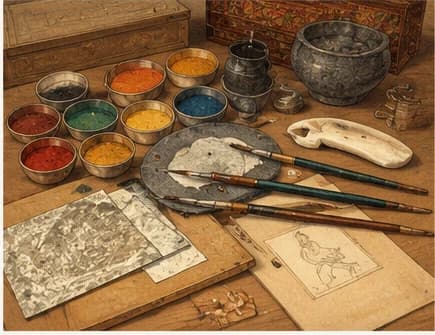
- •Patna Kalam belongs to the category of miniature painting, made mostly on paper, glass, mica and ivory sheets.पटना कलम लघुचित्र श्रेणी की चित्रकला है, जो अधिकतर कागज़, काँच, अभ्रक और हाथीदाँत की पट्टियों पर बनाई जाती थी।
- •Indigenous style of colouring: brushes of one or two hairs were used for fine painting and fine lines.रंगाई की स्वदेशी शैली: बारीक चित्रण और महीन रेखाओं के लिए एक या दो बालों वाली कूचियों का प्रयोग होता था।
- •Brush hair came from domestic animals such as the squirrel, goat, pig and buffalo.कूचियों में गिलहरी, बकरी, सूअर और भैंस जैसे पालतू पशुओं के बाल लगाए जाते थे।
- •Colours were extracted from indigenous plants, bark, flowers and metals.रंग देशी पौधों, छाल, फूलों और धातुओं से निकाले जाते थे।
- •The canvas, colours and brushes were prepared by the painters themselves.कैनवास, रंग और कूचियाँ चित्रकार स्वयं तैयार करते थे।
Kajli Siyahiकजली स्याही
Painters painted straight away with the brush, without first marking the contours of the picture in pencil. This technique is known as Kajli Siyahi.चित्रकार चित्र की रूपरेखा पहले पेंसिल से बनाए बिना सीधे कूची से चित्र बनाते थे। इस तकनीक को कजली स्याही कहा जाता है।
Slanting-dot shadingतिरछे बिंदुओं से छायांकन
Unlike the Delhi artists, Patna painters used a slanting-dot system for shading.दिल्ली के कलाकारों से भिन्न, पटना के चित्रकार छायांकन के लिए तिरछे बिंदुओं की पद्धति अपनाते थे।
Sparse backgroundsन्यूनतम पृष्ठभूमि
Backgrounds and landscapes were used sparingly to make paintings less expensive. When a background was used, it was mostly a door overlooking a river, a garden scene, a room partitioned by pillars and curtains, or ornamented draperies.चित्रों को कम खर्चीला रखने के लिए पृष्ठभूमि और परिदृश्य का कम उपयोग होता था। जहाँ पृष्ठभूमि दिखाई जाती, वहाँ प्रायः नदी की ओर खुलता द्वार, बगीचे का दृश्य, खंभों और पर्दों से विभाजित कमरा, या अलंकृत पर्दे-वस्त्र बनाए जाते थे।
Daily life as subject / विषय बना दैनिक जीवन
People, occupations and birdsलोग, कामकाज और पक्षी
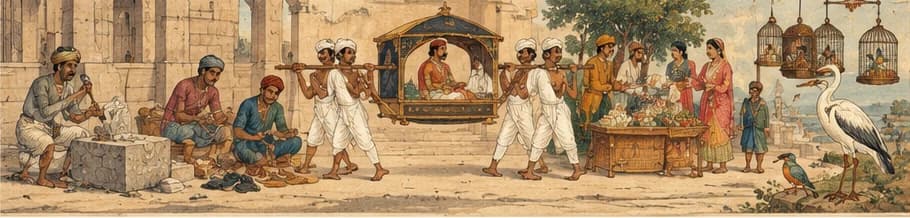
Themes came mostly from common daily life-Patna Kalam was the world's first independent school to do so.विषय अधिकतर सामान्य दैनिक जीवन से लिए गए-ऐसा करने वाला पटना कलम विश्व का पहला स्वतंत्र स्कूल था।
Stone-cutterपत्थर काटने वाला
Barberनाई
Shoemakerजूता बनाने वाला
Palanquin bearerपालकी ढोने वाला
Peddlerफेरीवाला
Butter-sellerमक्खन बेचने वाला
Distilleryशराब की भट्टी
Bakeryबेकरी
Maid-servantदासी / घरेलू सेविका
Modes of transportयातायात के साधन
Birds found at Patnaपटना में पाए जाने वाले पक्षी
Human figuresमानव आकृतियाँ
Heavy eyebrows / घनी भौंहेंPointed nose / नुकीली नाकThin face / पतला चेहराDeep-set, staring eyes / गहरी धँसी, एकटक देखती आँखेंBig moustaches on men / पुरुषों की बड़ी मूँछें
Painters and paintings / चित्रकार और चित्र
Artists, works and collectionsकलाकार, कृतियाँ और संग्रह
The painters of the style, their works and where the paintings are kept today.इस शैली के चित्रकार, उनकी कृतियाँ और वे स्थान जहाँ आज ये चित्र संग्रहित हैं।
Painters / चित्रकार
Sewak Ram (1770–1830) and Hulash Lal (1795–1880)सेवक राम (1770–1830) और हुलास लाल (1795–1880)
The earliest recorded names.सबसे पहले दर्ज नाम।
Jai Ram Das, Jhumak Lal, Fakirchand and Tuni Lalजय राम दास, झुमक लाल, फ़कीरचंद और तुनी लाल
Painters of the Patna style.पटना शैली के चित्रकार।
Shiv Lal and Shiv Dayaljiशिव लाल और शिव दयालजी
The two principal and most widely reputed artists who built the great reputation of the Patna School during its peak (1850–1880); sons of Fakirchand Lal and Tuni Lal respectively.उत्कर्ष काल (1850–1880) में पटना स्कूल की महान प्रतिष्ठा बनाने वाले दो प्रमुख और सर्वाधिक प्रसिद्ध कलाकार; क्रमशः फ़कीरचंद लाल और तुनी लाल के पुत्र।
Babu Mahadeo Lal and Shri Ishwari Prasad Vermaबाबू महादेव लाल और श्री ईश्वरी प्रसाद वर्मा
The last two representatives of the Patna style; Ishwari Prasad Verma was ex-vice-principal of the Government School of Art, Calcutta.पटना शैली के अंतिम दो प्रतिनिधि; ईश्वरी प्रसाद वर्मा गवर्नमेंट स्कूल ऑफ आर्ट, कलकत्ता के पूर्व उप-प्रधानाचार्य थे।
Notable works / उल्लेखनीय कृतियाँ
Mahadev Lal / महादेव लाल
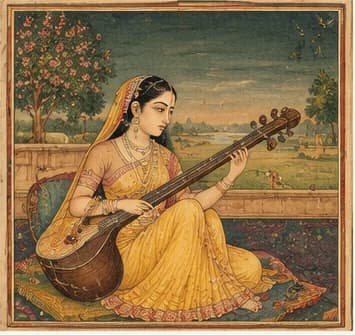
Ragini Gandhari and Ragini Todiरागिनी गांधारी और रागिनी टोडी
In the Ragini paintings, the artist shows a virahini (separated) heroine holding a veena.रागिनी चित्रों में कलाकार ने वीणा धारण किए विरहिणी नायिका को दर्शाया है।
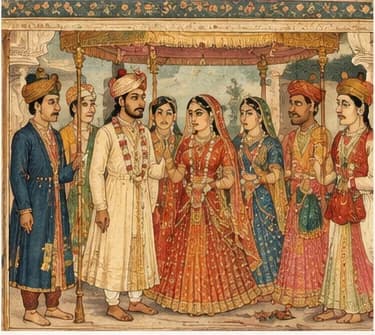
Shiv Lal / शिव लाल
Muslim marriageमुस्लिम विवाह
A picture of a Muslim marriage.मुस्लिम विवाह का चित्र।
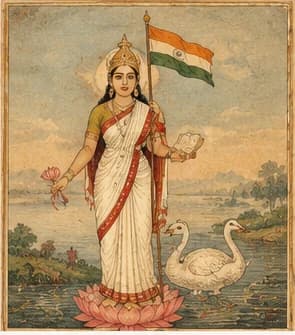
Ishwari Prasad / ईश्वरी प्रसाद
Bharat Mataभारत माता
A painting of Bharat Mata.भारत माता का चित्र।
Museums and collections / संग्रहालय और संग्रह
- •Patna Museumपटना संग्रहालय
- •Khuda Bakhsh Library, Patnaख़ुदा बख़्श पुस्तकालय, पटना
- •State Art Gallery attached to the Government School of Arts and Craftsगवर्नमेंट स्कूल ऑफ आर्ट्स एंड क्राफ्ट्स से जुड़ी राज्य कला दीर्घा
- •National Museum, New Delhiराष्ट्रीय संग्रहालय, नई दिल्ली
In Bihar, collections are at three places; other collections exist in the National Museum, New Delhi.बिहार में संग्रह तीन स्थानों पर हैं; अन्य संग्रह राष्ट्रीय संग्रहालय, नई दिल्ली में हैं।
Today / वर्तमान स्थिति
There is currently no one to carry on the tradition. This style of painting flourished only as long as its Western patrons existed.वर्तमान में इस परंपरा को आगे बढ़ाने वाला कोई नहीं है। यह चित्रशैली तभी तक फली-फूली जब तक इसके पश्चिमी संरक्षक रहे।
Legacy / विरासत
The most important characteristic of Patna Kalam is its liveliness and its depiction of scenes of common life. Its miniature ivory paintings are considered better than Mughal painting in liveliness, precision, perfection and beauty. Hence the style is still relevant and is one of the most glorious legacies of Bihar.पटना कलम की सबसे महत्त्वपूर्ण विशेषता इसकी जीवंतता और सामान्य जीवन के दृश्यों का चित्रण है। इसकी हाथीदाँत पर बनी लघु पेंटिंग जीवंतता, परिशुद्धता, पूर्णता और सुंदरता में मुगल चित्रकला से भी बेहतर मानी जाती हैं। इसलिए यह शैली आज भी प्रासंगिक है और बिहार की सबसे गौरवशाली विरासतों में से एक है।
Painting traditions / चित्रकला परंपराएँ
Ritual forms and regional stylesअनुष्ठानिक रूप और क्षेत्रीय शैलियाँ
Madhubani and Manjusha are joined by Sanjhi, Thangka and rock painting.मधुबनी और मंजूषा के साथ सांझी, थांका और शैल चित्रकला भी।
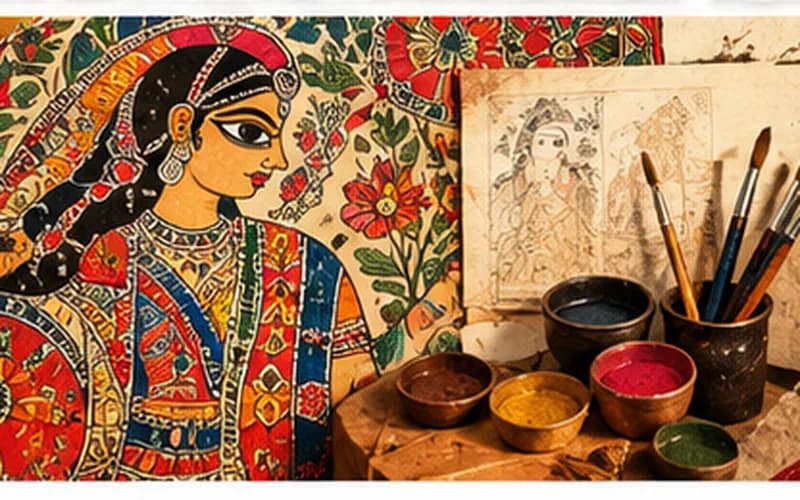
Madhubani paintingमधुबनी चित्रकला
- •Originated in the Mithila region; done with a variety of tools-fingers, twigs, brushes, nib-pens and matchsticks-using natural dyes and pigments.मिथिला क्षेत्र में उत्पन्न; उँगलियों, टहनियों, कूचियों, निब-पेन और माचिस की तीलियों जैसे विविध उपकरणों से, प्राकृतिक रंगों और रंजकों के साथ बनाई जाती है।
- •Characterised by geometric patterns representing birds, fish, flowers, animals and other objects; Aripan floor painting is also used in this style.पक्षियों, मछलियों, फूलों, पशुओं आदि को दर्शाने वाले ज्यामितीय प्रतिरूप इसकी पहचान हैं; इस शैली में अरिपन भूमि-चित्रण भी शामिल है।
- •Earlier practised mainly on walls during festivals and special occasions such as marriages and births; nowadays also on cloth and paper for commercial purposes.पहले मुख्यतः त्योहारों और विवाह, जन्म जैसे विशेष अवसरों पर दीवारों पर बनाई जाती थी; अब व्यावसायिक उद्देश्यों से कपड़ों और कागज़ पर भी बनाई जाती है।
- •Developed and kept alive mainly by women. Major artists: Ganga Devi, Siya Devi, Hira Devi, Kaushalya Devi, Lal Baba and Shashi Kala Devi.इस शैली को मुख्यतः महिलाओं ने विकसित और जीवित रखा। प्रमुख कलाकार: गंगा देवी, सिया देवी, हीरा देवी, कौशल्या देवी, लाल बाबा और शशिकला देवी।
- •A Madhubani Painting Museum has been built in Tokamachi city, Japan.जापान के तोकामाची शहर में मधुबनी पेंटिंग संग्रहालय बनाया गया है।
Manjusha paintingमंजूषा चित्रकला
- •Another important art form of Bihar, popular in Bhagalpur and nearby regions.बिहार का एक और महत्त्वपूर्ण कला रूप, जो भागलपुर और आसपास के क्षेत्रों में लोकप्रिय है।
- •Manjushas are temple-shaped boxes with eight pillars, used in Bishahari Puja, a festival dedicated to the snake god.मंजूषा आठ स्तंभों वाले मंदिर के आकार के बक्से हैं, जिनका उपयोग नाग देवता को समर्पित बिशहरी पूजा में होता है।
- •Speciality: only the left side of a character is shown in the painting.विशेषता: चित्र में पात्र का केवल बायाँ भाग दिखाया जाता है।
- •Painted in only three colours-red, yellow and green-on a black background.केवल तीन रंगों-लाल, पीला और हरा-से काली पृष्ठभूमि पर बनाई जाती है।
- •Shrimati Chakravati Devi is a famous painter of this style.श्रीमती चक्रवती देवी इस शैली की प्रसिद्ध चित्रकार हैं।
Other painting traditions in Biharबिहार में अन्य चित्र परंपराएँ
- •Sanjhi painting, from the Braj area of Uttar Pradesh.सांझी चित्रकला, उत्तर प्रदेश के ब्रज क्षेत्र से।
- •Thangka painting, a Tibetan Buddhist painting tradition.थांका चित्रकला, तिब्बती बौद्ध चित्र परंपरा।
- •Rock painting-engravings on the walls and ceilings of rock shelters.शैल चित्रकला-शैलाश्रयों की दीवारों और छतों पर उत्कीर्णन।
- •The impact and examples of all three are also found in Bihar.इन तीनों के प्रभाव और उदाहरण भी बिहार में मिलते हैं।
Performing arts / प्रदर्शन कलाएँ
Music, dance and drama rooted in region and occasionक्षेत्र और अवसर से जुड़े संगीत, नृत्य और नाटक
Folk music, dance and drama are performed on different occasions in different regions of Bihar.लोक संगीत, नृत्य और नाटक बिहार के अलग-अलग क्षेत्रों में अलग-अलग अवसरों पर किए जाते हैं।
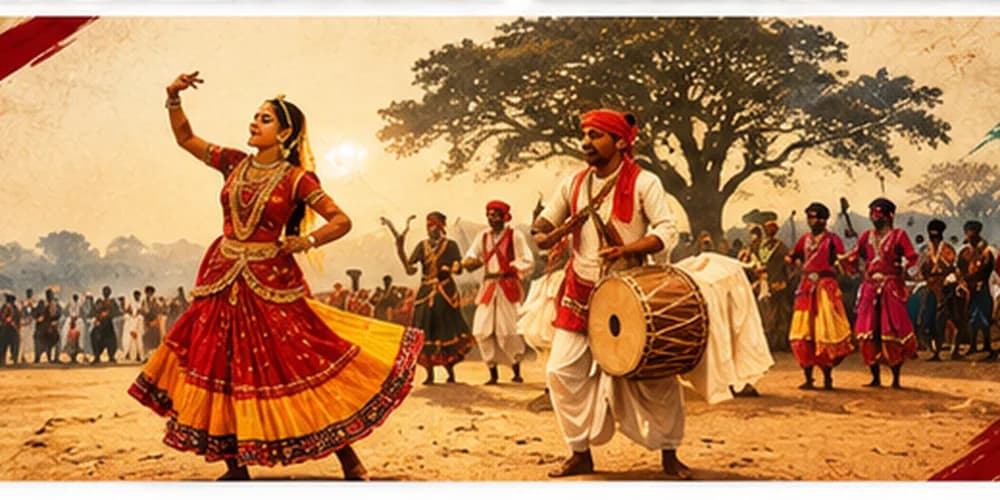
Folk music: historyलोक संगीत: इतिहास
- •Folk music is another form of fine art in Bihar.लोक संगीत बिहार में ललित कला का एक और रूप है।
- •Nayadeva of Mithilanchal (North Bihar) wrote a treatise on music at the beginning of the 13th century AD; Sufi and Bhakti saints developed music further in the medieval period.उत्तर बिहार के मिथिलांचल के नान्यदेव ने 13वीं शताब्दी ई. के आरंभ में संगीत पर एक ग्रंथ लिखा; मध्यकाल में सूफ़ी और भक्ति संतों ने संगीत को आगे विकसित किया।
- •Music also flourished in modern times: at Patna in 1913, Raja Shah of Bihar reorganised the Indian ragas and raginis, wrote the book ‘Nagmat Asafi’ on music, and began the use of an instrument called ‘Thaat’.आधुनिक काल में भी संगीत फला-फूला: 1913 में पटना में बिहार के राजा शाह ने भारतीय राग-रागिनियों को पुनर्गठित किया, संगीत पर ‘नग़मात आसफ़ी’ पुस्तक लिखी और ‘ठाट’ नामक वाद्य का प्रयोग आरंभ किया।
Folk songs and ragasलोकगीत और राग
- •Popular forms: Sumangali at marriage ceremonies, Sohar at birth ceremonies and Barahmasa for agricultural activities.लोकप्रिय रूप: विवाह में सुमंगली, जन्मोत्सव में सोहर और कृषि कार्यों के लिए बारहमासा।
- •The Nachari, Lagani, Chaita, Purbi and Phag ragas hold an important place; Nachari songs were composed by Mithila's famous poet Vidyapati.नचारी, लगनी, चैता, पूरबी और फाग राग महत्त्वपूर्ण स्थान रखते हैं; नचारी के गीत मिथिला के प्रसिद्ध कवि विद्यापति ने रचे।
- •Lagani songs are sung at marriages in Mithilanchal; Chaita is sung in the month of Chaita after Holi, while Phag is sung at Holi.मिथिलांचल में विवाह के अवसर पर लगनी गीत गाए जाते हैं; होली के बाद चैत महीने में चैता और होली पर फाग गाया जाता है।
- •Bhikhari Thakur of the Bhojpur region began a great folk-song tradition and is often called the ‘Shakespeare of Bhojpuri’. His major works: Bhikhari Thakur Granthavali, Bidesiya, Bhai Birodh, Beti Bechwa and Kaljug Prem.भोजपुर क्षेत्र के भिखारी ठाकुर ने लोकगीतों की एक महान परंपरा आरंभ की; उन्हें प्रायः ‘भोजपुरी का शेक्सपियर’ कहा जाता है। प्रमुख कृतियाँ: भिखारी ठाकुर ग्रंथावली, बिदेसिया, भाई बिरोध, बेटी बेचवा और कलजुग प्रेम।
Folk danceलोक नृत्य
- •Chhau, Kath Ghorwa, Launda, Dhobia, Jhijhiya, Kariya Jhumar, Panwariya, Jogira, Vidyapati and Bidesia dances.छऊ, काठ घोड़वा, लौंडा, धोबिया, झिझिया, करिया झूमर, पँवरिया, जोगीरा, विद्यापति और बिदेसिया नृत्य।
- •These folk dances are performed on different occasions in different areas.ये लोक नृत्य अलग-अलग क्षेत्रों में अलग-अलग अवसरों पर किए जाते हैं।
Folk dramaलोक नाटक
- •Jat-Jatin: performed in the months of Sawan and Kartik by unmarried women, showing married life.जट-जटिन: सावन और कार्तिक महीनों में अविवाहित युवतियों द्वारा, वैवाहिक जीवन को दर्शाते हुए।
- •Bhankuli-Banka: performed by women in the Angika region during Sawan and Kartik.भंकुली-बंका: सावन और कार्तिक में अंगिका क्षेत्र की महिलाओं द्वारा।
- •Sama-Chakwa.सामा-चकेवा।
- •Kirtaniya: stories of Lord Krishna performed by singing kirtans.कीर्तनिया: कीर्तन गाकर भगवान कृष्ण की कथाओं की प्रस्तुति।
Preservation / संरक्षण
Preserve and share Bihar's artistic heritageबिहार की कलात्मक विरासत को सहेजें और साझा करें
- •The ancient land of Bihar has a rich tradition of art and painting; the artistic gems received from history need to be preserved and awareness about them spread.बिहार की प्राचीन भूमि में कला और चित्रकला की समृद्ध परंपरा है; इतिहास से मिले कलात्मक रत्नों को संरक्षित करने और उनके प्रति जागरूकता फैलाने की आवश्यकता है।
- •This is a directive to the State under Article 49 and a fundamental duty under Article 51-A of the Constitution.यह संविधान के अनुच्छेद 49 के अंतर्गत राज्य के लिए एक निर्देश और अनुच्छेद 51-क के अंतर्गत एक मौलिक कर्तव्य भी है।
- •Government, civil society and academia should come together to take steps in this direction.सरकार, नागरिक समाज और शिक्षा जगत को इस दिशा में मिलकर कदम उठाने चाहिए।
Exam preparation repository / परीक्षा तैयारी संग्रह
BPSC Mains Question Bank & Answer BlueprintsBPSC मुख्य परीक्षा: प्रश्न बैंक और उत्तर रूपरेखा
Practise structured answers on Bihar's art, painting and living cultural traditions. Each question opens an outline with evidence and a balanced conclusion.बिहार की कला, चित्रकला और जीवंत सांस्कृतिक परंपराओं पर संरचित उत्तर लिखने का अभ्यास करें। प्रत्येक प्रश्न खोलने पर तथ्यों और संतुलित निष्कर्ष सहित रूपरेखा दिखती है।