


Growth of foodgrains
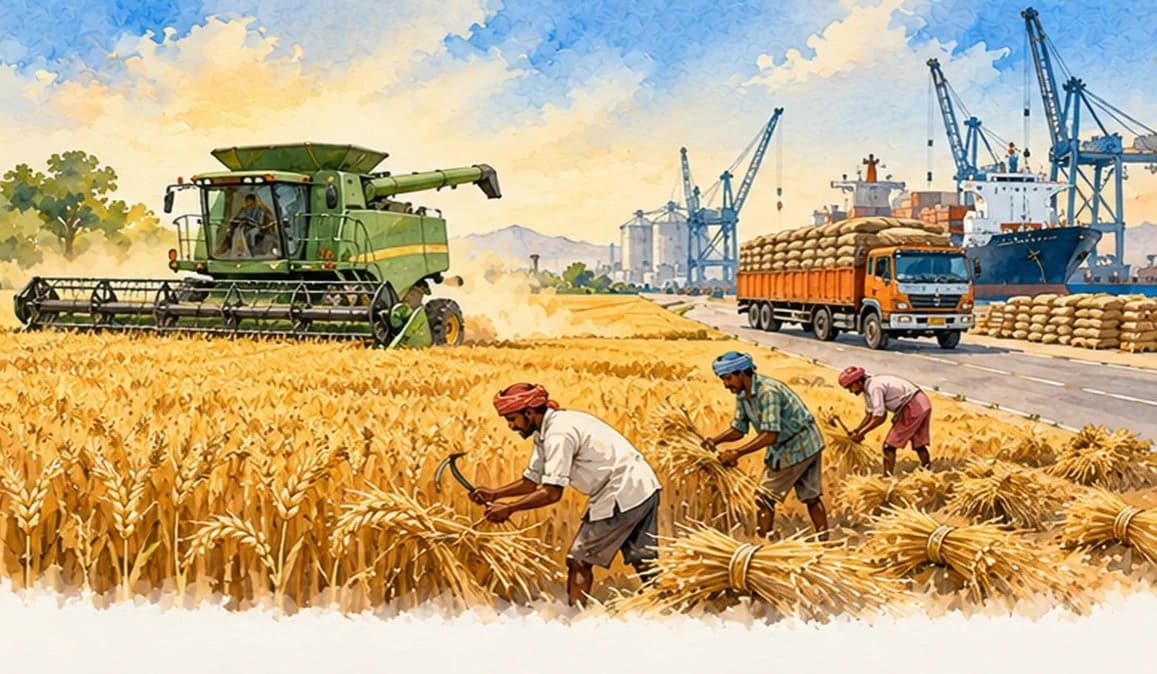
- India has been experiencing the increase in the production of food grains particularly after green revolution.
- Annual growth rate of 2.08 per cent was recorded during 1970s. Annual growth rate of 3.5 per cent in food grains in 1980s is the hallmark of the green revolution that enabled India to become self sufficient in food grains and even a marginal exporter.
- However, the decade of 1990s could not maintain this pace and annual growth rate. There was a steep decline in the growth rate of land productivity during the decade of 1991-2001 to 1.7 percent per annum.
- This, however, improved slightly during the subsequent period of 2001-2009 to 2 percent per annum. It was close to the rate of growth of population. This indicates that there is no threat to foodgrain availability in India in the immediate future.
- During the nineties, (1989-90 to 1998-99) growth rate of production for both foodgrains and non-foodgrain crops taken together has declined to 2.35 percent per annum from 3.72 percent per annum achieved during the eighties (1979-80 to 1989-90).
- The decline in the rate of growth for foodgrains was sharper from 3.54 to 1.80 per cent per annum.
- Production of food grains increased from 176.39 million tonnes in 1990-91 to 303 million tonnes in 2020-21 (the 2002 answer gives 296.65 million tonnes in 2019-20). However,
- In 1991-92, total production of food grains came down to 167 million tonnes mainly due to fall in the production of coarse cereals and in 1993-94, the production was around 184 million tonnes.
- In 2002-03, total production of food grains has further decreased to 174.8 million tonnes.
- Productivity of food grain increased from 1380 kg/hectare in 1990-91 to more than 2300 kg/hectare in 2020-21 (the 2002 answer gives 2,070 kg/hectare in 2014-15).
- The country's requirement for food grains in order to provide for its population is projected to be 300 million tonnes by 2025. With present production of 296 million tonnes, we are not facing any problem of foodgrain scarcity in near future.
- The rate of growth of productivity per hectare of all crops taken together increased from 2.07 per cent in the decade ending 1985-1986 to 2.51 per cent per annum during the decade ending 1994-1995.
- Although productivity gains were sustained in the 1990s after the liberalization process began, the yield rates for most of the agricultural products in India are far below comparable rates in a number of other countries.
