NASA’s Simulated Mars Mission – CHAPEA
Eduteria Insights · 3 Nov 2026
Why in News?
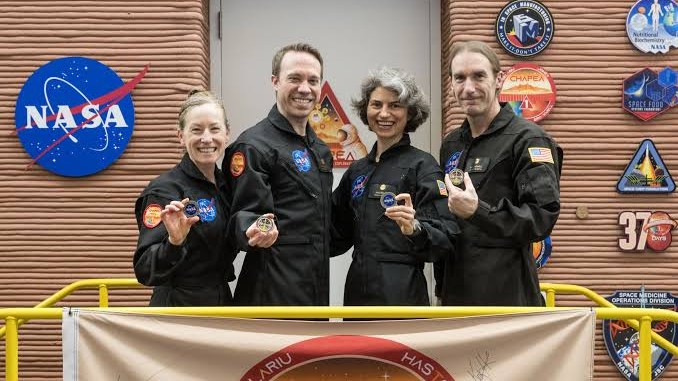
Four-member crew emerged after 378 days of isolation during NASA’s second simulated Mars mission at Johnson Space Center, Houston, USA.
In this mission, scientists developed Mars like environment on the Earth during the experiment.
Key Highlights
Mission: Crew Health and Performance Exploration Analog (CHAPEA).
Habitat: 1,700-square-foot (158 sq. m) 3D-printed facility.
Mission Period: 19 October 2025 onwards, for 378 days.
Activities included:
Growing crops in simulated Martian soil.
Maintaining the habitat and performing simulated Mars operations.
Communication with NASA officials with simulated interplanetary delays.
Objectives
Study astronauts' physical and psychological adaptation to long-duration space missions.
Understand the challenges of limited resources and isolation.
Assess communication delays, independent decision-making and habitat maintenance.
Help prepare for future human missions to the Moon and Mars.
- NASA Mission
- NASA Mission CHAPEA
- What is CHAPEA
Swipe up (or press ↓) for the next news