COP31 Climate Talks End Without Consensus on Fossil Fuel Phase-Out
Eduteria Insights · 23 Nov 2026
Why in News?
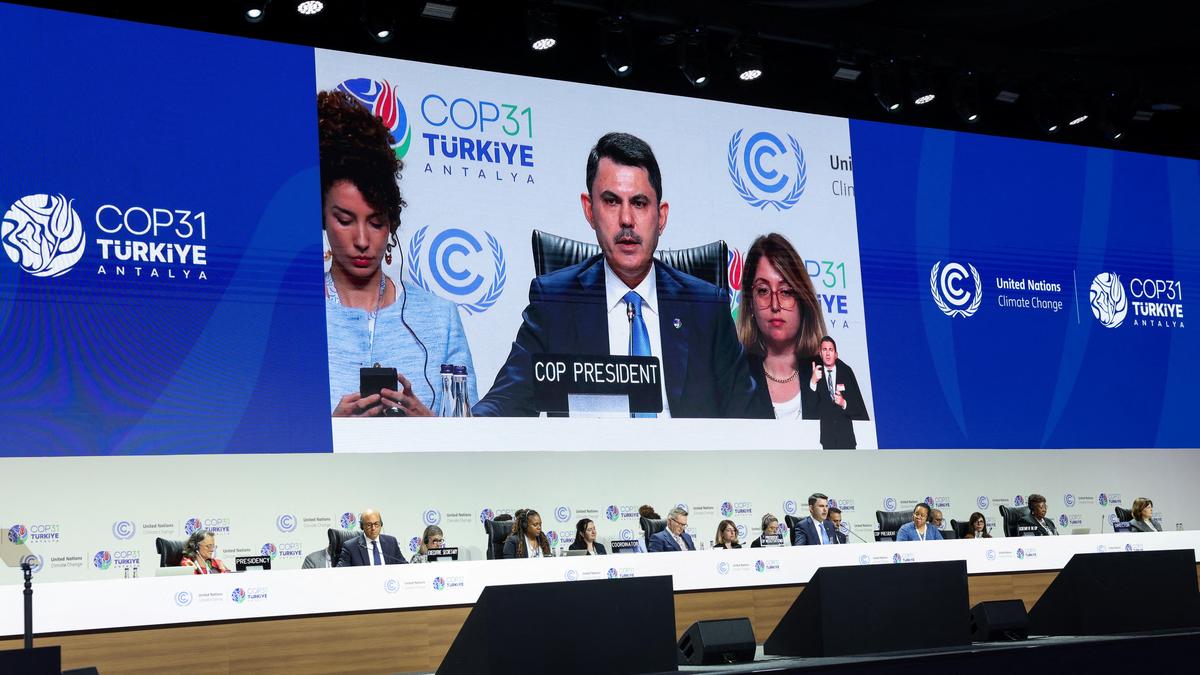
The 31st Conference of the Parties (COP31) climate summit, held in Antalya, Türkiye, ended without a consensus on explicitly mentioning the phase-out of fossil fuels in the final outcome document.
More than 130 countries opposed the draft text, arguing that it weakened global climate commitments.
COP31 Negotiations: What Led to the Deadlock?
The disagreement continued even after 48 hours of additional negotiations beyond the scheduled deadline.
The European Union (EU) led the opposition, demanding that the final document clearly mention moving away from fossil fuels such as coal, oil, and natural gas.
The EU's position was supported by around 130 countries. They argued that the world cannot effectively tackle climate change without a clear commitment to reducing dependence on fossil fuels.
However, the negotiations reached a deadlock because several countries disagreed with this approach.
India's Position on Fossil Fuels and Climate Finance
India, along with China and Saudi Arabia, supported the proposed cover text, which did not explicitly call for moving away from fossil fuels.
India maintained that climate ambition must go hand in hand with the means of implementation. In simple terms, developing countries should not be expected to take ambitious climate action without adequate financial support, technology transfer, and capacity-building assistance.
India also highlighted concerns relating to food security, livelihoods, cultural practices, and nationally determined climate goals.
Developing Countries Raise Concerns Over Climate Justice
A grouping of developing countries, including Least Developed Countries (LDCs), expressed concern that the principle of Common but Differentiated Responsibilities and Respective Capabilities (CBDR-RC) was being weakened.
This principle recognizes that developed countries have greater historical responsibility for greenhouse gas emissions and should take the lead in addressing climate change.
Developing nations argued that the final text did not adequately reflect historical responsibility, equity, and the financial obligations of developed countries.
COP31 Outcome: A Setback for Global Climate Action
The failure to reach consensus on fossil fuel phase-out exposed deep divisions between developed and developing countries.
The negotiations highlighted an important question: Can developing countries achieve ambitious climate targets without adequate financial and technological support?
- COP31 Summit 2026
- Fossil Fuel Phase-Out
- Climate Change
- Climate Finance
- India's Climate Policy
- Climate Justice
- CBDR-RC Principle
- Global Climate Action
- Developing Countries
- UPSC Current Affairs
- BPSC Current Affairs
Swipe up (or press ↓) for the next news